


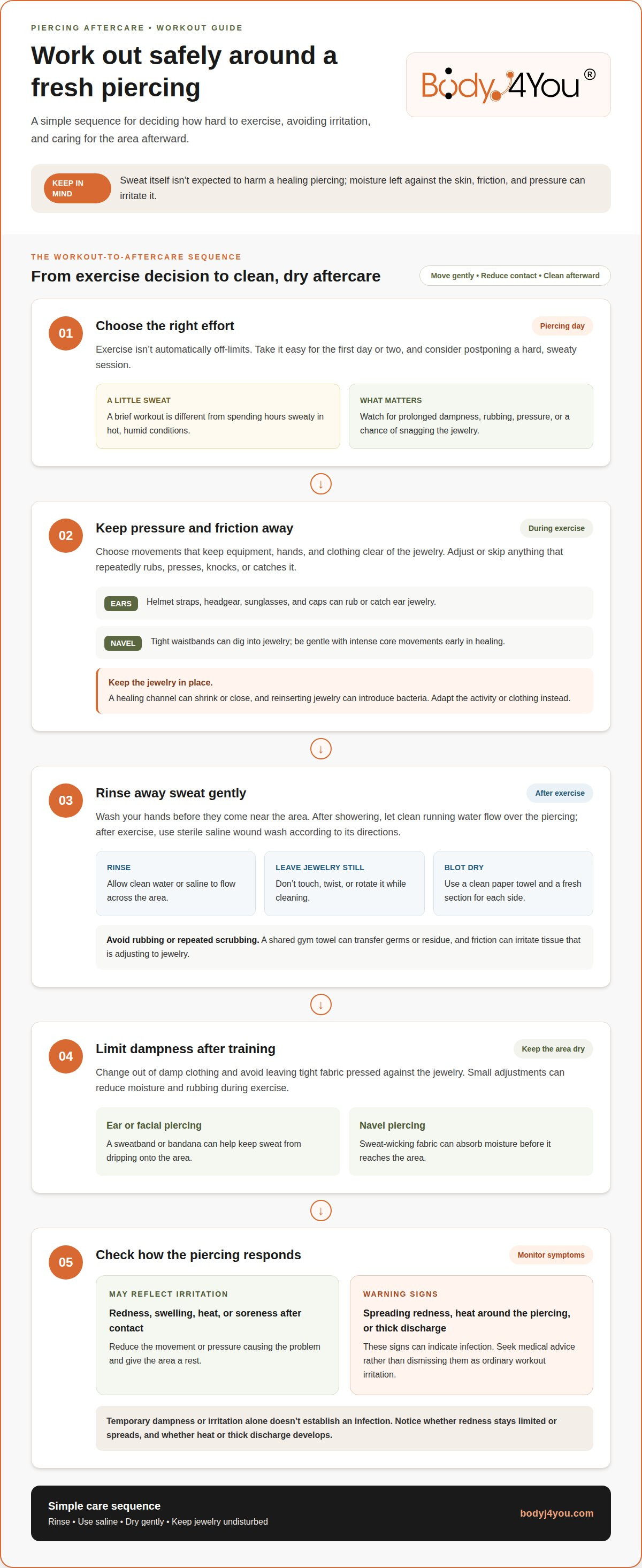
A workout on piercing day isn’t automatically off-limits, but it’s sensible to postpone a hard, sweaty session. Sweat itself isn’t expected to infect or harm a new piercing, though moisture left on the area can irritate it. Take it easy for the first day or two. After exercise, clean the area gently with saline and pat it dry.
It makes sense to be cautious with a fresh piercing, especially if your usual routine involves heat, movement, or equipment that may rub against it. Learn how to clean away sweat, when to ease up on exercise, and how humidity, friction, and pressure can affect healing. The goal is to keep the area clean and dry without overcleaning or disturbing the jewelry. Use these points to decide whether to work out on piercing day and how to care for your piercing afterward.
Key Takeaways
- Decide whether to exercise on piercing day by considering sweat, pressure, and the chance of snagging the jewelry.
- Learn how to rinse away post-workout sweat with sterile saline and dry the area gently.
- Spot how humidity, clothing, and workout equipment can add irritation even when sweat isn’t the main concern.
- Recognize warning signs that call for medical advice, rather than treating every bit of tenderness as an infection.
1. Cleaning with sterile saline wound wash
After exercise, clean a healing piercing with sterile saline wound wash, following the product directions, to remove sweat and residue. Sweat isn’t sterile, and leaving it on the skin can irritate the area. Clean promptly after a warm-weather workout, especially if sweat has collected around the jewelry or beneath clothing. Aim for a gentle rinse, not repeated scrubbing or aggressive cleaning.
After showering, let clean running water flow over the piercing, then use sterile saline wound wash according to its directions. If sweat remains after training, saline can rinse it away without rubbing the healing channel. Wash your hands before they come near the area, and avoid touching or twisting the jewelry while cleaning.
- Rinse the piercing with clean running water after showering, or use sterile saline after exercise.
- Allow the saline to flow across the area without moving or rotating the jewelry.
- Blot excess liquid with a clean paper towel, using a fresh section for each side.
A shared gym towel can transfer germs or residue, so use a clean paper towel instead. Pat carefully rather than rubbing, since friction can irritate tissue that is adjusting to jewelry. If you’re traveling after a workout, carrying your aftercare solution can make rinsing easier when you’re away from home.
Avoid hydrogen peroxide, isopropyl alcohol, and antibiotic ointments for routine piercing care. These products can dry the area or trap germs, while harsh or excessive cleaning can cause further irritation. Keep makeup and skincare products away from the piercing opening, too. A simple routine works best: rinse, use saline, and dry gently. If symptoms worsen rather than showing ordinary post-exercise dampness, use the infection warning signs discussed later to guide your next step.
2. Sweat and humidity during piercing healing
Sweat from exercise isn’t expected to harm a healing piercing by itself. However, sweat isn’t sterile, and salt and moisture left against the skin can cause irritation. A brief workout is different from spending hours sweaty in hot, humid conditions. Prolonged dampness can make it harder for the skin around the jewelry to dry comfortably. Regular jogging or exercise a few times a week is unlikely to cause the same moisture-related irritation.
Piercing location can affect how long sweat and damp fabric stay nearby. Moisture can collect around underarm piercings, while a navel piercing may become damp beneath snug clothing. Ear and facial piercings can also get sweaty during exercise, so keeping the area clean and dry afterward can help limit irritation. The main concerns are prolonged moisture, rubbing, and pressure around the healing site.
Make small adjustments to limit dampness during a workout. A sweatband or bandana can help keep sweat from dripping onto a fresh ear or facial piercing. For a navel piercing, sweat-wicking fabric can absorb moisture before it reaches the area. After exercise, change out of damp clothing and avoid leaving tight fabric pressed against the jewelry. If heat or strenuous activity keeps the area moist, reduce that exposure to help prevent irritation.
Most people can continue regular exercise if they protect the piercing and clean it afterward. Pay attention to how the tissue responds: ongoing irritation from moisture may call for less strenuous activity or more care to keep the area dry. A little sweat isn’t the same as an infection, but symptoms that spread need medical attention. See a doctor if redness spreads, the area feels hot, or thick discharge appears. These signs can indicate infection and shouldn’t be dismissed as ordinary workout irritation.
3. Friction and pressure during workouts
For the first day or two after a piercing, take it easy and avoid heavy sweating or direct pressure. A fresh piercing can be knocked or snagged during exercise, disrupting healing. Choose movements that keep equipment, hands, and clothing clear of the jewelry. A lighter session is a sensible alternative to activities that repeatedly jostle the area.
Helmets, headgear, and workout equipment can press against or catch a piercing. For example, a helmet strap rubbing an ear piercing may irritate the site repeatedly. Sunglasses and baseball caps can also rub against ear jewelry. Adjust or skip equipment that contacts the piercing, and avoid exercises where the area could be knocked.
Clothing can cause similar pressure. With a healing navel piercing, leggings that dig into the jewelry can irritate the area, especially during movement. Be gentle with intense core exercises early in healing, as bending and stretching may increase contact with waistbands. Choose clothing that sits comfortably away from the piercing rather than tight fabric that repeatedly pulls across it.
Don’t remove jewelry before a workout to prevent rubbing. A healing piercing channel can shrink or close, and reinserting jewelry can introduce bacteria. Keep the jewelry in place and adapt your activity or clothing instead. Repeated friction can irritate the tissue and may contribute to jewelry migration over time. A single knock or snag can also disrupt healing, so stop an activity if contact keeps happening.
After exercise, notice how the area responds. Persistent redness, swelling, heat, or soreness may mean the activity is aggravating the piercing. Reduce the movement or pressure causing the problem and give the area a rest. For example, change a rubbing cap or avoid a machine that presses against the piercing. Return to that exercise when it no longer causes repeated contact or discomfort.
4. What are the signs of an infected piercing versus normal healing?
A piercing may feel irritated after a workout, especially if sweat, clothing, or equipment rubbed against it. Irritation alone doesn’t establish an infection. Look for a pattern instead: spreading redness, heat around the piercing, or thick discharge are warning signs. These symptoms need more attention than temporary dampness after exercise.
Normal healing and infection can be difficult to distinguish by appearance alone. Notice whether redness stays limited or spreads, and whether heat or thick discharge develops. Sweat left against the skin can irritate a healing piercing, but it isn’t proof of infection. Don’t judge the cause by one symptom in isolation. Pay attention to changes and how they develop.
- Spreading redness around the piercing.
- Heat at the site.
- Thick discharge from the piercing.
If you notice spreading redness, heat, or thick discharge, consult a doctor. These signs can indicate infection and warrant medical assessment, rather than simply another cleaning session. Don’t rely on aftercare products to treat a suspected infection. Avoid removing or twisting the jewelry to investigate, since handling can add irritation. Note what you observe, including whether redness is spreading and whether discharge is thick.
For routine care after sweating or exercise, use sterile saline as directed and gently dry the area. A saline aftercare spray can support that cleaning routine, but it isn’t a substitute for medical care when infection signs appear. If you’re wondering whether sweat alone caused a problem, remember that moisture can irritate skin, while spreading redness, heat, and thick discharge call for a doctor. Don’t let the question of whether sweat can infect a new piercing distract you from those visible changes.
For everyday post-workout care, choose a saline piercing aftercare spray as part of a gentle rinse-and-dry routine, not as treatment for infection.
BodyJ4You
BodyJ4You helps you support piercing care with relevant aftercare products and body jewelry. If workouts leave sweat around a healing piercing, a Saline Piercing Aftercare Spray can fit into a gentle rinse-and-dry routine. It doesn’t replace medical care for spreading redness, heat, or thick discharge, so seek a doctor for those warning signs.
For other piercing needs, the range also includes Piercing Cleaning Swabs, jewelry, and ear-stretching kits. Choose products according to the care your piercing needs, and avoid treating a suspected infection with cosmetic or aftercare products alone.
Contact BodyJ4You if you’d like help finding a suitable product for your piercing-care routine.
Keep your piercing-care routine moving forward
Healing takes time, so let changes in your piercing guide your next step. Knowing whether sweat can infect a new piercing is useful, but your routine should also account for how your skin responds to workouts, clothing, and daily care. Keep your approach gentle, and seek medical attention if infection signs appear rather than relying on a product.
For piercing-related needs beyond everyday aftercare, BodyJ4You offers an Acrylic Ear Stretching Kit and a Surgical Steel Taper and Plug Kit. Its Saline Piercing Aftercare Spray can support a simple cleaning routine. Choose products for their intended purpose, and seek medical advice for symptoms that suggest infection.
If you have questions about piercing-care products or choosing an item for your routine, contact BodyJ4You with your piercing questions. Take your next step with care and confidence.
Frequently Asked Questions
Can I work out the same day I get a piercing?
Rest or choose gentle movement on piercing day, especially if your planned workout is intense. The first day or two are a sensible time to avoid heavy sweating and pressure. For example, consider a relaxed walk instead of a contact sport or a session involving tight straps. If exercise would jostle or repeatedly rub the new jewelry, postpone that workout.
Can you exercise with a fresh piercing?
Yes, you can continue regular exercise if you adapt your activities to protect the piercing. Choose movements that won’t knock the jewelry, and avoid equipment or clothing that presses directly on it. For example, modify a stretch if it pulls a fresh navel piercing against a waistband. Gradually return to your usual routine while paying attention to how the area responds.
Is sweat bad for a healing piercing?
Sweat does not necessarily mean a piercing will be harmed, but good aftercare can help keep the area comfortable. Salt in sweat may contribute to discomfort, especially if damp clothing stays against a navel piercing after training. Change out of wet clothes and prevent the area from staying moist. A short workout is different from prolonged dampness in hot conditions.
Should I take my jewelry out to exercise?
No. Removing jewelry from a healing piercing can let the channel shrink or close, and putting it back may introduce bacteria. Instead, adjust the activity or equipment causing contact. For example, switch to an exercise that doesn’t press a helmet strap against an ear piercing. Keep jewelry in place unless a qualified medical professional advises otherwise.
Can sweat cause an infection in a new piercing?
Sweat alone isn’t expected to harm a healing piercing, but sweat left on the area can irritate it. Whether sweat can infect a new piercing depends less on a single workout than on prolonged moisture, friction, and hygiene. If redness spreads, the site feels hot, or thick discharge appears, consult a doctor instead of assuming sweat is the only cause.
Does sweat contain bacteria that can infect a piercing?
Sweat isn’t sterile, and moisture can trap bacteria against the skin, but sweating doesn’t automatically mean an infection will develop. Germs can also transfer through fingers or shared surfaces. For example, wipe shared gym equipment before using it, then avoid touching your piercing during exercise. This reduces avoidable exposure without treating ordinary sweat as proof of infection.


