

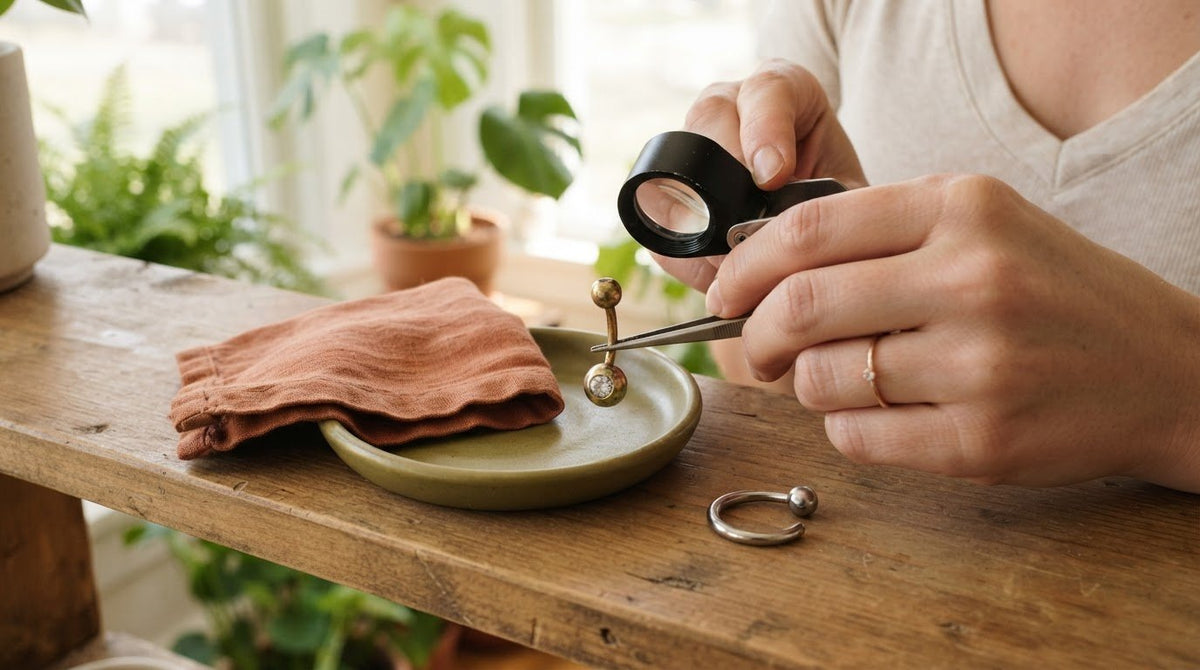
A neat stamp doesn’t guarantee a well-made piece. To tell if jewelry is low quality, look beyond the label: inspect the metal marks, stone settings, plating, finish, and high-wear areas for signs of weak construction or uneven workmanship.
It’s easy to focus on a piece’s shine or style, but small details can reveal more about how it may hold up. A hallmark is a clue, not proof on its own. The way a stone is secured or a clasp closes matters just as much.
This guide explains how to examine jewelry, from checking metal and plating marks to spotting rough edges, loose settings, and worn finishes. Use these checks to assess whether a piece meets your standards for quality and everyday wear.
Key Takeaways
- Treat a metal stamp as a starting clue, then consider the material and the rest of the piece before judging its quality.
- Look closely at how gemstones are held and whether their settings appear even and secure.
- Check plated jewelry and high-wear areas for changes in color, rough edges, or uneven finishing.
- Use the details that matter most to your intended wear to guide your jewelry choices.
Hallmarks and metal purity
Start with the stamp, then assess the material, construction, and any details about its origin. Compare warranties, return policies, and certifications by their written scope: warranties describe covered defects and remedies, return policies set return conditions, and certifications document specific material or quality claims.
-
Check Hallmarks and Fineness Stamps
Turn the piece over and inspect the clasp, inner band, or underside for a legible hallmark. The Federal Trade Commission identifies “925” as a mark for sterling silver. Gold fineness stamps can include 10K, 14K, 18K, or 24K; platinum marks can include 900, 950, PT, or PLAT. Read the entire stamp, since a plating abbreviation describes a surface layer rather than solid gold. Treat any stamp as one clue, not proof: a worn or missing mark alone doesn’t establish poor quality, especially on older jewelry.
-
Compare Precious and Base Metals
Identify the stated metal before judging a piece’s value or durability. Gold, silver, and platinum are precious metals; copper and nickel are common base metals. A silver-colored piece may be silver, plated metal, or another alloy, so appearance alone can’t confirm its composition. Look for a clear material description alongside the hallmark, and note whether it says solid gold or only describes a gold-colored finish. Specific wording helps distinguish the underlying metal from its surface appearance.
- Assess weight alongside construction, not as a stand-alone quality test. Longer or heavier solid gold or platinum jewelry can contain more precious metal, but weight alone proves little because base metals can also feel heavy. Examine chain links, joints, and closures for consistent construction. Very thin sections or weak-looking connections may be more vulnerable to bending or breaking during wear. A well-crafted piece should feel coherent: its weight, proportions, and visible structure should make sense together.
- Consider hidden metals if you have sensitive skin. The visible surface may not reveal every metal in an alloy, and coatings can conceal the material underneath. Look for a clear description of the metal composition and any available documentation about material testing or origin. Nickel can trigger reactions for some people, so a precise material label is more useful than a vague one. Don’t infer metal purity or skin compatibility from color, shine, or weight; those details can’t identify every component.
Inspecting gemstone prongs and settings
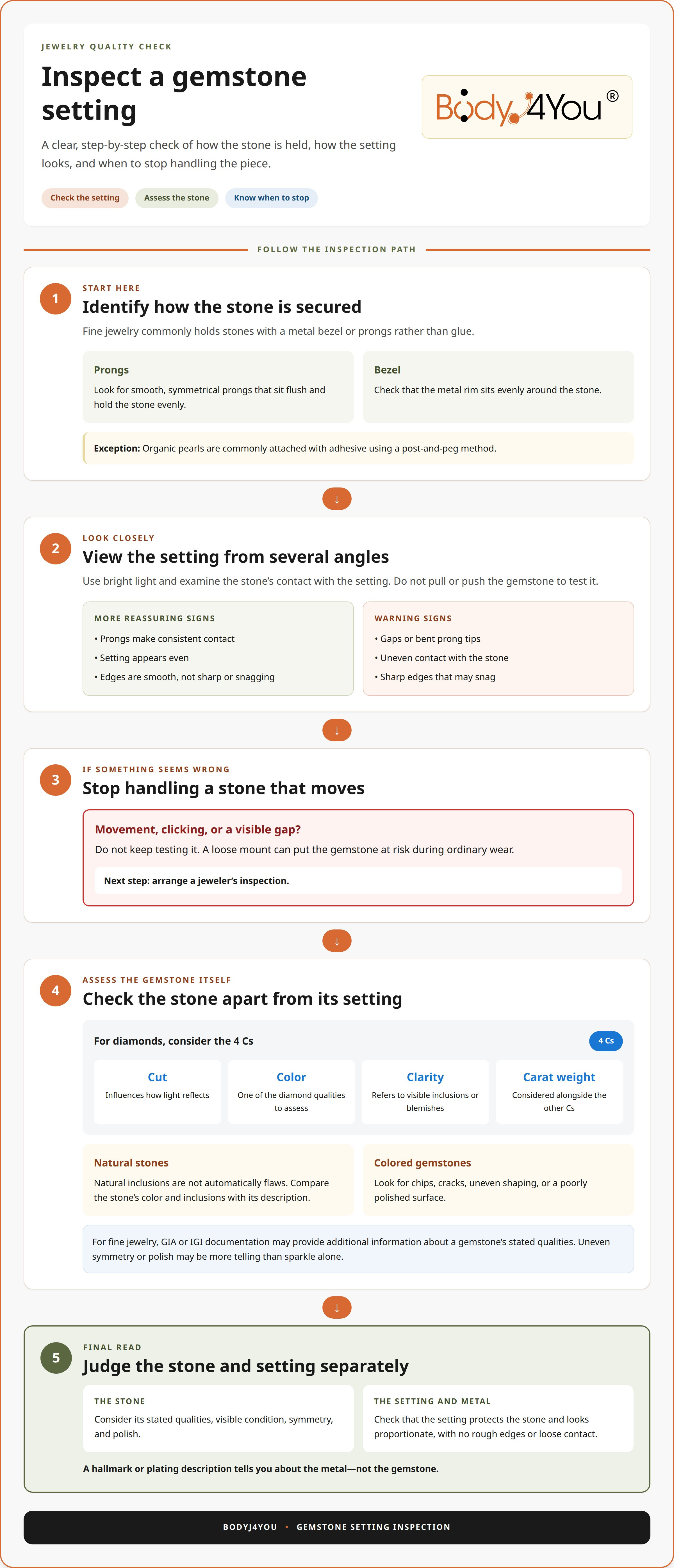
Have a jeweler inspect the piece if a stone moves, a prong catches fabric, or the setting looks damaged. A loose mount can put the gemstone at risk during ordinary wear.
- Examine how each stone is secured. Fine jewelry commonly uses a metal bezel or prongs, rather than glue. Check whether the prongs look smooth and symmetrical, sit flush against the stone, and hold it evenly. Gaps, bent tips, or uneven contact can suggest a weakened setting. Organic pearls are a notable exception, since adhesive attachment with a post-and-peg method is standard.
- View the setting from several angles in bright light. A bezel should sit evenly around the stone; prongs should make consistent contact without sharp or snagging edges. Watch for movement, but don’t pull or push the gemstone to test it. If it shifts, clicks, or leaves a visible gap, stop handling the piece and arrange a jeweler’s inspection.
- Assess diamond qualities through the 4 Cs: cut, color, clarity, and carat weight. Cut influences how light reflects, while clarity refers to visible inclusions or blemishes. Natural inclusions aren’t automatically flaws. A practical part of how to tell if jewelry is low quality is noticing whether the stone’s symmetry and polish look uneven, rather than judging it by sparkle alone.
- Look for chips, cracks, uneven shaping, or a poorly polished surface on colored gemstones. Natural stones can vary in color and inclusions, so compare them with their description instead of expecting identical appearances. For fine jewelry, GIA or IGI documentation may provide additional information about a gemstone’s stated qualities.
- Assess the stone separately from its setting and metal. A hallmark or plating description identifies information about the metal, not the gemstone. To tell if jewelry is low quality, also consider whether the setting protects the stone and looks proportionate to its shape, without rough edges or loose contact.
Gold-plated and gold-filled indicators
Read the full description and inspect the stamp before treating a gold-colored surface as solid gold. The wording and wear pattern can help distinguish a coating from the metal beneath it.
- Look for a clear plating description on the piece or its documentation. A gold-plating claim should state the karat before the words “gold plated.” For example, “14K gold plated” identifies the karat of the gold layer, not the underlying metal. Don’t interpret that wording as a claim that the entire necklace or bracelet is solid gold.
- Look for abbreviations near a clasp, pendant bail, or bracelet closure. GP means gold plated, GF means gold filled, GE means gold electroplated, and HGE means heavy gold electroplated. These marks describe different gold-layer claims; they don’t mean the piece is solid gold. G.E.P. is also used for gold electroplate. Read the letters carefully, since a short stamp can be easy to overlook.
- Compare the stamp with the seller’s material description. A piece described as sterling silver with gold plating has a silver base and a gold-colored surface layer. Gold-filled wording describes a construction distinct from solid gold, so don’t treat “filled” as interchangeable with “solid.” Clear descriptions should identify both the finish and underlying metal, rather than relying on gold color alone.
- Inspect contact points and moving parts for wear. On a necklace, look closely at the links near the clasp; on a bracelet, examine the inner surface and edges that rub against skin or a desk. A darker or silvery area can indicate that plating has worn through. Compare exposed and protected areas, such as a pendant’s underside and its visible face. One worn spot doesn’t identify the base metal, but it does show where the finish has changed.
- Keep this distinction in mind when comparing chains. A gold-colored appearance, a GP stamp, or a plated description doesn’t establish solid-gold purity. Assess the stated construction, stamp, and visible wear together before deciding whether the piece meets your expectations.
Inspecting finishes and high-wear areas
Inspect jewelry under bright light and gently run a clean fingertip over accessible edges. Avoid scraping, bending, or using chemicals, which can mark the finish or loosen stones.
- Inspect the front, back, and hidden surfaces under steady light. A well-finished piece should feel smooth, with clean edges and no sharp seams, pits, or rough patches. Check the underside of a pendant and the inside of a ring, where polishing tools may not reach easily. White or dim areas beside a bright surface can point to uneven polishing, rather than a design choice.
- Look closely at joints and galleries, the open spaces beneath stones. Smooth solder joints and polished interior galleries help avoid weak points that may fail with wear. Follow the chain from end to end: links should drape fluidly, without twisting abruptly around a stiff or uneven connection. Handle a thin chain especially gently during inspection, since pulling can stress its links.
- Check high-contact areas for color changes. On a bracelet, examine the underside and edges that touch a desk or skin; on a necklace, inspect the clasp and nearby links. Gold-plated jewelry can show darker or silvery color where its surface layer has worn away. This can reveal wear, but doesn’t identify the underlying metal by itself.
- Compare exposed surfaces with protected areas. Solid gold or platinum should remain the same color where worn, although this comparison doesn’t apply to white gold. For colored stones, inspect the surrounding setting as well as the stone: rough metal edges or worn plating can affect comfort even when the stone looks bright.
- Operate the clasp gently, then listen and feel for a smooth opening and firm closing click. Check that the closure meets evenly and doesn’t catch. For a box clasp on a tennis bracelet or heavy chain, look for an additional side safety latch. If you’re choosing body jewelry, explore body jewelry options with these finish checks in mind.
BodyJ4You
BodyJ4You is a natural next step when your jewelry needs relate to body piercings rather than fine gemstones or precious-metal pieces. The checks in this guide can help you assess visible construction; BodyJ4You’s relevant options include captive bead rings and a Surgical Steel Taper and Plug Kit. For piercing care, Saline Piercing Aftercare Spray and Piercing Cleaning Swabs provide dedicated aftercare and cleaning options.
Use the material and finish details you’ve learned to make informed choices, and consider which product category fits your needs. BodyJ4You focuses on body-piercing jewelry and related care products, not gemstone appraisal or custom jewelry work.
If you have a question about your needs, contact BodyJ4You.
Choose Your Next Piece With Care
Use what you’ve learned to make your next jewelry choice more deliberately. Knowing how to tell if jewelry is low quality can help you focus on the details that matter to your comfort, style, and intended wear. For body-piercing jewelry and related care, BodyJ4You offers an Acrylic Ear Stretching Kit, a Surgical Steel Taper and Plug Kit, and Saline Piercing Aftercare Spray.
Let your needs guide the next step. If you’re exploring body jewelry or piercing aftercare, consider which product type fits your situation, rather than treating a general jewelry inspection as a substitute for gemstone appraisal.
Contact BodyJ4You for help with choosing a suitable next step. Take your time, trust the details, and choose with confidence.
Frequently Asked Questions
What are common signs of low-quality jewelry?
Common warning signs include uneven construction, uncomfortable edges, loose components, and a finish that wears away. Look at the piece as a whole: a clasp that doesn’t align, links that catch, and visible surface flaws together deserve more attention than one isolated mark. Consider how the jewelry feels during gentle handling, and avoid wearing pieces with sharp edges or components that appear ready to detach.
How can you check jewelry metal markings and hallmarks?
Use a bright light or magnifier to read marks on the clasp, inner band, or pendant back. Compare the complete stamp with the item’s written material description; a stamp is a clue, not independent proof of composition. Older pieces may have no visible mark, or the stamp may have worn away. If the stated metal matters to your purchase, look for supporting documentation that describes the material.
How can you tell if jewelry is gold plated, gold filled, or solid gold?
Start with the exact wording in the item description, then match it to any stamp. GP, GE, and HGE indicate plating or electroplating; GF indicates gold filled. These terms describe constructions distinct from solid gold. If the wording only says “gold tone,” treat it as a color description, not a statement of gold content. Wear at the edges may expose a different-colored base, but appearance alone can’t establish what it is.
How can you identify low-quality gemstones and imitation stones?
Look for chips, uneven shaping, surface abrasions, or a stone that sits poorly in its setting. These observations can flag damage or workmanship concerns, but they can’t reliably establish whether a stone is natural or imitation. For a valuable diamond or colored gemstone, documentation from a recognized gemological laboratory can provide additional evidence. Compare the report’s description with the actual stone and its setting.
What jewelry construction flaws indicate poor craftsmanship?
Watch for uneven joints, links that snag or twist, settings that shift, and closures that don’t meet securely. These flaws can affect comfort and make parts more vulnerable during ordinary wear. Handle the piece gently rather than bending it to test its strength. If a stone moves, a clasp fails to close, or a sharp edge catches fabric, set the jewelry aside until it’s assessed.
What risks come with nickel or other metals in inexpensive jewelry?
Nickel can cause skin reactions in people who are sensitive to it, and other metals may also be a concern depending on the wearer and the item’s composition. A shiny coating doesn’t reveal every metal beneath it. If jewelry causes itching, redness, or irritation, remove it and avoid further contact. Clear material descriptions help you make a more informed choice, especially for frequent wear.


