

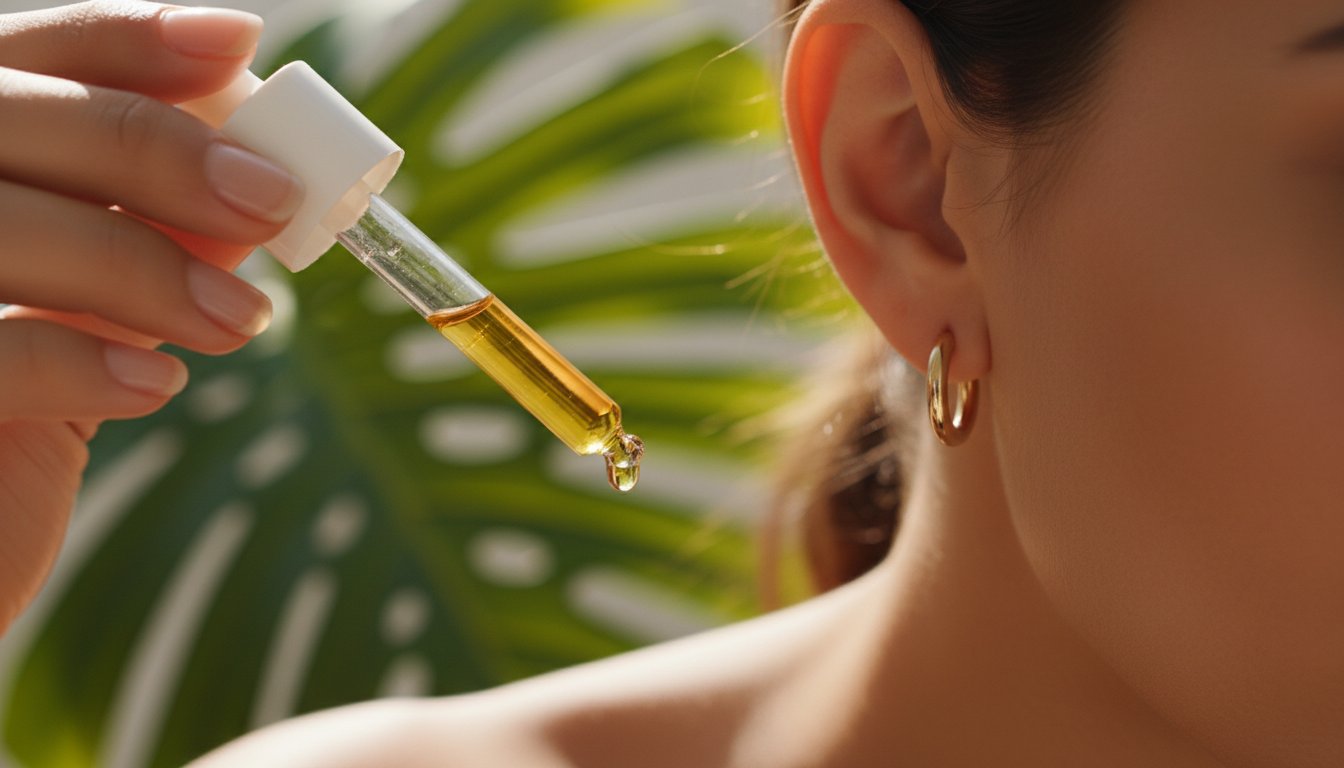
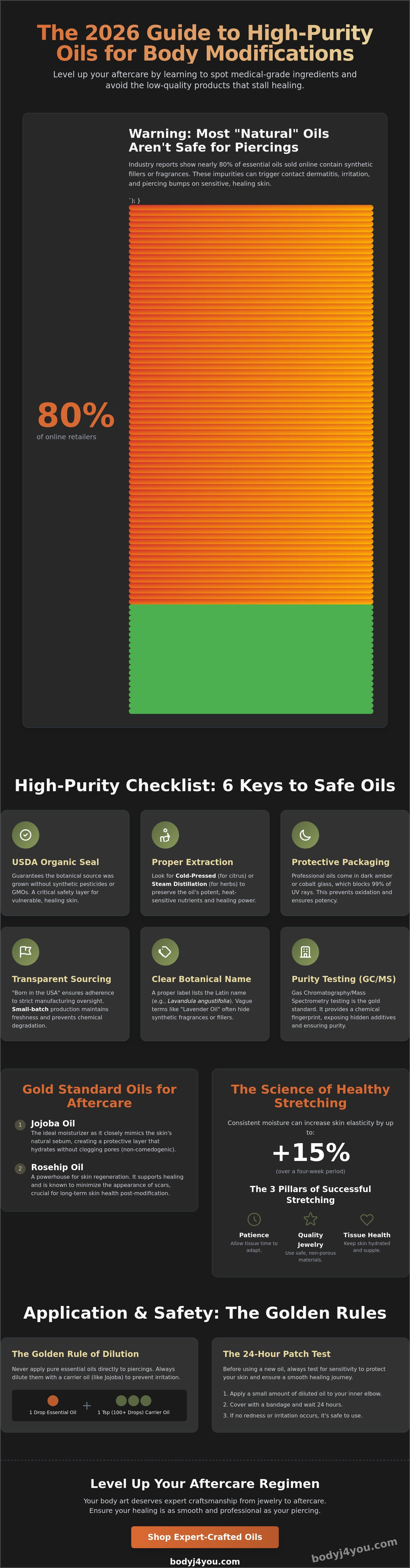
Is that "100% natural" bottle in your bathroom cabinet actually doing more harm than good to your new modification? Industry reports suggest that nearly 80% of essential oils sold through major online retailers contain synthetic fillers or fragrance enhancers that can trigger contact dermatitis on sensitive piercing sites. You want your body art to reflect your identity, not a cycle of irritation and redness. It's exhausting to battle stubborn piercing bumps or the dry, crusty skin that often accompanies a new stretch. We believe your skin deserves the same expert craftsmanship as your jewelry.
This 2026 buying guide empowers you to select high-purity oils that support healing and long-term skin health for your body modifications. You'll learn how to spot medical-grade ingredients and avoid the low-quality products that stall your progress. We're diving into the specific botanical profiles that ensure your skin stays clear, hydrated, and ready to level up your self-expression with total confidence. By focusing on purity and clinical efficacy, you can ensure your healing journey is as smooth and professional as the piercing itself.
Key Takeaways
- Understand the critical role of USDA Organic certification and cold-pressed extraction in maintaining the purity required for professional body modification care.
- Discover how Jojoba and Rosehip oils serve as the gold standard for supporting healthy ear stretching and minimizing the appearance of scars.
- Master the golden rule of dilution to safely integrate essential oils into your daily piercing aftercare and skin health routine.
- Learn the proper technique for a 24-hour patch test to ensure your skin remains protected and resilient throughout your healing journey.
- Level up your aftercare regimen with expert-crafted solutions designed to keep your body modifications healthy, safe, and effective.
Understanding Essential Oils in the Context of Body Modification
Body modification is a commitment to personal aesthetics and physical health. To succeed, you need more than just high-quality jewelry; you need a biological strategy. Essential oils serve as the cornerstone of this strategy. To understand the basics, we must define what are essential oils: they are concentrated, volatile plant extracts that capture the chemical essence of their source. In a 2026 wellness routine, these oils aren't just scents. They're active botanical tools.
Standard oils won't cut it for a fresh piercing. You need medical-grade purity. When skin is compromised, the barrier is open. Any impurities in your oil can lead to irritation or granulomas. We prioritize USDA Certified and organic options because your skin deserves the best. It's about safety, efficacy, and longevity. Our philosophy is simple: Crafted by Experts. Trusted by Thousands. Rooted in Care.
Natural oils interact with your body’s healing response by mimicking the skin's sebum. This creates a protective layer that prevents moisture loss without suffocating the tissue. It's a delicate balance that supports the body’s natural recovery process. When you use the right essential oils, you aren't just decorating your body. You're fortifying it.
Aromatherapy vs. Topical Skin Support
Fragrance-grade oils belong in a diffuser, not on a fistula. Many oils sold in retail environments contain 20% to 30% synthetic fillers. These chemicals can cause contact dermatitis on a healing piercing. For topical application, non-comedogenic properties are vital. A non-comedogenic oil ensures that pores remain clear. This allows the skin to breathe while it regenerates. You want to level up your aftercare, not clog your pores.
The Science of Skin Elasticity and Stretching
Ear stretching requires the dermis to remain supple. Dry skin lacks the tensile strength to expand. This often results in blowouts or micro-tears. Scientific data suggests that consistent moisture can increase skin elasticity by up to 15% over a four-week period. Essential oils penetrate the dermis to soften scar tissue and improve pliability. This makes gauge increases smoother and safer. If your lobes are dry, they're brittle. Brittle skin tears; hydrated skin flows. Successful stretching relies on three pillars:
- Patience in the process.
- Quality of the jewelry.
- Health of the tissue.
Key Features of High-Purity Oils: What to Look for in 2026
Quality essential oils require more than a pleasant scent. In 2026, purity is the non-negotiable standard for piercing recovery and skin health. You should prioritize the USDA Organic seal. This certification ensures the botanical source grew without synthetic pesticides or GMOs. It's a critical safety layer for skin that's physically vulnerable. High-purity oils are healthy, safe, and effective. They provide the stabilizing force your body needs during the healing process.
The extraction method determines the oil's biological power. Steam distillation remains the gold standard for most herbs, using low-pressure steam to pull volatile compounds without scorching them. For citrus-based oils, cold-pressed methods are superior because they preserve heat-sensitive nutrients. Once extracted, these oils are fragile. Exposure to light can cause oxidation in as little as 30 days. Professional oils always arrive in dark amber or cobalt glass. This packaging blocks 99% of UV rays, ensuring the liquid inside remains a potent healer rather than a skin irritant.
Sourcing and Manufacturing Standards
Quality begins at the source. Choosing products "Born in the USA" ensures adherence to strict domestic manufacturing oversight and transparent labor practices. Small-batch production is another hallmark of excellence. By limiting production to runs of 500 units or fewer, manufacturers maintain ingredient freshness and prevent the chemical degradation common in mass-market warehouses. You must read the label for the Latin botanical name. True Lavender must be labeled Lavandula angustifolia. If a label simply lists "Lavender Oil," it often contains synthetic fragrance or cheap fillers.
Testing for Purity and Potency
Professional grade essential oils undergo GC/MS (Gas Chromatography/Mass Spectrometry) testing. This analytical process identifies the exact chemical fingerprint of the oil. It exposes hidden additives like vegetable oil or synthetic linalool. Many brands use the term "Therapeutic Grade," but this is a marketing buzzword with no regulatory backing. It's better to trust 100% pure labels backed by third-party lab results. Following established essential oil safety guidelines is vital when applying these concentrated extracts to fresh piercings or sensitive skin.
Level up your aftercare routine by choosing a curated selection of premium oils crafted for precision and purity. Our approach is simple: Crafted by Experts. Trusted by Thousands. Rooted in Care. We prioritize the integrity of your skin over fleeting industry trends, ensuring every drop supports your journey of self-expression.
Standout Oils for Piercing Aftercare and Ear Stretching
BodyJ4You has spent 20 years refining the art of modification care. Selecting the right botanical extract is about biology, not just aesthetics. Your skin requires specific fatty acids and lipids to maintain elasticity during the healing process. While many products claim to support skin health, only a few select oils meet the rigorous standards required for professional piercing maintenance. These ingredients are healthy, safe, and effective.
Jojoba oil serves as the gold standard for ear stretching and lobe health. It is technically a liquid wax ester, making it nearly identical to the sebum produced by human skin. This allows for deep penetration without clogging pores. For those managing stubborn dry spots or thickened tissue, castor oil provides a dense, protective moisture barrier. It contains ricinoleic acid, which helps retain hydration in the outermost layers of the dermis. When managing minor irritations, tea tree oil is a common choice. However, scientific research on essential oils conducted by the NIEHS suggests that users should monitor for skin sensitivities, particularly with concentrated tea tree or lavender extracts, to ensure they do not disrupt the body's natural balance.
The Best Oils for Ear Stretching Kits
Successful ear stretching requires patience and proper lubrication. Jojoba oil mimics the skin’s natural sebum perfectly, providing a frictionless surface for tapers and plugs during a size-up. This reduces the risk of micro-tears or "blowouts" when moving between gauges. For those maintaining "0g" and larger lobes, a daily five-minute massage with essential oils like jojoba increases blood flow. This practice keeps the tissue supple, thick, and ready for future stretches. It is a vital step in any stretching journey. Level up your routine by using 100% organic, cold-pressed oils to ensure purity.
Targeting Piercing Bumps and Scars
Hypertrophic scarring and piercing bumps require targeted intervention. Rosehip oil is a powerhouse for reducing the appearance of scars because it is naturally rich in trans-retinoic acid and Vitamin C. These components support collagen production in damaged tissue, helping to flatten raised areas over time. Specialized piercing bump treatment oils often blend these botanicals to provide a soothing effect. You should transition from saline to oil-based care once the initial healing phase is complete, typically after 4 to 8 weeks. Using essential oils during this secondary phase helps the skin regain its natural texture. Crafted by experts. Trusted by thousands. Rooted in care.
Application and Safety: Avoiding Common Essential Oil Mistakes
Using essential oils effectively requires a balance of clinical precision and nurturing care. The golden rule of any piercing routine is proper dilution. Undiluted oils are far too potent for direct contact with healing tissue and can cause chemical burns if used carelessly. Industry standards from the Tisserand Institute suggest a 1% to 2% dilution for sensitive skin areas. This means mixing 3 to 6 drops of your chosen oil into one ounce of a high-quality carrier oil. This measured approach ensures your routine remains healthy, safe, and effective.
Before committing to a full regimen, always perform a 24-hour patch test. Apply a small amount of your diluted mixture to the inner forearm and wait a full day to monitor for reactions. If you notice redness, swelling, or persistent itching, the oil is not a match for your skin chemistry. To maintain potency for 2026 and beyond, store your bottles in a cool, dark place below 68 degrees Fahrenheit. Heat and UV light accelerate oxidation, which turns a therapeutic oil into a skin irritant. Recognizing the signs of over-application is vital for long-term health. Watch for these specific indicators:
- Persistent Redness: Flushing that does not subside within 30 minutes of application.
- Texture Changes: Skin that feels unusually scaly, tight, or bumpy.
- Localized Heat: A burning sensation that suggests the skin's moisture barrier is compromised.
The Correct Way to Apply Oil to Piercings
Precision is the hallmark of expert care. Always use a sterile cotton swab for application to prevent cross-contamination between your skin and the bottle. Our "Less is More" philosophy is rooted in 20 years of experience; one or two drops of a diluted blend is all the tissue needs to absorb the benefits. Never apply essential oils directly into a fresh, open wound. Wait until the initial inflammatory phase, usually the first 10 to 14 days, has passed. This allows the fistula to begin forming without interference from external liquids.
Age and Skin Type Considerations
Teenage skin typically produces more sebum, which means lighter carrier oils like jojoba are preferable to avoid clogging pores. Adult skin often requires more hydration, making almond or grapeseed oil excellent choices. Cartilage piercings, such as the helix or industrial, have significantly less blood flow than earlobes. These areas are prone to "piercing bumps" and require a disciplined, consistent application schedule. Finally, consider your jewelry material. Oils can degrade organic materials like wood or bone over time. Stick to non-porous materials like titanium or 316L surgical steel while using topical oils to ensure both your jewelry and your skin remain pristine.
Expert care is the foundation of every successful piercing. Level up your healing routine with our premium essential oils and give your skin the professional support it deserves.
The BodyJ4You Collection: Expert-Crafted Oils for Your Journey
BodyJ4You brings 20 years of specialized experience to your aftercare routine. We believe in providing products that are healthy, safe, and effective. Every bottle of our essential oils reflects a commitment to clinical precision and nurturing care. Our local manufacturing in Miami, Florida, allows us to oversee every step of the production cycle. This "Born in the USA" dedication ensures you receive only the highest quality ingredients for your skin. By maintaining local operations, we eliminate the risks associated with long-distance supply chains and unverified overseas facilities.
Our collection features USDA Certified Organic Jojoba and Rosehip oils. These are not basic cosmetic fillers; they are potent, cold-pressed solutions. Jojoba oil is particularly vital because it mimics human sebum, making it non-comedogenic and ideal for sensitive piercing sites. Rosehip oil provides the essential fatty acids and antioxidants necessary for tissue regeneration. When you choose professional-grade solutions, you're investing in the long-term health and aesthetics of your body modifications.
Standout Products for Your Aftercare Kit
The BodyJ4You Piercing Bump Treatment Oil is a flagship solution for common modification hurdles. It blends therapeutic essential oils to target localized irritation, redness, and swelling. This formula is designed to be hypoallergenic, providing a stabilizing force for skin that feels vulnerable. For those pursuing ear stretching, our Gauges Balm offers a specialized mix of emollients. It facilitates smooth transitions and maintains skin elasticity during the stretching process. We’ve spent two decades perfecting these formulas to ensure they meet the needs of the modern body modification community. Our products don't just sit on the surface; they support the biology of your healing.
- Piercing Bump Oil: Formulated to reduce the appearance of hypertrophic scars and keloids.
- Gauges Balm: A thick, protective barrier that prevents micro-tears and dryness.
- USDA Organic Jojoba: The gold standard for daily moisture and stretching lubrication.
Next Steps for Your Piercing Health
You can level up your healing process by integrating these oils into your daily ritual. Many of our customers bundle their favorite oils with our professional ear stretching kits to ensure a seamless experience. This holistic approach prevents the common pitfalls of improper aftercare. We are proud to be the "Wise Guardian" for over 100,000 individuals on their journey toward self-expression. Whether you are healing a new cartilage piercing or maintaining a decade-old modification, our products provide the reliability you need.
Your skin deserves the stability of expert-crafted care. Browse our full collection of essential oils and aftercare solutions today to support your long-term health. Trust the brand that is Crafted by Experts, Trusted by Thousands, and Rooted in Care.
Elevate Your Healing Journey for 2026
Success in body modification requires more than just a steady hand; it demands a commitment to superior skin health. We've highlighted the importance of selecting USDA Certified Organic ingredients and understanding how high-purity essential oils act as a protective barrier for new piercings. Choosing the right aftercare means the difference between a frustrating healing process and a seamless transition to your new look. You've invested time in your aesthetic, so it's vital to invest in the biological recovery that follows.
BodyJ4You brings 20+ years of industry expertise to your daily ritual. Our formulas are hypoallergenic and non-comedogenic, ensuring they support your skin without clogging pores or causing irritation. We believe in clinical precision paired with nurturing care. Every bottle is Crafted by Experts. Trusted by Thousands. Rooted in Care. It's the professional standard you need to level up your aftercare routine and protect your skin's integrity.
Don't leave your recovery to chance. Shop the BodyJ4You Essential Oil Collection today to give your skin the professional-grade support it needs. You've worked hard on your self-expression, and we're here to help you protect it every step of the way.
Frequently Asked Questions
Is it safe to put essential oils on a new piercing?
You shouldn't apply essential oils to a brand-new piercing during the initial 4 to 8 weeks of healing. Fresh piercings are open wounds that require a sterile environment; concentrated oils can trap bacteria or cause chemical burns on raw tissue. Stick to a 0.9% sodium chloride saline spray for daily cleaning during this phase. Once the fistula is fully established, usually after 60 days, you can introduce diluted oils to maintain skin elasticity.
What is the best oil for stretching my ears?
Jojoba oil is the gold standard for stretching ear lobes because its molecular structure is 97% identical to human sebum. This high compatibility allows it to absorb deeply into the skin without clogging pores or causing irritation. It provides the necessary lubrication to prevent micro-tears during a jewelry transition. Using a blend that includes essential oils like Tea Tree can also provide antimicrobial benefits during the stretching process.
How do I get rid of a piercing bump using oils?
You can reduce a piercing bump by applying a 5% dilution of Tea Tree oil twice daily to the affected area. This oil acts as a powerful anti-inflammatory that helps shrink hypertrophic scarring and common irritation bumps. Research published in 2022 indicates that Tea Tree oil effectively neutralizes surface bacteria that cause localized swelling. Always mix 1 drop of the oil with 20 drops of a carrier like Jojoba to avoid skin irritation.
Can I use essential oils if I have sensitive skin?
You can use essential oils on sensitive skin if you follow a strict 1% dilution ratio to ensure safety. This means using only 3 drops of oil per ounce of carrier liquid to prevent adverse reactions. Before full application, perform a 24 hour patch test on your inner forearm to check for redness. If no reaction occurs after 1,440 minutes, the mixture is likely safe for your piercing site. Focus on soothing oils like Lavender or Chamomile.
How often should I massage my stretched lobes with oil?
You should massage your stretched lobes for 5 minutes once or twice every day to maintain blood flow and tissue health. Regular massages break down scar tissue and keep the skin thick and pliable for future stretches. BodyJ4You has recommended this daily ritual for over 20 years to ensure long-term ear health and comfort. Consistent hydration prevents the thinning effect often seen in lobes stretched beyond 12mm without proper care.
Do essential oils expire, and how should I store them?
Essential oils typically expire within 12 to 36 months depending on their specific chemical composition. Citrus oils oxidize the fastest, usually losing potency after 1 year, while wood-based oils can last up to 6 years. Store your bottles in a cool, dark place using amber or cobalt glass. These dark containers block 99% of UV rays that degrade the oil's therapeutic properties and cause skin-irritating oxidation over time.
What is the difference between a carrier oil and an essential oil?
Carrier oils are neutral plant fats like Sweet Almond or Jojoba used to dilute concentrated extracts for safe skin contact. Essential oils are highly volatile, potent liquids distilled from plants that can cause burns if used at 100% strength. Think of the carrier as the delivery vehicle and the essential oil as the active ingredient. Most professional piercing aftercare routines require a ratio of 98% carrier to 2% active oil for optimal results.
Can I use Rosehip oil on my septum piercing?
You can use Rosehip oil on your septum once the initial 3 month healing phase is complete and the tissue is stable. Rosehip is rich in Vitamin A and Vitamin C, which help regenerate the delicate mucosal tissue inside the nose. It's an excellent choice for preventing the dryness and septum funk that sometimes occurs with prolonged jewelry wear. Apply a single drop to a cotton swab and gently coat the entrance of the piercing site twice weekly.


