

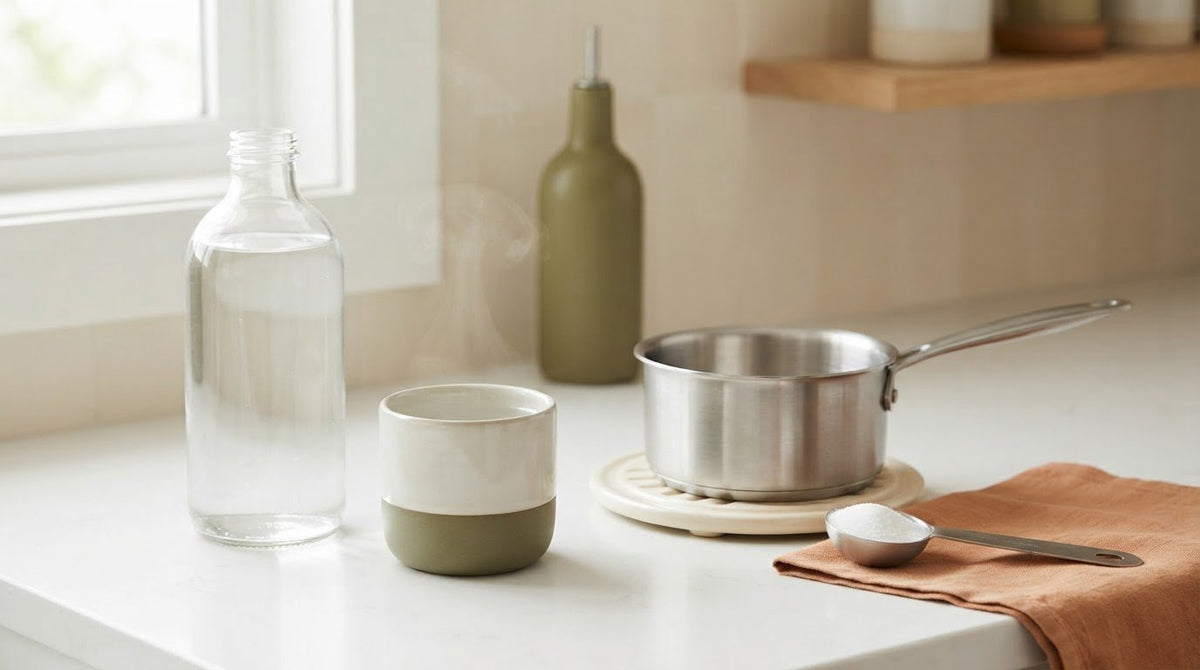
Yes, you can use bottled water for saline solution for nasal rinsing if it’s labeled “distilled” or “sterile.” You can also use tap water that has been boiled and cooled. Choose the water carefully, and measure the salt accurately.
A sealed bottle isn’t necessarily suitable for every nasal rinse. Bottled water types aren’t interchangeable. This guide explains which water to choose, how to boil and store it safely, and how to mix homemade nasal saline using the stated proportions. It also explains when a ready-made saline aftercare spray may suit piercing care, a separate purpose from nasal rinsing.
Key Takeaways
- Choose water suitable for nasal rinsing, and learn when boiling or a properly rated filter matters.
- At elevations above 6,500 feet, the Centers for Disease Control and Prevention says to boil tap water for 3 minutes before sinus or nasal rinsing.
- Measure salt carefully and see how the recipe can be adjusted for comfort.
- Find out how to handle and store a homemade rinse, and when a ready-made saline spray is a better fit for piercing aftercare.
Boiling and storing water safely
- Wash your hands before preparing a nasal rinse. Use soap and warm water, then choose a clean pot and container. This helps prevent contamination after boiling. Keep the container’s inside and lid clean as you prepare the solution.
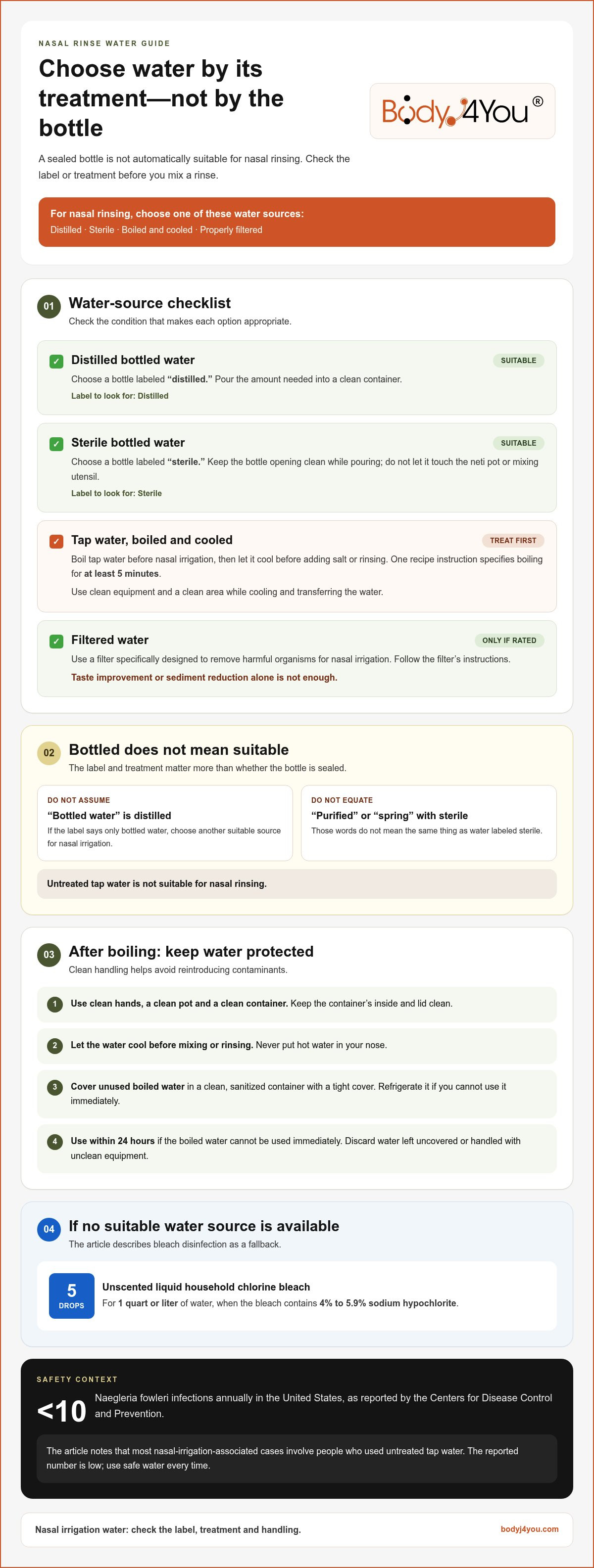
- Bring tap water to a rolling boil before nasal irrigation. If using tap water, bring 1 quart to a rolling boil, then let it cool before adding salt. At elevations above 6,500 feet, the Centers for Disease Control and Prevention says to boil tap water for 3 minutes. Follow the altitude-specific instruction when it applies.
- Let boiled water cool before mixing or rinsing. Set the pot aside in a clean area, and never put hot water in your nose. Once the water has cooled, transfer only what you need to a clean vessel. Avoid dipping used utensils or fingers into it, as they can reintroduce contaminants.
- Cover and store any unused boiled water carefully. Use a clean, sanitized container with a tight cover, and refrigerate it if you can’t use the water immediately. Boiled water for nasal irrigation should be used within 24 hours if it cannot be used immediately. Discard water that has been left uncovered or handled with unclean equipment.
- Keep the safety risk in perspective, but use safe water every time. The Centers for Disease Control and Prevention reports fewer than 10 Naegleria fowleri infections annually in the United States. The number is low, but untreated tap water can still be unsafe for nasal rinsing. Use boiled-and-cooled water, or water labeled distilled or sterile, rather than assuming clear water is safe.
Most cases of Naegleria infection associated with nasal irrigation involve people who used untreated tap water.
If no distilled, sterile, or boiled-and-cooled water is available for nasal rinsing, disinfect water with unscented liquid household chlorine bleach. To disinfect 1 quart or liter of water for nasal rinsing with household bleach containing 4% to 5.9% sodium hypochlorite, use 5 drops.
Distilled, sterile, boiled, and filtered water
For nasal rinsing, use water labeled distilled or sterile, or tap water that has been boiled and cooled. The label or treatment matters more than whether the bottle is sealed.
-
Distilled Bottled Water
For a nasal rinse, choose store-bought water labeled “distilled.” Ordinary bottled water isn’t distilled just because it’s sealed. Check the label before opening the bottle, then pour the amount you need into a clean container. If it says only “bottled water,” choose a different suitable water source for nasal irrigation.
-
Sterile Bottled Water
Choose store-bought water labeled “sterile” for a nasal rinse. Don’t assume that “purified” or “spring” means the same thing. Keep the cap and bottle opening clean while pouring, and don’t let the opening touch your neti pot or mixing utensil. Use the sterile water as directed for the rinse.
-
Boiled and Cooled Tap Water
For nasal irrigation, use tap water only after boiling and cooling it. Boil water for at least five minutes before using it in a neti-pot mixture. Let it cool before adding salt, and handle it with clean equipment. This is an alternative when distilled or sterile bottled water isn’t available. Untreated tap water isn’t suitable.
-
Filtered Water
Choose a filter specifically designed to remove harmful organisms before using filtered water for nasal irrigation. A filter that improves taste or reduces sediment isn’t automatically suitable for this purpose. The Centers for Disease Control and Prevention provides guidance about filters that are safe for nasal irrigation. Follow the filter’s instructions, and use another appropriate water option if your filter doesn’t meet that standard.
Homemade saline solution proportions
Measure the water and salt before mixing. Nasal saline is made by combining water and sodium chloride, and the proportions determine the solution.
- Choose a suitable volume of water. Start with one or two cups of distilled water, or tap water that has been boiled and cooled. Use a clean measuring cup so the amount of salt matches the volume of water. Measure rather than estimating by eye.
- Measure the non-iodized salt level, not heaped. For a one- or two-cup homemade recipe, the stated proportion is ½ to ¼ teaspoon of non-iodized salt. Measure carefully rather than adding a pinch, and don’t substitute iodized salt.
- Use the quart recipe as a separate proportion. The University of Mississippi Medical Center recommends 2 level teaspoons of non-iodized salt per quart of distilled water. It says the amount may be increased to 3 level teaspoons if tolerated better. Don’t combine this quart measure with the one- or two-cup recipe; choose one proportion and match its water volume.
- Add baking soda only as an optional adjustment. The University of Mississippi Medical Center says 1 level teaspoon of baking soda may be added to homemade saline to make it less irritating. Measure it level, and don’t confuse this optional addition with the salt measurement. The base solution remains water and salt.
- Stir until the measured ingredients dissolve. Use a clean utensil, then use the solution for nasal irrigation as prepared. Plain water can irritate nasal passages, which is why the recipe uses a saline mixture. Don’t add extra salt or baking soda by guesswork, as this changes the proportions.
Can homemade saline solution be stored, and for how long?
- Prepare only what you plan to use. Mix nasal saline with suitable water and clean utensils, then use it promptly. Smaller batches leave less solution to handle or store. Keep nasal irrigation separate from piercing aftercare: a rinse recipe isn’t a substitute for a product intended for piercing care.
- Keep boiled water covered before mixing. If boiled water cannot be used immediately, store it safely and use it as soon as practical. Place it in a clean, sanitized container with a tight cover, and refrigerate it. Pour the amount needed into a clean measuring vessel rather than dipping utensils into the stored water.
- Protect the solution from recontamination. Wash your hands before mixing and use a clean container each time. Don’t pour unused saline back into the storage vessel. Fingers, used utensils, or a nasal irrigation device can introduce contaminants into the remaining solution.
- Discard leftovers instead of topping them up. Don’t add fresh water or salt to yesterday’s mixture to extend its use. This changes the measured proportions and doesn’t restore cleanliness. Make a fresh batch if the container was left uncovered, touched by used equipment, or handled in an uncertain way.
- Choose care products for their intended use. Homemade nasal saline is mixed for nasal irrigation, while piercing aftercare calls for a product designed for that purpose. For piercing care, explore Saline Piercing Aftercare Spray rather than applying a nasal-rinse recipe to a piercing.
The stated homemade nasal irrigation mixture is one or two cups of distilled or boiled water and ½ to ¼ teaspoon of non-iodized salt. The storage guidance applies to boiled water: it can be kept in a clean container for seven days or more if refrigerated. Store unused boiled water for sinus or nasal rinsing in clean, sanitized containers with tight covers. This guidance is for the water, not a stated storage period for mixed saline.
The University of Mississippi Medical Center recommends nasal irrigation twice a day for as long as directed. This is guidance on use, while the storage advice concerns boiled water. Neither statement specifies how long to store mixed saline.
BodyJ4You: Acrylic Ear Stretching Kit
BodyJ4You’s Acrylic Ear Stretching Kit is for readers exploring ear stretching, not nasal rinsing. Homemade nasal saline and ear-stretching products serve different purposes, so keep their care routines separate. For piercing aftercare, BodyJ4You also offers Saline Piercing Aftercare Spray, a product designed for that distinct need. If you’re considering stretching, the kit is a relevant next step; if you’re preparing a nasal rinse, follow the water and measurement guidance above instead.
Choose the product that matches your goal: stretching, piercing aftercare, or nasal irrigation. Visit bodyj4you.com to explore BodyJ4You’s offerings.
Choose the right care for your next step
Your next step depends on what you’re caring for. Nasal irrigation and piercing aftercare are separate routines, so use products and instructions intended for each purpose. If you’re asking whether you can use bottled water for a saline solution, first identify its intended use, then choose the appropriate supplies.
For piercing aftercare, BodyJ4You offers Saline Piercing Aftercare Spray. If you’re exploring ear stretching, its Acrylic Ear Stretching Kit and Surgical Steel Taper and Plug Kit relate to that different goal. Keeping those needs separate helps you choose with clarity, rather than treating every saline or piercing product as interchangeable.
For questions about BodyJ4You’s offerings, contact BodyJ4You with your questions. Take the next step that fits your routine and feel confident in your care choices.
Frequently Asked Questions
Can bottled water be used to make saline solution for nasal rinsing?
Yes, you can use bottled water for saline solution for nasal rinsing if the label says “distilled” or “sterile.” The label matters, not just the sealed cap. If it’s ordinary drinking water without either label, choose another suitable source for nasal irrigation, such as tap water that has been boiled and cooled.
Is distilled or sterile water safer than bottled water for saline solution?
Distilled or sterile bottled water is appropriate for nasal rinsing; ordinary bottled drinking water isn’t interchangeable with those labeled options. Whether you can use bottled water for saline solution depends on the label and intended use. For example, choose a bottle marked “distilled” rather than assuming spring or purified drinking water is equivalent.
What is the correct salt-to-water ratio for homemade saline solution?
One recipe uses one or two cups of distilled or boiled water with ¼ to ½ teaspoon of non-iodized salt. Another uses 2 level teaspoons per quart of distilled water, with the amount adjustable to 3 level teaspoons if better tolerated. These are separate proportions, so match the salt measurement to its corresponding water volume.
Can bottled water be used for wound cleaning or rinsing eyes?
Don’t assume bottled drinking water is suitable for cleaning a wound or rinsing eyes. Water choices for nasal irrigation don’t establish suitability for these different uses. Choose sterile saline specifically intended for the purpose and follow its label. For piercing aftercare, BodyJ4You’s Saline Piercing Aftercare Spray is for external use only; avoid eye contact and don’t use it on open wounds.


