

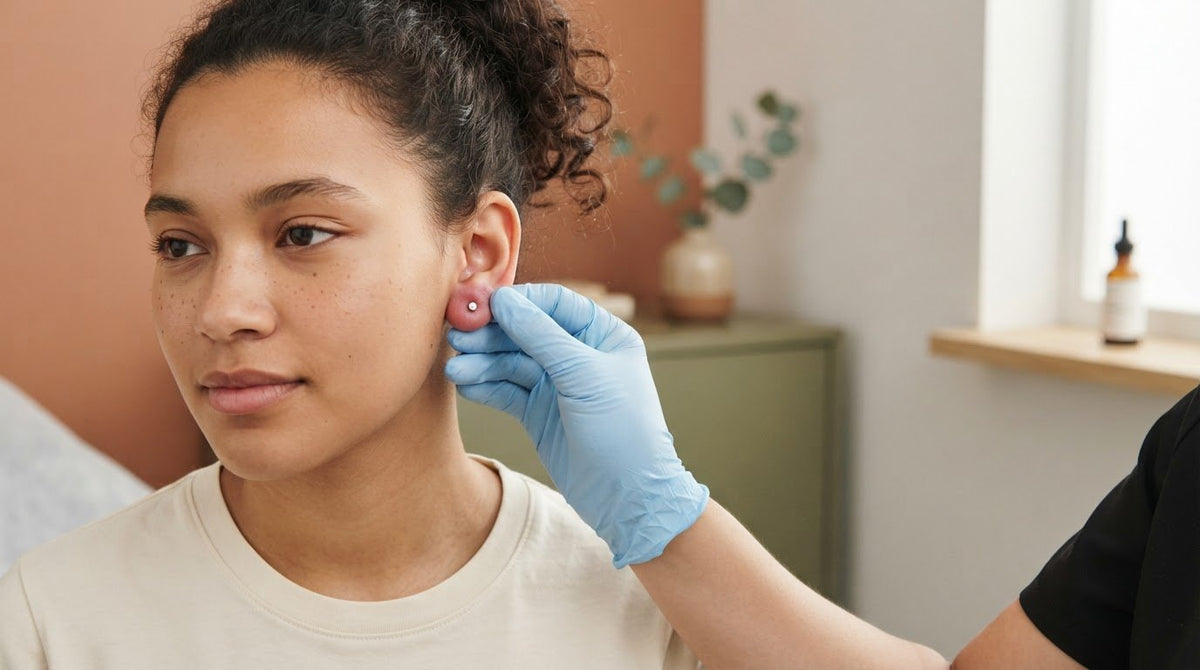
A piercing that looks irritated may need medical care, not just extra cleaning. Knowing when to see a doctor for a piercing issue means watching for worsening redness, swelling or pain, pus, fever or chills; signs of infection in ear cartilage deserve prompt medical attention. Seek urgent care for severe symptoms, redness spreading beyond the piercing, red streaks, or an earring embedded in the ear.
A little crust around a healing piercing can be normal, but thick, foul-smelling discharge or symptoms that keep worsening are not. It can be difficult to tell infection from irritation or an allergic reaction by appearance alone, and waiting too long may allow a problem to progress.
This guide explains what an infected ear piercing can look and feel like, which warning signs need immediate care, and when persistent symptoms warrant a doctor’s assessment. You’ll also learn what to avoid while deciding what to do, so you can care for the piercing without delaying help when it’s needed.
Key Takeaways
- Learn to distinguish mild healing signs from possible infection, including changes in pain, swelling, redness, and discharge.
- Recognize warning signs that call for immediate medical care, especially when symptoms affect ear cartilage or spread beyond the piercing.
- Know when worsening symptoms or a lack of improvement mean it’s time to contact a healthcare provider.
- Understand why leftover antibiotics and irritating products can be poor choices, and what treatment a doctor may consider.
What is an infected ear piercing?
An infected ear piercing involves inflamed tissue, often with worsening pain, redness, swelling, or pus. In the United States, insurance coverage for a doctor’s visit depends on your policy and how the visit is billed. Don’t remove jewelry yourself: the Association of Professional Piercers advises leaving appropriately sized, styled, and made jewelry or a retainer in place to allow drainage, since removal may contribute to an abscess.
Recognizing Infection Signs
An infection can cause increasing tenderness, redness, swelling, and discharge around the piercing. A small amount of crust at the opening may occur during healing, but copious, foul-smelling, or green discharge is more concerning. Fever or chills can also signal infection. A clinician can assess these changes before they progress or cause more tissue damage.
Infection Versus Allergic Reaction
An allergic reaction often appears as an itchy red rash around the jewelry, while infection more often causes pain, swelling, and discharge. A rash may extend several inches beyond the piercing and suggest contact dermatitis or sensitivity to the jewelry. Persistent itching or a spreading rash deserves assessment, rather than being treated as proof of infection.
Spread and Cartilage Complications
Redness or swelling spreading beyond the piercing, thick foul-smelling discharge, or red streaks can signal a more serious infection. Cartilage piercings in the upper ear carry greater infection risk than earlobe piercings. Cartilage has fewer blood vessels, making it harder for antibiotics to reach an infection. Untreated infection may damage cartilage, so signs of cartilage infection need medical attention.
Tenderness Behind the Ear
Ear pain and swelling with marked tenderness over the bone behind the ear can indicate a serious infection. This is different from mild soreness confined to the piercing. Infection in this area may need intravenous antibiotics and sometimes surgery. Seek emergency care for pronounced bone tenderness with ear symptoms, especially if swelling or pain is worsening.
When piercing symptoms warrant immediate medical attention
Some piercing symptoms need same-day assessment, while severe signs call for emergency care. Don’t wait to see whether cleaning or home care works when symptoms are escalating.
Symptoms Requiring Urgent Care
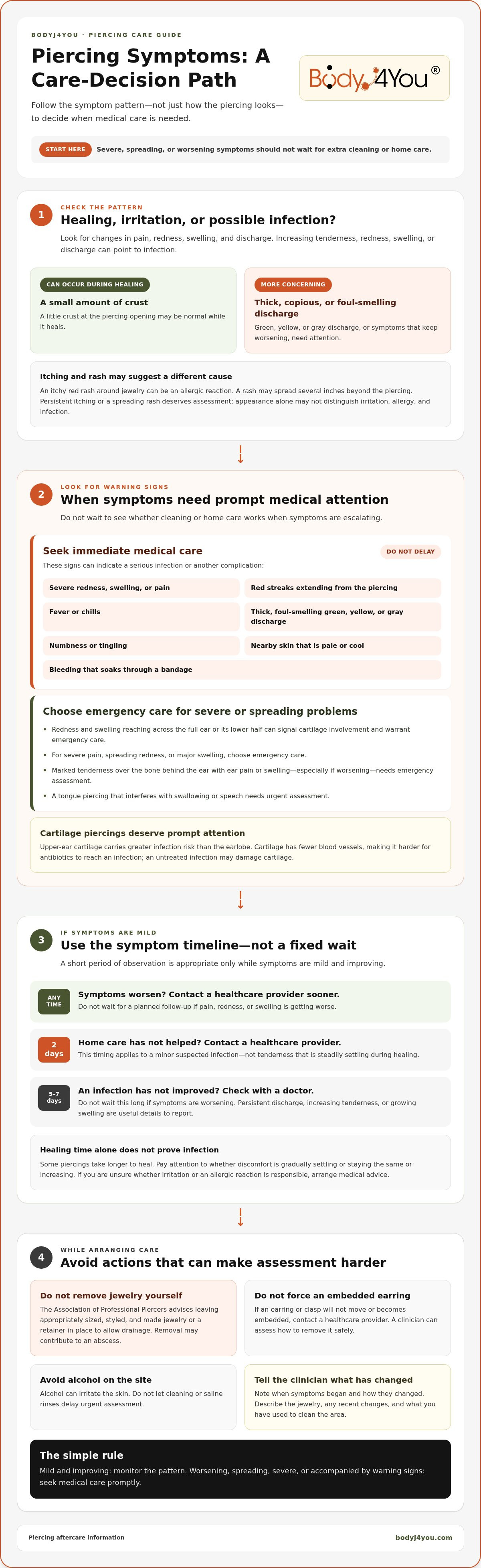
Seek immediate medical care for severe redness, swelling, or pain; thick, foul-smelling green, yellow, or gray discharge; or red streaks extending from the piercing. Fever, chills, numbness, tingling, pale or cool nearby skin, and bleeding that soaks through a bandage also need prompt attention. These signs may indicate a serious piercing infection or another complication requiring professional assessment.
Redness and swelling reaching across the full ear or its lower half can signal cartilage involvement and warrant emergency care. A tongue piercing that interferes with swallowing or speech also needs urgent assessment. If you take steroids or have a chronic illness or another health condition, seek immediate medical care for a piercing problem instead of relying on home cleaning.
Embedded, Torn, or Bleeding Piercings
Contact a healthcare provider if an earring or clasp won’t move or becomes embedded in the ear. Don’t force it through swollen tissue; a clinician can assess how to remove it safely. A tear, persistent bleeding, or bleeding that soaks through a bandage calls for prompt medical care, especially if the surrounding skin feels numb or looks pale or cool.
A doctor or urgent care can generally assess a small infection or local irritation without a trip to the emergency room. For severe pain, spreading redness, or major swelling, choose emergency care. Avoid alcohol on the site because it can irritate the skin, and don’t let cleaning or saline rinses delay urgent assessment.
For routine cleaning after urgent symptoms have been addressed, a saline piercing aftercare spray may fit into your care routine. It isn’t a substitute for medical evaluation or treatment of an infection.
When to contact a doctor if symptoms worsen or persist
For a minor piercing infection, contact a healthcare provider if home care hasn’t helped within 2 days. Seek advice sooner if pain, redness, or swelling is getting worse. Knowing when to see a doctor for a piercing issue starts with the direction symptoms are moving: easing symptoms differ from worsening ones. This timing applies to suspected infection, not tenderness that’s steadily settling during healing.
If symptoms remain mild but haven’t improved after a few days, arrange medical advice. Check with a doctor if an infection hasn’t improved in 5 to 7 days, and don’t wait that long if it’s worsening. Persistent discharge, increasing tenderness, or swelling that keeps growing are useful details to report. Note when symptoms began and how they have changed.
Some body piercings take longer to heal than others, so healing time alone doesn’t prove infection. Pay attention to the symptom pattern: ongoing or increasing discomfort differs from tenderness that gradually settles. If you’re unsure whether irritation or an allergic reaction is responsible, make an appointment with a primary care provider. Worsening symptoms or no improvement are clear reasons for when to see a doctor for a piercing issue.
A minor infection that isn’t improving within 2 days warrants medical attention; worsening symptoms call for earlier contact. A short period of observation is appropriate only while symptoms are mild and improving, not when they’re severe or spreading. If symptoms change, contact a healthcare provider rather than waiting for a previously planned follow-up.
A clinician can assess the piercing site, symptom pattern, and possible complications, then determine whether treatment is needed. Describe the jewelry, any recent changes, and what you’ve used to clean the area. If the piercing is in cartilage, mention its location because cartilage infections can be harder to treat. These details help the healthcare provider evaluate the problem and recommend appropriate care.
Antibiotics and ointment
Doctors assess an infected piercing by examining the site and reviewing symptoms such as redness, swelling, pain, and discharge. The piercing’s location and the severity of the condition help guide treatment. A cartilage infection, for example, can be harder to treat than an earlobe infection, so describe where the piercing is and how symptoms have changed.
Treatment may include topical or oral antibiotics, depending on the piercing site and symptoms. A doctor may also need to remove jewelry if the infection is severe. Don’t remove it yourself before receiving medical advice, since removal during an infection may contribute to an abscess. Tell the clinician about any medication allergies and treatments you’ve already applied.
Use prescribed antibiotics exactly as directed, and follow the treatment instructions provided. Don’t take leftover antibiotics: a doctor needs to choose the appropriate medicine for the infection. The wrong antibiotic may not treat the cause, and using medication without clinical guidance can delay appropriate care. If symptoms worsen during treatment, contact the prescriber.
Avoid applying alcohol, hydrogen peroxide, or antibiotic ointment to the piercing unless a clinician specifically directs you to do so. These products can further irritate the skin and slow healing. For gentle cleaning, use sterile saline rather than harsh chemicals, and keep your hands clean before touching the area. Stop using products that cause burning or worsen redness.
How do doctors diagnose and treat an infected piercing? They examine the site and consider its location and symptoms, then may prescribe topical or oral antibiotics. Severe infections can require jewelry removal, so leave that decision to the treating clinician.
For routine piercing aftercare, shop saline piercing aftercare spray. Saline aftercare supports cleaning, but it doesn’t replace clinical assessment or prescribed antibiotics for an infection.
BodyJ4You: Acrylic Ear Stretching Kit
BodyJ4You’s Acrylic Ear Stretching Kit is an option for readers exploring ear stretching, not a treatment for an infected piercing. Wait until the piercing is fully healed before considering stretching; pain, swelling, or discharge calls for medical care, not a stretching kit.
Once you’re ready to explore jewelry and stretching options, BodyJ4You also offers a Surgical Steel Taper and Plug Kit. For routine aftercare, its Saline Piercing Aftercare Spray is another relevant option. These products support different needs, so choose according to whether you’re exploring stretching or caring for a piercing.
Visit BodyJ4You online to explore the ear-stretching options.
Make your next piercing decision with care
After a piercing problem, give your body time to settle before changing jewelry or considering stretching. Keep medical care separate from style choices: jewelry and routine aftercare products aren’t substitutes for diagnosis or treatment. If you’re still deciding when to see a doctor for a piercing issue, consider whether symptoms are worsening, lingering, or affecting your wellbeing, and seek medical advice accordingly.
When you’re ready to explore your next jewelry or aftercare choice, BodyJ4You offers an Acrylic Ear Stretching Kit, a Surgical Steel Taper and Plug Kit, and Saline Piercing Aftercare Spray. Choose products for the need you have now, and let your healing take priority.
Contact BodyJ4You with your questions as you consider your next step. Move forward thoughtfully, with your health first and your self-expression close behind.
Frequently Asked Questions
How can you care for yourself at home?
For a mild piercing concern, keep the area clean and avoid irritating it. The Association of Professional Piercers suggests rinsing body piercings with sterile wound-wash saline 1-3 times a day. Don’t twist the jewelry or apply alcohol, hydrogen peroxide, or antibiotic ointment, which can irritate skin. If symptoms worsen or don’t improve, contact a healthcare provider instead of relying on home care.
What questions should I ask my healthcare provider?
Ask whether your symptoms look more like infection, irritation, or an allergic reaction, and what treatment fits the piercing site. Clarify whether to leave the jewelry in place, what changes should prompt urgent reassessment, and how to use any prescribed medicine. Mention when symptoms began, whether they’re changing, and any products you’ve applied. These details help your provider make a more informed assessment.
When should you call for help?
Call a healthcare provider if the piercing is getting worse, hasn’t improved with home care, or you’re unsure whether symptoms point to infection or allergy. Don’t wait for a routine appointment if you develop fever, chills, or rapidly increasing swelling. An embedded earring also needs professional assessment. Share the piercing location, symptom changes, and any chronic illness or steroid use when you call.
What signs of a piercing infection require urgent medical care?
Seek urgent assessment for severe pain, swelling, or redness; red streaks; or a large amount of thick, foul-smelling discharge. Fever and chills are also warning signs. Numbness, tingling, pale or cool skin near the piercing, or bleeding that soaks through a bandage need immediate attention. These symptoms matter even if the piercing looked normal earlier that day.
When should you go to the emergency room for a piercing problem?
Go to emergency care if redness or swelling extends across the full ear or its lower half, since cartilage may be involved. Emergency evaluation is also appropriate for severe, spreading infection or marked tenderness over the bone behind the ear with pain and swelling. If symptoms are mild and localized, a doctor or urgent care can generally assess them instead.
What are symptoms of a serious piercing infection, such as spreading redness or fever?
Serious infection can involve redness spreading beyond the piercing, fever, chills, red streaks, severe swelling, or thick, foul-smelling discharge. An abscess may appear as a pus-filled blister. Cartilage infection deserves particular attention because it can be harder to treat and may damage the ear. If symptoms are spreading or accompanied by fever, seek prompt medical assessment rather than continuing home care.


