

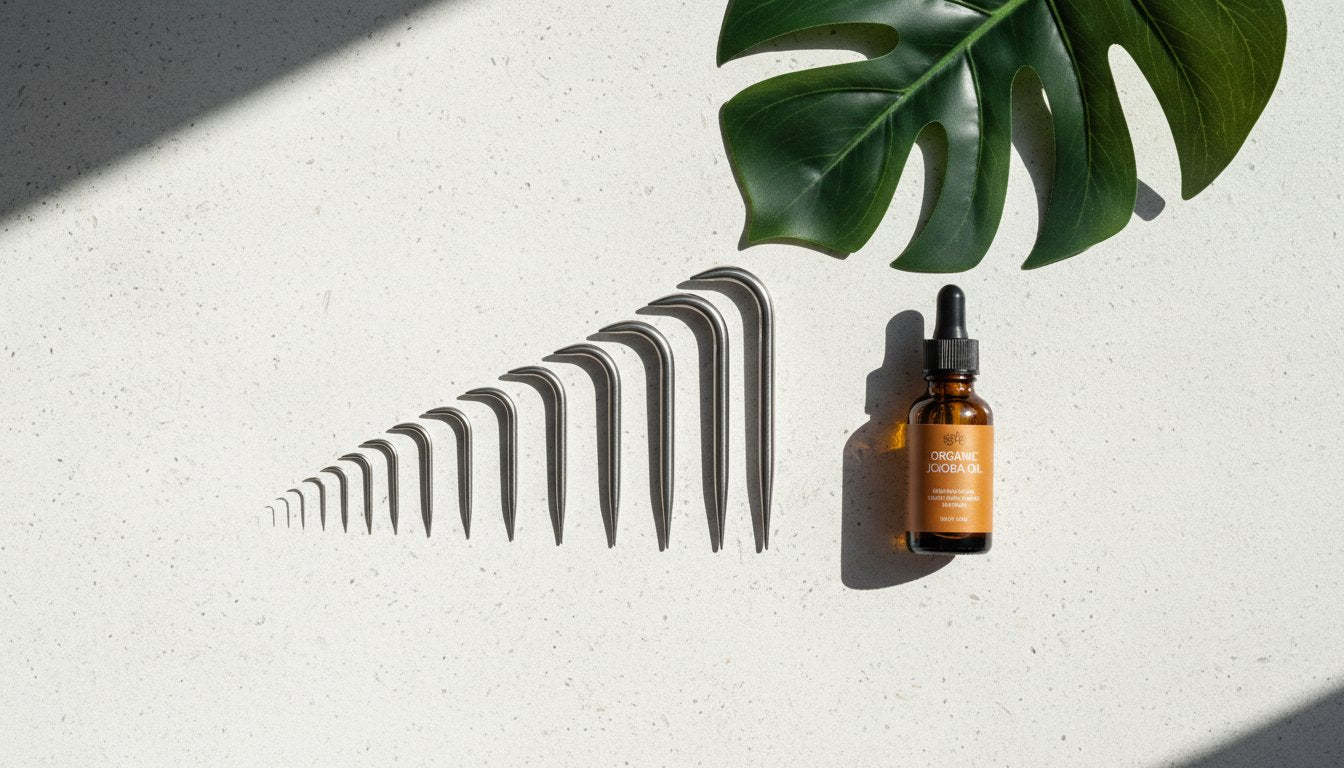
Septum stretching is a precision journey of biological patience, not a race to the next gauge. You've likely felt that mix of excitement and anxiety, wondering if your next jump will lead to a painful blowout or a stubborn irritation bump. Since 31% of people report complications during the healing process, your concern about hitting hard cartilage or causing permanent damage is completely valid. Choosing the right septum stretching kit is the first step in ensuring your transition is healthy, safe, and effective.
You don't have to guess your way through gauge sizes or settle for mystery metals. We'll help you master the art of the stretch by identifying high-quality materials that meet the updated February 2026 ASTM F136 standards for purity. This guide explains the specific roles of tapers versus pinchers and how to use jojoba oil to maintain skin elasticity. We're detailing the essential tools, professional sizing techniques, and aftercare protocols you need for a smooth, pain-free stretch.
Key Takeaways
- Identify your unique anatomy and the "sweet spot" to ensure every stretch is comfortable and avoids sensitive cartilage.
- Choose a high-quality septum stretching kit made from 316L surgical steel to provide a sterile, weighted, and hypoallergenic experience.
- Master the mechanical differences between tapers and pinchers to achieve a seamless jewelry transition without causing skin trauma.
- Implement a professional-grade protocol using natural lubricants like jojoba or castor oil to reduce friction and support skin health.
- Level up your body modification journey with expert guidance that prioritizes long-term wellness and prevents common irritation bumps.
Navigating the Septum Stretching Journey: Anatomy and Expectations
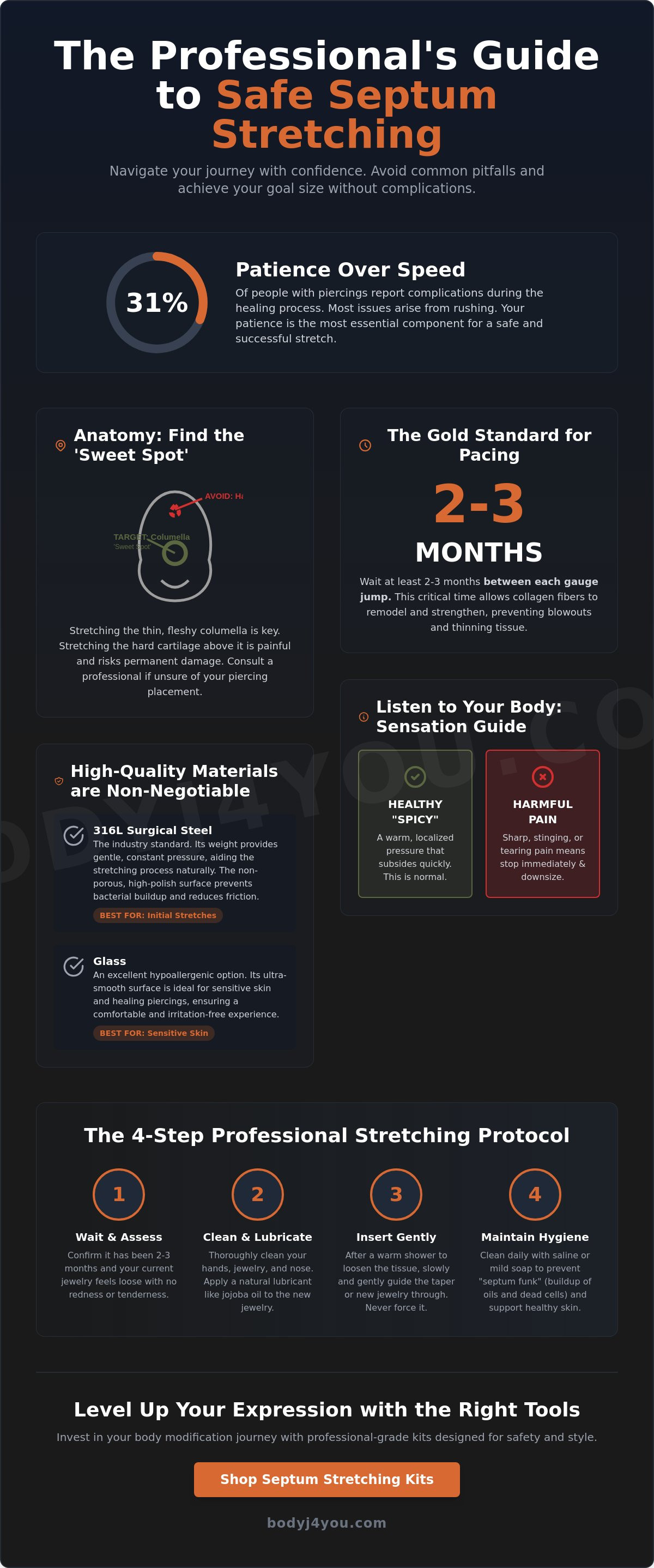
Septum stretching is a biological commitment that requires a deep respect for your body's limits. Unlike earlobes, which are highly elastic, the tissue in your nose is surrounded by dense structures. Success depends entirely on your ability to listen to your body rather than following a calendar. Statistics show that 31% of people with piercings experience complications during the healing process. Most of these issues arise when individuals prioritize speed over safety. Your septum stretching kit is a set of tools, but your patience is the most essential component of the process.
Establishing a realistic timeline is the foundation of a healthy stretch. The gold standard for septum modification is waiting at least 2 to 3 months between each gauge jump. This duration allows the collagen fibers in your skin to remodel and strengthen. If you attempt to level up too quickly, you risk thinning the tissue or causing a blowout. A ready piercing should feel loose, with the jewelry moving freely and showing no signs of redness, crusting, or tenderness. It's a journey of precision, care, and steady progress.
Finding the 'Sweet Spot' for a Safe Stretch
Your septum anatomy consists of two main parts: the hard alar cartilage and the thin, fleshy area known as the "sweet spot." This columella is the target for any safe Stretching (body piercing). If your initial piercing was placed too high and pierced the hard cartilage, stretching will be significantly more painful and carries a higher risk of permanent damage. You can locate this area by pinching the center of your nose; it feels like a thin bridge of skin between the tip and the harder structure behind it. If you're unsure about your placement, consulting a professional piercer before using your septum stretching kit can prevent unnecessary trauma to your nasal structure.
Managing Sensation and Healing Timelines
Understanding the difference between healthy pressure and harmful pain is vital. A safe stretch often produces a "spicy" sensation, which is a warm, localized pressure that subsides quickly. If you feel a sharp, stinging pain or a tearing sensation, your tissue isn't ready, and you should downsize immediately. Rushed stretching leads to blowouts, which are unsightly rings of scar tissue that can permanently complicate your ability to wear jewelry.
The distinct odor known as "septum funk" is simply a buildup of natural skin oils and dead cells that you can easily manage by cleaning your jewelry daily with saline or mild soap. Maintaining a high standard of hygiene ensures your skin stays healthy and resilient. By prioritizing the integrity of your skin over fleeting trends, you build a foundation for a successful and expressive modification journey.
Selecting the Right Materials: Steel, Glass, and Acrylic Kits
Material choice is the invisible architecture of a successful stretch. It isn't just about the look; it's about how the material interacts with your internal tissue. A high-quality septum stretching kit must balance weight with biocompatibility to prevent the common pitfalls of irritation and rejection. Choosing the right material for the right stage of your journey ensures your skin remains resilient and healthy.
High-quality materials reduce the risk of the "septum funk" mentioned earlier. Non-porous surfaces ensure that dead skin cells and sebum don't become trapped against the healing fistula. This clinical approach to jewelry selection is what separates a professional-grade experience from a risky DIY project. By prioritizing purity, you support your body’s natural healing process during every transition.
Surgical Steel: The Industry Standard for Durability
316L surgical steel is favored for its durability and mirror-like finish. This smoothness is critical because any microscopic scratches on the jewelry can tear the delicate skin inside your nose. The weight of steel is a hidden benefit. It provides a gentle, constant downward pressure that encourages the skin to expand naturally without the need for aggressive force. By choosing kits crafted with care and "Born in the USA," you're investing in materials that meet strict safety standards. You can level up your collection with steel options that prioritize both strength and style.
- Non-porous surfaces prevent the buildup of bacteria and biofilm.
- Weighted properties facilitate a more natural stretching process.
- High-polish finishes minimize friction during the initial jewelry insertion.
Glass and Acrylic: Weight and Hypoallergenic Options
Glass is a favorite among professionals because it is incredibly smooth and completely non-reactive. It won't trigger nickel allergies, which affect a significant portion of the population. If you have sensitive skin, glass pinchers provide the most comfortable entry point for a new gauge. Regardless of the material, following the Suggested Aftercare for Body Piercings ensures that your new stretch heals without the formation of unsightly piercing bumps.
Acrylic kits are an excellent choice for those who want a lightweight feel, especially at larger gauges where steel might feel too heavy for all-day wear. However, you must understand the limitations of plastic. Acrylic cannot be autoclaved and is slightly porous. Use it only as "jewelry for the day" once your septum is fully stabilized. Never use acrylic to perform the actual stretch with your septum stretching kit, as the friction can cause micro-tears that the porous material will then irritate.
To maintain your jewelry, use saline-based cleaners or mild, organic soaps. Steel and glass are resilient, but acrylic can degrade if it comes into contact with harsh chemicals or high heat. Consistency in your cleaning routine is the simplest way to protect your investment and your long-term health.
Comparing Kit Styles: Tapers, Pinchers, and Circular Barbells
Every septum stretching kit serves as a bridge between your current look and your aesthetic goal. The tools you select determine how smoothly you cross that bridge. While some kits focus on quantity, the quality of the tool's geometry is what prevents irritation. Understanding the mechanics of each style ensures you don't just reach the next size, but you do so with the health of your skin intact. We've seen how the right equipment transforms a stressful process into a confident step toward self-expression.
The transition between gauges is a delicate moment for your nasal tissue. Using a tool that minimizes friction and maximizes control is the most effective way to avoid micro-tears. Whether you prefer the technical precision of a taper or the gradual curve of a pincher, your choice should reflect your comfort level and the specific needs of your anatomy. Each tool in a professional-grade kit is crafted by experts to ensure your journey is healthy, safe, and effective.
Concave Tapers: The Secret to Smooth Transitions
Standard tapers have a flat end, but concave tapers feature a hollowed-out back. This design is the secret to a seamless follow-through. You place the end of your new jewelry directly into the hollow of the taper. As the taper slides through the sweet spot, the jewelry follows immediately. This eliminates the "lost" piercing moment where you're blindly searching for the exit hole with a blunt piece of steel. It reduces friction and minimizes the time the fistula is left without support. Remember that tapers are strictly tools for the moment of stretching. They aren't meant for long-term wear because their uneven weight distribution can cause the piercing to heal at an awkward angle.
Buffalo Pinchers: Stretching and Style in One
Buffalo pinchers are unique because they act as both the stretching tool and the jewelry. Their gradual curve allows for a method similar to "dead stretching," where the shape slowly expands the tissue as it's inserted. You can secure them with O-rings to prevent sliding, making them a stable choice for daily wear. This dual-purpose nature makes them a favorite for those who want to level up their style immediately after a stretch. If you're looking for a more traditional aesthetic once you've reached your target size, you might explore captive bead rings as a versatile and secure alternative.
Circular barbells, often called horseshoes, remain the most popular "goal" jewelry for septums. They offer the ability to flip the jewelry up into the nostrils for a hidden look when necessary. This versatility makes them a staple in any high-quality septum stretching kit. By choosing jewelry that aligns with your lifestyle, you ensure that your modification remains a source of pride and comfort for years to come.
The Gold Standard Stretching Protocol: Step-by-Step Guidance
A successful stretch is a clinical procedure. It requires a sterile environment and a patient mindset. Before you open your septum stretching kit, ensure your hands and workspace are thoroughly cleaned. Disinfect your jewelry with a specialized piercing cleanser or mild soap. This initial hygiene step is your first line of defense against the infections that affect 10% to 20% of all body piercings. By establishing a clean field, you protect the integrity of your skin and ensure a predictable healing process.
Patience is your most effective tool. If you've followed the gold standard timeline of 2 to 3 months between stretches, your tissue should be ready. However, every body heals at a different pace. If you encounter significant resistance, it's a sign that your collagen fibers haven't fully remodeled. We advocate for a "listen-first" approach; your body will tell you when it's ready to level up. Forcing a stretch that isn't ready is the primary cause of blowouts and long-term complications.
Preparation: Lubrication and Sterile Environments
Relaxing the nasal tissue is essential for a low-friction transition. Many enthusiasts use the "hot shower" trick, where the steam and warmth increase blood flow and skin elasticity. Once the tissue is relaxed, check for any redness or tenderness. If your piercing feels tight or irritated, postpone the stretch. Your skin must be in peak condition to handle the expansion without trauma.
Apply a generous layer of jojoba oil to both the taper and the piercing site. This natural lubricant mimics your skin's sebum, allowing the tool to glide through the sweet spot without sticking. Don't use petroleum-based products, as they can trap bacteria and clog pores. If you feel sharp pain instead of a warm pressure, stop immediately. A healthy stretch should feel like a tight squeeze, never a tear.
Aftercare: Preventing Bumps and Managing Sensitivity
Your work doesn't end once the jewelry is in place. Integrating aftercare immediately is the only way to stabilize the new size. Use a saline piercing aftercare spray twice daily to flush out debris and keep the area hydrated. Avoid touching or twisting the new jewelry. This "hands-off" policy allows the internal fistula to heal without unnecessary physical stress.
Keep a close watch for any localized swelling. If you notice a small, raised piercing bump, start warm sea salt soaks to draw out impurities and soothe the skin. These bumps are often a sign of physical irritation or material sensitivity. Addressing them early prevents them from becoming permanent. You can shop our professional aftercare collection to find the exact tools needed to protect your investment and ensure a healthy, safe, and effective heal.
Level Up Your Expression with BodyJ4You Septum Kits
Self-expression is a journey that requires a reliable partner. At BodyJ4You, we've spent over twenty years serving as a supportive specialist for the body modification community. We understand that stretching a piercing involves physical vulnerability; therefore, we position ourselves as a protective force for your skin health. Our expertise isn't just about providing jewelry; it's about supporting your transition with professional authority and nurturing care. When you choose a septum stretching kit from our collection, you're investing in a legacy of safety and style.
Every product we offer is designed to be healthy, safe, and effective. We've seen the industry evolve, and we've remained steadfast in our commitment to clinical precision. This experience allows us to act as a wise guardian, helping you avoid the common pitfalls of DIY stretching. We don't just sell tools; we provide the roadmap for a successful transformation that respects your anatomy and your aesthetic goals.
Complete Kits for a Seamless Transformation
Our comprehensive sets are designed to take the guesswork out of your progress. We offer 316L surgical steel sets that provide the necessary weight and sterile surface for a successful stretch. These kits often include aftercare samples, ensuring you have the right topical support from the very first day. For those with long-term goals, our bulk kits covering 14G to 00G allow you to plan your entire journey in one curated package. If you're just starting and need to understand the basics of your initial placement, our guide to the septum piercing provides the foundational knowledge you need before you begin sizing up.
- Professional-grade 316L surgical steel for a smooth, non-porous finish.
- Step-by-step sizing increments to prevent tissue trauma.
- Integrated aftercare components to support the healing fistula.
The BodyJ4You Quality Guarantee
Quality control is the heartbeat of our brand. Our Miami-based team meticulously oversees every septum stretching kit to ensure it meets our strict clinical standards. We prioritize hypoallergenic materials because we know that 15% of men and an even higher percentage of women suffer from nickel sensitivities. By maintaining high standards for purity and biocompatibility, we ensure your skin stays protected throughout its expansion.
Level up your look with the confidence that comes from expert craftsmanship. Our brand philosophy is summarized in nine simple words: Crafted by Experts. Trusted by Thousands. Rooted in Care. This tripartite motto is our promise to you. We're proud of our heritage and our local manufacturing standards, which translate to a personality that is reliable, transparent, and deeply knowledgeable. Your journey toward self-expression is unique, and we're here to ensure every step is a healthy one.
Master the Art of the Safe Stretch
Your journey toward a larger gauge is a blend of biological patience and technical precision. By prioritizing the "sweet spot" and selecting a high-quality septum stretching kit, you ensure that your self-expression never comes at the cost of your health. Remember that waiting the full 2 to 3 months between transitions is the most effective way to avoid permanent scarring and blowouts. This disciplined approach allows your tissue to remain resilient and ready for the next level of your modification journey.
BodyJ4You supports your progress with over 20 years of industry experience and a steadfast commitment to "Born in the USA" quality control. We provide the professional tools you need for a healthy heal, including USDA Certified organic aftercare oils that nourish and protect your skin during every expansion. It's time to transform your look with the support of a specialist who understands the delicate balance between beauty and biology. Level up your look with a professional BodyJ4You Septum Stretching Kit and embrace your new aesthetic with confidence and care.
Frequently Asked Questions
Is septum stretching more painful than ear stretching?
Septum stretching generally feels more intense than ear stretching due to the density of the nasal tissue. While earlobes are highly elastic, the nose contains more nerve endings and is closer to cartilage structures. You should expect a "spicy" pressure or warm sensation during the transition. However, sharp or radiating pain is a clear signal that you're moving too quickly or hitting the hard cartilage structure.
How long should I wait between septum stretches?
You should wait a minimum of 2 to 3 months between each gauge increment. This timeline allows the internal fistula to stabilize and the collagen fibers to remodel. Rushing this process is the primary cause of blowouts and permanent tissue thinning. If your jewelry doesn't slide in with minimal resistance after 12 weeks, your body simply needs more time to adjust naturally.
Can I hide my stretched septum piercing for work?
Yes, you can easily conceal a stretched septum by using a circular barbell or a retainer. These pieces of jewelry can be "flipped up" into the nostrils, making the piercing invisible to others. This versatility is why many choose a septum stretching kit that includes horseshoes, allowing for a professional appearance without sacrificing your progress or causing irritation to the healing tissue.
What is the "sweet spot" and how do I know if I have one?
The "sweet spot" is the thin, fleshy area of skin located between the hard alar cartilage and the tip of your nose. You can identify it by gently pinching the center of your septum with clean fingers. It feels significantly softer and thinner than the surrounding structures. If your piercing passes through this specific area rather than the hard cartilage, stretching will be much more comfortable.
What should I do if my septum starts bleeding during a stretch?
If your septum starts bleeding, you must stop the stretch immediately and downsize to your previous gauge. Bleeding indicates a tear in the tissue, which can lead to infection and significant scar tissue formation. Clean the area with a saline spray and wait for the wound to heal completely before attempting to use your septum stretching kit again. Patience is vital for long-term health.
Can I use tapers as jewelry in my septum?
Tapers should never be worn as long-term jewelry in a septum piercing. They are designed specifically as tools to guide new jewelry into place. Because tapers are front-heavy and unevenly weighted, wearing them for extended periods can cause the piercing to heal at an improper angle. This uneven pressure often leads to tissue thinning or irritation bumps. Always follow the taper with a balanced plug or barbell.
How do I clean my septum stretching kit before use?
Clean every component of your kit with a specialized piercing cleanser or mild, fragrance-free soap and warm water. After washing, rinse the tools thoroughly and allow them to air dry on a clean paper towel. For surgical steel components, you can also use an autoclave if you have access to one. Ensure your hands are sanitized before handling the equipment to maintain a sterile environment.
What is the largest gauge I can safely stretch my septum to?
The maximum safe gauge depends entirely on your unique nasal anatomy and the size of your sweet spot. Many enthusiasts find that 0G or 00G is the anatomical limit before the jewelry begins to press against the hard cartilage. This is known as "dentation." If you feel constant, aching pressure against your cartilage, you have reached your limit and should avoid further expansion to prevent permanent damage.


