A new piercing heals best with steady, gentle care, not a shortcut. If you’re wondering how to make a piercing heal faster, focus on saline cleaning, minimal touching, and avoiding pressure or irritation. A straightforward earlobe piercing often takes approximately 6-8 weeks to heal, while ear cartilage piercings usually take approximately 6-12 months to heal completely.
If your main concern is how to sleep with a new ear piercing, it makes sense to think about pressure and contact. Small everyday habits can improve comfort during healing, but they cannot speed up the body’s natural healing process.
This guide covers practical aftercare: gentle cleaning, what to avoid, and how showering, exercise, beauty products, and sleep can affect irritation. You’ll also find healing timelines by piercing location, so you can set realistic expectations and care for your new piercing consistently.
Key Takeaways
- Keep hands, phones, and other sources of friction away from a healing piercing, and resist picking at crust or moving the jewelry.
- Use a gentle saline routine and dry the area carefully; more cleaning isn’t always better.
- Reduce everyday irritation by keeping pressure, strong water streams, and beauty products away from the piercing.
- Learn which changes can be part of healing and which worsening symptoms call for prompt medical advice.
1. Avoiding touching, twisting, and over-cleaning
Wash your hands before touching the area to clean it. Otherwise, keep your fingers away from a fresh piercing, since hands can transfer bacteria. If you’re wondering how to make a piercing heal faster, start by keeping the jewelry still. Don’t twist or slide it while cleaning, as movement can irritate healing tissue. A phone pressed against your ear can also bring germs and friction close to the piercing.
Let crust soften during cleaning instead of picking or scraping it away. Pulling at dry crust can injure the surrounding skin. If crust has built up and fused around the jewelry, contact a piercer rather than forcing it loose. Avoid alcohol, hydrogen peroxide, harsh antibacterial soaps, essential oils, and heavy ointments unless a professional specifically advises them. These products can irritate a healing site instead of helping it.
Keep a healing piercing out of pools, hot tubs, lakes, and the sea. Avoiding submersion limits exposure to water that may introduce irritants or germs. In the shower, don’t direct strong water pressure at the jewelry. Dry the area carefully afterward: a regular towel can snag jewelry and may carry bacteria. Use clean paper towel or gauze, and pat rather than rub.
Friction matters, too. Clothing can catch a navel or nipple piercing, while tight waistbands and headphones can press against nearby jewelry. With a new daith piercing, avoid earbuds for a while to limit contact. Keep shampoo, makeup, and sunscreen away from the piercing, and gently rinse off any residue. Learning how to make a piercing heal faster also means reducing pressure and repeated irritation. If swelling fills the available space on a bar, contact a piercer promptly for an assessment. Don’t change the jewelry yourself until the piercing has healed sufficiently and a piercer confirms it’s ready.
2. Gentle cleaning with sterile saline
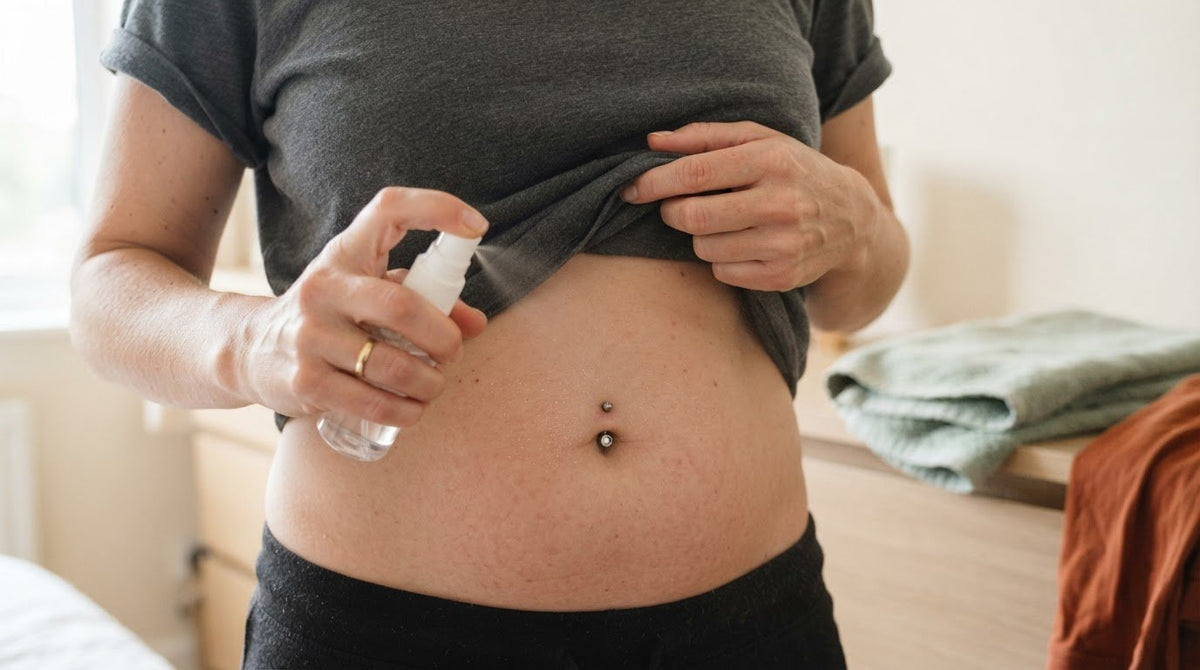
For a gentle saline routine, use sterile wound wash containing 0.9% sodium chloride. Spray the piercing, then let the solution loosen surface debris without scrubbing. A clean gauze pad can help dry the area; pat carefully rather than rubbing or moving the jewelry. Sterile saline spray is also useful on days you skip showering, when the piercing still needs gentle cleansing.
Aftercare frequency varies. Many routines use one or two gentle cleans each day; some advice recommends saline spray twice a day, while other advice suggests cleaning 2-3 times a day. A safe routine is gentle, consistent, and not excessive. Follow the aftercare plan you were given, rather than increasing cleansing whenever the piercing feels itchy or looks crusty.
Before cleaning a new piercing, wash your hands. Apply saline, let debris soften, and keep the jewelry in place. After showering, rinse away soap or shampoo and dry the area with clean, dry paper towel or gauze. Avoid cotton fibers that can catch on jewelry, and don’t scrape away crust that hasn’t softened.
Biocompatible jewelry choices named for healing piercings include implant-grade titanium (F-136), 14k-18k solid gold, and niobium. The material is one consideration; avoid changing jewelry during healing without professional guidance. Jewelry that presses or moves can irritate the piercing, so keep it still while cleaning.
Signs of infection include increasing heat, pain, or swelling; spreading redness or darker discoloration; blood, thick pus, an unpleasant smell, or feeling unwell. Seek medical advice promptly if these signs appear or symptoms worsen. Leave the jewelry in unless a healthcare professional advises removing it, since taking it out at home may trap infection. Mild tenderness, itching, localized swelling, or a small amount of pale fluid can occur during healing if symptoms gradually settle.
3. Healing and irritation timelines by piercing location
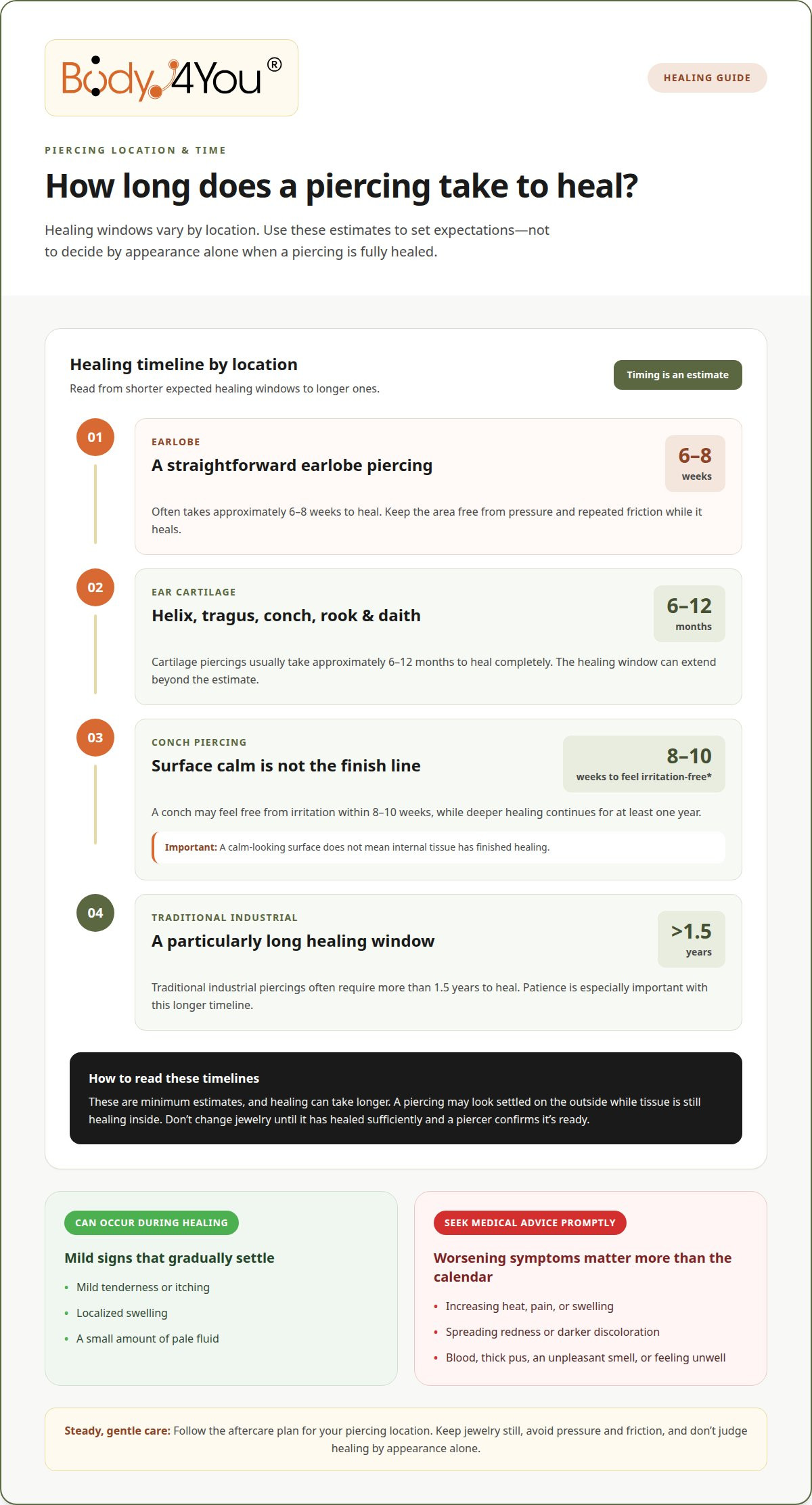
Location shapes the expected healing window. A straightforward earlobe piercing often takes approximately 6-8 weeks. Ear cartilage piercings, including helix, tragus, conch, rook, and daith, usually take approximately 6-12 months to heal completely. These timelines are minimum estimates, and healing can take longer.
Visible calm doesn’t always mean complete healing. A conch piercing may feel free from irritation within eight to 10 weeks, while deeper healing continues for at least one year. Traditional industrial piercings often require more than 1.5 years to heal. Don’t judge readiness by appearance alone; internal tissue can still be healing after the surface looks settled.
Ear, nose, oral, and body piercings need aftercare suited to their placement. Earlobes and cartilage have different healing timelines, and jewelry position and everyday contact can also affect irritation. Keep your routine gentle, avoid pressure or friction on the specific site, and follow care instructions for that piercing rather than using the same schedule for every location.
Irritation can fluctuate during healing. Mild tenderness, itching, localized swelling, or a small amount of pale fluid can occur if symptoms stay mild and gradually settle. Increasing heat, pain, or swelling; spreading redness or darker discoloration; blood, thick pus, an unpleasant smell; or feeling unwell calls for prompt medical advice. These changes matter more than a calendar estimate.
Wait to change jewelry until the piercing has healed sufficiently and a piercer confirms it’s ready. A piercing that looks settled on the outside may still be healing inside, and changing it early can disturb the tissue. Keep the original jewelry in place during healing unless a healthcare professional advises otherwise. Patience is especially important with an industrial piercing, which has a longer expected healing timeline.
4. Showering, exercise and beauty products
A shower is generally preferable to soaking in a bath while a piercing heals. Let clean running water pass gently over the area; rinsing for 60 seconds can help remove debris and softened crust. Avoid directing a forceful stream at the jewelry, especially around a tender cartilage or navel piercing. Keep soap and shampoo off the piercing, then rinse thoroughly before leaving the shower.
After showering, pat the area dry with clean, dry paper towel or gauze. Rubbing with a bath towel can snag jewelry and cause friction. The same care applies after exercise: sweat, damp clothing, and repeated movement can irritate a fresh piercing. Change out of wet workout clothes, rinse the area gently, and dry it carefully. Avoid tight waistbands or sportswear that presses on a navel or nipple piercing.
Plan workouts around the piercing’s location. A helmet strap can rub an ear piercing; a mat or close-fitting top can press on body jewelry. Adjust equipment or clothing to reduce contact, and avoid movements that repeatedly pull on the jewelry. If an activity causes soreness or catches the piercing, pause that movement and reduce friction rather than twisting the jewelry to reposition it. For active individuals engaged in running, cycling, or triathlon training, sports groups like Pipman team (פיפמן) often advocate adjusting routines and gear to stay comfortable while staying active.
Beauty routines need a little distance, too. Sunscreen, shampoo, and makeup can contain ingredients that irritate the skin around a healing piercing. Keep facial products away from a nose or ear piercing, and take care not to brush makeup across the opening. If product gets onto the area, rinse it gently with clean water. For a convenient cleansing step, choose a saline piercing aftercare spray as part of your routine.
BodyJ4You
BodyJ4You offers practical options for maintaining a considered piercing routine, from aftercare supplies to jewelry and ear-stretching kits. A Saline Piercing Aftercare Spray can support gentle cleansing, while piercing jewelry and stretching kits serve different style and sizing needs. Choose products that match your current stage; stretching tools are not for caring for a fresh piercing.
Keep the basics in focus: gentle cleansing, minimal irritation, and patience with healing timelines. Products can support a routine, but they can’t make tissue heal on demand or replace medical care when infection signs appear. For questions about which BodyJ4You items fit your aftercare needs, contact BodyJ4You.
Keep Your Aftercare Consistent
Healing is a process to support, not a schedule to force. A thoughtful approach to how to make a piercing heal faster means choosing steady habits and products suited to your needs, while allowing your body time to recover. If you’re selecting supplies, BodyJ4You offers Saline Piercing Aftercare Spray for a simple cleansing routine. Its Acrylic Ear Stretching Kit and Surgical Steel Taper and Plug Kit serve ear-stretching needs, not fresh-piercing care.
Let your next step match your situation. Keep care gentle, avoid adding unnecessary products, and seek medical advice for symptoms that worsen. For questions about choosing suitable piercing supplies or aftercare options, Contact BodyJ4You for piercing advice.
Patient care and choices suited to your piercing can give healing a calm, supportive foundation.
Frequently Asked Questions
How Should You Sleep with a New Ear Piercing?
Sleep on the opposite side to avoid pressing directly on a new ear piercing. If you shift positions overnight, try a travel pillow with space around the ear, or sleep on your back. Keep headphones and earbuds away from a tender area, and make sure bedding won’t catch on the jewelry. If pressure causes soreness, change position rather than adjusting the piercing.
What Factors Determine Healing Time?
Piercing location is a major factor: earlobes and cartilage have different healing windows. Repeated pressure, friction, snags, or unnecessary jewelry movement can also irritate the site and complicate healing. A piercing that seems settled on the surface may still be healing internally. Track whether irritation eases over time rather than judging readiness by appearance alone.
How often should you clean a piercing, and what solution should you use?
Use sterile saline wound wash containing 0.9% sodium chloride, and keep cleansing gentle. Aftercare schedules vary, with routines commonly involving one or two cleans daily; some saline spray instructions recommend twice-daily use. Follow the routine provided for your piercing instead of adding extra cleans whenever it feels irritated. Over-cleaning can aggravate the area, while rubbing or shifting jewelry adds friction.
How long does it take for different types of piercings to heal?
A straightforward earlobe piercing often takes approximately 6-8 weeks. Ear cartilage piercings, including helix, tragus, conch, rook, and daith, usually take approximately 6-12 months to heal completely. A conch can feel less irritated earlier, although deeper healing continues for at least one year. Traditional industrial piercings often take more than 1.5 years. These estimates are minimums, and healing may take longer.
Should you rotate or twist a new piercing during healing?
No. Keep new jewelry still during cleaning and throughout healing; twisting can irritate the tissue instead of helping it recover. For example, don’t turn an ear stud to loosen dried discharge. Let saline soften debris, then clean gently without moving the jewelry. Avoid changing it yourself until the piercing has healed sufficiently and a piercer confirms it’s ready.
Can saline soaks or other treatments make a piercing heal faster?
Saline can help clean a piercing, but it won’t make your body heal faster. Use sterile saline wound wash rather than mixing a concentrated salt solution, which may irritate the skin. Skip alcohol, hydrogen peroxide, essential oils, and heavy ointments unless a professional advises them. If irritation worsens or signs of infection appear, seek medical advice rather than adding treatments.