

Your body is a biological masterpiece, but it doesn't always recognize your new jewelry as a work of art. You've likely invested significant time and resources into your self-expression, so noticing a sudden shift in your jewelry's position can feel deeply unsettling. It's common to feel anxious about permanent scarring or the loss of a sentimental piece. Understanding the early signs of piercing rejection is the vital difference between a minor healing hiccup and a permanent mark on your skin.
We've spent over 20 years as a supportive specialist in the body modification industry, and we know that early intervention is everything. This guide provides the clinical precision you need to distinguish between normal irritation and a true rejection event. You'll learn our expert "save it" protocol, which includes symptoms to monitor, prevention techniques, and actionable steps to stop migration in its tracks. We'll also clarify exactly when it's time to seek professional help to protect your skin's integrity. Let's level up your aftercare knowledge and keep your journey toward self-expression safe, healthy, and effective.
Key Takeaways
- Understand the biological migration process to recognize when your body is repositioning jewelry before the rejection becomes permanent.
- Learn to identify the earliest signs of piercing rejection, such as shifts in jewelry angle and increased visibility of the barbell or ring.
- Discover how material sensitivity and incorrect jewelry gauges trigger inflammatory responses that compromise your safety, comfort, and aesthetics.
- Distinguish between immune-driven rejection and bacterial infection to ensure you provide the clinical precision your skin needs to heal.
- Master the "save it" protocol by utilizing professional insights and upgrading to biocompatible materials that are rooted in care.
Understanding Piercing Rejection: Why Your Body Says "No"
Your body is a masterpiece of biological defense. It's designed to protect you from the outside world. When you introduce a piercing, you're placing a foreign object into a delicate, living ecosystem. Sometimes, your immune system decides this decoration is a threat rather than an adornment. This process, known as piercing rejection, is your body's attempt to push the jewelry out through the surface of the skin. It's a protective measure, not a failure of style. Recognizing the early signs of piercing rejection allows you to intervene before permanent scarring occurs.
Surface piercings are particularly vulnerable to this response. Because the jewelry sits horizontally just beneath the skin rather than passing through a fleshy area like an earlobe, there's less tissue to anchor it. This shallow depth makes it easier for the body to identify the metal as an intruder. It's a matter of biology over aesthetics. When the skin feels the pressure of a foreign object in a thin layer of tissue, it begins a process of cellular turnover to move that object toward the exit.
Migration vs. Rejection: Identifying the Shift
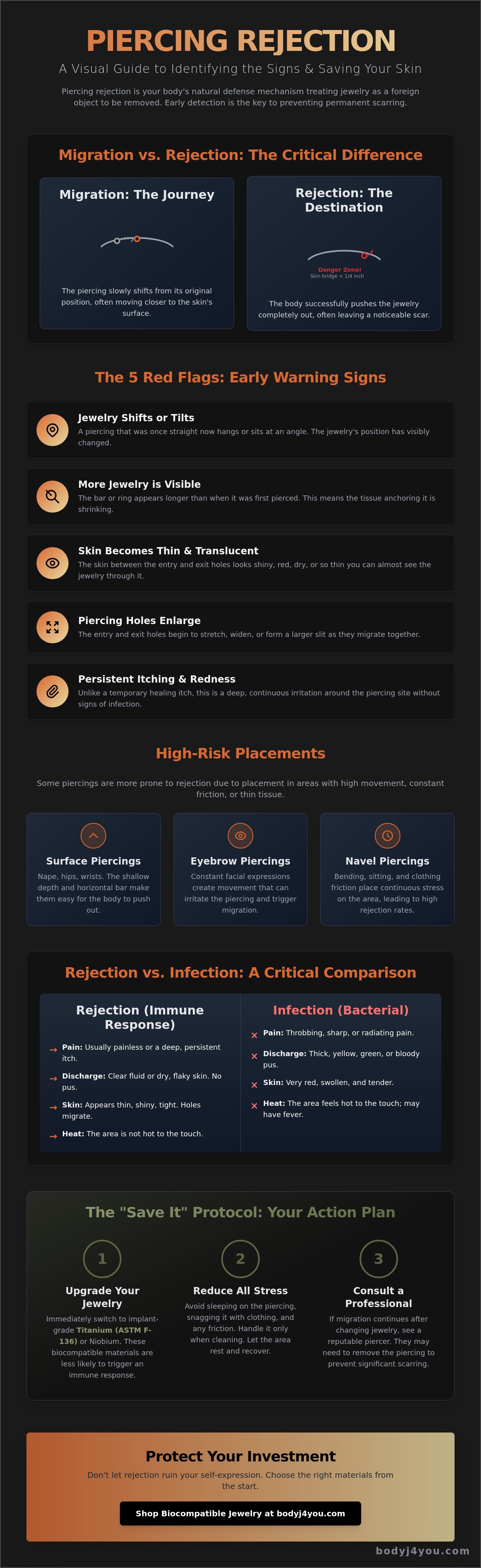
Migration is the journey; rejection is the destination. During migration, your jewelry shifts from its original placement, often moving closer to the surface. By Understanding Piercing Migration, you can see how the body slowly replaces skin cells behind the jewelry, effectively shoveling it forward. The critical danger zone occurs when the bridge of skin between the entry and exit holes becomes thinner than 1/4 inch (6.35mm). If you notice a visible trail or tracking scar where the jewelry used to be, your body is actively moving the piece toward a full exit. This is a clear signal that the piercing's stability is compromised.
High-Risk Placements: Why Some Piercings Fail More Often
Not all placements are created equal. Eyebrows, navels, and microdermals face the highest failure rates because they sit in areas of constant movement. When you walk, bend, or change expressions, the skin shifts, creating tension against the jewelry. This mechanical stress signals the immune system to respond. High-movement zones like the wrist or hip are especially prone to this. In these areas, the body prioritizes skin integrity over the jewelry, often resulting in the clear signs of piercing rejection that require immediate care. To minimize risk, we recommend these three pillars of success:
- Choose high-quality, hypoallergenic materials like titanium.
- Avoid areas with high skin tension or frequent friction.
- Follow a disciplined aftercare routine to reduce inflammation.
The 5 Red Flags: Identifying Piercing Rejection Symptoms Early
Detection is critical. Your body is a master of self-preservation; it's efficient, persistent, and quiet. Recognizing the signs of piercing rejection early allows you to intervene before permanent scarring occurs. Most people assume a piercing is safe once the initial swelling goes down, but rejection can begin months or even years after the initial procedure. It is a slow migration where your immune system treats the jewelry as a splinter that must be removed.
Monitor the jewelry's position daily. If a piercing that was once perfectly centered now sits at a 10-degree tilt, it's migrating. You'll often notice more of the jewelry's post or "wearable" area than you did during the first 14 days of healing. This increased visibility suggests the skin is thinning. According to the Association of Professional Piercers FAQ, proper initial placement is vital, yet your body can still choose to push jewelry out if it feels crowded or irritated by low-quality alloys.
Examine the texture of the skin bridge between the entrance and exit holes. Healthy tissue is opaque and firm. Rejection causes the skin to look translucent, shiny, or excessively dry, almost like a thin layer of plastic. You might also see the holes widening or "stretching" toward each other as the bridge of skin shrinks. When jewelry that once stood upright begins to droop or hang at an awkward angle, gravity is winning the battle against your skin's structural integrity.
Sensorial Warning Signs You Should Not Ignore
Distinguish between the "healing itch" and "rejection itch." Healing is a surface-level tickle caused by regenerating cells. Rejection is a deep, persistent irritation that feels internal and nagging. Unlike an infection, which is hot, red, and painful, rejection is often eerily painless. You might feel a subtle sensation of tightness as the body actively displaces the metal. This lack of acute pain often leads people to ignore the problem until the jewelry is hanging by a thread.
The "Through-the-Skin" Visibility Test
Perform a weekly audit using a bright LED light and a handheld mirror. Look specifically for a "shadow" of the jewelry through the skin bridge. If you can see the color of the metal through the tissue, the piercing is critically shallow. This is a definitive sign to consult a professional piercer immediately. To minimize the risk of tissue irritation, always choose high-quality hypoallergenic jewelry that supports your body's natural healing process rather than fighting against it.
Root Causes: Why Piercings Migrate and Reject
Rejection isn't a random accident. It's a calculated defense mechanism. When your body identifies jewelry as a threat rather than a decorative addition, it begins a process of expulsion. Understanding the signs of piercing rejection starts with recognizing the environmental and physical stressors that trigger this biological response. If the body feels the jewelry is a foreign invader, it will move the metal toward the surface to protect itself.
- Material Sensitivity: Nickel is a frequent offender. This low-grade alloy triggers chronic inflammation in roughly 18% of the population, leading the body to push the metal away to find relief.
- Incorrect Gauge: Jewelry that's too thin for the specific location creates what experts call the "cheese-cutter effect." A thin wire under constant tension, such as a 20G ring in a navel, will slowly slice through the skin.
- Physical Trauma: Constant friction from high-waisted jeans or the repetitive pressure of sleeping on a fresh piercing disrupts the healing fistula. Data suggests that accidental snags account for a significant portion of early-stage migration cases.
- Aftercare Errors: Harsh chemicals like 70% isopropyl alcohol or 3% hydrogen peroxide are too aggressive for new skin. They dry out the wound and kill the healthy cells trying to stabilize the jewelry.
The Role of Jewelry Material: Surgical Steel vs. Titanium
Selection matters from day one. While Surgical Steel is a durable and common choice, it's not always universal. Certain grades contain trace nickel that can irritate sensitive skin over time. For those seeking a higher standard of safety, G23 Titanium serves as the "Wise Guardian" for your body. It's a biocompatible metal that the immune system rarely views as an enemy. We also prioritize high-polish finishes. A mirror-smooth surface reduces microscopic friction, ensuring the skin doesn't snag or tear as it settles around the post.
Placement and Piercer Skill: The Foundation of Success
A piercing's longevity is often decided before the needle even enters the skin. Shallow placements are almost certainly destined to fail because there isn't enough tissue to anchor the jewelry. Your anatomy dictates the jewelry shape. Using a straight barbell where a curved one is required creates "point pressure," forcing the body to move the metal to find a neutral position. When choosing a professional, don't just look at fresh photos. Review their portfolio for healed surface work. This evidence proves their technique respects the body's natural contours. Level up your piercing journey by prioritizing precision and depth from the start.
Piercing Rejection vs. Infection: A Critical Comparison
Understanding the difference between these two issues is vital for your skin health and the longevity of your body art. Rejection is a mechanical immune response. Your body identifies the metal as a foreign threat and moves to push it out. Infection is a biological battle against bacteria like Staphylococcus aureus, which affects approximately 20% of new piercings according to clinical data. While rejection is a slow, steady eviction, infection is an active invasion. You can experience both at once; this complicates your healing journey and requires immediate intervention from a professional.
The primary distinction lies in how your body reacts to the jewelry. Rejection usually lacks the systemic "heat" or "fever" that defines a bacterial infection. To protect your skin, you must recognize these signs of piercing rejection early. Treating these conditions requires opposite approaches:
- For Rejection: You must remove the jewelry to prevent permanent scarring.
- For Infection: You should usually leave the jewelry in to allow the wound to drain and prevent an abscess.
Identifying Infection: Heat, Pus, and Swelling
An infected piercing looks "angry." The skin becomes deep red, tight, and significantly swollen. You'll feel a distinct, throbbing pain and localized heat that persists for more than 48 hours. Watch the discharge carefully. Healthy piercings produce clear or white lymph fluid that dries into small "crusties." Infection produces thick, yellow, or green pus that often has an unpleasant odor. If you notice red streaks radiating from the site or run a fever over 100.4°F, seek medical care immediately. These are not just local issues; they're signs your immune system is under stress.
Identifying Rejection: The "Painless" Migration
Rejection is often deceptive because it feels like nothing is happening. You won't usually see the intense swelling or heat found in infections. Instead, the primary signs of piercing rejection involve the jewelry shifting from its original placement. The skin over the bar may become thin, transparent, or develop a "calm pink" calloused appearance. In clinical observations of surface piercings, nearly 50% of rejections occurred without any initial pain. The jewelry simply moves closer to the surface until the skin bridge is too thin to hold it. This migration is your body's way of protecting itself from a material it doesn't trust.
Treating these conditions correctly ensures your piercing journey remains healthy, safe, and effective. Removing jewelry during a true rejection early can reduce the 3mm to 5mm of permanent scarring that typically follows a full migration. Our team at BodyJ4You has spent 20 years helping enthusiasts maintain the integrity of their skin through expert education and quality care.
The Action Plan: How to Stop Rejection and Prevent Future Issues
Act fast when you notice the signs of piercing rejection. Your window for intervention is narrow, but decisive steps can often save the modification. Visit a professional piercer immediately for a physical assessment. They can determine if the jewelry is migrating or if the issue is a manageable localized irritation. Early detection of the signs of piercing rejection allows for a smoother transition to a more stable jewelry setup.
A jewelry upgrade is often the first line of defense. Switching to a larger gauge or a more biocompatible material like G23 Titanium provides the stability your body needs to halt the rejection process. Titanium is lightweight, nickel-free, and hypoallergenic, making it the gold standard for sensitive tissue. If the piercer determines the placement is still viable, this simple switch can level up your healing process instantly.
Know when to let go to protect your skin. If the tissue between the entry and exit points has thinned to less than 2 millimeters, removal is the only safe option. Taking the jewelry out early prevents permanent, deep scarring and the "cheese cutter" effect where the jewelry eventually splits the skin. It's a choice rooted in care for your future self, ensuring the area remains healthy enough for a successful re-pierce later.
The Gold Standard Aftercare: Saline and Healing Oils
Sterile saline spray is the only safe way to clean a migrating piercing. Saline is a 0.9% sodium chloride solution that mimics human tears. It flushes out debris and bacteria without disrupting the delicate cellular repair happening at the wound site. To support your skin's recovery, you can integrate Piercing Bump Treatment Oil to soothe irritated tissue. This targeted approach keeps the skin supple, hydrated, and resilient during the stressful migration phase.
Preventing Rejection in Your Next Piercing
Patience is your greatest tool for long-term success. Wait at least 6 to 12 months before attempting to re-pierce a site that previously rejected. This timeline allows the internal collagen structures to rebuild and the skin to regain its strength. During this recovery phase, focus on active scar tissue management.
- Massage the area daily with Jojoba or Rosehip oil to improve skin elasticity.
- Avoid high-tension areas or "surface" placements if your anatomy doesn't support them.
- Adopt a "Titanium-first" policy for all new body modifications to minimize immune responses.
By choosing high-quality materials and following expert-led protocols, you ensure your journey of self-expression remains healthy, safe, and effective. Every piercing is a partnership between your body and your jewelry; treating that relationship with respect leads to a lifetime of beautiful results.
For those who value heritage and quality, BOS Jewelers Inc has been providing fine gold and diamond jewelry for over 40 years, offering expertly crafted pieces that complement a lifetime of self-expression.
Protect Your Self-Expression and Skin Health
Your body is a unique canvas, and protecting its integrity requires vigilant observation. Recognizing the early signs of piercing rejection, such as visible migration or widening holes, allows you to act before permanent scarring occurs. Successful healing depends on more than just luck; it requires high-quality materials and disciplined care. Switching to hypoallergenic titanium and utilizing professional-grade solutions can mean the difference between a lost piercing and a lifetime of style. We've seen how the right materials stabilize the skin's response to new modifications.
At BodyJ4You, we bring 20+ years of body jewelry expertise to your healing journey. Our aftercare solutions are formulated with USDA Certified organic ingredients to ensure your skin receives the nurturing care it deserves. We believe in providing products that are healthy, safe, and effective. It's time to prioritize the longevity of your jewelry. Level up your routine with the right tools to keep your piercings secure and vibrant. Crafted by Experts. Trusted by Thousands. Rooted in Care.
Shop Expert-Approved Piercing Aftercare and Titanium Jewelry
Your journey toward confident self-expression is just beginning, and we're here to support every step of your healing process.
Frequently Asked Questions
Can you stop a piercing from rejecting once it starts?
You cannot typically stop a piercing from rejecting once your body has identified the jewelry as a foreign object to be expelled. Professional piercers note that early intervention, like switching to a high quality titanium barbell, can sometimes stabilize the site if caught within the first 48 hours of movement. If the jewelry has migrated more than 2 millimeters from its original placement, removal is the only way to prevent severe scarring.
Does piercing rejection mean I am allergic to the metal?
Piercing rejection doesn't always mean you have a metal allergy, though nickel sensitivities trigger rejection in roughly 15% of the population. While an allergy causes localized dermatitis, rejection is a mechanical movement of the jewelry toward the skin surface. Choosing hypoallergenic, medical grade materials like 316L surgical steel or Grade 23 titanium reduces these risks. This helps ensure your self-expression remains healthy, safe, and effective.
What does the beginning of piercing rejection look like?
The beginning signs of piercing rejection usually include visible skin thinning and the jewelry appearing closer to the surface than on day one. You might notice the entry and exit holes seem larger or the skin over the bar looks transparent. If the distance between the holes has shortened by even 1 millimeter, your body is likely pushing the jewelry out. Early detection is rooted in care and daily observation.
Is it painful when a body rejects a piercing?
Piercing rejection is often surprisingly painless, which makes it easy to overlook until the jewelry is nearly out. You won't typically feel sharp pain, but you might notice a dull itch or a slight sensitivity when the area is touched. Because the body is slowly migrating the metal, the process lacks the acute inflammation found in infections. This subtle shift is why checking your jewelry weekly is vital for long term skin health.
Can I re-pierce an area that has previously rejected jewelry?
You can re-pierce an area that has previously rejected jewelry after waiting a minimum of 6 to 12 months for the tissue to fully stabilize. Success depends on the amount of scar tissue present, as scarred skin is less elastic and more prone to a second rejection. A professional piercer will often offset the new placement by 3 to 5 millimeters to ensure the jewelry sits in healthy, undisturbed tissue.
How long does the piercing rejection process typically take?
The rejection process typically takes anywhere from 4 weeks to several months to complete. It rarely happens overnight. The speed depends on your body's immune response and the amount of physical tension on the site. If you notice the jewelry moving, consult an expert within 48 hours to discuss removal. Taking action quickly helps you level up your healing process and protects your skin's integrity.
Will a rejected piercing leave a permanent scar?
A rejected piercing will likely leave a permanent scar if the jewelry is allowed to migrate all the way through the skin surface. This often results in a linear "zipper" scar or a split in the tissue. If you remove the jewelry while at least 50% of the original skin bridge remains, the scar will be significantly smaller. Proper aftercare with saline solutions can help minimize the visibility of these marks over 12 months.
Can stress or a weak immune system cause my piercing to reject?
Stress and a weak immune system can definitely cause your body to show signs of piercing rejection. When your cortisol levels rise, your body's ability to heal and accept foreign objects diminishes. Research shows that systemic health impacts skin recovery times. Maintaining a balanced lifestyle ensures your piercings stay secure. Our mission is to provide products that are healthy, safe, and effective for your unique journey.


