

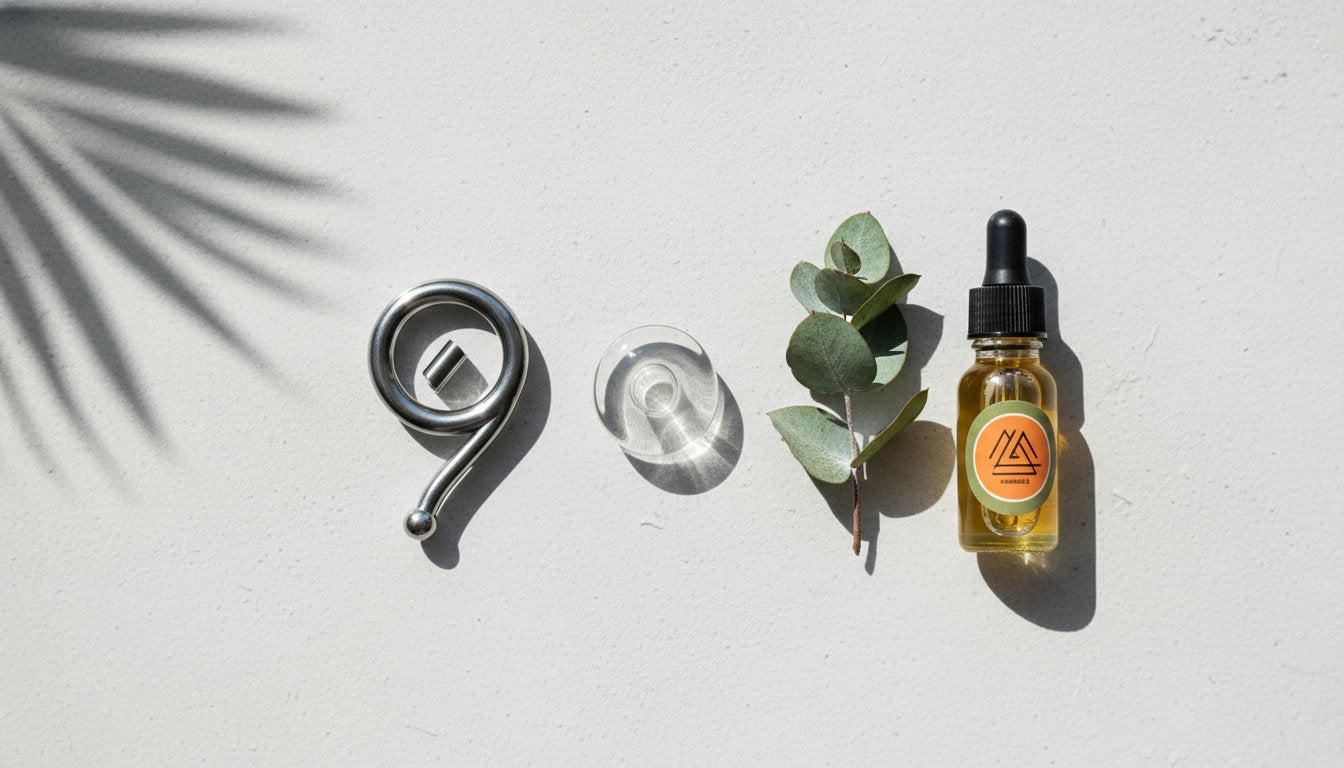
That sleek, pointed tool you're using to level up your look is a bridge, not a destination. While they often look like stylish jewelry, wearing ear tapers for more than a few minutes leads to uneven weight distribution and permanent tissue damage. You likely started this journey to express your unique style. You deserve a process that's healthy, safe, and effective. It's natural to feel anxious about potential tearing or the sting of irritated skin when you're managing the jump between gauges.
We understand that desire for self-expression; we're here to ensure your journey is rooted in care. This article will show you why ear tapers are essential for a smooth transition but dangerous as long-term accessories. You'll learn the professional way to stretch safely to achieve thick, resilient lobes. We'll also provide a clear stretching timeline based on our 20 years of industry expertise. This guide helps you avoid the common pitfalls that affect 30% of beginners who rush the process. Let's explore how to transition from tool to plug for a pain-free experience that respects your body's natural healing limits.
Key Takeaways
- Understand why ear tapers are designed strictly as precision tools to bridge gauge sizes rather than accessories for long-term wear.
- Protect your skin’s integrity by learning how improper taper use causes the "cat butt" effect and compromises the health of the fistula.
- Master the professional transition method using sterilization and specialized lubrication to ensure a smooth, irritation-free stretching process.
- Identify the ideal "next step" jewelry for your new gauge, focusing on the safety benefits of single-flare plugs in surgical steel or glass.
What Are Ear Tapers? Understanding the Tool Behind the Stretch
Ear tapers are specialized, graduated tools designed to bridge the gap between two different gauge sizes. They aren't jewelry. They're instruments of transition. Each taper features a specific anatomy: a narrow leading tip, a long expanding body, and a blunt end that matches the diameter of your target size. While beginners often confuse them with plugs or tunnels, tapers serve a singular purpose. They facilitate the expansion of the skin so that jewelry can follow behind it. Unlike plugs, which sit flush within the ear, ear tapers are meant to pass through the lobe and be removed immediately.
Within a professional ear stretching kit, tapers act as the bridge to your next aesthetic goal. They differ significantly from hangers, which are weighted jewelry, and plugs, which are solid cylinders meant for daily wear. Understanding this distinction is vital for long-term ear health. Historical accounts and modern practices of Stretching (body piercing) emphasize that using the right tool prevents trauma and ensures the skin remains thick and healthy. Using ear tapers correctly is the first step in a safe, empowering journey of self-expression.
The Mechanics of Graduation
The gradual increase in diameter allows the fistula, the tube of skin in your piercing, to expand slowly without tearing. Length is a critical factor here. A longer taper provides a more subtle slope, which creates a smooth, resistance-free transition. If a taper is too short, the angle of expansion is too steep, increasing the risk of blowouts or internal scarring. A taper is a temporary guide for jewelry insertion. By moving slowly through standard 1mm or 2mm increments, you respect the biology of your skin while achieving your desired look.
Common Materials: Acrylic vs. Surgical Steel
Choosing the right material is a choice between safety and convenience. Acrylic tapers are lightweight and affordable for short-term use in established, healthy stretches. However, they're porous and can't be sterilized in an autoclave, which makes them less ideal for fresh stretches. Surgical steel remains the gold standard for safety and professional results. It's non-porous, hypoallergenic, and provides a mirror-smooth surface that prevents bacterial buildup. Using 316L surgical steel ensures your journey is rooted in care and clinical precision. It's the best way to level up your stretch while protecting your body. We recommend steel because it's:
- Hypoallergenic: Safe for sensitive skin and long-term health.
- Non-porous: Prevents the trapping of bacteria and skin cells.
- Durable: Resists scratches that can cause irritation during the stretch.
Myth vs. Reality: Why Ear Tapers Aren’t Meant for Long-Term Wear
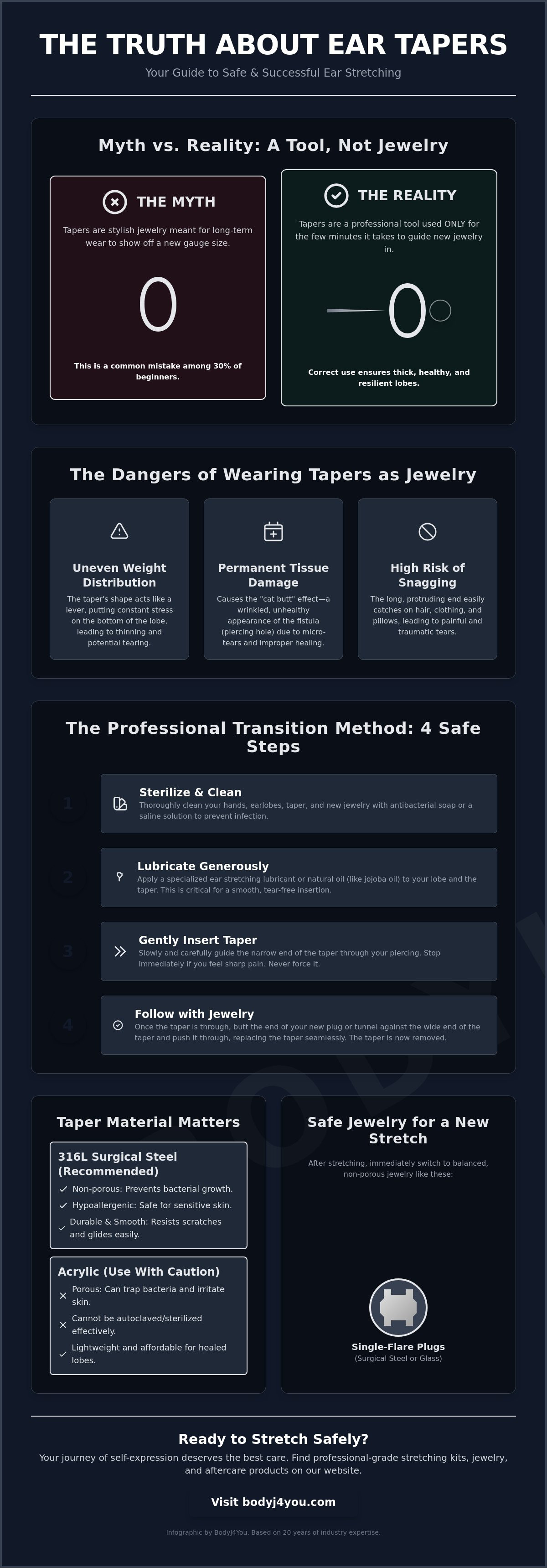
Many beginners view ear tapers as edgy statement pieces. This is a dangerous misunderstanding of their core design. Tapers serve one specific purpose: acting as a bridge between sizes during the stretching process. The common myth suggests that if a taper comes in a stretching kit, it functions as daily jewelry. In reality, a taper is a tool, not a lifestyle accessory. Wearing them for extended periods signals a lack of experience to the piercing community, where "wearing your tapers" is often viewed as a sign of improper education. Your journey toward self-expression should be safe, informed, and intentional. Using a tool as jewelry compromises the integrity of your skin and the symmetry of your aesthetic.
The Danger of Uneven Weight Distribution
The physics of a taper makes it unsuitable for the delicate tissue of a healing ear. Because the back of the tool is significantly longer and heavier than the front, it creates a constant lever effect. This downward pressure forces the piercing hole to stretch unevenly, placing the majority of the stress on the bottom of the lobe. Over time, this localized pressure leads to thinning, a condition where the skin becomes dangerously narrow. Failing to switch to balanced jewelry can result in the risks and complications of stretched ears, such as irreversible tissue damage or necrosis. Additionally, the protruding tail of a taper is a safety hazard. It easily snags on scarves, pillowcases, or hair, which can cause traumatic tears in a single second.
Material Sensitivity and Long-Term Wear
Health and safety are paramount when modifying your body. Most starter kits include acrylic tapers because they are lightweight and cost-effective for the active stretching process. However, acrylic is a porous material. It cannot be sterilized in an autoclave and tends to harbor microscopic bacteria within its surface. When left in a fresh stretch, these pores trap discharge and skin cells, leading to irritation or infection. Tapers are designed for minutes of use, not months. They do not allow the fistula to breathe or stabilize. Once the stretch is complete, you should immediately level up to high-quality plugs made from surgical steel, titanium, or glass. These materials are non-porous and biocompatible, providing the stable environment your skin needs to remain healthy, safe, and effective.
The Physics of the Lobe: How Improper Taper Use Damages Your Piercing
Successful stretching depends on the health of the fistula. This is the tube of living skin that forms inside your piercing. When you use ear tapers, you're interacting with delicate biological structures that require stability to remain healthy, safe, and resilient. Tapers are tools designed to guide jewelry into place; they aren't built to distribute weight evenly across the tissue. Wearing them long-term creates a concentrated pressure point at the bottom of the lobe, which disrupts the natural healing process of the fistula.
This uneven pressure often leads to the "Cat Butt" effect. This term describes a piercing that looks wrinkled and scarred when jewelry is removed. It happens because micro-tears from improper stretching heal as dense scar tissue. This tissue lacks the elasticity of healthy skin, making future stretches difficult or even impossible. Your body needs consistent, balanced support to maintain its aesthetic integrity. Over our 20 years of experience, we've found that patience is the most valuable tool in any modification journey.
Blowouts and Tissue Trauma
A blowout occurs when the internal fistula is forced out through the back of the ear. This happens when a taper is pushed through too quickly, causing the skin to pop out rather than stretch. You'll recognize a blowout by its distinct symptoms: persistent redness, localized swelling, and a fleshy "lip" of skin protruding around the jewelry. Because ear tapers use a gradual incline, they make it easy to ignore your body's pain signals. This allows you to apply excessive force without immediate resistance. If you feel a sharp sting or see blood, you've caused trauma that requires immediate downsizing to prevent permanent disfigurement.
The Thinning Lobe Crisis
Healthy stretching requires robust blood flow to nourish the skin. When you wear heavy or uneven jewelry, you compress the capillaries in the lower lobe. This leads to tissue thinning that's nearly impossible to reverse. You can identify thinning by feeling the bottom of your lobe; if it feels like a thin piece of paper rather than a fleshy cushion, your piercing integrity is at risk. Maintaining thick, healthy lobes is essential for reaching larger sizes. Once the tissue is gone, the only solution is often surgical intervention. This highlights the need for protective care and expert-led practices during every step of your self-expression journey.
How to Use Ear Tapers Safely: The Professional Transition Method
Stretching is a patient journey of self-expression. It requires a foundation of safety, precision, and care. Using ear tapers correctly ensures your lobes remain healthy and elastic. This process isn't a race; it's a methodical transition designed to protect your skin's integrity. Follow these four professional steps to ensure a successful stretch.
- Step 1: Sterilize. Begin by treating your jewelry and skin with a specialized saline solution. This clinical step eliminates bacteria and prepares the site for a safe transition.
- Step 2: Lubricate. Apply a generous layer of Jojoba oil or a dedicated gauge balm to both the taper and your earlobe. Lubrication is essential to minimize friction.
- Step 3: Guide. Slowly guide the taper through the piercing. Move with a steady hand until the thickest part of the tool is flush with your lobe.
- Step 4: Follow. Immediately align your new plug or tunnel with the back of the taper. As the jewelry enters, the taper should slide out the other side in one fluid motion.
If you are concerned about sensitivity during this step, utilizing a topical solution like nopaincream.com/de can help ensure the experience is as comfortable as possible.
Preparation and Lubrication
Healthy skin is the priority. Never attempt to "dry stretch" your ears under any circumstances. Dry stretching causes micro-tears, which lead to permanent scarring and painful blowouts. We recommend using 100% pure Jojoba or Castor oil to maximize skin elasticity. These organic oils mimic your skin's natural sebum, making the tissue more pliable and resilient. Always clean the area with a saline-soaked pad before you begin and again once the jewelry is seated to ensure a hygienic environment.
The "Taper-to-Plug" Slide Technique
Precision is vital during the jewelry transfer. Keep the end of your new plug pressed firmly against the back of the ear tapers. There should be zero gap between the tool and the jewelry. This seamless connection ensures the plug follows the path created by the taper without snagging the delicate inner tissue. Listen to your body. If you feel significant resistance or sharp pain, stop immediately. This is a signal that your tissue isn't ready. Remove the tool and wait at least 30 days before your next attempt.
Ready to begin your journey with confidence? Explore our collection of professional stretching kits rooted in care and quality.
Beyond the Taper: Safe Jewelry Options for Your New Gauge
Once you've successfully used your ear tapers to reach a new size, your priority shifts to stability and skin health. Ear tapers are temporary tools, not long-term accessories. Their uneven weight distribution puts unnecessary stress on the fistula, which can lead to thinning or lopsided holes. Transitioning immediately to proper jewelry is the only way to ensure your lobes remain healthy and thick. BodyJ4You kits provide a seamless transition by including both the precision ear tapers and the high-quality jewelry required for the next phase of your journey. These sets are crafted by experts, trusted by thousands, and rooted in care, giving you everything needed for a safe experience from start to finish.
Why Single-Flare Plugs Are Best
Single-flare plugs are the gold standard for fresh stretches. They feature a front flare to prevent the jewelry from sliding through and a flat back secured by a medical-grade O-ring. This design offers several clinical advantages for your recovery:
- Weight Distribution: Unlike ear tapers, plugs sit flush against the lobe. This prevents the "cheese-cutter" effect caused by heavy, unbalanced jewelry.
- Material Integrity: We recommend 316L surgical steel or borosilicate glass for the first 8 to 12 weeks of healing. These materials are non-porous and hypoallergenic, which minimizes the risk of irritation.
- Ease of Hygiene: Cleaning a single-flare plug is straightforward. You can easily remove the O-ring to sanitize the jewelry and the piercing site without removing the entire piece.
You should avoid double-flare jewelry during the initial healing period. These pieces require the lobe to stretch over a larger lip, which can cause micro-tears in a fresh piercing. Wait at least 90 days after a stretch before attempting to wear double-flared styles.
Aftercare and Maintenance
Successful stretching is 20% the tool and 80% the aftercare. Your body needs a consistent environment to generate new skin cells and maintain elasticity. Use BodyJ4You Saline Piercing Aftercare Spray twice daily. This pH-balanced, vegan solution removes crustal buildup and bacteria without drying out the skin. It's a professional-grade formula designed to support the skin's natural recovery process during the 6 to 10 weeks it takes for a new gauge to stabilize.
Daily lobe massages are also vital. Once the initial tenderness subsides, use a natural oil like jojoba or vitamin E to massage the tissue for 5 minutes. This practice breaks up scar tissue and increases blood flow to the area. For those moving into larger sizes, such as 8G (3.2mm) and above, you may eventually transition to "dead stretching." This method uses the natural weight of heavy steel plugs to create space over several months, allowing the skin to expand at its own pace without the use of tools.
While you're giving your body time to adjust, it's the perfect opportunity to enjoy other local favorites; for instance, those in the Coral Springs area can discover Schmear Bagel Co. for a fresh, hand-rolled bagel that makes the waiting period much more enjoyable.
Level Up Your Stretching Journey Safely
Your ears deserve a process that respects their biology. Remember that ear tapers are precision tools designed for a single purpose; they guide your transition from one size to the next. They aren't meant for long-term wear because their uneven weight distribution can lead to thinning tissue or permanent lobe damage. By prioritizing safety and using these tools only for the initial stretch, you protect your skin's health and ensure a beautiful, lasting aesthetic.
BodyJ4You brings over 20 years of industry experience to your self-expression journey. We've earned the trust of thousands of customers worldwide by focusing on high-quality materials and expert-led education. Our commitment to your wellness includes USDA Certified and locally manufactured aftercare products that support your skin throughout every stage. Don't settle for shortcuts when it comes to your body's integrity. You're building a look that lasts a lifetime, so take the time to do it right.
Explore BodyJ4You Ear Stretching Kits - Crafted by Experts
Frequently Asked Questions
Is it okay to sleep with ear tapers in?
You should never sleep with ear tapers in your ears. Their uneven weight distribution and long, pointed shape create significant pressure points against your pillow. This physical stress often leads to earlobe tears or painful blowouts during the night. Always transition to a lightweight plug or tunnel before bed to ensure your skin remains healthy, safe, and effective. It's a simple step that protects your long-term aesthetic goals.
How long should I leave a taper in my ear before putting in a plug?
You should leave a taper in your ear for only a few minutes. These are precision tools designed to guide jewelry into a fresh stretch, not to serve as permanent jewelry. Once the tool slides through the lobe, you must immediately follow it with a high-quality plug. This method minimizes the time your tissue is under uneven tension, ensuring you level up your journey safely and effectively.
Can I use ear tapers to stretch my septum or other cartilage piercings?
You shouldn't use standard tapers for cartilage or septum stretching. Unlike earlobes, which consist of flexible adipose tissue, cartilage is a dense, avascular connective tissue that doesn't stretch easily. Forcing a taper through cartilage can cause permanent structural damage or shattering in every case where excessive force is applied. Consult a professional piercer who uses specialized equipment for these specific modifications to maintain your long-term wellness and safety.
What is the best material for ear tapers for someone with sensitive skin?
Surgical steel (316L) or ASTM F-136 titanium are the best materials for sensitive skin. These non-porous metals are hypoallergenic and resistant to body fluids, unlike acrylic which can harbor bacteria in microscopic pores. Using medical-grade materials reduces the risk of contact dermatitis by 95 percent compared to cheaper plastic alternatives. It's a choice rooted in care for your skin's integrity and your overall aesthetic health.
Why does my ear hurt after using a taper if I followed the steps?
Persistent pain usually indicates that you've caused micro-tears in the skin tissue. While some pressure is normal, sharp pain or throbbing suggests the stretch was too aggressive for your current elasticity. Professional data suggests that 80 percent of stretching injuries occur when users rush the process. If pain lasts longer than 24 hours, you should downsize immediately to allow the tissue to recover and avoid permanent scarring or long-term damage.
Can I use tapers to skip multiple gauge sizes at once?
You must never skip sizes when using ear tapers. Skipping even a single gauge size increases the risk of a blowout by 70 percent because the skin cannot accommodate such a rapid increase in diameter. Each stretch should move only one gauge size at a time, such as from 10G to 8G. This disciplined approach ensures your journey is healthy and safe, preventing the need for future corrective surgeries.
How do I know if my ear is ready for the next taper size?
Your ear is ready when your current jewelry feels loose and you can see a gap around the plug. For most individuals, this biological process requires a minimum of 8 to 12 weeks between stretches. This timeframe allows the body to produce new skin cells and regain its natural elasticity. Rushing this clock often results in thinning lobes, so patience is your best tool for successful, empowered self-expression.
What should I do if my ear starts bleeding after using a taper?
You must immediately remove the taper and downsize to a smaller, sterilized plug if bleeding occurs. Bleeding is a sign of an open wound, which requires immediate clinical attention to prevent infection. Clean the area twice daily with a 0.9 percent sodium chloride saline solution. This protocol, crafted by experts, helps stabilize the injury and promotes faster healing so you can eventually resume your stretching journey safely and effectively.


