

What if that stubborn growth on your new cartilage piercing isn't the permanent scar you fear? For the 30% of people who experience localized irritation after a procedure, the panic of seeing a raised mark is immediate. You've likely spent hours in front of the mirror, trying to solve the piercing bump vs keloid mystery while dealing with persistent itching and tenderness. We understand that your self-expression feels at risk when your skin reacts unexpectedly. It's frustrating to sort through conflicting DIY advice when you just want a return to a clean, healthy aesthetic.
At BodyJ4You, we believe in a path to healing that is healthy, safe, and effective. You don't have to guess about the future of your skin. This guide provides the definitive differences between temporary irritation and permanent tissue growth so you can choose the right treatment path with total confidence. We'll walk you through a clear diagnosis, an actionable plan to level up your aftercare, and expert strategies to prevent future bumps from appearing. Let's transform your worry into a structured plan for recovery. Your journey to self-expression should always be rooted in care and expert craftsmanship.
Key Takeaways
- Distinguish between temporary irritation and permanent scarring by evaluating four critical factors: location, timing, texture, and growth.
- Master the definitive differences in a piercing bump vs keloid to ensure you choose a treatment path that is healthy, safe, and effective.
- Identify how the "Irritation Loop" and specific jewelry materials can trigger your skin’s immune response and stall the healing process.
- Learn the "LITHA" foundation and the science of sterile saline to provide your piercing with the professional-grade care it deserves.
- Recognize the warning signs of clinical infection to determine when it is time to transition from home care to professional medical guidance.
Piercing Bump vs. Keloid: Identifying Your Skin’s Response
Discovering a raised mark near your new jewelry can feel alarming. It's a moment of vulnerability in your journey of self-expression. Rest assured, your body is simply communicating with you. Most of these occurrences are natural immune responses rather than permanent setbacks. At BodyJ4You, we believe in empowering your healing process through education and expert-crafted care. Understanding the piercing bump vs keloid distinction is the first step toward restoring the integrity of your skin. We've spent twenty years helping enthusiasts navigate these challenges with confidence and professional clarity.
To ensure a smooth recovery, we advocate for the Rule of Three. Every healthy piercing must remain:
- Clean: Free from debris and harmful bacteria through consistent saline irrigation.
- Stable: Protected from excessive movement, snagging, or friction.
- High-Quality: Adorned with hypoallergenic materials like titanium or 316L surgical steel.
Most "scary" bumps are actually temporary irritation responses that resolve with proper discipline. These are not permanent scars but signals that your aftercare routine needs a slight adjustment. You can level up your healing journey by identifying exactly what your skin is doing and why it's reacting.
What is a Hypertrophic Piercing Bump?
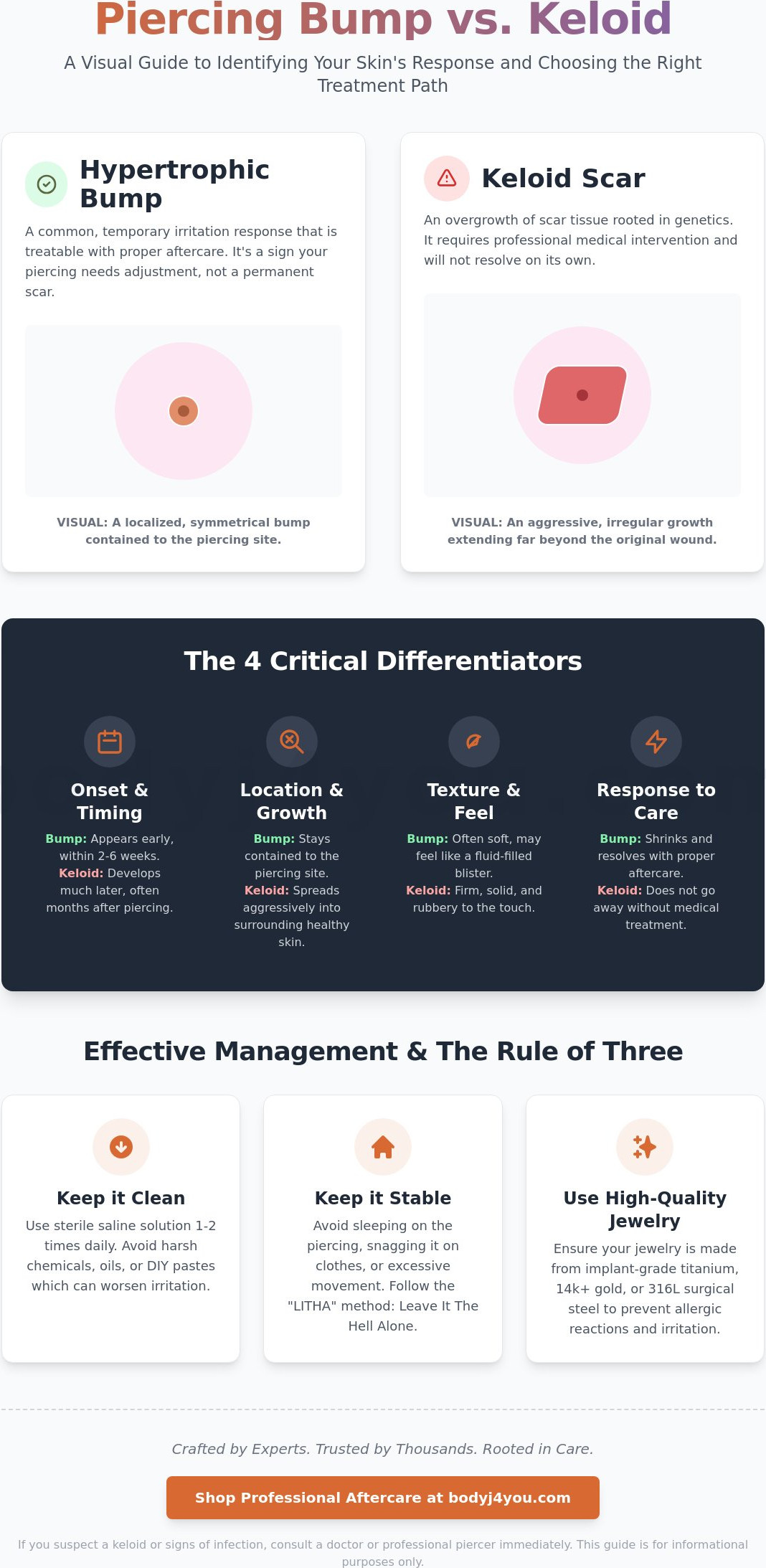
A hypertrophic bump is a localized inflammatory response. It's the skin’s way of reacting to physical friction, moisture trapped in the piercing channel, or minor bacterial presence. Unlike other scars, these bumps stay exactly at the piercing site. They don't spread to surrounding tissue. You’ll typically notice them appearing within 2 to 6 weeks of your procedure. They are often soft to the touch and might change in size based on your daily activity levels. When evaluating a piercing bump vs keloid, remember that hypertrophic bumps are irritation-based and usually disappear once the source of stress is removed.
What is a Keloid Scar?
A Keloid is a more complex biological response involving an overgrowth of fibrous tissue and excessive collagen production. While hypertrophic bumps are caused by external irritation, keloids are often rooted in genetics. Some individuals are biologically predisposed to this type of scarring. These scars are invasive; they often grow much larger than the original piercing wound itself. They feel firm, rubbery, and do not typically disappear on their own without professional medical intervention. Understanding your family history can provide significant clarity, as those with a history of keloids have a higher probability of developing them after any skin trauma.
Crafted by Experts. Trusted by Thousands. Rooted in Care.
The 4 Critical Differentiators: How to Tell the Difference
Identifying a skin reaction requires clinical precision and a patient eye. While both issues involve raised tissue, their biological signatures differ significantly. Proper identification is the first step toward effective healing. When differentiating piercing bumps from keloids, you must look past the surface level. Many people believe redness indicates a simple bump, but this is a common myth; both conditions can appear inflamed and red. Color alone isn't enough for a diagnosis. Understanding the texture of a piercing bump vs keloid helps determine if you're dealing with trapped fluid or permanent scar tissue.
Use this home evaluation checklist to assess your piercing:
- Onset: Did it appear within 14 to 30 days, or after several months?
- Boundaries: Is the growth contained to the jewelry site or spreading?
- Consistency: Does it feel like a fluid-filled blister or a solid rubber eraser?
- Response: Does it shrink when you apply saline or warm compresses?
Location and Growth Patterns
Piercing bumps are typically symmetrical and stay centered on the entry or exit point of the jewelry. They behave predictably. In contrast, keloids are aggressive. They often resemble spilled candle wax, flowing over the skin in irregular patterns. Keloids are characterized by their ability to extend beyond the original site of the piercing, often creating a sprawling, irregular shape. This lack of boundaries is a primary indicator of keloid tissue that has surpassed the body's normal healing limits.
Texture and Physical Sensation
The physical feel of the growth provides immediate clues. Irritation bumps are often soft, squishy, or may even drain fluid. They tend to itch or feel tender during the initial flare-up. Keloids are different. They feel firm, rubbery, and fixed to the underlying skin. Over time, a keloid may transition from a sharp throb to a persistent, dull ache. If your growth feels like a hard, permanent mass, it’s time to consult a professional. You can level up your aftercare routine with high-quality saline solutions to see if the tissue responds to gentle cleansing.
The Timeline of Appearance
Timing remains the most reliable indicator for non-professionals. Most irritation bumps appear within the first 2 to 6 weeks of a new piercing. If a growth appears 6 to 12 months after the initial procedure, it's more concerning. Bumps are famous for their regression; they shrink and disappear once the source of irritation is removed. Keloids do not regress. They are permanent scars that require medical intervention to reduce in size. This distinction is vital for your long-term skin health. Crafted by Experts. Trusted by Thousands. Rooted in Care.
Common Triggers: Why Your Piercing Developed a Bump
Understanding why a bump appears is the first step toward reclaiming your skin's health. Most issues stem from the "Irritation Loop." This occurs when constant friction prevents the delicate skin cells from sealing the wound. When the fistula is repeatedly disturbed, the body overproduces collagen and fluid, leading to a localized swelling. Distinguishing between a piercing bump vs keloid is essential here; while a bump is often a reaction to external stress, a keloid is a genetic overgrowth of scar tissue. For those concerned about long-term scarring, reviewing medical keloid prevention and treatment options can provide peace of mind and clinical clarity.
Angle trauma is another frequent culprit. If a piercing is performed even 5 degrees off-center, the jewelry rests at an uneven angle. This creates constant pressure on one side of the hole, resulting in a lopsided, persistent bump. Similarly, the journey of body modification requires patience. Using ear stretching kits too quickly can cause micro-tears in the lobe. These tiny fissures often manifest as irritation bumps when the skin is stretched beyond its natural elasticity before it has fully healed. We provide solutions that are healthy, safe, and effective for every stage of your journey.
Jewelry Material and Threading
The quality of your jewelry directly impacts your healing success. Nickel is the primary enemy of cartilage health, as roughly 15% of the population suffers from a nickel sensitivity that triggers allergic dermatitis. To ensure a safe experience, we recommend surgical steel or titanium. These materials are hypoallergenic, durable, and biocompatible. It is also vital to consider how your jewelry is constructed to distinguish a piercing bump vs keloid reaction caused by physical trauma.
- External Threading: These pieces have screw threads on the post. They act like a saw, tearing the internal tissue every time the jewelry moves.
- Internal Threading: The post is smooth, and the threads are on the decorative end. This protects the fistula from unnecessary trauma.
Aftercare Errors and DIY Disasters
Clean skin is healthy skin, but over-cleaning is a common trap. Harsh chemicals like rubbing alcohol or hydrogen peroxide destroy new skin cells. This slows the healing process and keeps the wound "open" for irritation. Modern experts have abandoned the outdated advice to "twist" or "rotate" jewelry. This movement breaks the healing "scab" inside the piercing, inviting bacteria and causing inflammation. Finally, the "sleeping trap" is a silent offender. Putting 8 hours of nightly pressure on a fresh piercing restricts blood flow and shifts the jewelry's alignment. Level up your aftercare by using a travel pillow to keep pressure off the site. Our products are Crafted by Experts. Trusted by Thousands. Rooted in Care.
Effective Management: How to Treat Piercing Bumps Safely
Managing an irritation bump requires a disciplined approach rooted in patience and precision. The foundation of any successful recovery is the LITHA method, which stands for "Leave It The Hell Alone." Constant touching, rotating, or picking at jewelry introduces over 80% of the bacteria responsible for secondary infections and prolonged inflammation. Understanding the distinction between a piercing bump vs keloid is vital here. While a keloid is a permanent genetic scar that often requires a dermatologist, a piercing bump is usually a localized reaction to trauma that you can resolve with consistent, non-invasive care.
Never attempt to "pop" or "drain" a bump at home. This creates an open wound that invites deep-tissue infection and significantly increases the risk of permanent scarring. Instead, focus on supporting the body's natural healing rhythm through stabilized hygiene and high-quality topicals.
The Sterile Saline Protocol
Cleanliness is your first line of defense. Use a sterile 0.9% sodium chloride spray twice daily to maintain a healthy environment. This specific concentration is the "Gold Standard" because it perfectly matches the osmotic pressure of your skin cells, ensuring the wound stays hydrated without being macerated. Spray the site directly from a distance of 3 inches. Avoid using cotton balls or q-tips that can leave behind micro-fibers. If you notice crusty debris, use specialized, lint-free cleaning swabs to gently clear the area without shifting the jewelry bar.
Healing Oils and Natural Solutions
Once the initial inflammatory phase subsides, focus on restoring skin elasticity. Jojoba and Rosehip oils are exceptional for softening thickened tissue and reducing redness. Jojoba oil is particularly effective because it mimics the skin’s natural sebum, allowing it to penetrate the dermis without clogging pores or causing breakouts. Specialized "Bump Treatment Oils" differ from standard essential oils because they are pre-diluted with nourishing carrier oils to prevent chemical burns. These organic, vegan-friendly solutions help the skin regain its original texture while calming the "fire" of a fresh irritation.
While topical oils are vital for external recovery, a holistic approach often includes supporting your body from the inside out. Incorporating wellness products from Rastaman Stew can help you maintain the overall health required for your skin to thrive and heal effectively.
When the Bump Won’t Budge
If a fluid-filled "irritation bubble" persists for more than 14 days, you may need to adjust your strategy. Consider these professional-grade interventions:
- Warm Compresses: Apply a warm saline compress for 5 to 10 minutes to increase localized blood flow and encourage natural drainage.
- Silicone Discs: Small "No-Pull" silicone discs can be worn against the bump to apply constant, gentle pressure that flattens hypertrophic tissue over 4 to 6 weeks.
- Upgrading Jewelry: If your jewelry feels tight, a piercer should install a longer bar. Adding just 2 millimeters of extra space can provide the room needed for swelling to subside.
Level up your healing process by choosing our expert-crafted piercing care collection designed to soothe and protect your skin.
Professional Guidance: When to See a Doctor or Piercer
Distinguishing between a standard irritation and a clinical emergency is the first step in protecting your skin. Irritation bumps don't require a doctor, but an infection does. Seek a medical professional immediately if you experience a fever, green or foul-smelling discharge, or red streaks spreading from the piercing site. These symptoms indicate a systemic struggle that aftercare alone cannot resolve. Understanding the nuance of a piercing bump vs keloid is helpful, but safety always takes priority over self-diagnosis.
Medical Treatments for Keloids
Keloids are permanent changes in your skin's structure that require professional intervention. Corticosteroid injections are the most common approach. These treatments flatten fibrous tissue by breaking down excess collagen bonds over several sessions. Surgical removal is another option, yet it remains risky. Clinical data shows that keloids return in nearly 45 to 100 percent of cases if surgery isn't paired with pressure therapy or radiation. Specialized pressure jewelry or cryotherapy can help suppress regrowth by restricting blood flow to the scar tissue.
Prevention for Future Piercings
Healthy healing begins with the right choices in the studio. Success is built on three pillars:
- Internal Threading: Choose jewelry where the screw is on the ball, not the post. This ensures a smooth surface passes through your skin, preventing micro-tears.
- The Downsizing Appointment: Visit your piercer at the 4 to 6 week mark to swap your initial long bar for a shorter one. This prevents the jewelry from tilting or snagging, which is a leading cause of irritation.
- Consistent Rituals: Use sterile saline twice daily. A disciplined routine ensures your piercing remains stable and protected from debris.
BodyJ4You is your dedicated partner in the long-term aftercare journey. We believe in empowering your self-expression through products that are healthy, safe, and effective. Our 20-year heritage in the industry makes us a supportive specialist you can rely on. We provide the clinical precision your skin deserves while celebrating the creative world of body modification. Our goal is to ensure your journey is as seamless as your style. Crafted by Experts. Trusted by Thousands. Rooted in Care.
Level up your aftercare with our Piercing Bump Treatment Oil and give your skin the stabilizing force it needs to thrive.
Level Up Your Piercing Recovery
Your journey toward flawless self-expression shouldn't be stalled by unexpected skin reactions. Distinguishing between a piercing bump vs keloid is the first step to restoring your skin's health. While most bumps are temporary irritations caused by friction or jewelry quality; keloids require a different clinical approach. By identifying critical differentiators early, you can take control of your healing process with confidence.
BodyJ4You has spent 20+ years refining our approach to body modification wellness. We believe your skin deserves the highest standard of care, which is why we provide solutions that are healthy, safe, and effective. Our formula relies on USDA Certified Organic Ingredients to soothe irritation and promote recovery. It's a method trusted by thousands of piercing enthusiasts worldwide who refuse to compromise on quality. You don't have to navigate this alone; expert help is always within reach.
Shop our Expert-Crafted Piercing Bump Treatment Oil
Stay patient and keep your healing on track. Your piercing is an investment in your personal style, and with the right care, it'll look exactly how you envisioned.
Frequently Asked Questions
How can I tell if my piercing bump is infected or just irritated?
You can distinguish an infection from irritation by the presence of yellow or green discharge, persistent heat, and throbbing pain. While irritation bumps are usually pink and localized, an infection may cause a fever over 100.4°F or red streaks spreading from the site. If you notice these severe symptoms, consult a medical professional immediately. Most minor bumps respond well to a sterile saline wash twice daily. Our products are healthy, safe, and effective for maintaining routine hygiene.
Will a piercing bump go away on its own if I leave it alone?
A piercing bump rarely disappears without intervention because it's usually a physical response to a specific trigger. You must identify the source of the stress, such as low-quality jewelry or accidental snagging, to see improvement. Once you remove the irritant and apply consistent care, most hypertrophic bumps begin to subside within 14 to 30 days. Leaving it completely alone often allows the irritation to persist. Rooted in care, our approach focuses on active, gentle recovery.
Can I use tea tree oil to get rid of a keloid?
Tea tree oil cannot remove a keloid because these are permanent overgrowths of fibrous scar tissue. While tea tree oil has antiseptic properties for minor irritations, it won't shrink the dense collagen structure of a true keloid. Understanding the piercing bump vs keloid distinction is vital; while a bump might respond to topical oils, a keloid often requires clinical treatments like cryotherapy or corticosteroid injections. We provide the expert guidance you need for every step of your journey.
What happens if I pop a piercing bump?
You shouldn't pop a piercing bump because it introduces bacteria into an open wound and increases the risk of a secondary infection. Forcing the fluid out can cause localized trauma, leading to more significant scarring or even a staph infection. Instead of popping, use a warm saline compress for 5 to 10 minutes to encourage natural drainage and soothing. This gentle approach protects the integrity of your skin. Crafted by experts, our advice prioritizes your long-term skin health.
How long does it take for a hypertrophic piercing bump to flatten?
A hypertrophic piercing bump typically takes 4 to 8 weeks to flatten once you've addressed the underlying cause of irritation. Consistency is the key to recovery. You must maintain a strict cleaning regimen and avoid touching the area during this period. If the bump remains unchanged after 60 days of diligent care, it's time to consult your piercer to check the jewelry fit or angle. We believe in providing the tools you need to level up your aftercare routine, which can include wellness resources like CBD Health Collection to support your body's natural healing process.
Are certain people more likely to get keloids than others?
Genetic factors significantly influence keloid development; they are approximately 15 times more common in individuals with darker skin tones, including those of African, Hispanic, or Asian descent. If you have a family history of keloids, your risk of developing one from a piercing increases by 50 percent. Knowing your skin's history helps you make informed decisions about body modification. We're here to support your self-expression with professional authority and nurturing care.
Should I take my jewelry out if I see a bump forming?
You shouldn't remove your jewelry when a bump forms because the hole could close and trap an infection inside, leading to an abscess. Keeping the jewelry in place provides a channel for any fluid or discharge to drain safely. If the bump is caused by a material allergy, have a professional piercer swap your jewelry for implant-grade titanium. This swap often resolves the issue within 7 to 10 days. Trusted by thousands, our mission is to keep your piercings healthy.
Can a piercing bump turn into a keloid over time?
An irritation bump will not turn into a keloid because they are two distinct types of skin reactions. A hypertrophic bump is a localized inflammatory response that stays within the boundaries of the piercing, whereas a keloid is a genetic condition where scar tissue grows uncontrollably beyond the original wound. Distinguishing between a piercing bump vs keloid is essential for proper treatment. Crafted by Experts. Trusted by Thousands. Rooted in Care.


