

A Q-tip isn’t automatically harmful to a piercing, but rubbing and loose cotton fibers can irritate healing tissue. So, are q-tips bad for piercings? It depends on how you use one and whether it touches tender tissue or catches on the jewelry. Conflicting aftercare advice can make this confusing, especially if you’ve already reached for a swab.
One gentle use doesn’t necessarily mean you’ve caused damage. The bigger risks are repeated friction, probing around the opening, and fibers left behind. This guide explains when to avoid a cotton swab, what to use instead, and how to clean without disturbing healing tissue.
You’ll find a simple routine using sterile saline and a clean, low-lint drying option, plus steps to take if you’ve already used a Q-tip. You’ll also learn which symptoms call for advice from a qualified healthcare professional. Gentle care, minimal handling, and knowing when to seek help can make aftercare clearer.
Key Takeaways
- Are q-tips bad for piercings? The answer depends on friction, pressure, and loose fibers, not simply on the swab itself.
- Compare saline, clean disposable gauze or paper products, and cotton swabs to choose a gentle option for each step of aftercare.
- Use a simple cleaning routine to remove buildup without scrubbing, twisting jewelry, or overhandling the piercing.
- If you’ve already used a Q-tip, learn what to do next and which changes deserve attention from a qualified healthcare professional.
Are Q-Tips Bad for Piercings? The Short Answer
Q-tips aren’t automatically harmful, but using one with too much pressure or in the wrong place can irritate a healing piercing. The main concerns are friction against tender tissue, snagging jewelry, unnecessary movement, and loose cotton fibers left around the opening. Lightly touching accessible outer skin is different from pushing a swab into the piercing channel, which can disturb healing tissue.
A piercing is healing tissue, not a spot to scrub clean. Repeated rubbing or handling can make the area sore and irritated while it heals. The Body piercing healing process varies by piercing and individual, so tenderness or a small amount of dried fluid doesn’t necessarily mean something is wrong. Aim to clean gently, not to make the area look perfectly clear in one pass.
When can a cotton swab irritate a piercing?
A swab may cause trouble if you press or scrub with it, or twist it around the jewelry. Even small movements can tug a tender opening, and a cotton tip can catch on a ring or stud. Fibers may also shed and cling to moisture or jewelry. These risks don’t mean every use will cause a problem. If you use a swab, keep it clean and limit contact to accessible outer skin. Don’t insert it into the channel or use it to dig out dried buildup.
Let softened residue come away with gentle rinsing rather than forcing it loose. If the swab catches, stop instead of pulling it across the piercing.
Does using a Q-tip once mean the piercing is damaged?
No. A single use doesn’t prove that you’ve harmed your piercing. Stop using the swab if it causes pain, bleeding, or increased irritation, and leave the area alone rather than repeatedly checking or cleaning it.
Mild tenderness that settles can be different from discomfort that worsens or persists. Notice changes without repeatedly touching the site. If pain, redness, swelling, warmth, or discharge is worsening, or you feel unwell, seek advice from a qualified healthcare professional. The next step is gentle care, not more scrubbing.
How Cotton Fibers and Friction Affect a Healing Piercing
A healing piercing is tissue repairing itself around jewelry. It can be sensitive to pressure and movement, so cleaning more often isn’t automatically better. Rubbing with a dry swab, twisting jewelry to reach hidden areas, or checking repeatedly for every trace of crust can add friction when the tissue needs a gentler touch.
Cotton fibers can shed or catch on jewelry, particularly if a swab snags against a stud or ring. A fiber near the opening may feel uncomfortable and tempt you to handle the area more as you try to remove it. These are possible practical problems, not guaranteed outcomes of using a cotton swab. The Association of Professional Piercers includes gauze or cotton swabs among options for drying, while emphasizing gentle care and leaving jewelry alone. Follow your piercing professional’s aftercare instructions, and don’t let any tool become a reason to probe the channel.
Why less handling can mean less irritation
Every unnecessary twist or tug can move jewelry against sensitive tissue. Keep your hands clean before care, use light contact, and resist rotating jewelry or touching the area repeatedly to inspect it. If there’s a small amount of dried crust, don’t scrub until the skin looks spotless. Gentle rinsing can soften residue so you’re less tempted to pick or pull at it.
Treat cleaning as a brief, careful routine, not a search for perfect-looking skin. If a tool catches or contact hurts, stop rather than pressing harder.
Irritation, normal healing, and signs that need attention
Some tenderness or crusting may occur during healing, but those signs alone can’t confirm whether a piercing is healing normally or has a problem. Irritation is not the same as infection, and appearance alone can’t reliably tell you which is present. Pay attention to changes over time, and seek medical assessment if pain worsens, redness spreads, the area feels unusually warm, or discharge concerns you.
Severe symptoms, fever, or rapidly worsening concerns call for prompt professional medical advice. Don’t try to manage a worrying change by scrubbing more or repeatedly moving the jewelry. For gentle-care supplies, explore piercing aftercare products, and use each item according to its current label.
Q-Tips, Gauze, or Saline? Choose a Gentle Piercing-Care Approach
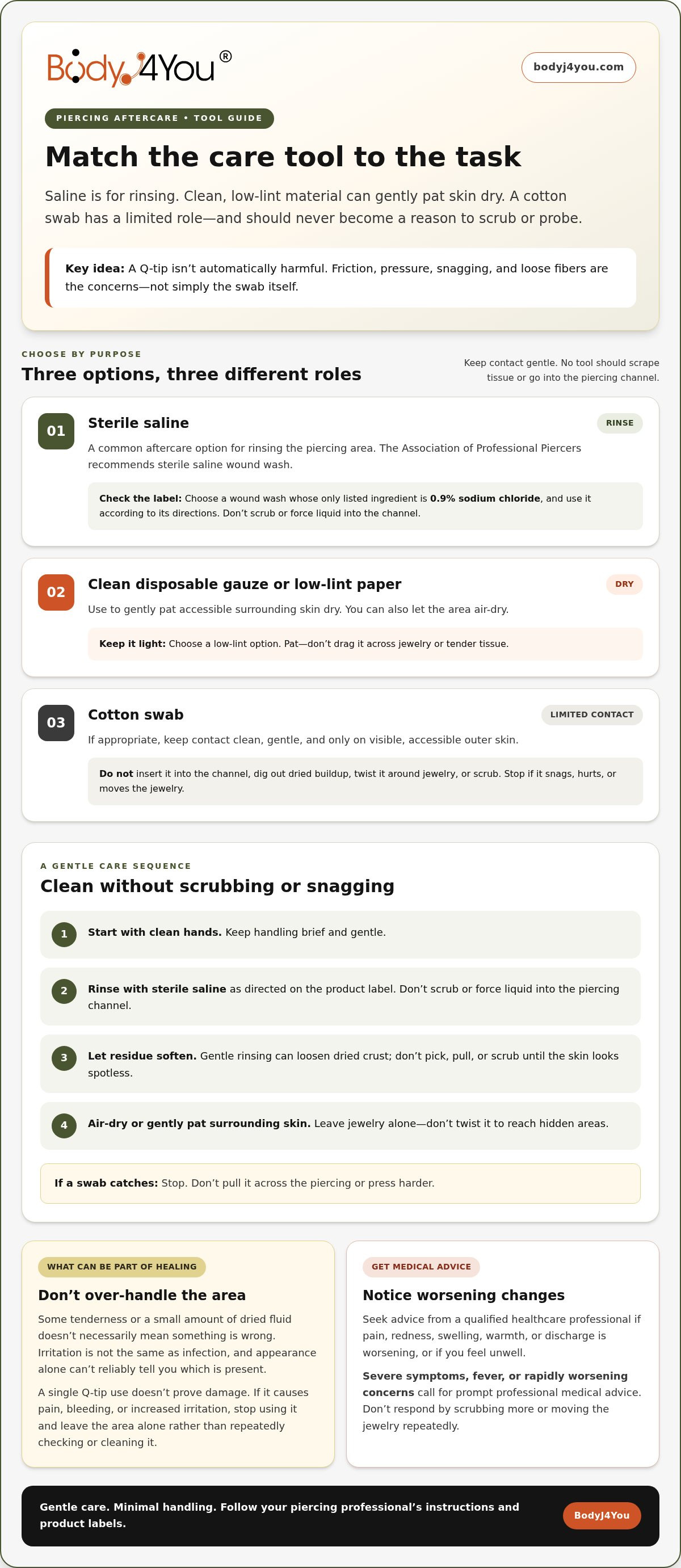
Choose the tool for the task: saline helps rinse, while a clean disposable material can gently pat accessible skin dry. A cotton swab may have a limited role, but it’s easy to apply too much pressure or snag jewelry. None of these tools should go into the piercing channel or scrape tissue.
The Association of Professional Piercers aftercare guidelines recommend sterile saline wound wash and gentle drying. Follow your piercing professional’s advice and the directions on any aftercare product, since routines can vary.
| Option | Best suited for | Care to take |
|---|---|---|
| Sterile saline | Rinsing the piercing area as directed | Use according to the label; don’t scrub or force liquid into the channel. |
| Clean, disposable gauze or paper product | Gently patting accessible skin dry | Choose a low-lint option and avoid dragging it across jewelry or tender tissue. |
| Cotton swab | Limited, gentle contact with visible outer skin when appropriate | Don’t probe, scrape, or rub. Stop if it snags, hurts, or moves the jewelry. |
What can I use instead of a Q-tip?
Sterile saline is a common aftercare option for rinsing. Choose a wound wash whose only listed ingredient is 0.9% sodium chloride, and follow its directions. To dry the area, let it air-dry or gently pat the surrounding skin with clean disposable gauze or a low-lint paper product. These materials are less likely to snag than fluffy cotton. Clean water may also be suitable for rinsing in some routines. Let your piercing professional’s instructions guide which approach fits your piercing.
For more on saline aftercare, read this sterile saline spray aftercare guide.
When might a cotton swab be useful?
Are q-tips bad for piercings? Not necessarily in every situation, but a swab isn’t a tool for cleaning inside the piercing. If you use one, keep contact gentle and limited to visible outer skin. Don’t use it to dig out discharge or crust, and don’t twist it around jewelry. If the swab catches, sheds fibers, causes pain, or shifts the jewelry, stop. Gentle rinsing and minimal handling are better than trying to make the area spotless.
How to Clean a Piercing Without Scrubbing or Snagging Jewelry
A gentle routine cleans the area without making jewelry move or rubbing tender tissue. Follow your piercing professional’s aftercare directions and the product label, since instructions may differ. The goal isn’t to remove every trace of crust or make the piercing look spotless.
A gentle cleaning routine, step by step
- Wash your hands. Clean them with soap and water before touching the piercing or nearby jewelry. Handle the area only as much as your routine requires.
- Rinse gently. Use sterile saline wound wash as directed on its label, or follow your piercer’s guidance on rinsing with clean water. Let the liquid reach the surrounding skin without pushing an applicator into the piercing channel.
- Leave softened residue alone. If buildup doesn’t rinse away easily, don’t pick or scrape it. Let it soften during rinsing rather than forcing it off.
- Dry with a light touch. Let the area air-dry, or gently pat accessible skin with a clean, disposable, low-lint material. Don’t drag it over the jewelry or use a swab to probe inside the opening.
In plain terms: wash your hands, rinse gently, and let the piercing air-dry or pat the surrounding skin without rubbing.
Common cleaning habits to avoid
Resist rotating jewelry, picking at crust, or cleaning repeatedly just to make the area look clear. Those extra movements can create friction and prolong discomfort. Skip harsh household disinfectants such as alcohol and hydrogen peroxide, and don’t treat a homemade salt mixture as a universal substitute for the aftercare your piercer recommends. If you’re using a product, follow its current label instead of improvising how to apply it.
If cleaning causes pain or bleeding, stop and avoid further rubbing. Worsening pain, spreading redness, unusual warmth, concerning discharge, fever, or rapidly worsening symptoms warrant medical advice. A gentle, consistent routine is preferable to repeated attempts to scrub away residue.
BodyJ4You offers supplies intended for piercing aftercare, including saline piercing aftercare spray and cleaning swabs. Use each product only as directed.
Used a Q-Tip on Your Piercing? What to Do Next
Using a Q-tip once doesn’t automatically mean you’ve damaged your piercing. Pause swab use if it rubbed the area, caught on jewelry, or made discomfort worse. Don’t try to “make up for it” by cleaning repeatedly. Give the tissue a break, follow your established aftercare directions, and notice whether discomfort settles or continues to worsen.
What should I do if fibers or crust are caught near the jewelry?
Don’t pull, scrape, or force anything away from tender tissue. Wash your hands, then gently rinse the area as directed by your piercing professional or the saline product label. Let loose material move away on its own. Don’t insert a tool into the channel or tug jewelry to reach it. If something remains trapped, or pain and irritation increase, seek advice from a qualified healthcare professional.
Monitor the area for changes rather than repeatedly touching it. Worsening pain, spreading redness, unusual warmth, or concerning discharge are reasons to seek medical assessment. Get prompt professional medical advice for severe symptoms, fever, or rapidly worsening concerns. Short-lived tenderness after friction may settle, but appearance alone can’t confirm whether there’s a problem.
Where to find calm, practical aftercare support
If irritation or a bump develops, avoid scrubbing or adding unverified treatments. A bump can have different causes, so the right response depends on what’s happening. This piercing bump aftercare guide offers more context. BodyJ4You offers saline aftercare spray and piercing cleaning swabs. Follow each product’s current label, and don’t use a swab to probe or forcefully rub the piercing.
So, are q-tips bad for piercings? Stop using one if it snags, adds friction, or increases discomfort, then return to gentle care. For medical concerns, rely on a qualified healthcare professional. If you need supplies for a careful routine, explore piercing aftercare essentials.
Keep Piercing Aftercare Gentle and Consistent
Are q-tips bad for piercings? Not automatically, but friction, snagging, and loose fibers can irritate healing tissue. If you use a swab, limit it to gentle contact with visible outer skin, and stop if it catches, hurts, or moves your jewelry. For routine care, follow your piercer’s directions and the product label, rinse gently, and avoid scrubbing or picking at crust.
One swab doesn’t automatically mean you’ve caused harm. Pay attention to changes instead. Worsening pain, spreading redness, unusual warmth, or concerning discharge deserve medical advice. Severe symptoms, fever, or rapid worsening call for prompt professional care.
BodyJ4You offers piercing aftercare options, including saline spray and cleaning swabs. Use products as directed and choose an approach that lets you care for your piercing without unnecessary handling. Explore BodyJ4You piercing aftercare essentials for supplies to support a gentle routine. A light touch and steady care can help you avoid unnecessary irritation.
Frequently Asked Questions
Are Q-tips bad for new piercings?
Q-tips aren’t automatically harmful to a new piercing, but friction, snagging jewelry, and loose cotton fibers can irritate fresh tissue. Whether are q-tips bad for piercings depends largely on how they’re used: don’t insert one into the channel or scrub. Follow your piercer’s aftercare instructions and clean gently. One gentle use doesn’t prove damage. Seek professional advice if discomfort worsens or concerning symptoms develop.
Can I use a Q-tip to remove crust from my piercing?
Don’t scrape or pull crust from tender piercing tissue with a Q-tip. Follow your aftercare directions and use gentle rinsing rather than probing the channel. Softened residue may loosen without force. Trying to remove every trace can add friction and irritation. If pain worsens, redness spreads, or you notice another concerning change, seek medical assessment from a qualified healthcare professional instead of repeatedly cleaning or picking at the area.
What can I use instead of a Q-tip to clean a piercing?
Start with clean hands, then use sterile saline if it fits your piercer’s instructions and the product directions. For drying, let the area air-dry or gently pat accessible skin with a clean, disposable, low-lint material. Don’t rub the piercing, twist the jewelry, or push gauze or another applicator into the channel. Keep care light and consistent instead of cleaning more whenever the area doesn’t look perfectly clear.
Can cotton from a Q-tip get stuck in a piercing?
Yes, loose cotton fibers may catch on jewelry or remain near the piercing opening, although this doesn’t happen every time. If you suspect a fiber is there, don’t dig, pull, or scrape at tender tissue. Gently rinse the area according to your aftercare instructions. If material remains trapped, or pain and irritation worsen, seek advice from a qualified healthcare professional rather than probing the channel.
What happens if I accidentally cleaned my piercing with a Q-tip?
One use of a Q-tip doesn’t automatically mean your piercing is damaged. Stop using it if it caused pain, snagging, bleeding, or increased irritation, then return to gentle care that follows your piercer’s instructions. A symptom or appearance alone can’t diagnose an injury. Notice whether discomfort settles or worsens, and seek medical advice if symptoms persist, escalate, or include severe pain or fever.
Is gauze better than a Q-tip for piercing aftercare?
Clean, disposable gauze may be useful for gently patting accessible skin dry, while a Q-tip can snag or shed fibers. Neither material should be rubbed against tender tissue or pushed into the piercing. The aim is gentle care, not scrubbing or removing every trace of crust. Follow your piercer’s guidance and product directions, and stop using any material that catches on jewelry or causes discomfort.
When should I get medical advice about an irritated piercing?
Contact a qualified healthcare professional if pain worsens, redness spreads, the area feels unusually warm, discharge concerns you, or symptoms persist or escalate. Severe symptoms, fever, or rapidly worsening concerns call for prompt medical attention. These signs need professional assessment; they don’t confirm a diagnosis on their own. Don’t remove or move the jewelry unless a healthcare professional advises you to do so.


