

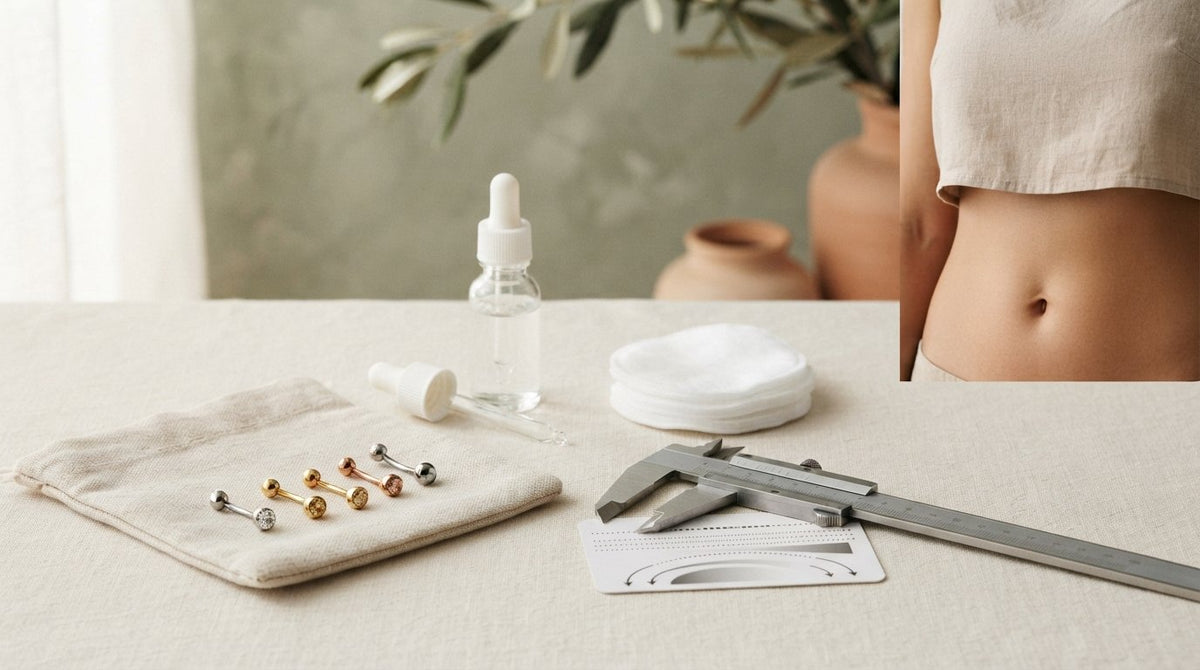
Did you know that up to 20% of the population suffers from contact dermatitis triggered by nickel ions? For many, the search for the perfect belly button rings ends in frustration due to persistent irritation, confusing gauge sizes, or the fear of jewelry migration. You want your piercing to be a statement of confidence, not a source of constant physical anxiety. We believe that safe self-expression is a technical discipline where material purity meets anatomical precision.
In this 2026 guide, you'll learn how to select jewelry that supports your body's natural healing process. We'll break down the technical standards of 316L surgical steel, provide a step-by-step method for measuring your unique anatomy, and share expert insights on maintaining a healthy fistula. This journey requires a focus on quality, safety, and style. You'll gain the knowledge to choose pieces that offer a snug 14G fit while understanding how professional-grade saline aftercare protects your investment. We're here to act as your supportive specialist, ensuring your path to aesthetic refinement is both informed and empowering.
Key Takeaways
- Identify the biocompatibility benefits of 316L surgical steel to protect your skin from common allergens and oxidation.
- Master the technical standard of 14G thickness to prevent migration and ensure your belly button rings sit securely.
- Learn how to measure your specific anatomy to determine if a 3/8" or 7/16" bar length provides the most comfortable fit.
- Discover why the navel is considered a high-movement zone and how specialized curved shapes accommodate your body's natural flexibility.
- Establish a safe jewelry-swapping routine by integrating professional-grade saline aftercare to maintain long-term piercing health.
Understanding Navel Jewelry: More Than Just an Accessory
Your navel is a unique anatomical landscape. Selecting belly button rings is about more than just aesthetics; it's a commitment to biological compatibility. For a deeper look at history and placement, this navel piercing overview and anatomy provides essential context for understanding how these piercings interact with the body. Unlike a static earlobe, the navel is a high-movement zone. It experiences constant tension from sitting, bending, and twisting. This physical reality requires a specialized curved barbell shape to prevent the jewelry from being pushed out by your own skin.
Choosing the right piece builds confidence through comfort. As a Wise Guardian of your piercing health, we prioritize the integrity of your fistula over fleeting fashion trends. High-quality jewelry acts as a stabilizing force, allowing you to express your style without compromising your skin's well-being. When you choose correctly, you aren't just buying an accessory; you're investing in your body's long-term wellness.
Traditional vs. Floating Navel Jewelry
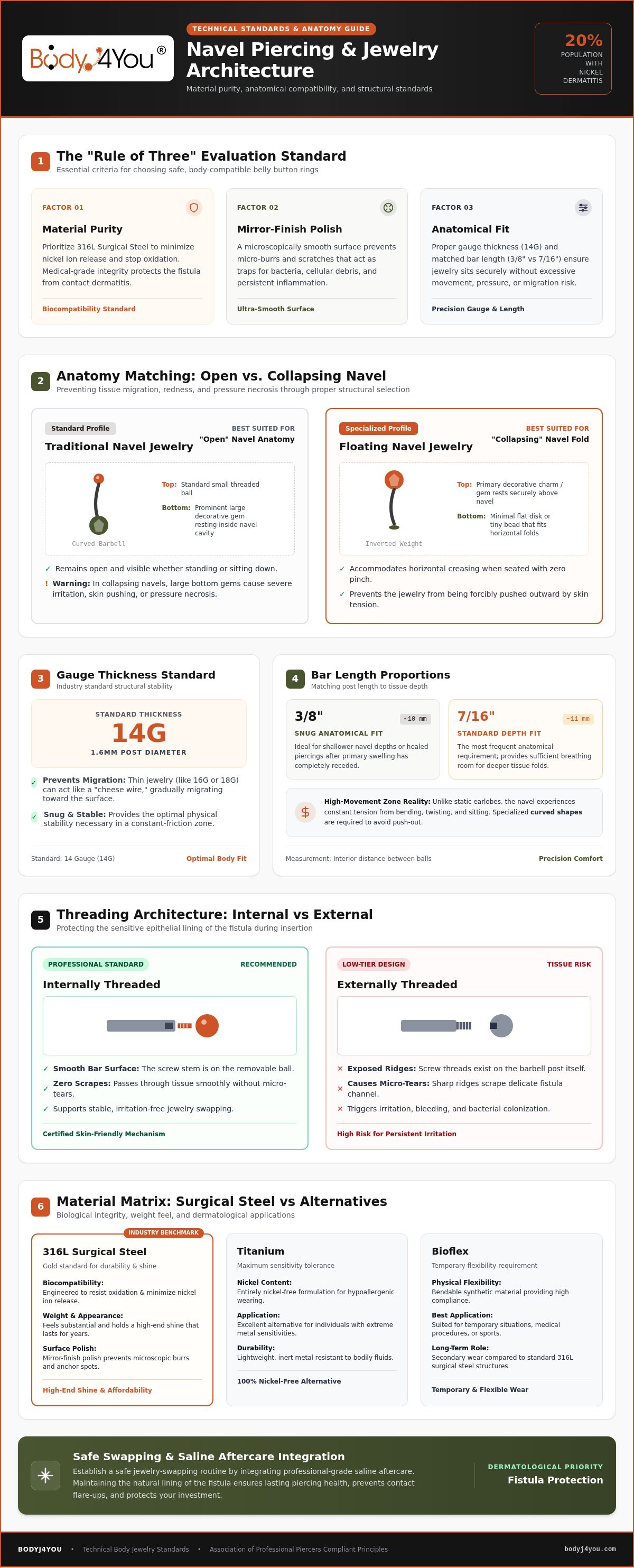
Anatomy dictates your jewelry needs. Standard belly button rings typically feature a large decorative gem on the bottom. These work beautifully for "open" navels that remain visible while standing or sitting. However, many individuals have a "collapsing" navel, where the skin folds into a horizontal crease when they sit down. If you have this anatomy, a large bottom gem can cause significant irritation or even pressure necrosis.
Floating navel jewelry solves this specific problem. It utilizes a small, flat disk or a minimal bead on the bottom post, with the decorative element sitting on the top ball. This design allows the navel to fold naturally without pushing against the jewelry. Selecting the wrong style often leads to redness and migration, so understanding your movement is the first step toward a successful piercing journey.
The Anatomy of a Belly Button Ring
Precision engineering defines a safe piece. Every high-quality navel barbell consists of three primary components: the top ball, the curved bar, and the bottom decorative piece. We advocate for the "Rule of Three" when evaluating any new addition to your collection: Material, Finish, and Fit. Each element must meet professional standards to ensure safety.
Threading is a critical safety detail. Internal threading is the professional choice for comfort. In this design, the screw is attached to the ball, and the bar is smooth. This prevents the threads from scraping the sensitive lining of your piercing during insertion. External threading, where the bar itself has ridges, can cause micro-tears in the tissue. Prioritizing internal threading is a simple way to support a healthy, irritation-free experience.
Material Integrity: Why Surgical Steel is the Gold Standard
Your skin is a living, breathing barrier. When you wear belly button rings, the metal sits in constant contact with a delicate fistula. Material integrity isn't a luxury; it's a biological necessity. We prioritize 316L surgical steel because it offers a sophisticated balance of durability, biocompatibility, and aesthetic refinement. This material is engineered to resist oxidation and minimize the release of nickel ions, protecting you from the contact dermatitis that often plagues lower-quality alloys.
Adhering to the Association of Professional Piercers jewelry standards is the foundation of our manufacturing philosophy. High-quality steel must possess a mirror-finish polish. A surface that looks smooth to the naked eye can still have microscopic burrs or scratches. These tiny imperfections act as anchors for bacteria and cellular debris, leading to chronic irritation or infection. By insisting on a flawless finish, we ensure your jewelry supports a stable, healthy environment for your skin.
Our commitment to ethical production means every piece undergoes rigorous quality control. We leverage over two decades of industry experience to bridge the gap between beauty and biology. This expertise allows us to provide jewelry that is both safe and aspirational. We act as your Supportive Specialist, ensuring the materials you put in your body meet the highest dermatological standards.
Surgical Steel vs. Titanium vs. Bioflex
Choosing the right material depends on your specific physical needs. Surgical steel remains the industry favorite for belly button rings due to its weight and affordability. It feels substantial and holds a high-end shine that lasts for years. Titanium is an excellent alternative for those with extreme metal sensitivities, as it is entirely nickel-free. For temporary situations, such as medical scans or the late stages of pregnancy, Bioflex or medical-grade acrylic provides necessary flexibility. These materials prioritize your comfort during life's transitions without sacrificing the integrity of the piercing site.
Identifying High-Quality Finishes
Vibrant colors shouldn't come at the cost of safety. We use Physical Vapor Deposition (PVD) coating to apply rich golds and blacks. This process bonds the color to the surgical steel base at a molecular level, ensuring it won't chip or flake inside your body. Avoid "mystery metals" or cheap alloys often found in bargain bins. These materials frequently contain high levels of lead or cadmium, which can lead to rapid piercing rejection. Maintaining your shine is simple: a quick wipe with a clean cloth and regular use of a saline-based cleanser keeps your collection pristine. Choosing high-grade surgical steel jewelry ensures your style journey remains safe and vibrant.
Navigating Sizes: Gauges, Lengths, and Perfect Proportions
Precision is the protector of your piercing. When selecting belly button rings, understanding the technical specifications of your anatomy is just as important as choosing a style. Standard navel piercings utilize a 14-gauge (1.6 mm) post. This specific thickness is chosen to prevent the "cheese-cutter effect," where jewelry that is too thin slowly migrates through the skin due to a lack of surface tension. Choosing a thinner 16G bar for a navel often leads to the jewelry being rejected as the body perceives the thin wire as a foreign object to be pushed out.
Bar length is the next critical variable in your comfort. Most healed piercings comfortably accommodate a 3/8" (10 mm) bar, while 7/16" (11 mm) is typically reserved for initial piercings to provide necessary room for swelling. Finding your perfect proportions ensures the jewelry sits flush against the skin without pinching or snagging. Improper sizing is the leading cause of piercing migration, a process where the body pushes the jewelry toward the surface. Following medical advice on preventing piercing complications and infections is essential for recognizing when a fit issue has turned into a health concern. When jewelry fits correctly, it supports the stability, health, and longevity of the piercing site.
How to Measure Your Current Jewelry
Measuring your collection at home provides immediate clarity. To find your "wearable length," use a millimeter ruler to measure the straight distance of the bar between the two balls. Don't include the balls themselves in this measurement. The gauge is the thickness of the jewelry post. If you're unsure of your size, comparing your bar to a standard 14G piece will reveal if your piercing has naturally downsized or stretched over time. Knowing these numbers allows you to shop with the confidence of a specialist.
The Impact of Jewelry Weight
Balance is the key to longevity. Your jewelry should match the thickness of your skin bridge, which is the amount of tissue held by the piercing. While elaborate dangles offer beautiful self-expression, they aren't intended for 24/7 wear. Heavy pieces exert constant downward pressure, which can thin out the skin bridge over time. We recommend a simple tripartite strategy for your collection: light for daily wear, moderate for short-term events, and minimal for sleep. Matching the weight of your decorative elements to your activity level protects the stability of your belly button rings and the integrity of your skin.
Safe Swapping: Integrating Aftercare into Your Style Routine
Every jewelry change is an opportunity for irritation. As your Wise Guardian, we recommend treating each swap with the same clinical care as a new piercing. Even a fully matured fistula can experience micro-tears from mechanical friction during a transition. If your piercing feels tight or sore after a change, don't ignore the sensation. It's often a sign that the tissue needs time to settle or that the jewelry length isn't providing enough room for movement. Prioritizing a sterile environment is non-negotiable for long-term health and keeps your belly button rings sitting comfortably.
The Jewelry Change Protocol
A successful swap follows a logical, steady rhythm. First, prepare the site by applying a sterile saline spray for piercings to both the entry and exit points. This isotonic solution flushes the channel and removes any microscopic cellular debris that could be dragged into the tissue. Second, lubricate the new jewelry. A single drop of high-purity jojoba or castor oil on the bar ensures a smooth entry without tugging at the delicate internal lining. Finally, check your threading. Securing the balls tightly prevents accidental loss and keeps the jewelry stable within the navel anatomy.
Managing Piercing Bumps and Irritation
Irritation is a common hurdle in the world of personal aesthetics. You must distinguish between a metal allergy and a standard irritation bump. Allergies usually present as widespread redness, persistent itching, and heat. An irritation bump is typically a localized, raised area of swelling caused by physical trauma or excess friction. If a bump appears, use a specialized piercing bump treatment oil to calm the tissue and promote localized recovery.
Sometimes, the best solution is simplicity. If the area remains stubborn after changing your belly button rings, revert to a basic surgical steel barbell to allow the site to rest. This removes the weight of heavy decorative elements and provides a stable environment for recovery. We offer a curated selection of professional-grade aftercare products to support you through every stage of your piercing journey. By combining high-quality materials with disciplined care, you ensure your self-expression remains a source of pride rather than discomfort. Our mission is to act as your expert mentor, prioritizing your well-being through every stylish transition.
Curating Your Collection with BodyJ4You Confidence
Your journey toward aesthetic refinement deserves a partner who understands the delicate balance between biology and beauty. With over two decades of industry experience, we act as a stabilizing force in the world of personal expression. We've spent 20 years perfecting the standards for belly button rings, ensuring every piece in your collection supports your long-term well-being. Our promise is simple: empowerment through jewelry that is safe, high-quality, and affordable. This commitment to purity ensures that your self-expression remains both aspirational and medically sound.
Building a jewelry wardrobe is an act of personal growth. You might start with minimalist surgical steel beads for daily stability and expand into elegant dangles for special occasions. Each piece, regardless of its decorative complexity, must adhere to the technical precision we've discussed: the 14G standard, the mirror-finish polish, and the biocompatible material integrity. By curating your collection with intention, you ensure that your style never comes at the cost of your health. We provide the expert mentorship required to help you transition from a single starter piece to a diverse, skin-safe collection.
Quality Control and Ethical Production
We maintain a clear preference for transparency and regional integrity. Our domestic production of piercing aftercare products ensures that every saline spray and treatment oil meets strict safety standards. Buying direct from a specialist like BodyJ4You eliminates the uncertainty of general retailers who may overlook the nuances of skin compatibility. We position ourselves as your supportive specialist, providing the technical justification for every material choice. Our heritage in manufacturing allows us to maintain a disciplined focus on quality control that generalists simply cannot match.
Next Steps for Your Navel Piercing
Your body deserves the best in both style and safety. As you look to expand your collection, we encourage you to browse by material to ensure every piece aligns with your skin's specific needs. Whether you're a professional piercer seeking reliable bulk options or an enthusiast building a curated set, our focus remains on the integrity of the individual. Your navel piercing is a permanent part of your identity. Treat it with the respect it deserves by choosing a Wise Guardian for your self-expression journey.
Embrace your style. Protect your health. Express your truth. We are here to support every step of your jewelry transition, providing the tools and the knowledge to make every swap a success. Choose belly button rings that reflect your inner confidence and your commitment to quality. By prioritizing dermatological standards alongside personal aesthetics, you create a style that is as resilient as it is beautiful.
Empower Your Style with Anatomical Precision
Your navel piercing is a permanent commitment to your aesthetic identity. We've established that mastering the selection of belly button rings requires a balance of creative vision and clinical standards. By prioritizing 14G thickness, mirror-polished finishes, and disciplined aftercare, you protect the long-term health of your skin. These technical details are the foundation of a comfortable, confident lifestyle.
BodyJ4You brings over 20 years of body jewelry expertise to your collection. We maintain high-quality surgical steel standards and produce our specialized aftercare line domestically in the US to ensure your safety. Your journey toward self-expression is a path we are proud to mentor. Explore the BodyJ4You Belly Button Ring Collection today to discover jewelry that bridges the gap between beauty and biology. Your body deserves the best in both safety and style. Step forward with the confidence of a specialist.
Frequently Asked Questions
What is the standard gauge size for belly button rings?
The universal industry standard for initial and healed navel piercings is 14 gauge, which measures approximately 1.6 mm in thickness. This specific gauge provides the necessary surface area to prevent the jewelry from migrating through the skin. While some individuals eventually transition to 16G, staying with the 14G standard ensures your jewelry remains stable. It supports the long-term integrity of the fistula and minimizes the risk of rejection or irritation.
Can I change my belly button ring if the piercing is not fully healed?
You shouldn't change your jewelry until the piercing is fully healed, which typically takes six to twelve months. Swapping pieces too early can tear fragile new tissue and introduce bacteria into the wound tract. If you experience significant swelling or require downsizing, consult a professional rather than attempting a change at home. Once the site is stable, always use a sterile saline spray to lubricate the transition and protect the delicate internal lining.
Is surgical steel or titanium better for navel piercings?
Both materials offer exceptional biocompatibility for long-term wear. 316L surgical steel is the industry gold standard due to its durability, high-end mirror polish, and affordability. It's an excellent choice for the vast majority of enthusiasts. However, if you have a known extreme nickel sensitivity, titanium is a superior alternative because it's entirely nickel-free. We prioritize high-grade surgical steel in our belly button rings to provide a balance of clinical safety and aesthetic refinement.
How do I know if my body is rejecting my belly button ring?
Rejection occurs when your body perceives the belly button rings as a foreign object and pushes it toward the surface. Look for three specific signs: the skin bridge becoming thinner, the jewelry post becoming visible through the skin, or the entrance and exit holes getting larger. You might also notice persistent redness or a clear discharge. If you suspect rejection, remove the jewelry immediately to prevent permanent scarring and consult a specialist for guidance.
How often should I clean my belly button ring after it has healed?
Even a fully matured piercing requires regular maintenance to prevent the buildup of cellular debris and bacteria. We recommend cleaning your healed jewelry once or twice a week during your normal bathing routine. Gently wipe the area with a saline-saturated swab to remove any residue. If the site becomes tight or irritated after a jewelry swap, increase cleaning frequency and use a professional-grade saline spray to soothe the fistula and restore stability.
What should I do if my belly button ring is stuck?
Never use force or tools to remove a stuck barbell, as this can cause traumatic tearing. Instead, apply a warm compress to the area for several minutes to soften any dried secretions or "crusties" around the threads. Lubricating the site with a drop of jojoba or castor oil can also help the balls unscrew more easily. If the jewelry remains immovable, visit a professional piercer who has the specialized tools to safely assist you without injury.
Are dangle belly rings safe for everyday wear?
Dangle jewelry is designed for short-term aesthetic expression rather than 24/7 wear. The additional weight and length of dangles increase the risk of snagging on clothing, which can lead to localized swelling or migration. We suggest a tripartite rotation: wear simple barbells for daily activities, save dangles for special events, and choose minimal pieces for sleep. This disciplined approach protects the thickness of your skin bridge and ensures your piercing remains healthy for years.
Can I wear a belly button ring during pregnancy?
You can maintain your piercing during pregnancy by switching to flexible, medical-grade materials. As your skin expands, rigid surgical steel barbells may become uncomfortable or cause the piercing to migrate. We recommend transitioning to a longer Bioflex or acrylic bar designed to bend with your changing anatomy. This allows the fistula to remain open without putting undue pressure on the skin. Always monitor the site for redness and use saline spray to manage any localized tension.


