

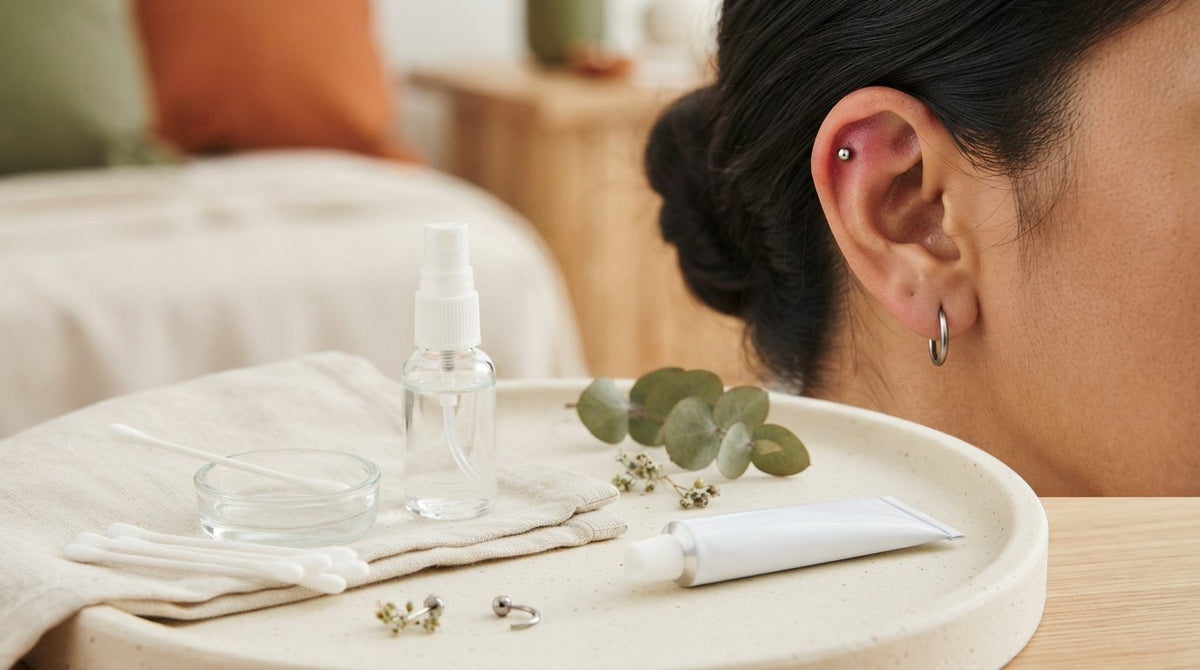
That trusted tube of antibiotic ointment in your medicine cabinet might be the very thing standing between you and a healthy, healed piercing. When you feel a sharp throb, notice heat, or see angry redness, your first instinct is to protect your health and your aesthetic. It's completely normal to feel anxious about your piercing closing up or to feel overwhelmed by the conflicting advice between general doctors and professional piercers. You deserve relief that is fast, effective, and safe.
In this guide, you'll discover why applying antibiotic ointment for infected piercing sites can actually trap bacteria, block essential oxygen, and trigger unwanted allergic reactions. We'll help you navigate the delicate balance of wound care with clinical precision and nurturing expertise. You'll learn how to reduce swelling, exactly when a doctor's visit is mandatory, and why sterile saline remains the gold standard for your recovery. By the end, you'll have a clear, professional plan to soothe your skin and protect your journey toward self-expression.
Key Takeaways
- Learn to distinguish a normal healing itch from a genuine bacterial infection by identifying the precise physical signs of tissue distress.
- Discover why utilizing a thick antibiotic ointment for infected piercing management creates an occlusive barrier that traps cellular debris.
- Master the saline gold standard to safely cleanse the delicate piercing tunnel without disrupting your body's natural recovery process.
- Recognize the critical systemic warning signs that dictate exactly when you must seek immediate guidance from a medical professional.
Is Your Piercing Infected? Spotting the Critical Signs
Distinguishing between the normal evolution of a healing wound and a genuine bacterial complication is the first step toward recovery. Many people experience a "healing itch" as nerves regenerate and tissue knits back together. This is a sign of progress, not a signal to apply an antibiotic ointment for infected piercing care. True infection is more aggressive and localized, often accompanied by a feeling of deep, internal pressure that doesn't subside with rest.
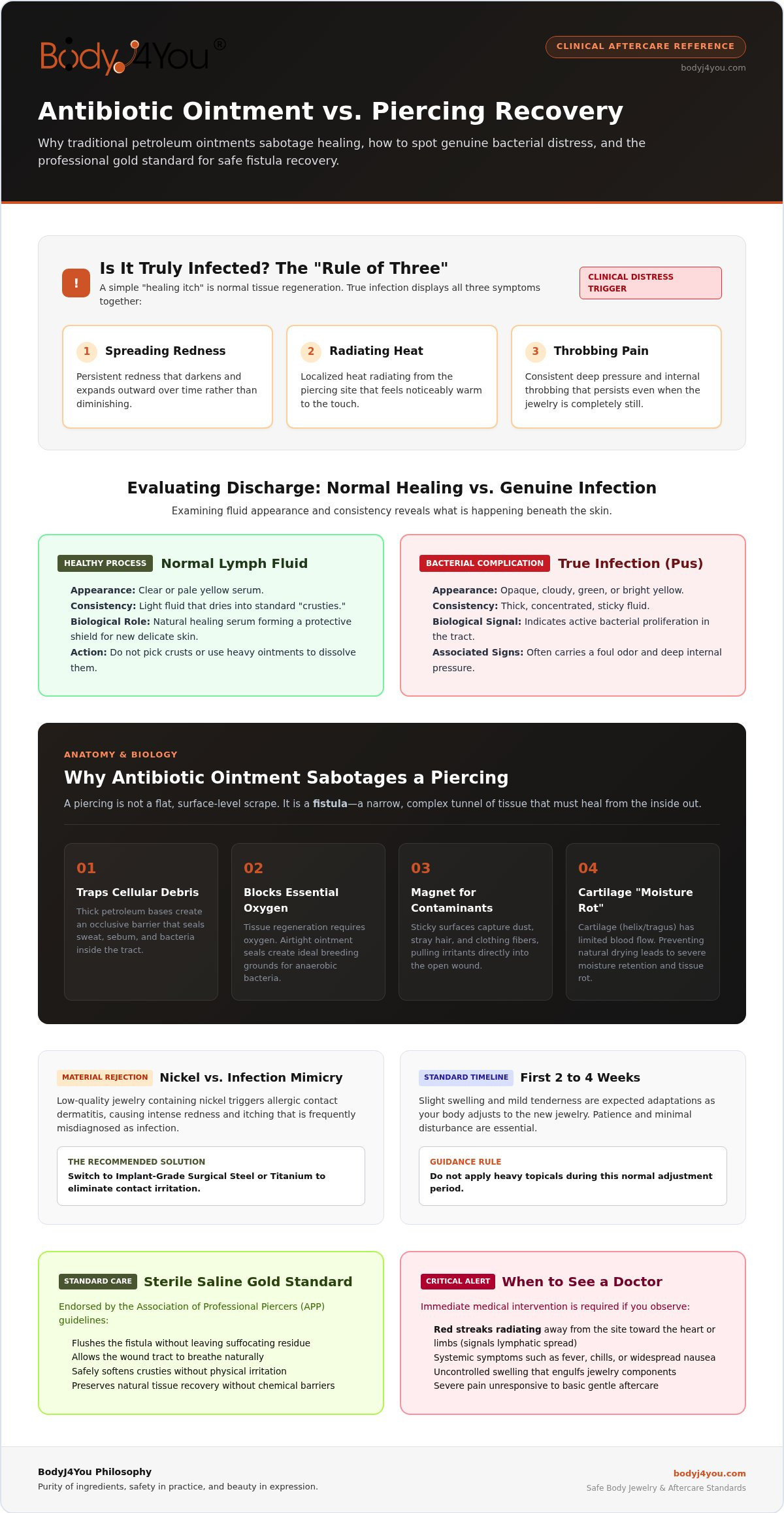
We recommend using the "Rule of Three" to identify clinical distress. If you experience these three symptoms together, your body is signaling for help:
- Persistent, spreading redness that darkens or expands over time.
- Localized heat radiating from the piercing site that feels noticeably warm to the touch.
- A consistent, throbbing pain that persists even when the jewelry is left completely still.
Look closely at your discharge to understand what's happening beneath the skin. Normal lymph fluid is the body's natural healing serum, appearing clear or pale yellow and drying into what we call "the crusties." These crusts act as protective shields for the delicate new skin forming inside the tunnel. Don't pick them or use heavy ointments to dissolve them. In contrast, a true infection produces opaque pus. This fluid is typically thick, green, or bright yellow and may carry a foul odor that indicates active bacterial growth.
Normal Healing vs. Signs of Distress
Slight swelling and tenderness are standard during the first 2-4 weeks of a new piercing as the body adapts to the jewelry. This is a period of adjustment where patience is your best tool. However, if you notice red "streaks" radiating away from the site toward your heart or other limbs, act quickly. This indicates the infection is moving into the lymphatic system and requires immediate medical intervention rather than home treatment.
The Role of Jewelry Material in Irritation
Sometimes the problem isn't bacteria; it's a simple case of material rejection. Low-quality metals containing nickel often trigger allergic contact dermatitis, which mimics infection with intense redness and itching. Consulting an Ear Gauge Size Chart can help you understand the dimensions of safe jewelry, but the material composition is the most critical factor for long-term health. Switching to implant-grade surgical steel or titanium often "cures" a suspected infection by removing the irritant entirely. This approach is far more effective than applying an antibiotic ointment for infected piercing sites that are actually reacting to poor-quality metal. We believe in a simple philosophy: purity of ingredients, safety in practice, and beauty in expression.
Antibiotic Ointment: Why the Traditional Choice Isn't Always Best
When a piercing feels tender or looks angry, most people rely on the "medicine cabinet reflex." We reach for Neosporin or Bacitracin because they are trusted staples for household scrapes. However, these products are formulated for flat, surface-level wounds that benefit from an occlusive barrier. A piercing is not a surface scrape; it is a fistula, a complex tunnel of tissue that must heal from the inside out. Applying a thick antibiotic ointment for infected piercing sites can actually sabotage this biological process. These heavy, petroleum-based formulas are designed to seal wounds, which is the exact opposite of what a healing piercing requires.
The petroleum base creates a significant problem by trapping bacteria, sweat, and sebum inside the piercing tract. This lack of drainage is particularly dangerous for cartilage piercings like the helix or tragus. Because cartilage has limited blood flow, it is prone to "moisture rot" when a heavy ointment prevents the site from drying. This stagnant environment encourages the very complications you are trying to avoid. According to the Association of Professional Piercers aftercare guidelines, the industry standard has moved away from these thick topicals in favor of sterile saline solutions that allow the wound to breathe.
Why Ointments Can 'Suffocate' Your Piercing
Your piercing needs oxygen to regenerate tissue. Ointments create an airtight seal that creates a perfect breeding ground for anaerobic bacteria, which thrive in low-oxygen environments. This "sticky situation" also turns your piercing into a magnet for external irritants. Dust, stray hairs, and clothing fibers adhere to the ointment, dragging contaminants directly into the open wound every time the jewelry shifts. For a cleaner, more targeted approach, using Saline Piercing Aftercare Spray ensures the site remains flushed without the heavy, suffocating residue of a cream.
Common Ingredients to Avoid
Beyond the physical texture, the chemical makeup of triple antibiotic creams often causes more harm than good. Neomycin, a primary ingredient in many OTC brands, is a notorious allergen. Data from the North American Contact Dermatitis Group indicates that neomycin sensitization affects between 7.0% and 11.8% of the population, often causing redness and bumps that people mistake for a worsening infection. Fragrances and harsh preservatives in these creams can further irritate raw, vulnerable skin. It is a simple truth of wound care: more medicine does not equal faster healing. Focus on purity, airflow, and gentle cleansing to let your body do what it does best.
The Hidden Risks of Using Ointments on Fresh Piercings
Applying an antibiotic ointment for infected piercing care creates a physical barrier that the body simply isn't designed to overcome. Think of your piercing as a small, living tunnel. For this tunnel to heal, it must remain open at both ends to allow for the natural expulsion of waste. When you apply a thick, occlusive cream, you are effectively "capping" these exits. This trap prevents the exit of bacteria and dead cells, which can quickly lead to an abscess. A localized infection that cannot drain is far more dangerous than one that is allowed to breathe.
Beyond the biological risks, there is a mechanical toll to consider. Applying ointment requires you to touch, rub, and manipulate the sore site. This movement causes the jewelry to slide and "spin" within the raw fistula. Every rotation of a stud or ring acts like a microscopic saw, tearing through the fragile new cells your body is working hard to build. Heavy creams also act as a lubricant, making jewelry unstable and far more prone to snagging on hair or clothing, which further resets the healing clock.
Trapped Bacteria and the Risk of Abscess
This capping effect is especially dangerous for complex areas like septum piercings or dense ear cartilage. If pus and lymph cannot drain, internal pressure builds against the surrounding tissue. This pressure doesn't just cause pain; it can lead to localized necrosis or permanent tissue deformation. Following the Association of Professional Piercers aftercare guidelines is vital here, as they emphasize keeping the wound clear of heavy topicals that invite these complications. Safety is never a trend; it's a standard.
Interfering with Natural Cellular Repair
Your body's primary defense is the secretion of lymph fluid, which flushes out debris. Ointments interfere with this natural flow, causing the skin to become overly soft and "macerated." Macerated skin is weak, prone to tearing, and loses its structural integrity. As a Wise Guardian of your own body, your priority should be maintaining a dry, clean, and stable environment. This allows your skin to knit together firmly, ensuring your journey toward self-expression is as safe as it is beautiful. We believe in supporting your body's natural wisdom through:
- Minimal physical interference.
- Consistent saline irrigation.
- Patience during the cellular knitting phase.
The Saline Gold Standard: A Safer Path to Recovery
The transition from heavy topicals to gentle irrigation is a turning point in your healing journey. While the instinct to apply an antibiotic ointment for infected piercing symptoms is understandable, the professional consensus has shifted toward a more refined approach. The industry gold standard is 0.9% Sodium Chloride, commonly known as sterile saline. This simple, isotonic solution works in harmony with your body natural chemistry rather than fighting against it. It flushes away debris, maintains hydration, and supports the delicate fistula without the risk of suffocation or chemical irritation.
A core pillar of successful recovery is the LITHA method: Leave It The Hell Alone. Every time you touch your piercing, you introduce bacteria and cause micro-trauma to the healing tissue. By minimizing physical contact, you allow the skin to knit together undisturbed. We advocate for a philosophy of less is more, where your role is to provide a clean environment and let your biology do the heavy lifting. It's about being a supportive specialist for your own skin.
The Benefits of Sterile Saline Spray
Isotonic saline is specifically formulated to mimic the salt concentration of your own cells. This balance prevents the stinging or osmotic stress caused by DIY sea salt mixtures. For complex setups like industrial piercings, where the jewelry spans two separate holes, a pressurized spray is essential. It allows you to irrigate the entire tract without the need for soaking or rubbing. For a comprehensive breakdown of application techniques, consult our Sterile Saline Spray Guide. This method is safe, effective, and precise.
Precision Care with Cleaning Swabs
Sometimes, lymph fluid dries into stubborn crusties that a simple spray cannot dislodge. While it's tempting to use a standard cotton bud, these often shed microscopic fibers that become embedded in the wound. Using specialized Piercing Cleaning Swabs offers a safer alternative. These tools provide the precision needed to target the back of a labret stud or the tight corners of a daith without forcing the jewelry to move. Using a targeted swab is a far superior method to smearing an antibiotic ointment for infected piercing sites that only need gentle cleaning. Always remember to gently pat the area dry after cleaning; moisture trapped against the skin can encourage fungal growth. To ensure your recovery stays on track, shop our professional aftercare collection.
Consulting the Experts: When Ointment Isn't Enough
Home care has its limits. While we advocate for a gentle, saline-based approach, there is a "Red Line" where self-treatment must end and medical intervention must begin. If your symptoms have progressed to the point where you are considering a heavy antibiotic ointment for infected piercing care, you likely need a professional evaluation. Topical solutions only treat the surface. When an infection takes hold deep within the tissue, your body requires a systemic response that only a physician can provide.
One of the most critical rules of piercing safety is to never remove the jewelry yourself during a suspected infection. It is a common reflex to "pull the plug," but this is often dangerous. If you remove the stud or ring, the exterior skin can close over the wound, trapping the bacteria inside. This creates a pocket for an abscess to form, which is far more difficult to treat than an open, draining infection. Keeping the jewelry in place ensures a path for fluid to escape while your doctor begins the appropriate treatment.
Emergency Signs You Can't Ignore
When the infection moves beyond a localized irritation, your body will send clear distress signals. You must seek immediate medical attention if you notice any of the following:
- Extreme swelling that begins to "swallow" or embed the jewelry into the skin.
- Red streaks that radiate away from the piercing site toward your heart.
- Thick, opaque pus that has a foul odor or a dark, concerning color.
If you experience fever, chills, or nausea, the infection may have become systemic. In these cases, an antibiotic ointment for infected piercing management will be ineffective; you will likely require oral antibiotics to clear the bacteria from your bloodstream.
Working with Your Doctor and Your Piercer
Recovery is often a collaborative effort. Doctors are trained to treat the biology of an infection, while piercers are experts in the mechanics of the jewelry. If a doctor suggests removing the jewelry, explain that you wish to keep the tract open for drainage. They can often work with you to maintain the piercing while the infection clears. Once the clinical infection has been resolved and the skin is no longer "angry," you can transition back to a nurturing routine. Using Healing Oils at this stage helps to soothe residual bumps and restore the skin's natural elasticity. We believe in a path to healing that is disciplined, transparent, and deeply respectful of your body's integrity.
Empower Your Healing Journey
Your piercing is a statement of identity that deserves the highest standard of care. We've explored why using an antibiotic ointment for infected piercing sites often sabotages recovery by trapping bacteria and blocking essential airflow. True healing relies on the clinical precision of sterile saline and the discipline of the LITHA method. By prioritizing oxygen and purity, you protect both your health and your personal aesthetic.
BodyJ4You brings over 20 years of industry expertise to your aftercare routine. We focus on dermatologically-focused formulations and local US manufacturing to ensure every spray meets strict quality standards. You deserve products that are as reliable as they are effective. Shop our US-made Saline Aftercare Spray for gentle, effective healing.
Stay patient with your body's natural wisdom. With the right tools and a little time, your piercing will be a healthy, vibrant reflection of your unique style.
Frequently Asked Questions
Can I use Neosporin on a new ear piercing?
No, you should avoid Neosporin on a new piercing. Its petroleum base creates an airtight seal that traps bacteria and prevents essential oxygen from reaching the wound. This "capping" effect can lead to moisture rot, especially in delicate cartilage. Additionally, Neosporin contains neomycin, a common allergen that often causes redness and itching. Stick to a sterile saline spray to ensure your skin can breathe and heal naturally.
How do I tell if my piercing is infected or just irritated?
Irritation is usually a localized reaction to friction or low-quality metal, appearing red or slightly swollen. A true infection follows the "Rule of Three": persistent throbbing pain, radiating heat, and opaque yellow or green discharge. If you notice red streaks moving away from the site or experience a fever, it's no longer just irritation. These are systemic warning signs that require immediate professional medical attention.
What is the best topical antibiotic for a piercing?
Most professionals don't recommend using an antibiotic ointment for infected piercing care at home. These topicals are designed for surface scrapes, not deep puncture wounds like piercings. If your infection is severe enough to require medicine, a doctor will typically prescribe oral antibiotics. This treats the bacteria from the inside out without suffocating the tissue or attracting hair and dust to the vulnerable site.
Should I take my jewelry out if I think it's infected?
You should never remove the jewelry yourself during a suspected infection. The jewelry acts as a vital drain for pus and lymph fluid. If you pull the stud or ring out, the skin may close over the opening, trapping the bacteria inside your body. This often results in a localized abscess that is much harder to treat. Wait for a doctor or piercer to advise on jewelry removal.
How many times a day should I clean an infected piercing?
You should clean the area exactly twice per day using a sterile saline solution. While it's tempting to clean more often when you're worried about an infection, over-cleaning can strip away healthy new cells. This causes dryness and mechanical irritation, which only delays the knitting of the tissue. Use a gentle spray and specialized swabs to keep the site clear without introducing unnecessary trauma to the wound.
Can I use rubbing alcohol or hydrogen peroxide instead of ointment?
No, rubbing alcohol and hydrogen peroxide are far too aggressive for a healing piercing. These substances are non-selective, meaning they kill the healthy cells responsible for regenerating your tissue along with the bacteria. This leads to extreme dryness, cracking, and prolonged inflammation. Sterile saline is the only solution that mimics your body's natural chemistry to provide a safe, nurturing environment for recovery.
What happens if I leave an infected piercing untreated?
Ignoring a localized infection can lead to serious complications like permanent scarring, tissue necrosis, or systemic illness. In cartilage piercings, an untreated infection can cause the ear to lose its structural integrity. If bacteria enter your bloodstream, you might experience fever, chills, and fatigue. It's vital to put down the antibiotic ointment for infected piercing sites and seek medical help if your symptoms don't improve with saline.
Is it normal for a healing piercing to have white discharge?
Yes, clear or pale white discharge is completely normal. This fluid is known as lymph, and it's your body's natural way of flushing out debris and dead cells. As it dries, it forms the "crusties" that protect the new skin forming inside the tunnel. You should only be concerned if the discharge becomes thick, opaque, foul-smelling, or changes to a dark yellow or green color.


