

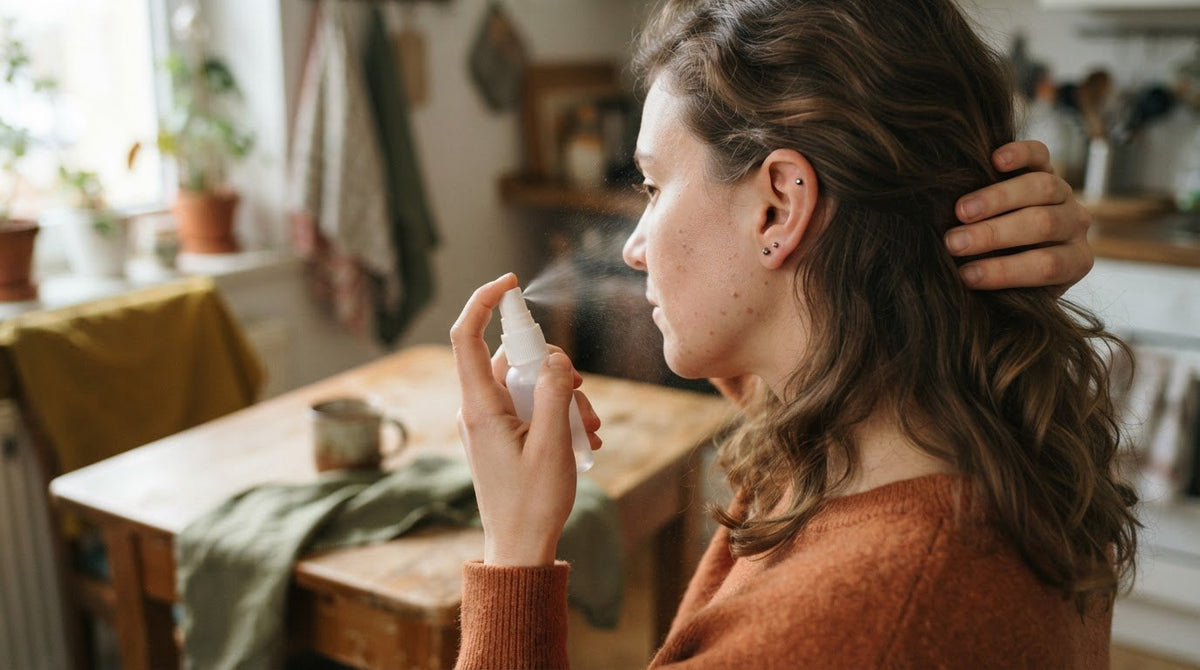
The jewelry may be small; the healing window isn’t. The typical flat piercing healing time is 6 to 12 months, so patience and consistent care are part of the process. This piercing sits in cartilage on the upper ear, and its location can affect what feels comfortable while it heals.
That timeline can feel longer than expected, especially when the area is tender or you’re eager to change your jewelry. Healing isn’t just about waiting for the outside to look settled; it also means giving the piercing time and avoiding unnecessary irritation.
Here, you’ll learn what defines a flat piercing and how its placement shapes everyday care. We’ll also cover what discomfort may feel like, how saline fits into aftercare, and how to support steady healing without rushing the process.
Key Takeaways
- Plan to keep the initial jewelry in place while healing; guidance commonly recommends waiting 6 to 9 months before a first change and having a piercer confirm healing.
- Use saline as part of a steady aftercare routine, and avoid twisting or rotating the jewelry.
- Reduce pressure on the piercing by avoiding sleep on that ear, which can help limit irritation during healing.
- Expect cartilage discomfort to vary; understanding the piercing’s placement and typical tenderness can help you prepare for the healing process.
What Exactly Is A Flat Piercing?
A flat piercing passes through the cartilage on the upper flat area of the ear, between the helix and rook. It usually holds a cartilage stud with either a flat back or bead back. Cartilage heals slowly, so the flat piercing healing time is commonly 6 to 12 months.
Like helix and conch piercings, a flat piercing passes through ear cartilage and takes a long time to heal. The exact flat piercing healing time varies by piercing and person, so don’t assume these placements share an identical timeline.
Healing progresses from early tenderness and swelling to calmer tissue, followed by deeper healing beneath the skin. A piercing can look settled before it has fully healed, so appearance alone isn’t a reliable reason to stop aftercare.
Healing can be affected by whether jewelry is downsized as swelling subsides, as well as by irritation and setbacks during aftercare. Pressure and unnecessary movement can disturb healing; saline makes routine cleaning simple.
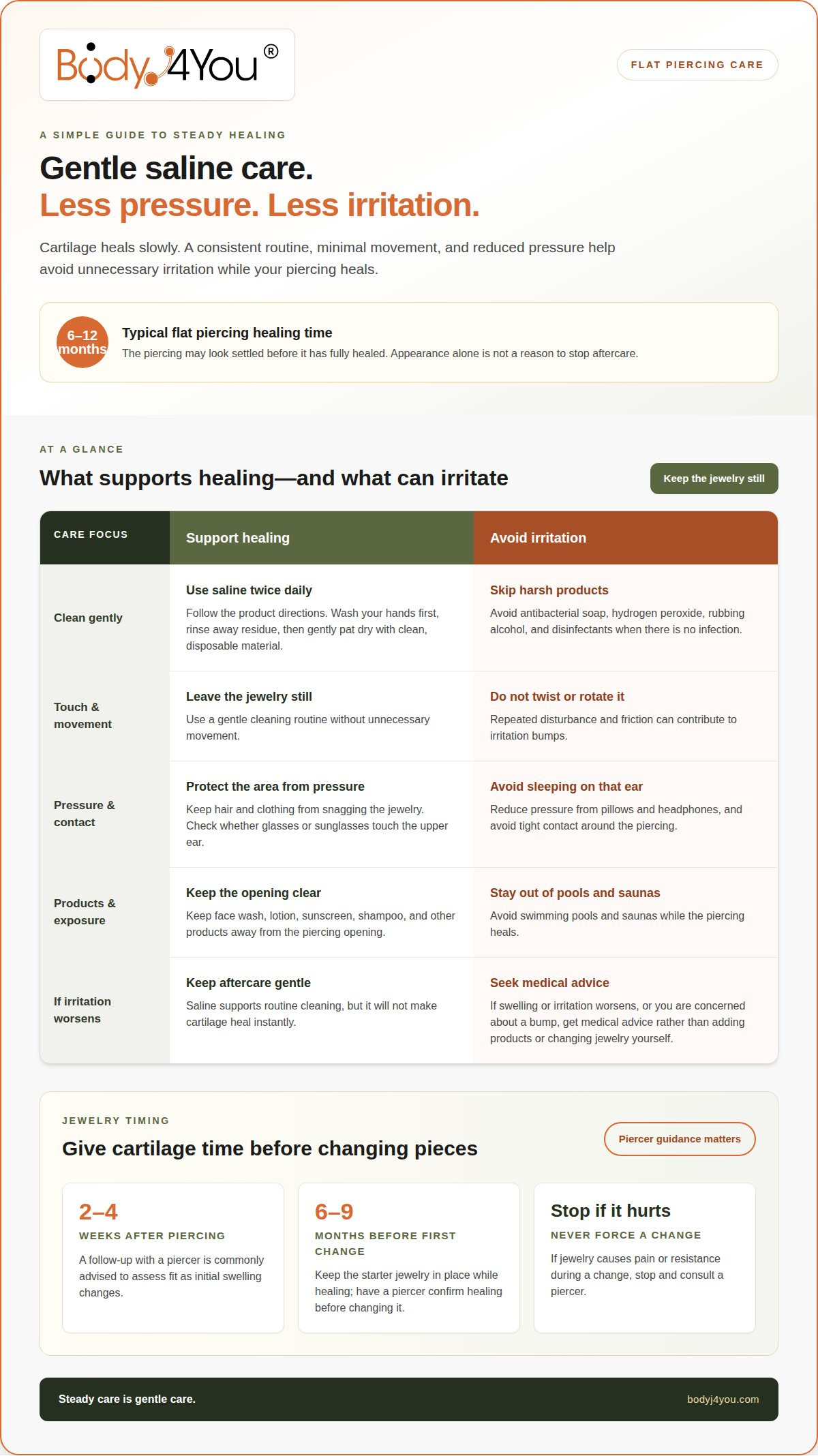
Keep the starter jewelry in place while the cartilage heals. A piercer can assess whether it needs downsizing as swelling goes down, with a follow-up commonly advised 2-4 weeks after piercing. For a first jewelry change, wait 6 to 9 months and have a piercer confirm healing before changing pieces or stopping aftercare.
Recommended starter jewelry includes titanium, with a flat-back stud offering a low-profile style. Flat piercing jewelry is usually 14g or 16g, with a 5/16 inch length. A piercer can help ensure the fit leaves room for swelling without unnecessary movement.
Save decorative jewelry for after healing is confirmed. Solid gold of at least 14 carats is one option mentioned for healed or downsized piercings; avoid treating gold-plated pieces as equivalent. If jewelry causes pain or resistance during a change, stop rather than forcing it, and consult a piercer.
Saline cleaning and aftercare
Consistent aftercare for a cartilage piercing means gentle cleaning and less pressure on the healing area. A simple routine supports healing without twisting the jewelry or using harsh products.
Aftercare for Healing
Clean the piercing with saline solution twice daily, following the product directions. Wash your hands before touching the area, then rinse away residue and gently pat it dry with clean, disposable material. This routine removes everyday buildup without unnecessary movement. Avoid antibacterial soap, hydrogen peroxide, rubbing alcohol, and disinfectants, which can irritate a piercing when there’s no infection.
Keep face wash, lotion, sunscreen, shampoo, and other products away from the piercing opening. Don’t rotate earrings or twist jewelry during cleaning. Avoid sleeping on the pierced ear, and stay out of swimming pools and saunas while it heals. These habits reduce pressure and exposure that can aggravate cartilage.
Preventing Irritation Bumps
An irritation bump is a raised area that can develop when a piercing is repeatedly disturbed. Reduce friction by leaving the jewelry still, keeping hair and clothing from snagging it, and avoiding pressure from pillows or headphones. A helix piercing can face similar friction from daily contact, so careful positioning matters for both placements.
Saline cleaning won’t make cartilage heal instantly, but a steady twice-daily routine supports gentle care. Don’t use alcohol, peroxide, or harsh disinfectants to treat a bump. If swelling or irritation worsens, or you’re concerned about a bump, seek medical advice rather than adding products or changing jewelry yourself.
For a convenient way to follow saline aftercare, explore saline piercing aftercare spray. Use it as directed, and keep pressure, twisting, and product residue away from the piercing.
Flat piercing location and anatomy
A flat piercing sits on the upper flat area of the ear, between the helix and rook. It passes through ear cartilage, not the soft earlobe. Its position gives the jewelry a visible, relatively level surface, while each ear’s anatomy shapes the space available for placement.
The flat area varies from ear to ear. A piercer assesses its shape and the surrounding cartilage before choosing the entry point and jewelry fit. If the surface is too small or sloped, a flat piercing may not suit that anatomy. Placement should follow the ear’s natural contours rather than force a preferred position.
Swelling matters because jewelry needs room as the tissue responds to piercing. A piece that presses against the ear or catches on nearby areas can add pressure and irritation. Follow-up with a piercer 2-4 weeks after piercing allows the fit to be assessed as initial swelling changes. Downsizing is considered when the jewelry no longer needs extra room.
Ear crawlers are shaped to follow the outer contour, while a flat-back stud sits against the flat area. These styles interact differently with ear anatomy: a crawler follows the rim, and a flat stud occupies the cartilage surface. Before choosing a decorative piece, consider where it rests and whether its shape could press against the piercing. A healed piercing offers more styling flexibility than a fresh one.
Placement also affects everyday contact. Glasses or sunglasses may sit near the upper ear, so check whether their arms touch the jewelry or surrounding cartilage. Clean glasses and sunglasses daily to help reduce irritation around the piercing. Avoid pressure from a tight fit, and don’t shift the jewelry to accommodate eyewear. If regular contact is difficult to avoid because of the piercing’s location, discuss placement and suitable jewelry with a piercer before proceeding.
Pain and discomfort
A flat piercing passes through cartilage, so consider the brief needle procedure separately from the discomfort during healing. Knowing what the appointment may feel like can help you plan for aftercare.
Pain Expectations
Piercing pain is the sensation during the needle procedure; tenderness can continue as the area heals. Cartilage piercings tend to hurt more than soft-tissue piercings because the needle passes through firmer tissue. Expect a quick, focused sensation during the appointment, followed by sensitivity around the jewelry. Avoid scheduling activities that could press or knock against your ear immediately afterward.
Pain Level
A flat piercing is commonly rated about 5 out of 10 on a pain scale. This offers a general reference, not a promise of an identical experience; pain perception differs between people. Comparing it with a lobe piercing can help set expectations, since the lobe is soft tissue and the flat is cartilage. The number describes piercing pain, not the full healing process.
After the appointment, pressure or accidental contact can make the area uncomfortable. Sleeping on the pierced ear may press the jewelry into the cartilage, so choose a position that leaves the ear free. Keep the jewelry still during cleaning, and use saline solution as directed rather than twisting it to assess tenderness. A titanium starter piece is recommended for a flat piercing.
Consider discomfort alongside other changes in the piercing. Contact a piercer about complications, and consult a doctor if symptoms persist or worsen. Avoid forcing jewelry or repeatedly touching the area to test whether it hurts, since that adds movement without clarifying what’s causing the discomfort.
Keep your aftercare routine gentle while the cartilage settles. Explore piercing aftercare essentials to support consistent cleaning during healing.
BodyJ4You: Saline Piercing Aftercare Spray
BodyJ4You’s Saline Piercing Aftercare Spray offers a convenient saline option for routine piercing care. Use it as directed on the product label, keeping your cleaning routine gentle and avoiding unnecessary movement of the jewelry.
A ready-to-use saline spray can be a practical addition to aftercare for a healing flat piercing, especially if you prefer it to preparing a saline solution. Saline supports cleaning, but it doesn’t replace avoiding pressure, touching, or twisting the piercing. Follow your piercer’s aftercare advice, and seek medical guidance if symptoms persist or worsen.
For questions about the Saline Piercing Aftercare Spray or other piercing aftercare options, contact BodyJ4You.
Make Aftercare Part of Your Routine
Use the flat piercing healing time to set expectations, not dictate your day. A steady routine can make care easier to maintain, while paying attention to changes helps you respond thoughtfully instead of rushing a jewelry change. If discomfort worsens or symptoms persist, seek medical advice.
Choose aftercare essentials that match the care you’re planning. BodyJ4You offers Saline Piercing Aftercare Spray, as well as an Acrylic Ear Stretching Kit and Surgical Steel Taper and Plug Kit for ear stretching. Each has a distinct purpose, so focus on the item that fits your current piercing or stretching needs.
Questions about BodyJ4You’s piercing care offerings? Contact BodyJ4You with your questions. Keep your routine calm and consistent, and give your ear the time it needs.
Frequently Asked Questions
When to change your jewelry for the first time?
Wait until healing is confirmed before changing jewelry for the first time; a common guide is 6 to 9 months after piercing. A planned jewelry change isn’t the same as downsizing: a piercer may assess fit as swelling subsides. If jewelry causes pain or resistance during a change, stop rather than pushing it through, and consult a piercer.
What to do in case of complications?
Contact your piercer about a flat piercing complication, and consult a doctor if symptoms persist or worsen. Don’t try to solve the problem by twisting jewelry, forcing a change, or adding harsh products. For example, if tenderness is getting worse rather than settling, seek professional advice promptly instead of treating the change as routine healing.
How long does a flat ear piercing take to heal completely?
A flat ear piercing may take 6 to 12 months to heal fully. Cartilage healing can take longer when the area is irritated or healing encounters setbacks, so a settled appearance alone doesn’t confirm complete healing. Keep up aftercare until a piercer confirms the piercing is healed, especially before changing jewelry or stopping your routine.
How often should you clean a flat piercing, and with what?
Clean a healing flat piercing with saline solution twice daily. Wash your hands first, apply saline gently, and avoid rotating or twisting the jewelry. Skip hydrogen peroxide, rubbing alcohol, antibacterial soap, and disinfectants when there’s no infection, since these can irritate the skin. Follow the product directions, and keep face wash or shampoo residue away from the piercing.
When can you change jewelry in a flat piercing?
For a full jewelry change, wait until the piercing is healed and a piercer confirms it; a common first-change timeframe is 6 to 9 months. Downsizing is a separate fit adjustment after initial swelling decreases. Don’t force jewelry through resistance or pain. If it won’t move easily, stop and contact a piercer for guidance.
What are signs of infection or other complications in a flat piercing?
Persistent or worsening symptoms are a reason to seek medical advice; contact your piercer about complications as well. A piercing bump or irritation can raise concerns, but don’t diagnose the cause or apply harsh disinfectants on your own. Avoid changing or removing jewelry as a quick fix, and get professional guidance if the area’s condition is deteriorating.


