


Redness alone doesn’t tell you whether a piercing is infected or just irritated. If you’re asking, “Is my piercing infected or just irritated?” look at the pattern: mild, localized tenderness or swelling can happen during healing or after friction, while increasing heat, intense throbbing pain, thick pus, spreading redness, or feeling feverish are more concerning signs of infection.
It’s understandable to feel unsure: normal healing and irritation can both cause redness, tenderness, and a little crust. Pay attention to how symptoms change over time. Symptoms that worsen instead of settling deserve attention.
Here, you’ll learn how to tell common healing and irritation signs from possible infection, what can trigger irritation, and why you generally shouldn’t remove jewellery yourself if you suspect infection. You’ll also learn when to seek medical care and how gentle aftercare can help avoid further irritation.
Key Takeaways
- Judge symptoms by how they change over time, not redness alone; worsening pain, heat, or discharge calls for closer attention.
- Leave jewellery in place if infection is suspected, and seek medical care for severe or worsening symptoms.
- Reduce common irritation triggers such as pressure, repeated touching, and harsh cleaning products.
- Choose gentle aftercare and avoid adding extra products or handling that could further disturb the piercing.
Is My Piercing Infected or Just Irritated?
Redness and tenderness can occur during healing or from irritation, so watch for worsening symptoms. Heat, spreading redness, thick discharge, or feeling unwell can point to a possible infection.
Signs of Irritation and Infection
Irritation is often localized; infection is more concerning when symptoms intensify or spread. A bump, dry skin, mild redness, slight swelling, and tenderness can follow pressure, clothing friction, or repeated touching. Increasing heat, throbbing pain, or thick yellow, green, or foul-smelling discharge needs attention. If cartilage piercing symptoms worsen, seek medical advice promptly. Worsening symptoms from nose or oral piercings also need clinical assessment, but these signs alone don’t establish that one location is more dangerous than an earlobe.
Normal Healing and Symptom Duration
Normal healing can include mild tenderness, itching, light redness, some swelling, and small crusts of dried lymph or blood. A small amount of clear fluid may appear during the first 24-48 hours, and mild soreness can last a few days. Redness and swelling should ease rather than spread or intensify. Initial healing takes 6 to 8 weeks for earlobes and 6 to 12 months for cartilage piercings, so mild symptoms can occur during healing.
Signs Requiring Medical Attention
Signs requiring medical attention include skin that feels hot, severe or increasing pain, spreading redness or red streaks, and thick pus-like discharge. Contact a health care provider for a fever of 100.4 °F or higher, yellow-green or foul-smelling discharge, or an area that is warm or extremely painful. Fever, chills, nausea, vomiting, dizziness, extreme swelling, or large amounts of discolored pus call for immediate medical attention. Clinicians may treat an infection with antibiotics; severe infections may need additional professional treatment.
Care for an Irritated or Infected Piercing
Care means keeping the area clean while avoiding actions that add irritation. Wash your hands before touching it, clean gently with sterile saline, and leave jewellery in place if infection is suspected. When saline is recommended, use packaged sterile wound wash containing 0.9% sodium chloride. Don’t rotate or handle the jewellery unnecessarily. Avoid rubbing alcohol, hydrogen peroxide, tea tree oil, and antibacterial soaps; the Association of Professional Piercers advises against these on healing piercings. Don’t use leftover antibiotics. If symptoms worsen or fail to improve, seek medical advice rather than relying on cleaning alone.
Whether to remove jewellery from an infected piercing
If infection is possible, leave the jewellery in place unless a health care provider advises you to remove it. Swelling, how the jewellery fits, and signs of infection all affect the safest next step.
Jewellery Removal During Suspected Infection
Leaving jewellery in place avoids an unsupervised change while the piercing is inflamed. Removing it yourself can cause additional trauma, especially if the tissue is swollen or painful. Don’t force tight or stuck jewellery through the piercing. If a piece is embedded, contact a health care provider promptly.
If swelling makes your jewellery feel too tight, seek medical advice rather than removing it yourself. A piercer can assess the fit and change it to a longer or larger piece if needed. This can make room for swelling without repeatedly moving the piercing or adding avoidable irritation.
Jewellery Materials and Metal Sensitivity
Jewellery can contribute to irritation if it causes a sensitivity reaction or exposes skin to certain metals. Plated or costume jewellery may break down and expose the piercing to metals such as nickel. Redness or discomfort around the jewellery can have several causes, so don’t assume metal sensitivity rules out infection.
For initial piercings, the Association of Professional Piercers recommends ASTM F136 titanium, ASTM F138 steel, niobium, or solid gold of at least 14 karat. Hypoallergenic, nickel-free earrings can reduce irritation or allergic reaction risk. Avoid switching jewellery during suspected infection without clinical or professional guidance.
Keep the area clean and avoid touching, twisting, or changing jewellery unnecessarily. Don’t use peroxide to clean the piercing; harsh products can worsen irritation. If a piece catches on clothing or presses against swollen tissue, seek advice about fit instead of forcing it. Gentle saline aftercare, such as a saline piercing aftercare spray, supports routine cleaning, but it doesn’t replace medical care for suspected infection. Focus on limiting friction and handling while symptoms are assessed.
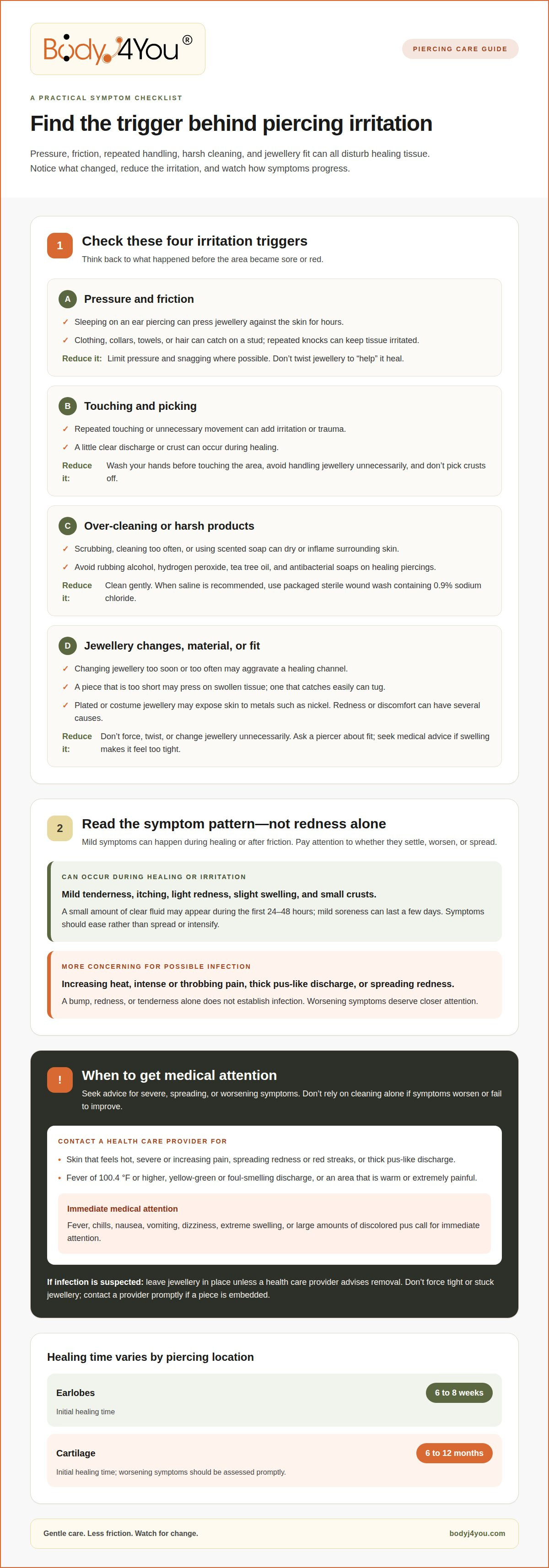
Common causes of piercing irritation
Irritation often follows repeated pressure, friction, or cleaning that disturbs healing tissue. A piercing bump can develop after localized irritation or trauma, but it doesn’t automatically mean infection. Think about what changed before the area became sore, such as a snagged earring or a new cleanser.
Everyday movement can stress a piercing. Sleeping on an ear piercing presses jewellery against the skin for hours, while a shirt collar, towel, or hair can catch on a stud. Repeated knocks or unnecessary touching may keep the tissue irritated. Reduce pressure and snagging where possible, and don’t twist the jewellery to “help” it heal.
Cleaning can also cause irritation. Scrubbing, cleaning too often, or using alcohol, hydrogen peroxide, or scented soap can dry or inflame the surrounding skin. Clean gently, and use saline when appropriate for piercing aftercare. A little clear discharge or crust can occur during healing. Don’t pick it off, as this can cause more trauma.
Jewellery changes may aggravate a healing channel, especially if pieces are changed too soon or often. Poor fit can add pressure: jewellery that’s too short may press against swollen tissue, while a piece that catches easily can tug the piercing. Piercing placement or angle can also contribute to ongoing friction. A follow-up appointment, typically 2 to 4 weeks after the initial piercing, lets a piercer check jewellery fit.
A localized bump may result from pressure, snagging, or unsuitable jewellery rather than infection. Keep the area clean, don’t squeeze the bump, and address the trigger instead of applying multiple treatments. Saline cleaning twice daily is recommended for a piercing bump. If symptoms worsen, discharge becomes thick or discolored, or the area feels hot, seek medical advice rather than treating a possible infection as a routine bump.
Differences between piercing infection and irritation symptoms
The clearest distinction is the symptom pattern: irritation often stays localized, while infection may intensify or spread. Redness alone can’t tell them apart. If you’re asking, “is my piercing infected or just irritated?”, track whether pain, swelling, warmth, or discharge is improving, staying the same, or worsening. Recent pressure, jewellery changes, or cleaning habits can also provide useful context.
Irritation is more likely when symptoms follow a clear trigger, such as sleeping on an ear piercing or snagging it on clothing. A small bump, dry skin, mild redness, or tenderness can result from friction or repeated handling. Symptoms that settle after you remove the trigger are more consistent with irritation than worsening infection, though appearance alone can’t confirm the cause.
Infection becomes more concerning when several changes occur together:
- Increasing warmth around the piercing with worsening swelling or throbbing pain.
- Thick yellow or green discharge, especially with an unpleasant smell.
- Spreading redness, red streaks, or feeling feverish, chilled, or generally unwell.
Discharge needs context. A little clear or pale fluid that dries into a crust can occur during healing. Thick, discolored pus alongside heat or worsening pain is a stronger warning sign. Mild redness near a new piercing differs from redness that spreads beyond the site. Aftercare can reduce avoidable irritation, but it can’t treat an established infection.
If you’re still wondering, “is my piercing infected or just irritated?”, consider the trend rather than one isolated symptom. If symptoms worsen, the skin feels hot, or redness spreads, contact a health care provider. Seek prompt care for fever, red streaks, extreme swelling, or significant pus. Avoid applying alcohol or peroxide, which can further irritate healing tissue. For routine saline aftercare, choose a saline piercing aftercare spray; don’t use it as a substitute for medical assessment when infection signs appear.
BodyJ4You
BodyJ4You offers piercing jewellery and aftercare products for readers managing routine care or irritation. Its range includes saline aftercare spray, cleaning swabs, bump treatment oil, and jewellery options, so you can choose products that fit your piercing-care needs.
Aftercare products support routine care; they don’t diagnose or treat an infection. If you notice worsening pain, spreading redness, fever, or thick discharge, seek medical care rather than relying on an oil or cleaning product. For a localized bump or routine cleaning, follow appropriate care guidance and avoid adding products that further irritate the area.
For questions about BodyJ4You’s piercing-care products, contact BodyJ4You.
Choose your next step with care
Your next move depends on whether you need medical care or routine piercing supplies. If symptoms are severe or worsening, prioritize a health care provider. For everyday aftercare needs, BodyJ4You offers a Saline Piercing Aftercare Spray, an Acrylic Ear Stretching Kit, and a Surgical Steel Taper and Plug Kit. These products serve different purposes; choose only what fits your situation, and don’t use aftercare products as a substitute for medical assessment.
If you’re still deciding whether your piercing is infected or just irritated, focus on what will best protect your health: seek care for concerning symptoms, and keep routine care gentle. For questions about BodyJ4You products, contact BodyJ4You about piercing care. Take the next step calmly, with your wellbeing first.
Frequently Asked Questions
When It Comes to Pus, What’s Normal and What’s an Infection?
A little clear or white lymph fluid can dry into a light crust during healing; this isn’t the same as thick pus. Yellow or green discharge, especially if it smells bad or comes with warmth and worsening pain, is more concerning. Don’t squeeze or scrape the area to inspect it. If discharge is thick, discolored, or increasing, contact a health care provider.
What Is a Piercing Bump?
A piercing bump is a raised area beside the piercing that can form after localized irritation or trauma. Repeated pressure from sleeping on an ear or snagging jewellery, for example, may contribute. A bump doesn’t automatically mean infection, and its appearance alone can’t confirm the cause. Don’t squeeze it or apply multiple treatments; worsening pain, heat, or discharge calls for medical advice.
What Is Common During the Healing Process?
Healing can involve mild tenderness or itching, light redness, slight swelling, and small crusts. Clear or white lymph fluid may dry around the opening, while dry or flaky skin can occur as tissue settles. Earlobes usually have an initial healing period of 6 to 8 weeks; cartilage piercings may take 6 to 12 months. Healing time varies by piercing location.
What’s Normal for a New Piercing?
A new piercing may be mildly sore for a few days, with some swelling during the first few days. Small amounts of blood or clear fluid can appear during the first 24-48 hours. These signs should ease rather than become more intense. For example, a light crust that stays close to the opening differs from redness that continues spreading.
What Are the Signs of an Infected Piercing Versus Normal Irritation?
Irritation often follows a recognizable trigger, such as snagging jewellery or pressure from sleeping. Infection is more concerning when symptoms build instead of settling, particularly with increasing heat, throbbing pain, thick discharge, or feeling unwell. Compare the area over time rather than relying on one glance. If symptoms worsen or fail to improve, seek medical advice.
What Does an Infected Piercing Look Like, Including Pus and Red Streaks?
An infected piercing may look increasingly swollen, hot, and intensely red, with thick yellow or green pus. Red streaks extending from the piercing are a warning sign that needs prompt medical attention. Fever, chills, dizziness, nausea, or extreme swelling also warrant urgent care. A fever of 100.4 °F or higher is a reason to contact a health care provider.


