


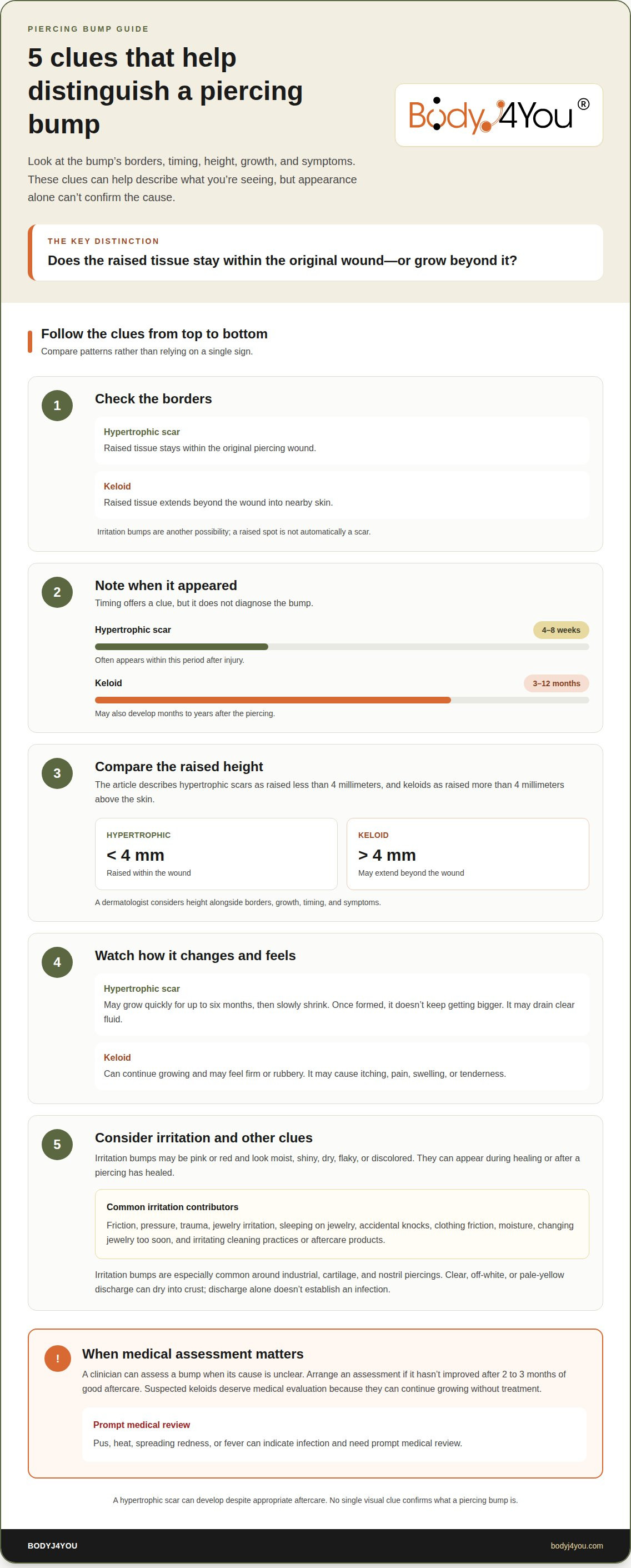
A raised piercing bump isn’t automatically a keloid. In hypertrophic scarring vs. keloid piercing bumps, the key difference is whether the raised tissue stays within the original wound or grows beyond it. Hypertrophic scars often appear within four to eight weeks, while a keloid may take three to 12 months to develop.
It’s understandable to worry when a bump appears, especially since irritation, scarring, and infection can look similar at first. Knowing what to look for can help you care for the area gently and recognize when it needs medical attention.
This guide explains how hypertrophic scars, keloids, and irritation bumps differ, why they develop, and which medical treatments may help. You’ll also find practical piercing-care basics, including how to clean the area and what to avoid during healing.
Key Takeaways
- Notice how a bump looks and feels, and whether it changes over time, to better understand what may be happening.
- Reduce common sources of irritation with gentle cleaning and avoid harsh products that can aggravate healing tissue.
- Learn which medical treatments may be considered for raised scars and why suspected keloids need professional assessment.
- Recognize signs such as pus, spreading redness, heat, or fever that call for prompt medical care.
What are hypertrophic piercing bumps?
The main difference in hypertrophic scarring vs keloid piercing is whether raised tissue stays within the wound or spreads beyond it. Timing, texture, and changes around the piercing offer useful clues, but a clinician can assess a bump when its cause is unclear.
Bump and Scar Appearance
A hypertrophic scar is raised tissue that stays within the original piercing wound, while a keloid extends beyond it. This difference matters because growth onto nearby skin may suggest a keloid rather than a localized scar.
Hypertrophic scars may appear as small, raised, flesh-colored bumps around the piercing’s entry or exit point. Irritation bumps may be pink or red and look moist, shiny, dry, flaky, or discolored. A keloid on an earlobe may form a round, hard mass. Appearance alone can’t confirm the cause.
Timing, Growth, and Symptoms
A piercing bump can appear within weeks, and hypertrophic scars generally appear four to eight weeks after injury. A keloid may develop three to 12 months later, or months to years after the piercing. Timing offers clues, but doesn’t diagnose the bump.
Hypertrophic tissue may grow quickly for up to six months, then slowly shrink. Once formed, a hypertrophic bump doesn’t keep getting bigger. Keloids can continue growing. They may feel firm or rubbery and cause itching, pain, swelling, or tenderness, while a hypertrophic scar may drain clear fluid.
Not every raised spot is a scar. Irritation bumps can develop during healing or after a piercing has healed, particularly around industrial, cartilage, and nostril piercings. Friction, pressure, trauma, or jewelry irritation can contribute. Clear, off-white, or pale-yellow discharge may dry into crust, so discharge alone doesn’t establish an infection.
The hypertrophic scarring vs keloid piercing distinction also involves height: hypertrophic scars are described as raised less than 4 millimeters, while keloids are raised more than 4 millimeters above the skin. A dermatologist considers borders, growth, timing, and symptoms before discussing treatment options. A hypertrophic scar can develop despite appropriate aftercare.
How do hypertrophic scars happen?
Scar formation begins as the body repairs tissue after a piercing injury. Sometimes collagen and granulation tissue build up excessively, creating a raised scar. The causes differ: hypertrophic scars are often associated with friction or trauma, while keloids reflect a tendency toward scar overgrowth. This distinction helps explain why similar-looking bumps can behave differently.
Repeated pressure can keep irritating tissue as a piercing heals. Sleeping on jewelry, accidental knocks, clothing friction, moisture, or changing jewelry too soon can contribute to irritation bumps. Cleaning practices and aftercare products may also irritate the area. These triggers don’t mean a keloid will form. Someone prone to keloids can develop one after an injury, even though irritation bumps are usually separate from keloid scars.
Location and borders offer useful clues. A hypertrophic scar stays within the original wound, while a keloid can extend beyond it into nearby skin. Irritation bumps are especially common around industrial, cartilage, and nostril piercings. Hypertrophic scars are more common after surgery or burns than after piercings, where irritation bumps occur more often. A piercing scar can still develop despite appropriate aftercare.
Color and texture vary, so they can’t establish the diagnosis on their own. Irritation bumps may be pink or red and look moist, shiny, dry, flaky, or discolored. Hypertrophic scars often appear as raised tissue at the piercing entry or exit. A keloid may feel firm or rubbery and cause itching, pain, swelling, or tenderness. The growth pattern and its relation to the wound matter too.
Genetic makeup influences keloid susceptibility, and these scars are more frequent among people with deeper skin tones. A dermatologist considers the piercing’s location, injury history, tissue borders, and symptoms together. Avoid adding pressure or friction while the area heals. If you’re considering stretching a fully healed piercing, explore the Surgical Steel Taper and Plug Kit; it isn’t a scar treatment.
Medical treatment for hypertrophic scars and keloids
Treatment depends on whether the raised tissue is a hypertrophic scar or a keloid. In the United States, keloid-treatment costs vary by procedure and treatment plan. Insurance coverage depends on the policy and medical circumstances.
Hypertrophic Scar Treatment Options
Hypertrophic scar treatments can include silicone gel sheets, corticosteroids, cryotherapy, laser therapy, massage, compression, or pressure therapy. These options address raised scar tissue in different ways, so treatment needs to match the scar. A dermatologist can assess it and discuss suitable medical care. Many hypertrophic scars resolve without treatment, but persistent symptoms or changes deserve attention.
Keloid Treatment and Recurrence
Keloids often need medical treatment because they don’t resolve without it. Small or early ear keloids are usually treated first with a course of steroid injections. Injections are given every four to six weeks, and studies report that 50% to 80% of keloids shrink after corticosteroid injections. Surgery can remove a keloid, but it can regrow afterward, so follow-up treatment may be part of care.
Laser and Topical Treatments
Laser therapy is one treatment option for raised scars, while silicone gel and sheets provide topical care. Silicone gel is applied to a scar twice a day. Scar dressings may be worn 12-24 hours per day for at least 8 to 12 weeks. These approaches differ from piercing aftercare: products intended for a healing piercing don’t replace medical treatment for established scar tissue.
When to Seek Medical Evaluation
A suspected keloid deserves medical evaluation because it can continue growing without treatment. Arrange an assessment if a piercing bump hasn’t improved after 2 to 3 months of good aftercare. Pus, heat, spreading redness, or fever can indicate infection and need prompt medical review. If infection is suspected, seek care from a primary care provider rather than treating the symptoms as scar tissue.
When should a piercing bump be evaluated by a doctor, and what symptoms need urgent care?
A piercing bump that hasn’t improved after 2 to 3 months of good aftercare should be assessed. Arrange medical evaluation sooner if it keeps enlarging, becomes increasingly painful, or changes beyond the original piercing site. Those changes can help a clinician distinguish ongoing irritation from a scar that needs treatment.
Some symptoms call for prompt medical attention. Pus, heat, spreading redness, or fever around a piercing may indicate infection. If you suspect an infection, contact a primary care provider rather than treating it as a scar. These signs matter even if the bump was previously small or seemed stable.
A suspected keloid also warrants assessment by a doctor or dermatologist. Keloids can continue growing without treatment, and they may develop well after the piercing injury. A firm mass on an earlobe, for example, deserves attention if it expands or causes discomfort. Don’t rely on appearance alone to identify the tissue.
Before an appointment, note when the bump first appeared and how it has changed. Record whether it stays within the piercing site or extends onto nearby skin. Mention symptoms such as tenderness or itching, any discharge, and recent changes to jewelry or aftercare. These details give the clinician a clearer timeline and context.
Until the bump is assessed, avoid squeezing it, picking crusts, or repeatedly changing jewelry. Extra friction can aggravate irritated tissue, while squeezing may injure the area. Keep routine cleaning gentle; saline is used for piercing care, not as a substitute for infection treatment. If you use a Saline Piercing Aftercare Spray, follow its product directions and seek medical care for infection symptoms.
If symptoms worsen, don’t wait for a routine follow-up. Fever alongside spreading redness, for example, calls for prompt medical attention. Timely assessment can help distinguish a possible infection from irritation or scar overgrowth and guide the next care decision.
BodyJ4You
BodyJ4You offers practical piercing-care products for readers maintaining a piercing while distinguishing irritation from scar tissue. Saline Piercing Aftercare Spray and Piercing Cleaning Swabs support routine cleaning, while Piercing Bump Treatment Oil is another option for piercing-bump care. These products are not medical treatment for a keloid or hypertrophic scar, and they don’t replace a dermatologist’s assessment when a bump grows, persists, or causes concern.
Choose care that suits the piercing’s needs, while keeping medical symptoms in view. For infection signs such as pus, heat, spreading redness, or fever, seek prompt medical care rather than relying on aftercare products. For routine piercing care, explore suitable options and follow each product’s directions.
Contact BodyJ4You if you have questions about its piercing-care products.
Choose your next care step with confidence
A piercing is part of your self-expression, and thoughtful care can help you protect that choice. Understanding hypertrophic scarring versus a keloid after piercing gives you a clearer basis for deciding whether routine aftercare suits your needs or a medical assessment should come first. Keep the two paths distinct: piercing-care products support routine care, while a clinician evaluates scar changes and possible infection.
For ongoing piercing care, BodyJ4You offers a Saline Piercing Aftercare Spray, plus an Acrylic Ear Stretching Kit and Surgical Steel Taper and Plug Kit for their respective uses. These products aren’t substitutes for professional evaluation or medical scar treatment. Choose the next step that fits your situation, without rushing a healing piercing or self-treating a concerning bump.
Contact BodyJ4You for piercing support, and take your next step with care.
Frequently Asked Questions
What Is a Keloid?
A keloid is a raised scar that can form as the skin heals after an injury. At a piercing, it may spread beyond the original wound rather than staying within the entry point. It can feel firm or rubbery. An earlobe piercing, for example, may develop a rounded, firm mass that grows beyond the piercing itself.
How Do You Get Rid of a Bump on a Piercing?
Start by reducing possible irritation and keeping routine cleaning gentle. Wash the area once a day with saline or mild soap and water, then avoid pressure, friction, and unnecessary handling. Don’t apply aspirin paste, rubbing alcohol, or hydrogen peroxide, which can harm healing tissue. Undiluted tea tree oil may also irritate skin. Seek medical care for signs of infection or a persistent bump.
What Is a Hypertrophic Scar?
A hypertrophic scar is raised scar tissue that stays within the borders of the original injury. Unlike a keloid, it doesn’t spread onto surrounding skin. It may form at a piercing’s entry or exit point, sometimes after friction or trauma. Appearance alone can’t confirm the diagnosis, so a clinician can assess changes that persist or cause discomfort.
Should I take my jewellery out if I have a bump?
Don’t remove or change jewelry yourself during the first six weeks of bump care. Movement and repeated jewelry changes can add irritation while the piercing is still healing. If jewelry feels tight, causes pressure, or seems to worsen the bump, seek medical advice before changing it. If there’s pus, heat, spreading redness, or fever, seek prompt medical care rather than relying on jewelry changes.
What Is an Irritation Bump?
An irritation bump is a raised spot linked to stress on the piercing, not necessarily to scar overgrowth. For example, pressure from sleeping on cartilage jewelry or friction around an industrial piercing may aggravate the site. The bump may produce clear, off-white, or pale-yellow fluid that dries into crust. Discharge alone doesn’t prove infection; heat, spreading redness, pus, or fever need medical attention.
Which piercing sites are most likely to develop keloids?
Keloids can form wherever a piercing injures skin, and earlobes are a notable site. A keloid there may become a rounded, firm mass. Nose and ear cartilage piercings are often associated with hypertrophic scars and irritation bumps, which aren’t the same as keloids. Personal tendency to form keloids also matters, so site alone can’t predict whether a particular piercing will develop one.


