


A daith piercing is the piercing most often mentioned when people ask what piercing helps with anxiety, but there’s no scientific evidence that it treats anxiety. The proposed explanation is that pressure on an ear point may affect the vagus nerve, yet research hasn’t shown that this mechanism makes a piercing an anxiety treatment.
It’s understandable to wonder whether a small, personal choice could offer relief. A daith piercing may appeal as body jewelry, but it’s important to distinguish that aesthetic choice from proven mental health care. This article explains where the piercing sits, how the vagus nerve theory is described, and what’s known about pain, healing, and possible complications. You’ll have a clearer basis for deciding whether a daith piercing is right for you, without mistaking a proposed benefit for an established one.
Key Takeaways
- A daith piercing sits in the inner cartilage fold, but its proposed anxiety benefit hasn’t been established by scientific evidence.
- The vagus nerve theory offers a possible explanation, not proof that ear pressure can treat anxiety.
- Cartilage piercings can be painful and take months to heal, so understand the aftercare and infection risks before deciding.
- Learn which health factors may affect healing and why a piercing shouldn’t replace established anxiety care.
Daith Piercing for Anxiety: Does It Work?
People asking what piercing helps with anxiety often hear about the daith, but scientific evidence doesn’t establish it as an anxiety treatment. Its placement and proposed mechanism explain the claim, not prove that it brings relief.
Daith Piercing Location and Procedure
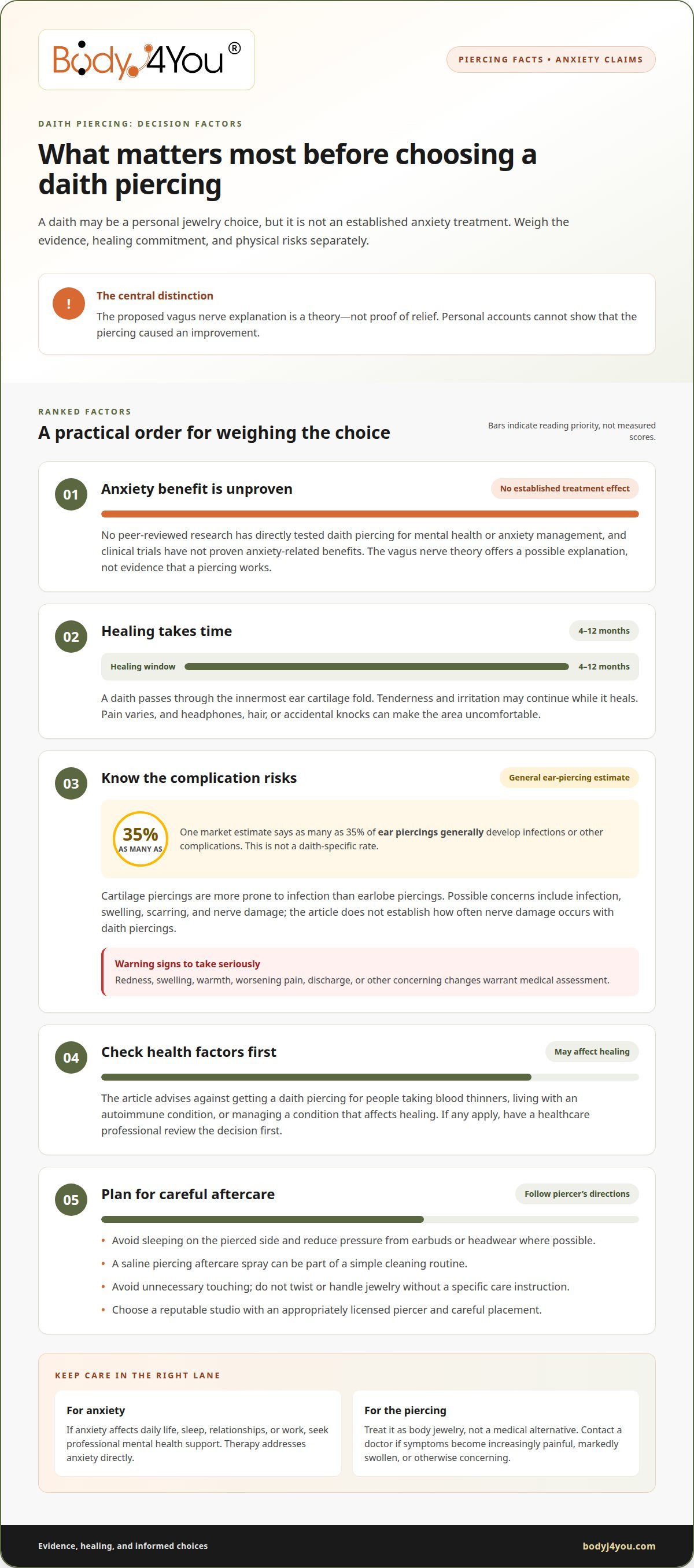
A daith piercing passes through the innermost cartilage fold of the ear, usually its thickest part. A professional piercer inserts jewelry through this fold, so precise placement matters for comfort and healing. The initial piercing may be painful, and healing can take 4-12 months.
Choose a reputable piercing studio with an appropriately licensed piercer. A clean, professional setting and careful placement matter for a cartilage piercing.
Proposed Anxiety Benefits
Some people believe a daith piercing can ease anxiety symptoms by stimulating an ear point associated with calm. Others link daith piercings with migraine relief, but those claims don’t demonstrate anxiety benefits. Personal accounts are anecdotal: they describe individual experiences, but can’t show that the piercing caused an improvement.
If anxiety affects daily life, sleep, relationships, or work, seek professional mental health support. Therapy addresses anxiety directly; a piercing shouldn’t replace it.
How the Proposed Mechanism Works
The theory draws on auriculotherapy, which treats the ear as a microsystem connected with the body. Supporters suggest pressure on a particular point could influence calming pathways, including the vagus nerve. They propose that jewelry keeps stimulating the spot, but this explanation doesn’t establish a therapeutic effect.
Evidence for Anxiety Relief
No peer-reviewed scientific research has directly tested daith piercing as a way to support mental health or manage anxiety. Clinical trials haven’t proven anxiety-related benefits. So, if you’re considering what piercing helps with anxiety, distinguish a personal report from evidence that the piercing itself changes symptoms.
There’s no single daith-piercing cost across the United States. The studio, jewelry, and location affect the total. Anxiety symptoms that persist or disrupt daily activities are a reason to seek professional help, whether or not you choose a piercing.
Pain, healing, and infection risks
A daith piercing passes through cartilage, so expect tenderness and a longer healing process than with an earlobe piercing. Healing can take 4-12 months, and irritation may continue during that period. Pain varies between people; pressure from headphones, hair, or accidental knocks can make a healing site uncomfortable.
Cartilage piercings are more prone to infection than earlobe piercings. Redness, swelling, warmth, worsening pain, or discharge can signal a problem that needs medical attention. Don’t assume persistent discomfort is normal just because cartilage takes time to heal. Avoid unnecessary touching, since hands can transfer germs to the piercing.
Aftercare needs to fit the long healing timeline. Avoid sleeping on the pierced side, and keep pressure from earbuds or headwear off the area where possible. A saline piercing aftercare spray can be part of a simple cleaning routine; follow the piercer’s aftercare directions. Don’t twist or handle jewelry without a specific care instruction.
Some people believe acupuncture pressure points can ease anxiety, but that belief doesn’t change the physical demands of a cartilage wound. Expectations may shape how someone interprets symptoms, while infection and irritation remain practical risks. Keep anxiety care separate from piercing aftercare, and don’t treat a piercing as a substitute for therapy.
Health factors matter before booking. People taking blood thinners, living with an autoimmune condition, or managing a condition that affects healing are advised not to get a daith piercing. If any of these apply, have a healthcare professional review the decision first. A careful choice supports healing, comfort, and overall wellbeing.
Infection, scarring, swelling, and nerve damage risks
Ear piercings can lead to infection or other complications. One market estimate says as many as 35% of ear piercings develop infections or other complications; this figure covers ear piercings generally, not daith piercings alone. It doesn’t tell you which complication will occur, but it shows why the healing process deserves attention.
A daith passes through cartilage, where persistent irritation can make swelling and discomfort harder to distinguish from ordinary healing. Excess pressure from jewelry, headphones, or repeated handling may aggravate the site. Scarring is another possible outcome, especially when tissue stays irritated. Avoid treating every change as harmless; a doctor can assess worsening symptoms and advise on appropriate care.
Nerve damage is also raised as a possible piercing concern, but the available facts don’t establish how often it occurs with daith piercings. The piercing’s location doesn’t prove that it can safely target a therapeutic pressure point. Claims about anxiety relief shouldn’t distract from physical changes around the piercing, including persistent swelling or unusual sensations.
Keep the distinction clear: anecdotal reports of calm or anxiety relief can’t show whether a piercing caused that experience. A placebo effect may influence how someone feels, but it doesn’t prevent infection, scarring, or swelling. Studies haven’t established daith piercing as an anxiety treatment, so it’s best viewed as body jewelry rather than a medical alternative.
If the area becomes increasingly painful, markedly swollen, or otherwise concerning, contact a doctor for an assessment. Don’t rely on online stories to diagnose a complication or decide how to manage jewelry. Taking physical symptoms seriously is a practical step, whether or not someone believes the piercing might offer emotional relief.
The vagus nerve and the proposed mechanism
The vagus nerve is the longest of the 10 nerves extending from the bottom of the brain into the body. Vagal afferent fibers carry signals toward the brain, which helps explain why some people connect this nerve with body responses. The daith theory proposes that stimulating an ear point could influence those pathways and alleviate anxiety symptoms.
Auriculotherapy treats the ear as a microsystem representing the body, drawing on acupuncture concepts. The World Health Organization created a list of 39 auricular points and 10 master points in 1990. These mapped points provide context for claims about ear stimulation, but they don’t establish that jewelry activates a particular nerve or treats anxiety.
The daith sits in the innermost cartilage fold. Some claims suggest its placement can target a pressure point linked to calm. But a piercing isn’t an acupuncture needle: it leaves jewelry in cartilage rather than applying a practitioner-controlled needle stimulus. The proposed mechanism therefore doesn’t show that everyday pressure from jewelry produces therapeutic stimulation.
That distinction matters when weighing treatment claims. No peer-reviewed scientific research has directly tested whether daith piercing improves mental health or helps manage anxiety. Clinical trials haven’t proven anxiety-related benefits. The vagus nerve’s role in the body doesn’t, by itself, demonstrate that an ear piercing can produce a measurable change in anxiety symptoms.
Consider the theory as an explanation people offer, not as proof of an effective treatment. If a piercing bump develops during healing, explore Piercing Bump Treatment Oil as a product option for bump care. It doesn’t stimulate the vagus nerve or treat anxiety, so keep those purposes separate.
BodyJ4You
BodyJ4You helps readers make informed choices about piercing jewelry and aftercare, not treat anxiety. A daith piercing is an aesthetic decision, and its proposed mental health benefits aren’t established. For anxiety symptoms, keep appropriate mental health care separate from piercing choices.
If you already have a piercing, practical aftercare products can support your routine. BodyJ4You offers Saline Piercing Aftercare Spray and Piercing Cleaning Swabs for cleaning, alongside Piercing Bump Treatment Oil for bump care. These products don’t prevent every complication or replace medical advice. The Acrylic Ear Stretching Kit and Surgical Steel Taper and Plug Kit serve a different purpose, so they aren’t needed for daith piercing aftercare.
Choose products based on your piercing-care needs, and follow the aftercare guidance you received. For questions about BodyJ4You’s offerings, contact BodyJ4You.
Choose Your Next Step With Care
If you’re still asking what piercing helps with anxiety, use the answer to guide a thoughtful choice rather than rush a decision. Consider what you want from a piercing as an expression of personal style, and keep decisions about anxiety support grounded in your wellbeing. Take time to reflect, discuss ongoing symptoms with a qualified mental health professional, and decide whether a piercing feels right for you.
For questions about piercing jewelry and aftercare options, contact BodyJ4You. A considered choice can honor both your self-expression and your health needs.
Move forward at your own pace. The best next step is one that feels informed, personal, and supportive of your wellbeing.
Frequently Asked Questions
Can it help treat anxiety?
A daith piercing hasn’t been shown to treat anxiety. Someone may feel calmer after getting one, but that experience alone can’t establish that the piercing caused relief or changed anxiety symptoms. If anxiety is affecting daily life, consider support from a mental health professional. A piercing can be a personal style choice, but it shouldn’t replace therapy or other appropriate care.
Does it matter which side the piercing is on?
There’s no scientific evidence that one side is more effective than the other for anxiety. If you’re choosing a side for appearance or comfort, consider how you sleep, use headphones, or wear items that might press against your ear. Those practical details can affect irritation during healing, but they don’t make either side an anxiety treatment.
Is it a placebo effect?
Expectations and the meaning someone attaches to a piercing may influence how they describe their experience. Feeling better after getting pierced doesn’t prove that a specific nerve or ear point caused the change. Since daith piercings haven’t been tested as anxiety treatments in peer-reviewed research, personal accounts can’t distinguish a placebo effect from other influences.
Are piercings ever recommended as a mental health treatment?
A daith piercing isn’t an evidence-based mental health treatment. No peer-reviewed research has directly tested it for managing anxiety, and clinical trials haven’t established anxiety-related benefits. If symptoms are persistent or interfere with work, sleep, or relationships, seek professional mental health support. Therapy addresses anxiety directly; jewelry decisions are best kept separate from treatment planning.
Are there any side effects or risks to consider?
Yes. A cartilage piercing can become infected, swell, scar, or cause other complications, and cartilage piercings are more prone to infection than earlobe piercings. Pressure or repeated handling may irritate the area. If pain worsens or swelling becomes concerning, seek medical assessment rather than trying to diagnose the problem from photos or personal stories.
How Much Does it Hurt?
Pain varies from person to person, but the initial piercing may hurt because the daith passes through thick ear cartilage. You may also notice tenderness if the area is knocked or pressed during healing. Consider routine pressure from headphones or your sleeping position before choosing a piercing. A professional piercer can explain the procedure and what to expect during placement.


