

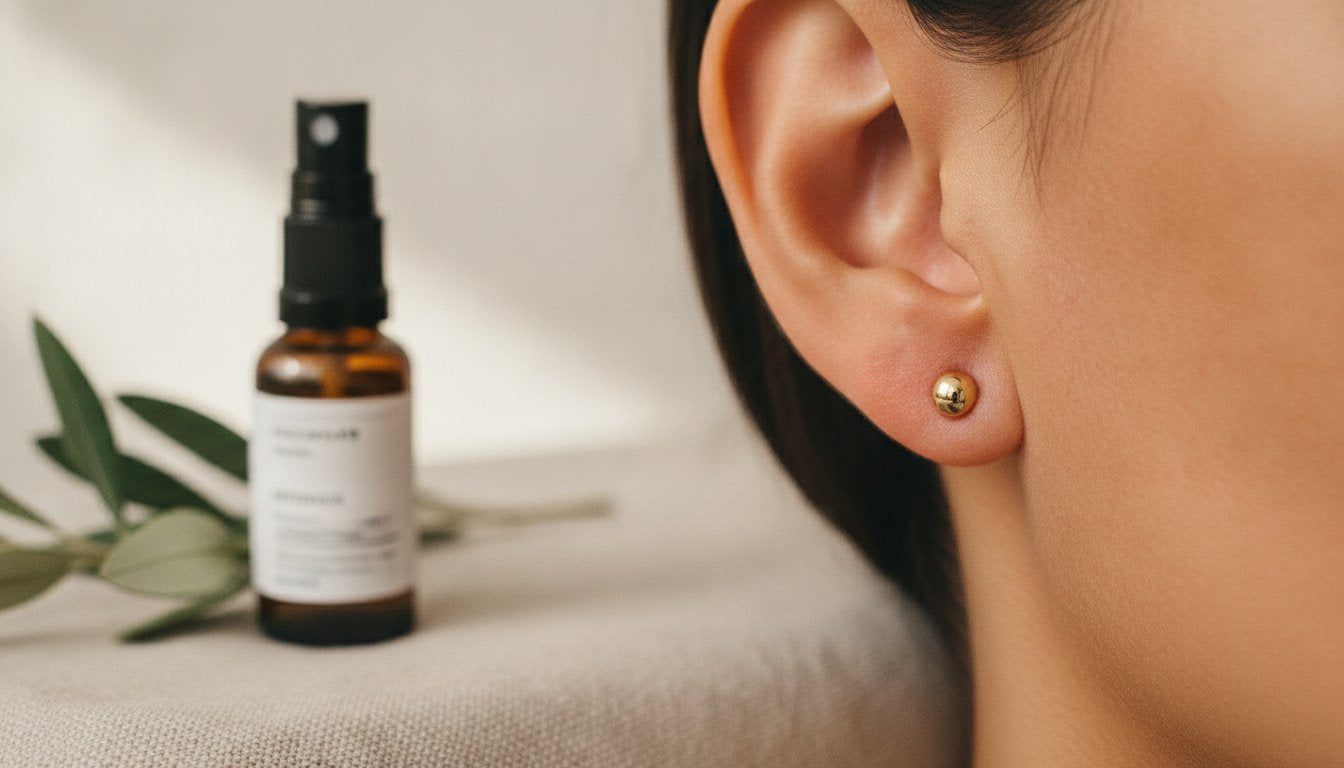
Your commitment to hygiene might be the very thing delaying your body's natural recovery. While we are taught that more cleaning equals better health, the delicate skin around a new piercing thrives on stability rather than constant intervention. If you are noticing persistent redness, flaky skin, or an itch that feels more like a rash than a healing tickle, you may be experiencing common over-cleaning piercing symptoms. Healing is a biological process of stability, not a battle of sterilization. When you disrupt the site too often, you are essentially creating micro-trauma that stalls cellular repair.
It's completely normal to feel protective of your new aesthetic. You want the site to be safe, stable, and radiant, so it's natural to reach for the saline spray every time you notice a tiny crust. However, professional standards from the Association of Professional Piercers remind us that minimal contact is the gold standard for health. This guide will teach you to recognize the subtle physical signals of over-cleaning and how to adjust your routine for a faster, safer healing process. We will explore the seven specific signs of irritation and define the exact frequency for saline use to help you achieve a fully healed fistula.
Key Takeaways
- Identify the "shiny skin" look and other visual markers that indicate you are over-exfoliating delicate healing tissue.
- Distinguish between common over-cleaning piercing symptoms, such as persistent itching, and the heat-based signals of a true infection.
- Shift your mindset from sterilization to stability by understanding why a clean, undisturbed environment is superior to constant scrubbing.
- Implement the LITHA method to reduce intervention and allow your body’s natural inflammatory phase to complete without interruption.
- Learn the exact frequency for saline use and when to introduce moisture-balancing oils to restore the skin's natural barrier.
The Over-Cleaning Paradox: Why More Isn’t Always Better
The urge to scrub is often born from a place of deep care. You want your new jewelry to shine. You want the site to remain pristine. You want to ensure total safety. However, healing is not a battle of sterilization; it is a delicate biological process of stability. Over-cleaning occurs when you disrupt your body's natural inflammatory healing phase, essentially resetting the clock on your recovery every time you intervene too aggressively. Healing is biological. It is rhythmic. It is patient.
Effective Body piercing aftercare focuses on creating a clean environment, not a sterile one. Your skin is a living barrier, not a piece of stainless steel. When you apply excessive salt solutions or harsh chemicals, you strip away the sebum and protective oils that keep the tissue supple. This results in the very over-cleaning piercing symptoms you are trying to avoid: dryness, persistent redness, and delayed closure. By stripping the site of its natural defenses, you leave it vulnerable to the environment.
The Biology of the Healing Fistula
A piercing is a controlled wound that requires a specific architectural change in your skin. Your body must build a new internal lining to protect itself from the jewelry. This delicate structure is known as the fistula. A fistula is the tunnel of skin that forms around jewelry. It is the bridge between your jewelry and your health.
The cells responsible for this, called basal cells, are incredibly fragile. They are the foundation of your new skin. When you clean too frequently, you are essentially "power-washing" these new cells away before they can bond. This keeps the wound open, raw, and vulnerable to external stressors. Stability is the only way to ensure these cells thrive.
Chemical vs. Mechanical Irritation
Irritation typically manifests in two forms: the chemical and the mechanical. Chemical irritation often stems from the "burn" of highly concentrated salt soaks or alcohol-based products. These substances act as desiccant agents, sucking the moisture out of healing tissue until it becomes brittle. Recognizing over-cleaning piercing symptoms early allows you to pivot back to a routine that supports your body's efforts.
Mechanical irritation is the physical "tear" caused by moving the jewelry. Many people still believe the outdated myth that you must "spin" or "rotate" your studs to prevent them from getting stuck. This practice is fundamentally harmful. It destroys the developing fistula and creates micro-tears in the tissue. These tiny openings are not just painful; they act as entry points for bacteria. True hygiene comes from stillness, safety, and sophisticated care.
Recognizing the Signs: Over-Cleaning Piercing Symptoms Checklist
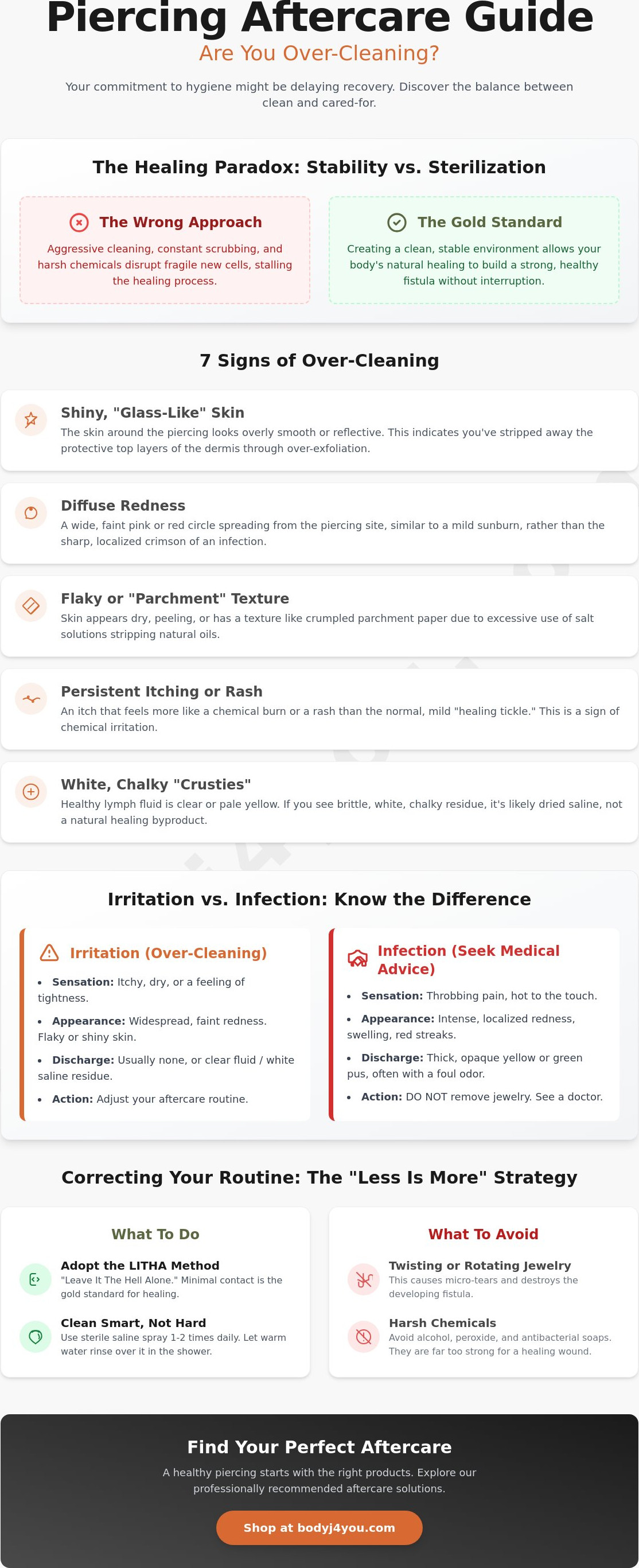
Self-diagnosis is the first step toward recovery. When you understand the difference between a healing wound and an over-processed one, you can adjust your routine before permanent damage occurs. A common, yet often overlooked, indicator of over-exfoliation is the "shiny skin" look. If the tissue immediately surrounding the jewelry entrance appears glass-like, overly reflective, or unnaturally smooth, you have likely stripped away the protective top layers of the dermis. This is one of the most definitive over-cleaning piercing symptoms, signaling that your skin is struggling to maintain its barrier.
Distinguishing between biological waste and product residue is equally vital. Healthy lymph is a clear or pale yellow fluid that helps build the fistula. In contrast, "crusties" caused by over-cleaning are often white, chalky, and brittle. This is typically dried saline residue rather than a natural healing byproduct. According to the APP aftercare guidelines, excessive cleaning can actually trap these irritants against the wound, leading to a cycle of dryness and inflammation. If you find yourself scrubbing away white flakes every few hours, you are likely doing more harm than good.
Visual Indicators: What to Look For
Visual cues provide an immediate map of your piercing's health. Look for these three specific markers:
- Diffuse Redness: Unlike the deep, localized crimson of an infection, over-cleaning causes a wide, faint pink circle that looks like a mild sunburn.
- Parchment Texture: The skin may appear peeling, flaky, or have a texture similar to crumpled parchment paper.
- Dry Bumps: While some piercing bumps are fleshy or fluid-filled, an over-cleaned bump is often dry, scaly, and prone to cracking.
Sensory Signals: What You Feel
Your nerves often detect over-cleaning piercing symptoms before your eyes do. A healthy piercing may feel tender, but it shouldn't feel "angry." If you experience a sharp stinging sensation immediately after applying your spray, the salt concentration may be too high or the frequency too high. Persistent itching is another red flag; this is frequently a sign of "salt-burn" rather than the standard itch of healing tissue. Finally, pay attention to tightness. If the jewelry feels "stuck" or the skin feels like it might snap when you move, your natural lubrication has been stripped away. To restore this balance, you might consider a more refined approach with a balanced saline piercing aftercare spray that respects your skin's biology.
It is easy to mistake these signs for a lack of hygiene. You might feel the urge to clean even more, but this only deepens the irritation. True healing requires a sophisticated balance of purity, patience, and protection. By recognizing these sensory signals early, you allow your body to transition from a state of defense to a state of repair.
Over-Cleaning vs. Infection: How to Tell the Difference
Misinterpreting your body's signals is a common pitfall during the healing process. Many individuals mistake the dry, itchy discomfort of over-cleaning piercing symptoms for a looming infection. This confusion often leads to a cycle of aggressive cleaning that only deepens the irritation. Understanding the subtle differences between a surface-level reaction and a deep-tissue issue is essential for your peace of mind. It allows you to respond with precision rather than panic.
A simple rule of thumb can guide your initial assessment: Redness plus itching usually equals irritation. Redness plus radiating heat typically equals infection. If your piercing feels like a mild sunburn, you are likely over-processing the site. If it feels like a hot, throbbing pulse, your body is likely fighting bacteria. Always consult a professional piercer before starting a course of antibiotics. They possess the industry experience to differentiate between a routine healing hiccup and a medical concern.
The Temperature and Swelling Test
Your skin’s temperature is a reliable indicator of its internal state. To check for infection, use a clean hand to feel the skin around the site. Radiating heat is a hallmark of localized infection. In contrast, over-cleaning typically results in "flat" redness that does not feel significantly warmer than the surrounding tissue. While infection causes "raised" swelling that feels firm to the touch, irritation from over-cleaning usually remains flush with the skin. Swelling that closes the gap on the jewelry bar requires immediate professional attention to prevent the jewelry from becoming embedded.
Analyzing Discharge and Odor
The fluid your piercing produces tells a story of its biological progress. Healthy lymph fluid is a clear, white, or very pale yellow byproduct of the healing process. It is odorless and serves as a sign that your body is successfully building the internal fistula. Pus is the opposite. It is thick, opaque, and often carries a distinct, unpleasant odor. It typically appears in shades of dark yellow or green.
It is also easy to misidentify dried saline as a sign of trouble. When you use too much spray or fail to rinse the area, the salt dries into white, chalky flakes. These flakes can mimic the appearance of "crusties," which often prompts people to scrub even harder. This creates a destructive loop where the treatment becomes the irritant. Recognizing these over-cleaning piercing symptoms as simple residue can save your skin from unnecessary trauma. True hygiene is found in balance, not intensity.
Correcting Your Routine: The "Less is More" Strategy
Recovery begins with restraint. If you have recognized the over-cleaning piercing symptoms discussed earlier, the most effective solution is often the simplest: the LITHA method. Standing for "Leave It The Hell Alone," this approach is the gold standard for recovering from excessive intervention. It respects your body's innate wisdom, prioritizes stability, and allows the fistula to finally close. By stepping back, you give your biological defenses the space they need to finish the job you started.
When your skin is severely salt-burned or parchment-like, even the best products can feel like an assault. In these cases, a "rinse-only" strategy is often necessary. This temporarily removes all chemical influence, allowing the skin's natural pH and moisture barrier to return to a baseline state. True healing is a partnership between your body and your routine.
The 48-Hour Reset Protocol
If your piercing is red, itchy, and dry, follow this disciplined reset to restore balance:
- Step 1: Cease all topical treatments for exactly 48 hours. This pause allows your skin’s acid mantle to stabilize without the constant introduction of saline.
- Step 2: Rinse only with clean, warm water during your daily shower. The gentle flow of water is sufficient to remove debris without stripping essential lipids.
- Step 3: Pat the area dry with a fresh, disposable paper towel. Avoid cloth towels because they harbor bacteria and can snag on jewelry, causing mechanical trauma.
Optimizing Your Saline Use
Once the initial irritation subsides, you must learn to use a sterile saline spray for piercings correctly. Misting is vastly superior to soaking. While a soak can be aggressive and macerate the tissue, a fine mist provides just enough moisture to soften crusts without drowning the wound. Avoid DIY salt mixtures at all costs. These home-brewed solutions are rarely sterile and almost always contain too much salt, which leads directly to the symptoms we are trying to resolve.
For those who have already developed a persistent irritation bump, understanding how to get rid of piercing bump formations is the next logical step. Remember that progress is not linear. It requires purity, patience, and protection. To support your skin’s journey back to health, integrate a balanced Saline Piercing Aftercare Spray into your refined routine.
Restoring Balance: Targeted Solutions for Irritated Piercings
Once you have identified over-cleaning piercing symptoms and completed a necessary reset, your objective changes. You are no longer in a battle of sterilization. You are now in a phase of restoration. This transition from "cleaning" to "soothing" is vital for long-term health. It requires a mindset of protection, patience, and professional-grade care. When you stop treating your piercing like a problem to be solved and start treating it like tissue to be nurtured, the healing process accelerates naturally.
Your body is a masterpiece of self-regulation. When we intervene too often, we disrupt the delicate signals that tell skin cells to close the gap. Restoring this balance means providing the environment your cells need to thrive. It’s about being a wise guardian of your own healing process. By choosing products that respect your biology, you ensure your self-expression remains a source of joy rather than a source of irritation.
Soothing the "Salt-Burn" with Natural Oils
Your skin’s natural barrier is a sophisticated defense system. When salt-burn occurs, this barrier is compromised, leading to the parchment-like texture often seen in over-processed sites. Natural, plant-based lipids like Jojoba oil or Rosehip oil act as biological mimics. They replenish what was lost. Applying a piercing bump treatment oil can calm the persistent redness and micro-inflammation caused by excessive saline use. These oils provide essential fatty acids that support cellular repair and skin elasticity. Always apply these oils to the skin around the site; never introduce them inside the wound itself. This ensures the fistula remains clear while the surrounding tissue regains its strength.
When to Swap Your Jewelry
Sometimes, the irritation isn't just about your routine. It's about the material. Low-quality alloys often contain nickel, which can trigger allergic reactions that perfectly mimic over-cleaning piercing symptoms. If your skin remains flaky and red despite a reduced cleaning schedule, your jewelry might be the culprit. Switching to biocompatible titanium or high-grade surgical steel provides the stability your body craves. These materials are non-reactive and allow the tissue to rest. For those navigating the complexities of stretching, consulting an ear gauge size chart ensures you are using the correct increments. This reduces mechanical stress and prevents the micro-tears that invite irritation.
BodyJ4You aftercare represents a sophisticated balance between clinical precision and natural wellness. We prioritize purity, safety, and self-expression in every formula. Our solutions are designed to support your journey without overwhelming your biology. Trust the process. Respect your skin. Achieve your aesthetic.
Embrace Stability for Lasting Radiance
Healing is a sophisticated biological dance that requires patience, purity, and protection. You've learned that stability is far more vital than sterilization. You now know how to distinguish between the radiating heat of an infection and the dry, parchment-like itch of simple irritation. By learning to identify over-cleaning piercing symptoms, you empower yourself to make informed decisions about your body's recovery. Your journey toward self-expression deserves a foundation built on industry expertise rather than chemical excess.
BodyJ4You brings over 20 years of body modification expertise directly to your daily routine. Our dermatologically focused saline sprays are manufactured in the USA to ensure the highest standards of quality control and safety. We provide the professional tools you need to support your body's natural defenses without overwhelming them. Shop BodyJ4You Balanced Aftercare Solutions today to restore harmony to your healing process. Trust your body. Trust our experience. Achieve your aesthetic.
Frequently Asked Questions
Can you clean a piercing too much?
Yes, you can certainly over-clean a piercing. While hygiene is vital, excessive intervention disrupts the body's natural inflammatory healing phase. Cleaning too frequently strips the site of essential sebum and protective lipids, leading to the very irritation you are trying to prevent. Stability is often more important than sterilization for a healing wound. True health requires stillness, safety, and sophisticated care.
What does an over-cleaned piercing look like?
An over-cleaned piercing often features a "shiny" or glass-like skin texture around the jewelry entrance. You may also observe diffuse, faint redness that extends in a wide circle rather than a localized spot. Peeling, flaky, or parchment-like skin is a primary indicator of over-exfoliation and a compromised moisture barrier. Recognizing these visual cues allows you to pivot toward a more restorative routine.
How many times a day should I clean my new piercing?
You should clean your new piercing exactly twice a day using a sterile saline mist. This frequency provides a perfect balance between maintaining hygiene and allowing the tissue to rest. Cleaning more than twice daily increases the risk of developing over-cleaning piercing symptoms such as dryness and salt-burn. Consistency is superior to intensity. Your recovery depends on purity, patience, and protection.
Why is my piercing itchy and peeling?
Itching and peeling are typically signs of localized dehydration or chemical irritation from salt residue. When saline solution is applied too often or left to dry without a rinse, it creates a desiccant effect that sucks moisture from the cells. This results in a persistent itch that feels more like a surface-level rash than the deep-tissue tickle of normal healing. Restoring moisture is essential for comfort.
Should I stop cleaning my piercing if it is irritated?
Don't stop cleaning entirely, but you must reduce the frequency and intensity of your routine immediately. If the site is severely irritated, implement a 48-hour reset where you only rinse the area with warm water during your daily shower. This allows the skin's pH to stabilize before you reintroduce a gentle, balanced saline mist. A brief pause often provides the stability your body needs to recover.
How long does it take for an over-cleaned piercing to recover?
Most over-cleaned piercings show significant improvement within three to seven days of reduced intervention. Once you adopt the LITHA method and stop aggressive scrubbing, the skin's natural lipid barrier begins to rebuild. Full recovery of the moisture barrier depends on your individual biology and the severity of the initial irritation. Be patient with your body. Healing is a steady, rhythmic, and logical process.
Is it normal for a piercing to be red after cleaning?
Brief, mild pinkness immediately after cleaning is a normal reaction to the physical contact. However, persistent redness that lingers for hours is one of the more common over-cleaning piercing symptoms. If the redness is accompanied by a stinging sensation or flaking, it is a clear signal to scale back your aftercare frequency. Your skin is a living barrier that requires gentle handling rather than force.
Can I use moisturizer on an over-cleaned piercing?
Avoid using standard commercial moisturizers or lotions, as they often contain fragrances and preservatives that irritate open wounds. Instead, apply a single drop of Jojoba or Rosehip oil to the skin surrounding the piercing entrance. These natural lipids help restore the skin's barrier without clogging the fistula or introducing harmful chemicals to the healing tissue. Always prioritize purity and ingredient integrity when selecting your aftercare products.


