

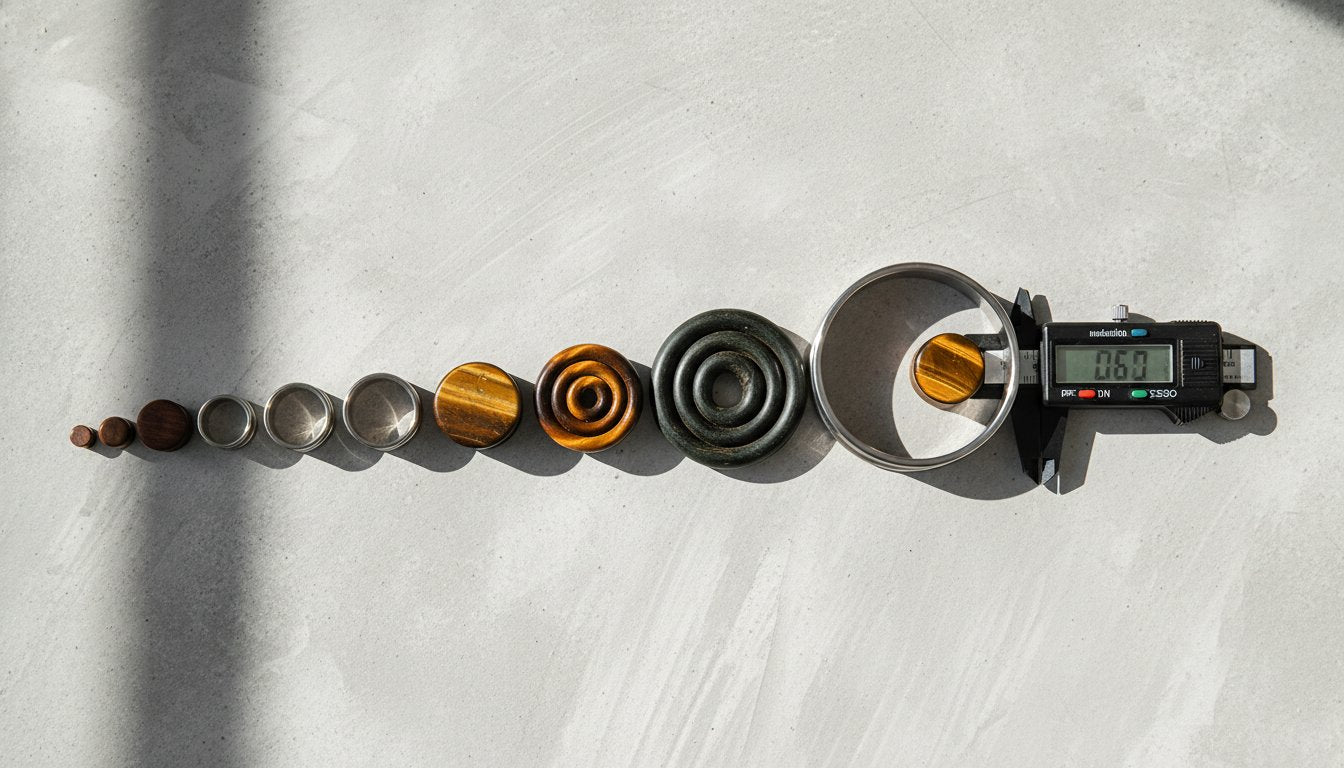
Your earlobes possess a biological memory, but they rarely come with a return policy. While stretching is a vibrant journey of self-expression, the path between a standard piercing and a 10mm plug is paved with technical math and physical limits. Confusion is natural when you're staring at an ear gauge size chart and trying to reconcile American gauges with metric millimeters. We understand that you want to push your aesthetic boundaries without the fear of painful blowouts, thinning tissue, or permanent damage.
Most enthusiasts feel the same tension between the desire for progress and the need for anatomical safety. This reference provides the definitive 2026 conversion standards to ensure your stretching process remains safe, steady, and sophisticated. You'll master the transition from 14g to the point of no return, which typically occurs between 2g and 00g, while learning why the industry is shifting toward millimeter precision. We will cover the necessity of the eight-week wait period and give you the confidence to select your next piece of jewelry with precision, patience, and protection.
Key Takeaways
- Decode the technical logic of the American Wire Gauge system to understand why smaller numbers signify larger diameters.
- Master every transition with a definitive ear gauge size chart that aligns millimeters, fractional inches, and gauges for total accuracy.
- Identify the biological threshold between 2g and 0g to understand when your self-expression becomes a permanent modification.
- Prioritize anatomical safety by replacing visual estimates with digital calipers to ensure your jewelry fits your current stretch perfectly.
- Cultivate dermal health and elasticity through disciplined massage and the application of nutrient-dense oils to prepare for your next size.
Decoding the Ear Gauge System: Why Sizes Work Backwards
The gauge system is a riddle. It defies standard mathematical intuition, yet it remains the gold standard for body modification. For most newcomers, the logic feels inverted because the numbers shrink as the jewelry expands. This isn't a design flaw; it's a legacy of industrial manufacturing. Understanding this relationship is the first step toward a safe, successful modification journey. It allows you to approach your ear gauge size chart with a sense of clarity, logic, and confidence.
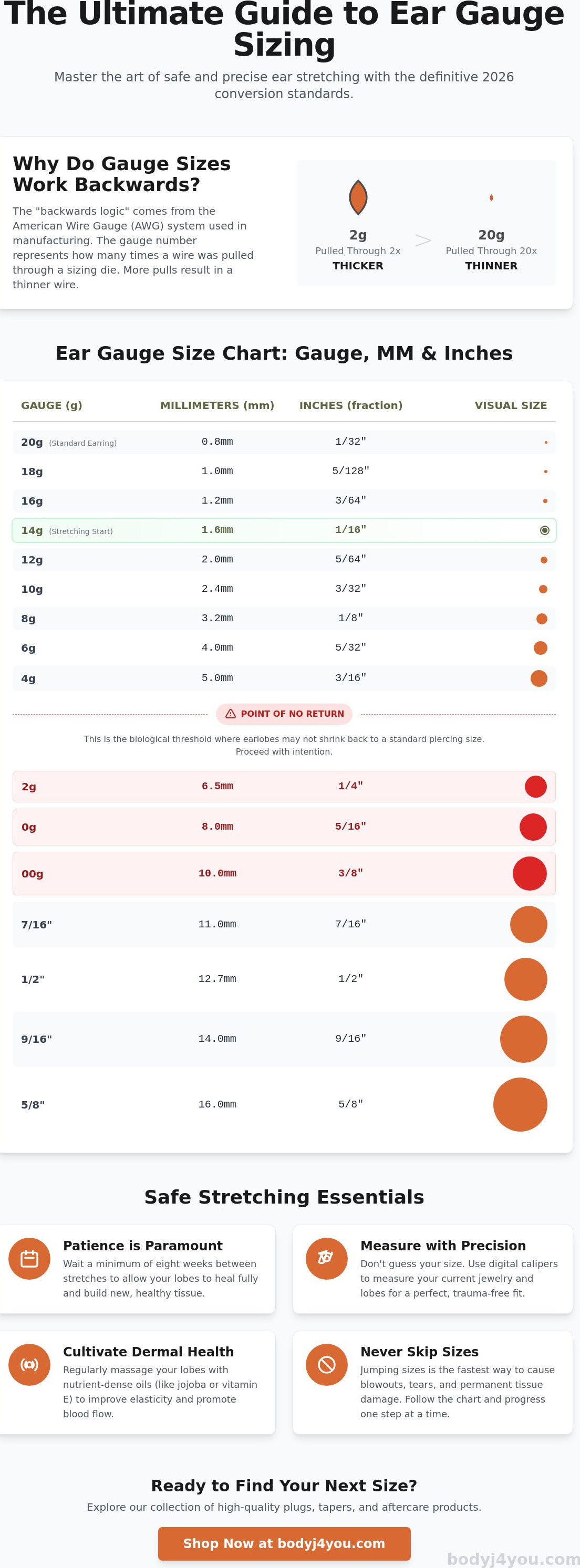
This "backwards logic" originates from the American Wire Gauge (AWG) standards. In this system, the gauge (g) number refers to the amount of times a wire was drawn through a sizing die during production. A 20g wire has been pulled through twenty times, making it significantly thinner than a 2g wire that only passed through twice. This is why a 00g plug is a substantial piece of jewelry while a 20g stud is nearly microscopic. Once you reach the limit of this scale at 00g, the industry typically switches to fractional inches or millimeters to prevent the measurements from becoming confusing or mathematically impossible.
The History of Gauge Measurements
Our modern aesthetic choices are deeply rooted in 18th-century industrial necessity. When the body modification community sought a standardized way to measure jewelry, they adopted the AWG system to ensure consistency across different manufacturers. It provided a reliable language for safety, precision, and quality. The gauge system is a measurement of thickness derived from the specific metal drawing processes used in wire production. You can explore the history of ear stretching to see how these industrial tools evolved into symbols of cultural identity and personal growth. This technical heritage ensures that whether you're using an Acrylic Ear Stretching Kit or high-end glass, the measurements remain uniform.
Standard Piercing vs. Stretched Gauges
Not every piercing is ready for immediate expansion. Most initial earlobe procedures are performed at a 20g or 18g size. These starting points are delicate, decorative, and thin. To begin an intentional journey, you must first identify your baseline on a professional ear gauge size chart. While 18g is common for standard jewelry, 14g is widely recognized as the official entry gate for intentional stretching. It's the point where the tissue begins to adapt to the weight and volume of specialized jewelry. Before you reach for a Surgical Steel Taper and Plug Kit, you must confirm your current diameter. Knowing your starting point prevents the micro-tears and trauma that occur when you skip steps. Precision is your best protection.
The Ultimate Ear Gauge Size Chart: Millimeters, Inches, and Gauges
Precision is the cornerstone of wellness in body modification. While your eyes may deceive you, a standardized ear gauge size chart provides the clinical accuracy required for a healthy fistula. This reference serves as your protective guide, ensuring that every transition is calculated, intentional, and safe. By aligning metric measurements with traditional gauges, you eliminate the guesswork that often leads to tissue trauma.
Below is the definitive 2026 conversion standard. It bridges the gap between the American Wire Gauge system, metric millimeters, and fractional inches to support your journey toward aesthetic refinement.
| Gauge (g) | Millimeters (mm) | Fractional Inches |
|---|---|---|
| 20g | 0.8mm | 1/32" |
| 18g | 1.0mm | 5/128" |
| 16g | 1.2mm | 3/64" |
| 14g | 1.6mm | 1/16" |
| 12g | 2.0mm | 5/64" |
| 10g | 2.4mm | 3/32" |
| 8g | 3.2mm | 1/8" |
| 6g | 4.0mm | 5/32" |
| 4g | 5.0mm | 3/16" |
| 2g | 6.0mm | 1/4" |
| 1g (Half-size) | 7.0mm | 9/32" |
| 0g (Milestone) | 8.0mm | 5/16" |
| 00g (Milestone) | 10.0mm | 3/8" |
| 1/2" | 12.7mm | 1/2" |
| 1" | 25.4mm | 1" |
| 2" | 50.8mm | 2" |
Half-sizes like 7g (7.0mm) or 1g are the secret tools of the experienced enthusiast. They provide a vital bridge for those with stubborn or less elastic tissue, allowing for a gentle 1mm increase rather than a traumatic 2mm leap. Using these in-between sizes is a hallmark of a disciplined and patient approach to body art.
Small Gauge Conversions (20g to 10g)
The early stages of stretching often feel deceptively simple. Between 20g and 10g, the increments are microscopic, yet they require the same level of care as larger jumps. For instance, 18g (1.0mm) and 16g (1.2mm) represent a tiny 0.2mm difference. Even at this scale, rushing the process can cause micro-tearing and irritation. Always allow your tissue to fully stabilize and heal before moving to the next size on the ear gauge size chart.
Mid-Range and Large Gauge Milestones (8g to 00g)
As you move from 8g toward 00g, the physical stakes increase significantly. The transition from 2g (6mm) to 0g (8mm) is a notorious milestone because it represents a full 2mm jump, which is double the previous increments. This is the most common cause of blowouts and scarring in the community. By consulting the chart, you can identify the need for a 1g (7mm) intermediate plug to ease the transition. Following these standardized measurements aligns with broader safety philosophies, such as the principles found in OSHA's Bloodborne Pathogens Standard, which emphasizes injury prevention and biological safety. For those ready to begin their journey with professional-grade tools, exploring a Surgical Steel Taper and Plug Kit ensures you have the exact increments required for a healthy stretch.
Navigating the Point of No Return and Stretching Milestones
Your earlobes aren't static pieces of skin. They're dynamic, living tissues governed by complex biological systems. When you consult an ear gauge size chart, you aren't just looking at measurements; you're looking at milestones in your body's ability to regenerate. The fistula, or the tunnel created by your piercing, adapts to new diameters through a process of collagen remodeling. However, this elasticity has a definitive threshold, often referred to in the community as the "point of no return."
While every body is unique, the consensus among professionals is that the threshold for permanent change typically lies between 2g (6mm) and 0g (8mm). Beyond this point, the likelihood of your lobes shrinking back to a standard piercing size decreases significantly. Several factors influence this biological limit:
- Age and Collagen: Younger skin typically possesses higher levels of collagen and elastin, allowing for better recovery and retraction.
- Stretching Velocity: Moving too quickly through the ear gauge size chart causes micro-trauma and scar tissue. Scar tissue is fibrous and rigid; it doesn't possess the elastic memory of healthy skin.
- Overall Health: Proper hydration and circulation are essential for the tissue to remain supple and resilient during the expansion process.
The 0g and 00g Milestones
0g (8mm) and 00g (10mm) are more than just numbers. They're iconic aesthetic choices. For many, 0g is the ultimate destination because it offers a bold presence without the extreme weight of larger jewelry. At these sizes, the physical mass of the plug or tunnel begins to exert constant pressure on the lower lobe. It's vital to monitor how your skin reacts to this weight over time. You can find detailed safety protocols for these specific sizes in our ear gauge sizes guide, which helps you manage the transition with professional care.
Biological Limits and Lobe Health
As you progress, the tissue of the lobe naturally becomes thinner. This isn't necessarily a problem, but it requires vigilant observation. When the skin becomes transparent or feels "cold" to the touch, it's a sign that blood flow is being restricted. Healthy stretching relies on maintaining robust circulation to the bottom of the lobe. If your skin feels tight or looks excessively thin, it's time to pause. Your body's signals are more important than the next step on a chart. Respecting your personal maximum size is a mark of a mature, self-aware enthusiast who values long-term wellness over temporary trends.
Beyond the Chart: How to Measure and Choose Your Next Size
Visual estimation is the enemy of earlobe health. While an ear gauge size chart provides the theoretical map, the physical reality of jewelry often involves subtle manufacturing variances. A plug that appears to be an 8g may actually measure 3.3mm instead of the standard 3.2mm. These microscopic discrepancies are enough to cause irritation or micro-tears in a healing fistula. You must prioritize precision over guesswork.
Digital calipers are the essential tool for any serious enthusiast. They provide 100% accuracy, immediate results, and total peace of mind. When measuring your jewelry, you aren't measuring the total length or the decorative face; you're measuring the "wearable area." This is the part of the plug or tunnel that actually makes contact with your skin. For double-flared jewelry, you must also account for the flare size. The flares are typically 1mm to 2mm larger than the gauge size, meaning your ear must be elastic enough to accommodate that temporary stretch during insertion.
Step-by-Step Jewelry Verification
Place the jewelry between the jaws of your calipers and close them until they snugly touch the wearable surface. This verification process applies to every piece in your collection, from a 00g tunnel to a surgical steel nose ring used in a secondary piercing. Avoid the "paper test" or holding jewelry up to a printed ear gauge size chart. Paper can warp, printers can misalign, and eyes can fail. Only a calibrated tool ensures your safety.
Choosing Your Next Stretching Method
Your current position on the size chart dictates your stretching strategy. For smaller sizes, a Surgical Steel Taper and Plug Kit offers a controlled, guided transition. However, as you move past 00g, many enthusiasts pivot toward the taping method or dead stretching. Dead stretching relies on the natural weight of high-quality jewelry to create space over time. This method is patient, gentle, and highly effective for maintaining thick, healthy lobes. Always match your jewelry material to your current stage; surgical steel and glass are ideal for active stretches, while wood or bone should be reserved for fully healed piercings.
Precision is the foundation of self-expression. To ensure your next transition is seamless, explore our Surgical Steel Taper and Plug Kit for jewelry that meets the highest standards of accuracy and safety.
Safe Transitions: Preparing Your Lobes for the Next Gauge
Success in body modification is measured by time, not just diameter. While an ear gauge size chart provides the technical target, your internal calendar dictates the safety of the move. Stretching is a physiological request for your skin to create new cells. This process cannot be forced. Rushing through milestones often leads to the very complications enthusiasts fear most: thinning, tearing, and loss of tissue integrity. Our philosophy centers on three pillars: patience, precision, and protection.
The "Golden Rule" of timing suggests a minimum of six to eight weeks between smaller gauge jumps. As you progress toward larger sizes, this window should expand to at least three months. Your lobes require this time to stabilize, regain blood flow, and thicken. If you attempt a stretch while the tissue is still tender or tight, you risk permanent damage. Listen to your body's rhythm; it's the most accurate guide you possess. Purity. Safety. Self-expression.
The BodyJ4You Wellness Protocol
Healthy stretching requires a foundation of moisture and elasticity. Daily massages with Jojoba oil or Gauges Balm stimulate blood flow and break up minor adhesions in the tissue. This ritual keeps the skin supple, resilient, and ready for expansion. When you're ready to move forward, using a high-quality ear stretching kit ensures you're following standardized, safe increments rather than guessing with unsuitable materials. Once the new jewelry is in place, apply Saline Piercing Aftercare Spray twice daily for the first 48 hours. This protects the vulnerable fistula from environmental bacteria while the skin settles into its new shape. Lubrication is non-negotiable; never attempt a size jump on dry skin.
When to Wait: The Dangers of Rushing the Chart
Impatience is the primary cause of the "cat-butt" effect, a term for the unsightly puckered scar tissue that forms when a lobe is forced to expand too quickly. This happens because the skin has teared and healed improperly rather than stretching naturally. Skipping a size on the ear gauge size chart is the most common mistake leading to this outcome. Scar tissue is rigid and lacks the blood supply of healthy skin, which can halt your progress permanently. Patience is the most critical tool in any stretching kit. If you feel sharp pain, see redness, or notice swelling, stop immediately. A healthy stretch should feel like a slight pressure, never a traumatic event. Your journey is a marathon of self-expression, not a sprint to the finish.
Empower Your Aesthetic Journey with Precision
Mastering the ear gauge size chart is the first step toward a lifetime of healthy self-expression. By understanding the technical logic of the American Wire Gauge system and respecting the biological limits of your tissue, you transform a physical modification into a disciplined art form. You now possess the knowledge to navigate milestones like the 0g threshold with clinical accuracy and anatomical safety. Precision. Patience. Protection.
At BodyJ4You, we support your evolution with over 20 years of industry expertise and a commitment to dermatologically minded aftercare solutions. Our products are ethically manufactured in the USA to ensure the highest standards of quality control and regulatory trust. We provide the tools you need to move confidently through every millimeter of your transformation. Whether you're beginning with a starter set or reaching for a significant milestone, we're here as your supportive specialist.
Explore BodyJ4You Ear Stretching Kits for a Safe Journey and begin your next chapter with the confidence of professional-grade equipment. Your path to a curated aesthetic is a unique story; we're honored to help you write it safely.
Frequently Asked Questions
What is the smallest ear gauge size?
The smallest standard size for an earlobe piercing is 20g, which measures approximately 0.8mm in diameter. This is the entry-level thickness for most decorative jewelry and initial procedures. While 22g exists in some specialized fine jewelry, the 20g marker is the baseline for health and stability. Purity. Precision. Protection. Starting at this size ensures your tissue has a stable foundation before you begin your intentional journey through the ear gauge size chart.
How many millimeters is a 00 gauge?
A 00 gauge (00g) plug or tunnel measures exactly 10 millimeters in diameter. This is a significant milestone in the stretching community, representing a full centimeter of expansion. Because manufacturing variances can occur between brands, we always recommend verifying your jewelry with digital calipers. This ensures your 10mm piece fits perfectly within the fistula without causing unnecessary tension or biological stress. Precision is your best protection.
Is 0g or 00g bigger?
00g is the larger size, measuring 10mm, while 0g measures 8mm. The double zero notation indicates a step beyond the single zero on the American Wire Gauge scale. This 2mm jump is one of the most physically demanding transitions for your earlobes. We advise enthusiasts to move slowly and consider using a 9mm intermediate size to maintain the long-term health and thickness of the lobe tissue. Clean. Safe. Empowered.
Can I skip sizes on the ear gauge chart if my ears feel loose?
You should never skip sizes, even if your jewelry feels loose or slides easily. Skipping steps on the ear gauge size chart is the leading cause of permanent scarring and painful blowouts. Your tissue needs time to remodel its collagen structure at every increment. Patience. Discipline. Resilience. By following every step, you protect the blood flow and elasticity required for a sophisticated, healthy stretch.
What size is the "point of no return" for ear stretching?
The "point of no return" is generally considered to be between 2g (6mm) and 0g (8mm). At this diameter, the piercing is unlikely to shrink back to a standard earring size if the jewelry is removed. This threshold varies based on individual skin elasticity, age, and your history of aftercare. We encourage you to view stretching as a permanent body modification once you surpass the 6mm milestone. Wisdom. Care. Foresight.
How long should I wait between gauge sizes?
For smaller increments, you must wait a minimum of six to eight weeks between stretches. Once you reach larger diameters above 2g, this waiting period should extend to three months or longer. This calendar-based approach allows the fistula to heal, stabilize, and regain its natural thickness. Rushing this biological timeline can lead to thinning lobes and compromised dermal integrity. Your body's health is more important than a fast result.
Why does the gauge number get smaller as the size gets bigger?
The gauge number represents how many times a wire was pulled through a sizing die during the manufacturing process. A 20g wire was drawn twenty times, making it much thinner than a 2g wire that only passed through twice. This industrial legacy provides a standardized language for safety and precision in the body modification world. It ensures consistency across different jewelry materials and regional manufacturers. Logic. History. Standardization.
What size is 1/2 inch in gauges?
A 1/2 inch measurement is approximately 12.7 millimeters in diameter. At this stage, the industry typically drops the "gauge" terminology in favor of fractional inches or metric millimeters. It's a bold aesthetic choice that requires significant dedication and long-term tissue management. Ensuring your lobes remain thick and healthy at this size involves regular massage with nutrient-dense oils to support ongoing dermal elasticity. Your journey toward self-expression is a marathon, not a sprint.


