

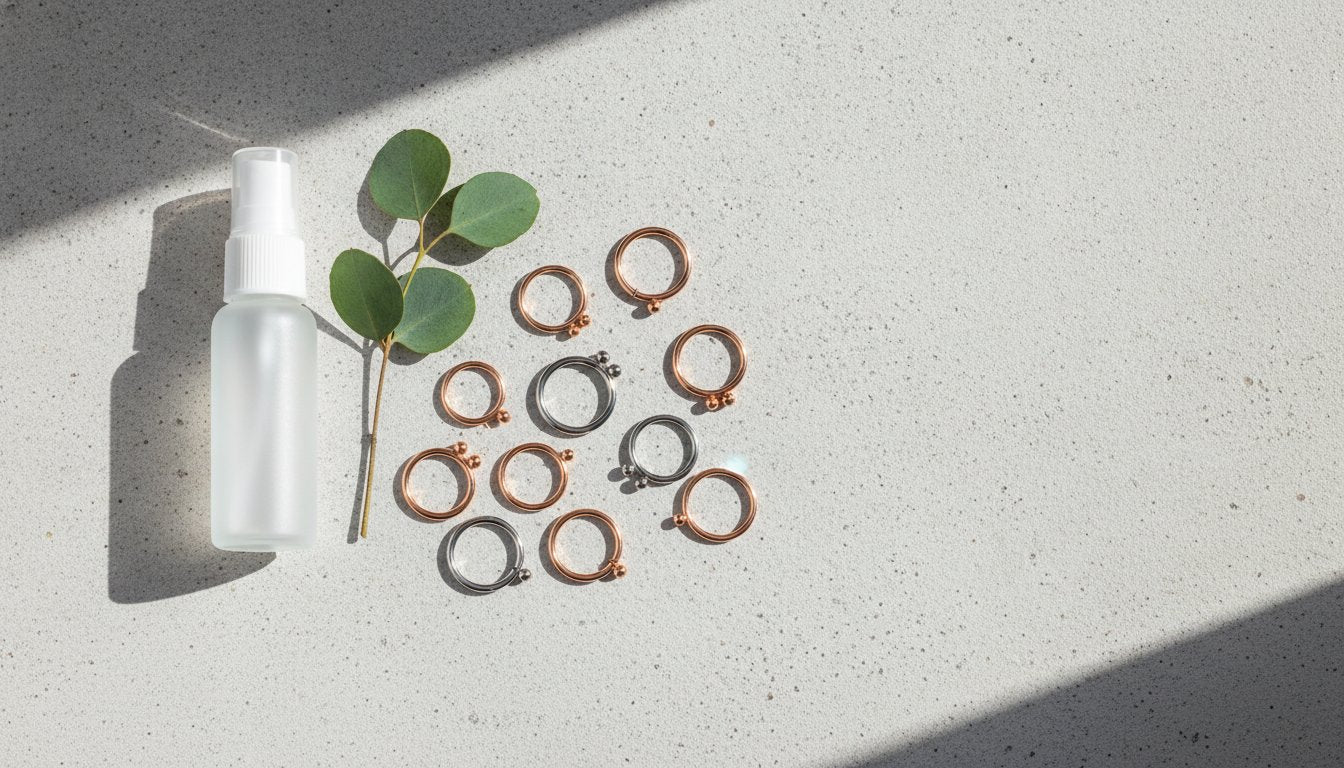
Did you know that 22% of Gen Z individuals with piercings have now chosen the septum as their defining statement piece? This shift reflects a move toward intentional, curated aesthetics that bridge the gap between bold self-expression and refined wellness. Finding the perfect septum rings involves more than just picking a design; it requires a balance of anatomical precision, material integrity, and diligent aftercare.
We understand that the journey from a fresh piercing to a healed, styled look often comes with a side of uncertainty. You might feel confused by gauge sizes, worried about metal sensitivities, or unsure how to maintain a professional appearance. It's natural to prioritize safety while seeking a high-end aesthetic. This guide is designed to empower your choices. You will learn how to identify your ideal gauge size, select hypoallergenic materials like ASTM F136 titanium, and master a daily cleaning routine that ensures comfort.
By the end of this article, you'll have the confidence to navigate sizing charts and material certifications like a specialist. We'll explore the nuances of internal threading, the benefits of saline-based care, and the best styles for easy concealment. Your path to a healthy, stylish piercing starts with expert knowledge and premium essentials.
Key Takeaways
- Identify the "sweet spot" within your nasal anatomy to ensure a smooth piercing process and minimal discomfort during healing.
- Prioritize biocompatible materials like 316L surgical steel to protect your skin from allergic reactions and ensure long-term durability.
- Learn how to balance gauge thickness and ring diameter when selecting septum rings for a personalized, secure fit.
- Master the "Leave It The Hell Alone" (LITHA) protocol and use sterile saline spray for a safe, irritation-free recovery.
- Leverage two decades of industry expertise by choosing specialized internal threaded options and US-manufactured aftercare solutions.
Understanding Septum Piercing: Anatomy, Pain, and the "Sweet Spot"
A septum piercing is a horizontal perforation of the nasal midline, resting between your nostrils. It's a procedure that balances clinical precision with aesthetic intent. While the practice is rooted in the history of septum piercings, modern techniques prioritize anatomical comfort and long-term health. Most individuals describe the sensation as a sharp, fleeting pinch, typically rating it a 4 out of 10 on the pain scale. You should expect a "teary eye" reflex during the procedure. This is a natural response to the stimulation of the trigeminal nerve; it's a biological signal rather than a sign of emotional distress. A standard healing journey requires 3 to 6 months of patience before the tissue is fully stabilized.
The Importance of the Sweet Spot
The success of your piercing depends on the "sweet spot," technically known as the columella. This is the thin, fleshy strip of skin located between the hard septal cartilage and the tip of your nose. Piercing the dense cartilage itself is a common mistake that leads to intense pain, prolonged healing times, and increased risk of migration. A professionally placed piercing sits high and forward in the nose, ensuring the jewelry hangs straight and feels weightless. You can identify your own anatomy by gently pinching the center of your nose with clean fingers. If you feel a soft, flexible area between the firm cartilage above and the base below, you've found your ideal placement zone. This anatomical target ensures your septum rings sit comfortably without putting pressure on the surrounding structure.
Initial Healing and What to Expect
The first 72 hours after the procedure are the most critical for stabilization. You'll likely experience minor swelling, localized tenderness, and clear or pale yellow crusting. These are signs of a healthy immune response. It's vital that you don't flip your jewelry up and down during this initial phase. Constant movement disrupts the forming fistula and introduces bacteria into the open wound. You may also notice a temporary scent, colloquially known as "septum funk." This occurs when sebum and dead skin cells accumulate on the jewelry surface. Using high-quality septum rings made from non-porous materials like 316L surgical steel helps minimize this issue. The healing process is a journey of consistency, safety, and care. By respecting the initial recovery window, you set the foundation for a lifetime of comfortable self-expression.
Material Safety: Why Surgical Steel and Titanium Rule the Septum
The nasal cavity is a distinct biological landscape. It is warm, moist, and perpetually active. Because of these unique conditions, septum rings must be crafted from materials that resist oxidation and support mucosal integrity. 316L Surgical Steel remains the industry standard for its resilience, accessibility, and classic aesthetic. For those with specific metal allergies or heightened sensitivities, Titanium (G23) offers a higher tier of protection. Choosing these materials is not just a fashion choice; it is a clinical necessity for maintaining proper aftercare for septum piercings. Your body deserves a foundation that is non-reactive, durable, and safe.
Surgical Steel vs. Titanium
Selecting between these two metals involves balancing weight, biocompatibility, and investment. 316L Surgical Steel is a low-nickel alloy designed specifically for medical use and long-term wear. It provides a reassuring heft and a high-polish finish that many users prefer for its traditional look. Titanium, however, is approximately 40% lighter than steel and is entirely nickel-free. This makes it the gold standard for initial piercings and individuals with sensitive skin. Both materials carry "implant grade" designations when they meet strict metallurgical standards. This ensures they are safe to remain inside the human body without leaching harmful toxins or causing irritation. It's a choice between reliable performance and premium biocompatibility.
Materials to Avoid in a New Septum Piercing
Cheap fashion jewelry often contains "mystery metals" like lead, cadmium, or high levels of nickel. These elements trigger contact dermatitis and chronic inflammation. You must also avoid sterling silver in a healing fistula. Silver is prone to tarnishing when it contacts body fluids. This oxidation can lead to argyria, a permanent grey or black staining of the skin tissue that cannot be easily reversed. Plated metals are equally risky; the outer layer can flake off, trapping bacteria and irritating the wound. To minimize tissue trauma during jewelry changes, many professionals recommend using internal threaded labret studs or barbells. These designs keep the smooth metal against your skin, preventing the scraping effect caused by external threads. Protecting your piercing is a long-term commitment to quality. If you're ready to upgrade your style safely, you can browse our selection of biocompatible jewelry designed for lasting comfort.
Septum Ring Styles and Sizing: Finding Your Perfect Fit
Selecting the right architecture for your jewelry requires a clear understanding of two distinct measurements: gauge and diameter. Gauge refers to the thickness of the metal post passing through your piercing, while diameter measures the distance across the inside of the ring. Most professionals perform initial piercings at a 16G (1.2mm). This size offers the ideal balance of structural stability and aesthetic refinement. Choosing the right diameter is equally vital, as it determines how low the jewelry hangs and how it interacts with your unique anatomy. Precision, comfort, and style are the three pillars of a perfect fit.
Common Septum Jewelry Styles
Circular Barbells, often called horseshoes, are the premier choice for versatility. Their open-ended design allows you to flip the jewelry upward into the nostrils, making them the superior option for professional environments or conservative settings. If you prioritize absolute security, Captive Bead Rings (CBRs) provide a closed-loop system held in place by tension. While they require a bit of practice to open and close, they offer a classic, balanced look that stays put during high-activity days. For those who value convenience and ornate detail, Septum Clickers feature a hinged clasp that snaps shut with a satisfying click. These are the modern favorite for quick changes, allowing you to transition from a minimalist hoop to an intricate, decorative statement piece in seconds.
Decoding the Ear Gauge Size Chart for Septum Use
While the terminology is shared with other piercings, applying an ear gauge size chart to your septum requires specific attention to millimeter conversions. A 16G post is 1.2mm thick, which is the standard for most septum rings. If you prefer a bolder, more substantial look, you might opt for a 14G (1.6mm). Conversely, an 18G (1.0mm) provides a daintier, more subtle appearance. Accuracy is paramount for comfort. We recommend measuring your current jewelry with a digital caliper or comparing it against a printed sizing guide before ordering online.
To find your ideal diameter, you must consider the distance from your piercing hole to the bottom of your nose. A 8mm (5/16") diameter usually fits snugly against the septum, creating a seamless, minimalist loop. A 10mm (3/8") diameter provides a more noticeable "hang" that clears the tip of the nose comfortably. If you have a larger nasal structure or prefer a dramatic drop, a 12mm (1/2") diameter may be necessary. By aligning your jewelry style with your daily lifestyle and anatomical measurements, you ensure a look that is both secure and visually harmonious.
Expert Aftercare: Maintaining a Healthy Septum
Success in healing septum rings relies on a philosophy of minimal interference. The LITHA rule, which stands for "Leave It The Hell Alone," is the cornerstone of professional piercing maintenance. Your body is already equipped to heal the wound; your role is to provide a clean, stable environment for it to do so. This means no touching, no twisting, and no unnecessary movement of the jewelry. By respecting this biological boundary, you reduce the risk of introducing bacteria and prevent the formation of irritation tissue. Cleanse. Protect. Stabilize.
When selecting a cleanser, purity is non-negotiable. Using sterile saline spray for piercings is the only recommended method for daily hygiene. Unlike harsh chemicals like isopropyl alcohol or hydrogen peroxide, which destroy healthy cells and delay recovery, saline mimics your body's natural chemistry. It gently flushes out debris without causing dryness or chemical burns. Consistency is vital. A simple morning and evening routine will keep the area pristine throughout the three to six month healing window.
How to Clean Your Septum Piercing
Cleaning your piercing should be a disciplined ritual of care. Follow these steps twice daily to ensure optimal health:
- Mist the saline solution directly onto the piercing site or onto a sterile applicator.
- Gently remove any "crusties," which are the dried lymph fluid that naturally accumulates, without rotating the jewelry or picking at the skin.
- Dry the area thoroughly with a clean, disposable paper towel to prevent moisture-related irritation.
Moisture trapped in the nasal cavity can lead to bacterial growth and skin maceration. Avoid cloth towels, as they harbor bacteria and can easily snag on your jewelry, causing unnecessary trauma to the fistula.
Dealing with Piercing Bumps
Even with diligent care, localized swelling or small bumps can appear. Most often, these are irritation bumps caused by accidental trauma, poor jewelry fit, or environmental allergens. It's important to distinguish these from keloids, which are rare genetic overgrowths of scar tissue. To maintain a debris-free environment and target specific problem areas, using piercing cleaning swabs allows for precise application of aftercare solutions without disturbing the rest of the nose.
If you notice persistent redness or a stubborn protrusion, you can follow our comprehensive guide on how to get rid of piercing bump for advanced troubleshooting. A healthy piercing is a reflection of the quality of care you provide. For the best recovery experience, ensure you have a dedicated saline aftercare spray ready before your procedure.
The BodyJ4You Difference: Quality Jewelry and Reliable Care
BodyJ4You has spent more than two decades serving as a supportive specialist for the piercing community. We understand that your choice to modify your body is a deeply personal act of self-expression. It requires a balance of clinical precision and aesthetic vision. With 20+ years of industry experience, we've built a legacy of trust by prioritizing high-quality materials and locally manufactured aftercare. We don't just sell jewelry; we provide the essential tools for a safe, successful transformation. Our heritage is rooted in the belief that everyone deserves access to professional-grade products that honor their physical well-being.
Why Shop BodyJ4You for Septum Jewelry?
Choosing the right provider is as important as choosing the right style. Our collection of septum rings undergoes rigorous quality control to ensure every piece meets our uncompromising standards for purity. Whether you select our 316L Surgical Steel or our implant-grade Titanium, you're investing in biocompatible jewelry designed for long-term wear. We prioritize the health of your piercing by focusing on the biology of the healing process. Our inventory is curated to bridge the gap between high-end aesthetics and dermatological safety.
- Specialized internal threaded options designed to minimize tissue trauma during jewelry changes.
- A diverse selection of designs ranging from minimalist hoops to intricate, gem-encrusted clickers.
- Locally manufactured aftercare, including our saline piercing aftercare spray and specialized piercing cleaning swabs.
We offer a streamlined experience where you can find both your statement jewelry and your professional recovery essentials in one location. This holistic approach ensures that your healing journey is supported by products designed to work in harmony with your body's natural recovery mechanisms. We take pride in our regional manufacturing, which serves as a shorthand for the quality control and regulatory trust you expect from an industry leader.
Your Journey to Self-Expression
A new piercing is more than a fashion choice. It's a milestone in personal growth and a bold step toward aesthetic refinement. When you wear our jewelry, you join a vibrant community of individuals who value both ethics and elegance. We believe the right piece of jewelry has a transformative power that extends beyond the physical. It builds confidence. It reflects identity. It empowers the spirit. We avoid fleeting trends in favor of lasting quality, ensuring that your investment in yourself remains timeless.
As you move forward in your healing journey, remember that we're here as your expert mentor. Explore our curated collection of circular barbells, captive bead rings, and clickers to find the piece that speaks to your unique story. Your path to self-expression is a journey we're proud to support. Quality. Integrity. Empowerment.
Embrace Your Aesthetic with Confidence
Your journey toward a perfectly healed and styled piercing is a balance of biology and personal branding. By respecting your anatomy, prioritizing biocompatible materials, and maintaining a disciplined aftercare routine, you ensure your self-expression remains safe and vibrant. We've explored how the right gauge and diameter can transform your look while supporting the delicate tissue of the nasal midline. These foundational steps are the key to a lifetime of comfortable wear.
BodyJ4You stands as your supportive specialist, offering over 20 years of industry expertise to guide your choices. Our collection features affordable, high-quality Surgical Steel and Titanium options paired with US-manufactured aftercare solutions. Whether you're selecting your first piece or upgrading to an intricate clicker, our septum rings provide the reliability and style you deserve. We take pride in being a protective force for your wellness and your wardrobe. To explore the standards of professional healthcare equipment and apparel, visit Sygeplejebutikken. Quality. Safety. Style.
Find your signature style in our Septum Ring Collection and join a community that values purity, integrity, and empowerment. Your transformation is a milestone in your unique story, reflecting your growth and aesthetic refinement. Wear your new look with pride and confidence.
Frequently Asked Questions
How much does a septum piercing hurt compared to other piercings?
Septum piercings typically rate a 4 out of 10 on the pain scale, making them more intense than a lobe piercing but significantly less painful than a helix or industrial piercing. The sensation is often described as a sharp, fleeting pinch that subsides within seconds. Because the needle passes through the soft "sweet spot" rather than hard cartilage, the recovery is generally smoother. Expect a natural teary eye reflex as your nerves react to the localized stimulation.
Can I flip my septum ring up immediately after getting it pierced?
You can flip a circular barbell upward immediately after the procedure, provided it is done gently and with sterile hands. However, you must commit to keeping it in that position for the duration of the initial healing phase. Constant flipping creates micro tears in the delicate fistula, which invites bacteria and prolongs swelling. Decide on your preferred orientation early to ensure a stable, uninterrupted recovery environment for your new jewelry.
What is the best material for a new septum ring?
Implant grade titanium (ASTM F136) is the premier choice for new septum rings due to its biocompatibility and nickel free composition. It is lightweight, non reactive, and highly resistant to the moisture of the nasal cavity. 316L Surgical Steel is a reliable, affordable alternative that offers excellent durability for those without extreme metal sensitivities. Prioritizing these medical grade materials minimizes the risk of allergic reactions and supports the integrity of your skin.
How do I know what gauge my septum piercing is?
Most professional septum piercings are performed at a 16G, which measures 1.2mm in thickness. If your jewelry looks slightly thicker, you may have been pierced at a 14G (1.6mm), while a very dainty hoop might be an 18G (1.0mm). You can verify your size by checking your original piercing records or using a digital caliper for precision. Understanding your gauge is essential for selecting a comfortable fit that doesn't put pressure on the healing tissue.
Is it normal for my septum piercing to smell during healing?
Experiencing a localized odor, often called "septum funk," is a completely normal part of the healing process. This occurs when sebum, dead skin cells, and lymph fluid accumulate on the surface of the jewelry. Regular cleaning with a sterile saline spray and using non porous materials like surgical steel will significantly reduce this scent. It's a sign that your body is renewing its cells, not necessarily a symptom of a deeper health issue.
How long should I wait before changing my septum jewelry for the first time?
You should wait a minimum of 3 to 6 months before changing your jewelry for the first time. While the piercing may feel healed on the surface after a few weeks, the internal tissue requires several months to fully stabilize and strengthen. Prematurely swapping your septum rings can cause the hole to shrink or close instantly. Always consult with a specialist if you're unsure whether your anatomy is ready for a style transition.
Can I hide my septum piercing for work or school?
Hiding your piercing for professional or academic environments is easily achieved by using a circular barbell or a U shaped retainer. These styles are designed to be flipped upward into the nostrils, making the jewelry completely invisible to others. This versatility allows you to maintain your personal aesthetic without compromising your professional standing. It is one of the few piercings that offers total concealment while remaining fully intact during the workday.
What should I do if I think my septum piercing is infected?
If you suspect an infection, do not remove the jewelry, as this can trap the infection inside the tissue. Look for symptoms like persistent heat, green or bloody discharge, and throbbing pain. Immediately increase your saline cleaning routine and contact a professional piercer or a medical specialist for an evaluation. Keeping the jewelry in place allows the site to drain, preventing the formation of an abscess while you seek targeted treatment.


