

What if the very routine you believe is protecting your new jewelry is actually the one thing standing in the way of your body's recovery? It's a common mistake. You see a bit of redness and reach for the cleanser, assuming more effort equals a faster result. However, overcleaning a piercing is one of the most frequent causes of persistent irritation, dry skin, and delayed healing. When you disrupt the delicate cellular scaffolding and the skin's natural microbiome, you turn a simple recovery into a biological struggle.
You likely feel that a rigorous schedule is the only way to ensure safety. We understand the anxiety of managing physical vulnerability while pursuing aesthetic refinement. This guide provides the expertise you need to identify the signs of over-cleaning and master the delicate balance of piercing aftercare for faster, complication-free healing. We'll define the "Goldilocks" cleaning frequency, help you differentiate between simple irritation and a true infection, and provide clear steps to soothe an angry, over-processed piercing. It's time to move toward a routine that is safe, effective, and nurturing.
Key Takeaways
- Understand the biological formation of the fistula and why excessive interference compromises the skin’s natural healing scaffolding.
- Identify the hallmark signs of overcleaning a piercing, including persistent redness and localized dehydration, to prevent long-term irritation.
- Recognize why harsh chemicals like alcohol or peroxide are counterproductive and how to transition to a gentle, sterile saline-based protocol.
- Master the "less is more" philosophy by limiting cleaning to twice daily, ensuring a stable environment for cellular recovery.
- Learn the steps to rescue an irritated site using the LITHA method and nutrient-rich oils to restore the skin's essential moisture barrier.
The Science of Piercing Healing: Why More Is Not Better
A piercing is a controlled puncture wound. It requires a stable, protected environment to thrive. Your body treats this new addition as a site of urgent repair, initiating a complex biological response to seal the opening and protect your internal systems. When you engage in overcleaning a piercing, you aren't just removing debris; you are stripping away the essential proteins and moisture that the body uses to knit itself back together. This process requires three core elements: safety, precision, and patience.
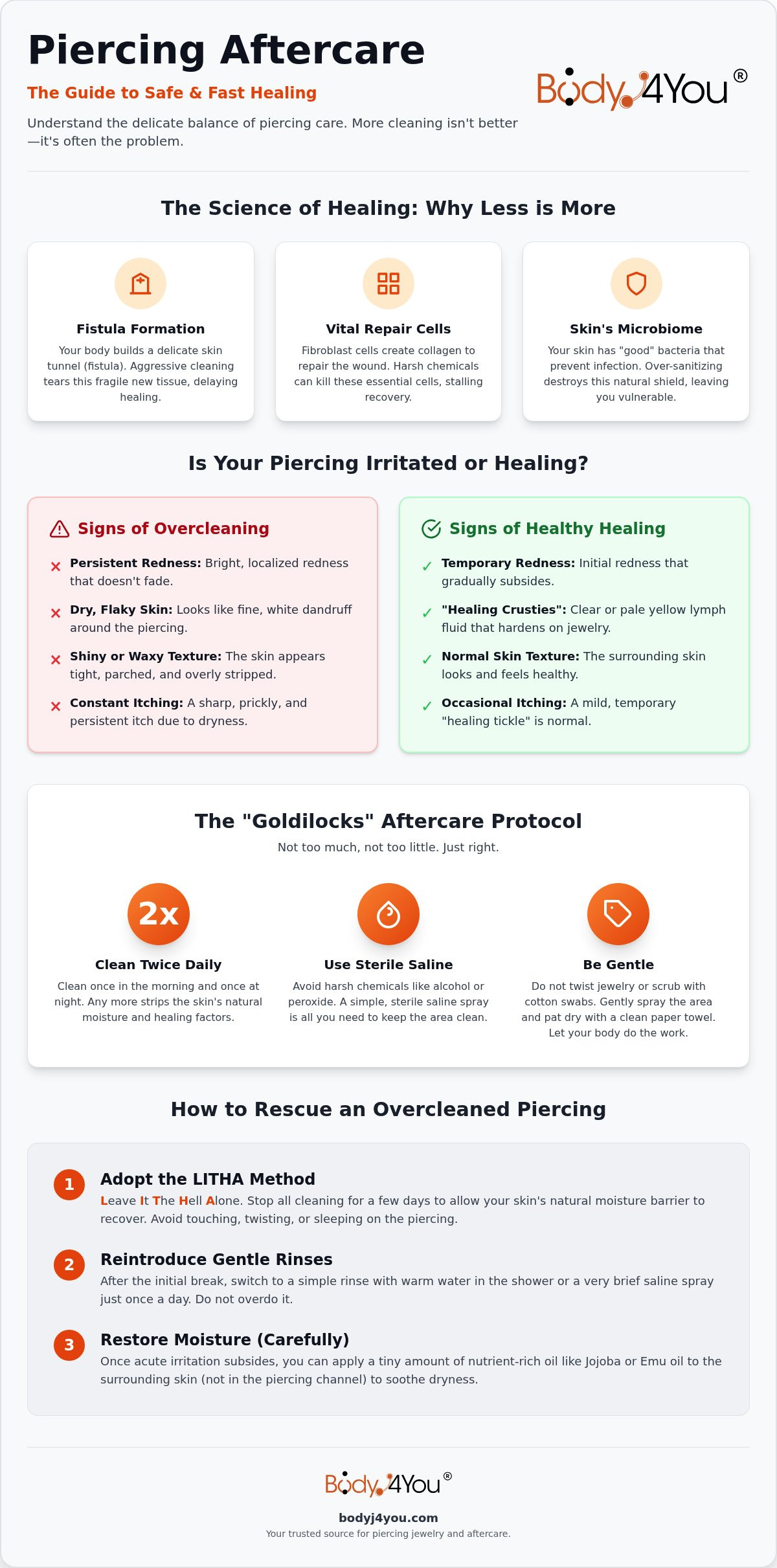
The primary goal of healing is the formation of the fistula. This is a delicate tunnel of new skin that grows from the outside in. This new tissue is incredibly fragile. It lacks the durability of established skin and can be easily torn or irritated by excessive movement or harsh irrigation. Understanding The Science of Piercing Healing helps you realize that your body needs peace to perform this intricate task. Constant scrubbing or high-pressure rinsing flushes away the very white blood cells and growth factors that are working to stabilize the site. Healing is a biological negotiation, and your body cannot negotiate while it is under constant chemical or physical attack.
The Role of Fibroblasts in Tissue Repair
Fibroblasts are specialized cells that build the structural framework for your new skin. They produce collagen and elastin, creating the cellular scaffolding required to turn a raw wound into a permanent, healthy channel. Fibroblasts are the architects of piercing healing. However, these cells are highly sensitive. When you introduce harsh chemicals or engage in overcleaning a piercing, you stall their activity. Chemical interference doesn't just clean the area; it can actually kill these vital repair cells. This leads to stalled healing, thinning tissue, and the persistent irritation that many mistake for an infection.
Microbiome Balance and the Piercing Site
Your skin is home to a thriving community of beneficial bacteria. This microbiome acts as a natural defense system, crowding out harmful pathogens and maintaining a healthy pH balance. Over-sanitizing the area creates a biological vacuum. By killing the "good" bacteria, you leave the door open for opportunistic infections to take hold. A successful healing journey focuses on cleanliness, not total sterilization. Consider these distinctions:
- Sterile: An environment devoid of all life, often achieved through harsh chemicals that damage tissue.
- Clean: A balanced environment where pathogens are managed without destroying healthy flora.
- Stable: The ideal state for long-term recovery and aesthetic success.
By respecting the skin's natural biology, you empower your body to heal itself. True aftercare is about supporting these natural systems rather than attempting to replace them with aggressive intervention. Often, this support involves maintaining internal wellness to promote skin clarity; for insights on supporting your complexion from within, read more.
Signs You Are Overcleaning Your Piercing
Your body is a communicative system. It provides immediate, tangible feedback when your routine crosses the line from helpful to harmful. Identifying the early markers of overcleaning a piercing is essential to preventing permanent scarring or jewelry rejection. When you ignore these signals, you risk turning a temporary aesthetic journey into a long-term dermatological struggle. Listen to your skin; it knows the difference between protection and provocation.
One of the most common points of confusion involves "healing crusties." New piercings naturally produce lymph fluid, a clear or pale yellow substance that hardens around the jewelry. This is a sign of healthy cellular activity. In contrast, excessive flaking looks like fine, white dandruff. It signifies that the skin barrier is dehydrated and brittle. Many Common Aftercare Mistakes stem from mistaking this dry, flaking skin for dirt and cleaning even more aggressively, which only deepens the damage.
Visual Cues: Redness vs. Discoloration
Over-stripped skin possesses a distinct, "shiny" appearance. It looks waxy and tight, often accompanied by a bright, superficial redness that stays localized around the entry points. You might notice tiny cracks or a "parched" texture in the tissue. This is a clear indicator of localized dehydration. Contrast this with the signs of a true infection, which usually presents as a dark, radiating redness that feels hot to the touch and spreads far beyond the immediate site of the jewelry.
Sensory Feedback: Itching and Tightness
Itching is a frequent part of the healing process due to the body's natural histamine response. However, there is a significant difference between a "healing tickle" and a "dry itch." If the area feels sharp, prickly, and constant, your skin is likely crying out for moisture. You may also notice a persistent feeling of tightness. This happens when the skin loses its natural elasticity because its protective lipids have been washed away. A healthy piercing should feel supple, not like a drumhead stretched to its limit.
If your routine has left the area feeling brittle, incorporating specialized healing oils like Jojoba or Rosehip can help restore the essential moisture barrier. When you strip away all natural oils, your skin may attempt a "rebound effect," where it overproduces sebum to compensate for the dryness. This can lead to clogged pores and irritation bumps. Additionally, excessive handling during cleaning increases the risk of migration. Every time you move the jewelry to "scrub" the site, you put physical pressure on the fragile fistula, which can cause the piercing to shift or even be rejected by the body.
Common Aftercare Mistakes: Frequency and Chemicals
The belief that more cleaning leads to faster healing is a dangerous fallacy. In reality, wound management requires biological stability, not constant disruption. Overcleaning a piercing often involves aggressive habits that reset the body's healing clock every single day. One of the most persistent myths is the need to "spin" or "rotate" jewelry to prevent it from sticking to the skin. This action is physically destructive. It tears the developing fistula, breaks the seal of healing tissue, and introduces bacteria into the raw wound. Jewelry doesn't "stick" to the skin like glue; it's held by lymph fluid, which is best removed through gentle irrigation rather than mechanical force.
Harsh chemicals are the enemy of delicate tissue. While these substances are effective for surface-level abrasions, they are far too aggressive for the internal environment of a piercing. Many people reach for household staples, assuming that if it stings, it's working. This is a fundamental misunderstanding of cellular biology. Antiseptics like Bactine are specifically labeled "not for puncture wounds" because they contain ingredients that can impede oxygen flow to the site. Purity. Safety. Precision.
The Toxicity of Harsh Antiseptics
Hydrogen peroxide is a non-selective oxidizer. It kills bacteria, but it also destroys the healthy cells responsible for tissue repair. Isopropyl alcohol is equally problematic. It causes micro-cracking in the skin, which creates tiny entry points for infection and leads to severe dehydration. These products are simply too harsh for a healing fistula. To avoid these risks, we recommend switching to a sterile saline spray for piercings. This provides the necessary cleanliness without the chemical burn associated with antiseptics. It is the gentle, professional alternative your body deserves.
The Problem with DIY Salt Water
Mixing your own salt solution in a kitchen is a gamble with your health. The Association of Professional Piercers aftercare guidelines emphasize that correct salinity is vital for wound recovery. If your solution is too salty, it will dehydrate the site; if it's too weak, it's effectively useless. The gold standard is a 0.9% sodium chloride ratio, which perfectly mimics the body's natural chemistry. DIY soaks also carry the risk of contamination from non-sterile tap water, unwashed containers, or airborne irritants. Professional-grade saline is sterile, balanced, and precise. It ensures that overcleaning a piercing with incorrect ratios doesn't sabotage your aesthetic goals.
The Ideal Aftercare Protocol: Finding the Balance
Achieving a healthy piercing requires three essential pillars: discipline, patience, and biological respect. The most effective protocol caps your cleaning routine at a maximum of two times per day. When you engage in overcleaning a piercing, you reset the inflammatory response, preventing the tissue from reaching the stability it needs to mature. Most of the time, your body simply needs a rinse and leave strategy. This involves gentle irrigation followed by complete stillness, allowing the natural healing proteins to remain undisturbed. Precision. Purity. Safety.
Moisture is a hidden bacterial trap. Leaving a piercing wet after cleaning creates a warm, stagnant environment where pathogens thrive. It's vital to ensure the area is completely dry to maintain the integrity of the skin barrier. As healing progresses, typically after the initial 8 weeks, you should scale back to once-daily cleaning. This transition supports the skin's ability to maintain its own moisture balance without external interference. If the site doesn't show signs of irritation, less intervention is always the superior choice.
The Three-Step Saline Method
Precision in execution is just as important as frequency. Follow these three steps to ensure a clean, stable environment for your jewelry:
- Step 1: Gentle irrigation. Use a sterile saline spray to flush the area. This removes surface debris without requiring you to touch or move the jewelry.
- Step 2: Soften and remove. Only remove lymph (crusties) when they are fully loosened by the saline. Never pick at dry tissue, as this causes micro-tears in the fistula.
- Step 3: Thoroughly pat dry. Use non-woven gauze or piercing cleaning swabs to dry the site. Removing excess moisture is the final, essential step in preventing localized irritation.
Tailoring Frequency to Piercing Type
Different anatomical locations require specific levels of intervention. Cartilage piercings are notorious for their slow metabolic rate and lack of blood flow; they require extreme patience and minimal agitation. For oral piercings, the goal is to balance saline rinses with your mouth's natural saliva enzymes, which already possess antibacterial properties. Body piercings, such as navels or nipples, face the added challenge of friction from clothing. In these cases, cleaning is as much about removing sweat and lint as it is about hygiene. To maintain this delicate balance, you can find professional-grade solutions in our full aftercare collection to support your journey toward perfect self-expression.
How to Rescue an Overcleaned Piercing
Realizing that you are overcleaning a piercing is the first step toward restorative health. When the skin barrier is compromised, the solution isn't more intervention; it's a strategic retreat. Your body possesses an incredible capacity for self-repair when provided with the right environment. The immediate priority is to stop all aggressive scrubbing, eliminate harsh antiseptics, and adopt the LITHA protocol. This industry standard stands for "Leave It The Hell Alone." It is a commitment to biological peace that allows the fistula to stabilize without the constant trauma of over-handling.
Recovery requires a shift in mindset. You must move from a state of hyper-vigilance to one of supportive observation. By reducing your cleaning frequency to the absolute minimum, you allow the skin's natural pH and moisture levels to recalibrate. This transition period is essential for rebuilding the cellular scaffolding we discussed in previous sections. Purity. Balance. Resilience.
Restoring the Barrier with Healing Oils
Once you've ceased the irritation, the next phase is rehydration. Overcleaning a piercing strips away the skin's essential lipids, leaving it brittle and prone to cracking. Natural oils can bridge this gap by mimicking the skin's own sebum. Jojoba oil is particularly effective for this purpose, as its molecular structure is nearly identical to human skin oils. Rosehip and Castor oils offer additional support, providing the nutrients necessary for localized skin rejuvenation and barrier repair.
For targeted recovery, applying a piercing bump treatment oil can soothe inflamed tissue. Use a clean applicator to apply a single drop to the surrounding skin, ensuring you don't move the jewelry excessively. This provides a protective layer that locks in moisture while the internal fistula continues its delicate work of repair. It's a gentle way to support the skin without introducing the harshness of DIY solutions.
When to Consult a Professional
While most irritation from over-cleaning resolves with rest, you must remain vigilant for serious red flags. If you notice a localized piercing bump, you should differentiate between a simple "cleaning bump" caused by dryness and a granuloma or keloid. A cleaning bump is typically a small, flesh-colored elevation that responds well to improved aftercare. In contrast, a granuloma may appear red and raw, indicating a more significant inflammatory response. Seek professional advice if you experience any of the following:
- Persistent, radiating heat or throbbing pain that doesn't subside.
- Thick, dark, or foul-smelling discharge from the site.
- Sudden migration or a visible thinning of the skin around the jewelry.
A "less is more" mindset is your greatest asset for the remainder of your healing journey. Trust your body's innate wisdom, use professional-grade tools, and prioritize the long-term integrity of your skin over fleeting trends. This disciplined approach ensures your self-expression remains a source of pride, not discomfort.
Embrace a Balanced Path to Healing
Your journey toward self-expression should be defined by confidence, not irritation. The biological process of forming a fistula requires a stable environment that avoids the physical and chemical trauma of overcleaning a piercing. By respecting the skin's natural microbiome and limiting your routine to twice-daily irrigation, you empower your body to heal with precision and ease. Remember that localized dryness and waxy redness are signals to scale back, not to increase your efforts. Healing is a partnership between your body and your routine.
True recovery depends on the integrity of your aftercare tools. Restore your piercing’s natural balance with BodyJ4You’s Saline Piercing Aftercare Spray. Our formula features dermatologically focused ingredients and is manufactured in the USA for guaranteed purity. With over 20 years of industry experience, we provide the protective and stabilizing force trusted by professional piercers. Purity. Safety. Resilience.
You've made a beautiful investment in your personal aesthetic; now, give it the peace it needs to last a lifetime. Trust the process, listen to your skin, and enjoy the results of a healthy, vibrant piercing.
Frequently Asked Questions
Can overcleaning a piercing cause a bump?
Yes, excessive cleaning frequently leads to the development of irritation bumps. These small elevations occur when the skin's protective lipid barrier is stripped away, causing the body to overproduce tissue in response to constant trauma. Unlike a true infection, these bumps are usually flesh-colored and triggered by mechanical or chemical stress. Reducing your routine and using a gentle, sterile saline spray can often help resolve these localized issues without further complicating the healing process.
How do I tell the difference between overcleaning and an infection?
The primary difference lies in the type of redness and sensation you experience. Overcleaning typically causes waxy, superficial redness and a "dry itch" localized to the jewelry entry points. An infection usually presents with radiating heat, deep throbbing pain, and dark, spreading discoloration. If you notice foul-smelling discharge or fever, consult a professional. Conversely, overcleaning a piercing results in flaking, peeling, and a persistent feeling of tightness in the surrounding tissue.
Is it okay to clean my piercing three times a day?
Cleaning three times a day is generally considered excessive for most piercings. Most industry professionals recommend a maximum of twice daily to avoid disrupting the fragile fistula formation. Excessive irrigation flushes away the beneficial proteins and fibroblasts required for cellular repair. If your environment is particularly dusty or dirty, a quick rinse with plain, filtered water is safer than a third application of saline, which can lead to severe skin dehydration.
Should I stop cleaning my piercing if it is dry and peeling?
You shouldn't stop entirely, but you must scale back your frequency immediately. Dry, peeling skin is a clear indicator that your current routine is too aggressive for your skin type. Switch to once-daily cleaning with a sterile 0.9% saline spray and ensure you're patting the area completely dry with non-woven gauze. Total cessation can allow debris to build up, but reducing the chemical load allows the skin's natural barrier to begin its essential recovery.
What is the best thing to put on an over-cleaned, irritated piercing?
The most effective solution is a combination of rest, stability, and nutrient-rich natural oils. After reducing your cleaning frequency, apply a single drop of Jojoba or Rosehip oil to the surrounding skin. These oils effectively mimic natural sebum and restore the moisture barrier without clogging pores. Using a specialized piercing bump treatment oil can also provide a protective layer that soothes inflammation while the internal tissue stabilizes itself through the LITHA (Leave It The Hell Alone) protocol.
Can I use moisturizer on a dry piercing?
Standard commercial moisturizers are not recommended for healing piercings. These products often contain synthetic fragrances, preservatives, and thickeners that can trap bacteria or cause further chemical irritation. Instead, use high-purity biological oils like Jojoba, Castor, or Rosehip oil. These professional alternatives provide necessary hydration while allowing the skin to breathe. Always apply oils to the surrounding tissue rather than directly into the piercing channel to maintain the integrity of the healing site.
Why does my piercing hurt more after I clean it?
Increased pain after cleaning usually indicates mechanical irritation or chemical sensitivity. If you're moving the jewelry or "scrubbing" the site, you're causing micro-tears in the developing skin tunnel. Additionally, if your saline solution is too concentrated or contains harsh additives, it can cause a stinging sensation. Cleaning should be a gentle, hands-off process. If discomfort persists, it's a sign that your body requires more rest and significantly less intervention from your aftercare routine.
How long does it take for an over-cleaned piercing to calm down?
Most piercings begin to show visible improvement within 3 to 7 days of adopting a "less is more" approach. The skin requires this window of time to replenish its natural lipids and for the initial inflammatory response to subside. During this recovery period, it's crucial to maintain absolute stillness and avoid all harsh household chemicals. Consistency in your reduced routine is the key to successfully reversing the effects of overcleaning a piercing and restoring your skin's health.


