


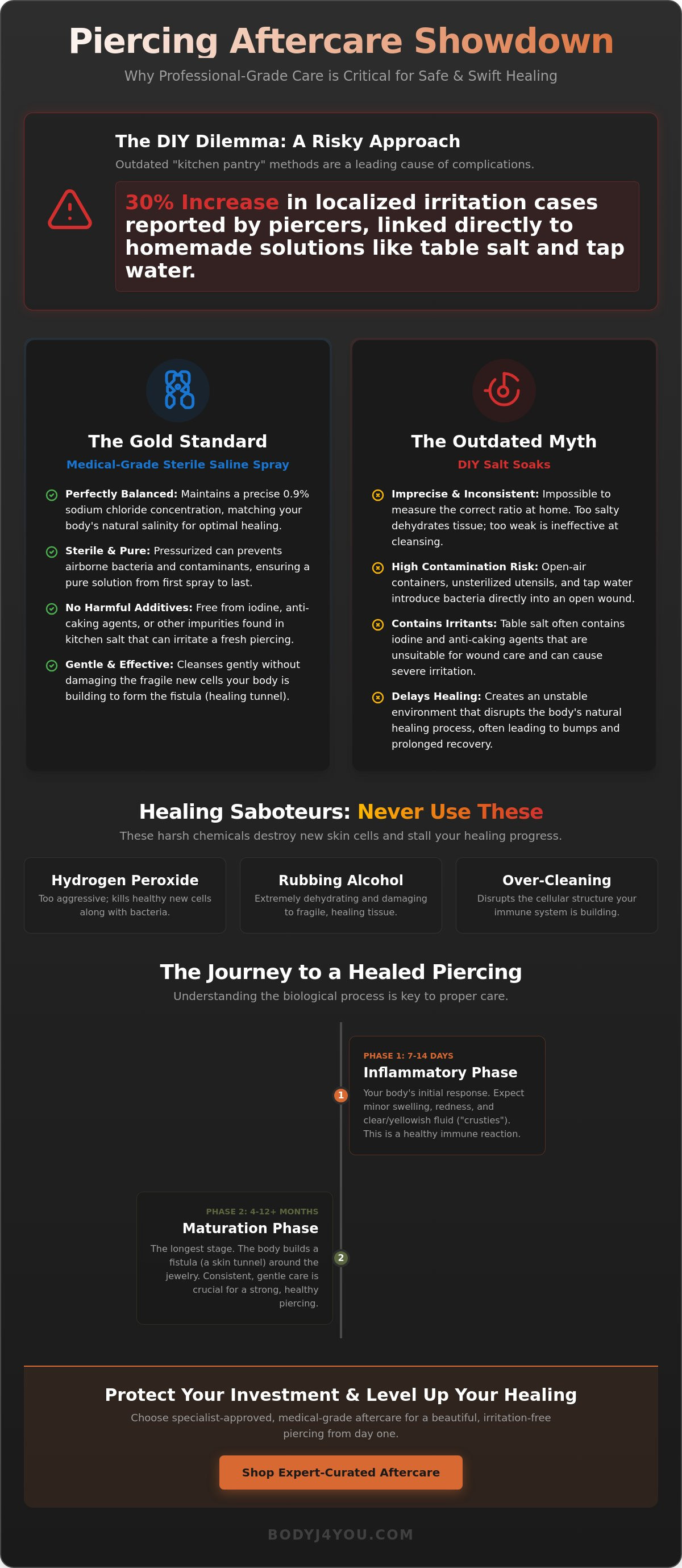
Your kitchen pantry is the last place you should look for professional-grade wound care. While the internet frequently suggests a pinch of table salt and tap water, this outdated DIY approach is responsible for a 30% increase in localized irritation cases reported by professional piercers over the last year. You've chosen a beautiful piece of jewelry to express your identity, and the last thing you want is for a preventable infection to ruin the aesthetic.
We understand the frustration of waking up to a persistent piercing bump or the fear that your body might reject a new addition. It's a vulnerable process that requires a delicate balance of biology and beauty. This guide will teach you how to select medical-grade piercing aftercare products that are healthy, safe, and effective. You'll learn to identify the exact ingredients that trigger reactions and how to resolve minor irritations in as little as 48 hours.
We're going to compare the science behind saline sprays and bump-shrinking oils while providing a clear routine to ensure your healing is seamless. It's time to level up your skin health and protect your investment with a specialist-approved plan rooted in twenty years of industry expertise.
Key Takeaways
- Understand the critical transition from the inflammatory phase to maturation to ensure your piercing heals safely and stays healthy.
- Discover why medical-grade sterile saline spray is the industry gold standard for piercing aftercare compared to traditional DIY salt soaks.
- Learn to identify different types of piercing bumps and how specialized, organic oils can effectively reduce inflammation and irritation.
- Master the "Soak and Spray" method to gently remove debris and maintain perfect hygiene without causing trauma to the healing tissue.
- Level up your healing journey by selecting expert-curated aftercare bundles designed to provide comprehensive, medical-grade protection.
What is Proper Piercing Aftercare? Understanding the Healing Stages
Proper piercing aftercare is a precise, controlled wound-healing process. It isn't just about keeping a site clean; it's about providing the specific pH-balanced environment your skin needs to regenerate. When you receive a new piercing, your body treats the jewelry as a foreign object. A comprehensive Body piercing overview reveals that while the practice is ancient, modern science has refined how we support the biological recovery of the skin. Successful healing requires products that are healthy, safe, and effective.
The journey of a healing piercing moves through distinct biological stages. The inflammatory phase typically lasts the first 7 to 14 days. During this time, your body sends white blood cells to the area, resulting in minor swelling and redness. This is followed by the maturation phase, which can last from 4 to 12 months depending on the location. During maturation, the body works to strengthen the new tissue. It's vital to distinguish between normal lymph discharge and actual infection. Lymph is a clear or pale-yellow fluid that dries into "crusties." It's a sign of a healthy immune response. Conversely, an infection presents as thick green discharge, localized heat, or radiating red streaks. BodyJ4You acts as a Wise Guardian in this process, offering products that protect the skin's integrity while it navigates these delicate stages.
Why Your Body Needs Specialized Aftercare
Your body is an architect. To accommodate jewelry, it must build a fistula, which is a structural tunnel of skin that lines the piercing track. This process, known as epithelialization, requires a stable environment. Sterile saline solutions are the gold standard because they maintain the osmotic balance of new cells. If a solution is too salty, it dehydrates the tissue; if it's too weak, it fails to cleanse. The material of your jewelry also dictates the success of this stage. Understanding the relationship between metal and skin is essential, as detailed in our septum piercing guide. High-quality materials and precise aftercare ensure the fistula matures without unnecessary trauma.
The Risk of "Old School" Methods
Modern piercing aftercare has evolved past the aggressive tactics of the 1990s. Using hydrogen peroxide or rubbing alcohol is a common mistake that stalls the body’s natural healing rhythm. These substances are non-discriminatory; they kill the harmful bacteria but also destroy the fragile new skin cells trying to form the fistula. Over-cleaning is another hidden danger. Scrubbing a piercing three or four times a day disrupts the cellular "scaffolding" your immune system is building. Healing is a partnership between your immune system and the products you choose to support it. By choosing gentle, expert-crafted solutions, you avoid the cycle of irritation and "piercing bumps" that plague many enthusiasts. Level up your routine by trusting products rooted in care rather than harsh chemicals.
Choosing Your Primary Cleanser: Saline Spray vs. DIY Soaks
Sterile saline spray is the industry gold standard for initial healing. It offers a level of precision and safety that homemade solutions simply cannot match. While the "sea salt soak" was once a staple of the industry, professional standards moved toward pressurized delivery systems years ago. Pressurized cans maintain a vacuum seal, preventing the introduction of airborne bacteria and contaminants that thrive in open-air containers.
The "DIY myth" often leads to unnecessary irritation. Mixing salt and water at home is imprecise. If the solution is too salty, it pulls moisture from the cells and delays healing. If it is too weak, it fails to provide the necessary osmotic balance. Furthermore, kitchen salt often contains anti-caking agents or iodine, which are not suitable for open wounds. Using a professional product helps prevent piercing complications by ensuring a perfect 0.9% sodium chloride concentration every time.
Quality control is the foundation of safe healing. We prioritize the "Born in the USA" standard for medical-grade saline. This ensures the product meets rigorous safety protocols and remains free from the impurities often found in imported alternatives. It is a commitment to purity that protects your skin and your investment in your body art.
What to Look for in a Saline Piercing Spray
Purity is paramount. Your piercing aftercare spray should only contain two ingredients: USP-grade water and 0.9% sodium chloride. Avoid additives, preservatives, or fragrances that can cause allergic reactions. A "360-degree" misting nozzle is essential for difficult placements. This technology allows you to spray from any angle, ensuring you reach the tight crevices of a daith or the dual exit points of an industrial piercing without touching the wound. BodyJ4You’s Saline Piercing Aftercare Spray is a top-tier choice for its purity and reliable delivery system.
When to Use Hypochlorous Acid vs. Saline
Saline is your daily maintenance tool. It is gentle, soothing, and mimics the body’s natural fluids. However, if a piercing becomes irritated or shows signs of a stubborn bump, you may need to level up your routine. Hypochlorous acid acts as a secondary antimicrobial. It is naturally produced by human white blood cells to fight infection and is incredibly effective at killing bacteria without stinging. While saline flushes debris, hypochlorous acid targets pathogens directly. You can switch to an antimicrobial spray for 48 to 72 hours during a flare-up before returning to standard saline for long-term care. Explore our range of specialized piercing aftercare to find the right balance for your healing journey.
Crafted by Experts. Trusted by Thousands. Rooted in Care.
Targeted Treatments: Solving Piercing Bumps and Dryness
Successful healing isn't always a straight line. Even with a perfect routine, your body might react to the new jewelry or environmental stressors. This is where targeted piercing aftercare becomes essential. You must first identify what you're dealing with. Most people face one of three issues: irritation bumps, granulomas, or keloids. Irritation bumps are the most common, usually appearing as small, red raised areas caused by friction or jewelry movement. Granulomas are a localized overgrowth of blood vessels, while keloids are dense, permanent scar tissue that grows beyond the site of the piercing. Understanding these differences allows you to choose the right solution rather than guessing.
A core pillar of any complete aftercare kit is specialized bump care. We prioritize non-comedogenic ingredients because they ensure your pores stay clear during the recovery process. Clogged pores lead to secondary infections, which only delay your progress. By using products crafted with clinical precision, you level up your routine from basic cleaning to active skin rehabilitation. This proactive approach prevents minor irritation from becoming a long-term scar. It's about providing your skin with the specific nutrients it needs to regenerate without obstruction.
The Power of Healing Oils: Jojoba, Rosehip, and Castor
Natural oils provide a sophisticated way to soften crusty tissue and reduce inflammation. Jojoba oil is particularly effective because its chemical structure closely mimics human sebum. This allows it to penetrate the skin deeply rather than just sitting on the surface. Rosehip and castor oils work in tandem to reduce redness and promote collagen elasticity, which is vital for a smooth finish. To get the best results from BodyJ4You’s Piercing Bump Treatment Oil, apply a small amount to the affected area. Use a clean finger to massage it in for 30 seconds. This physical stimulation increases blood flow and ensures maximum absorption of the nutrients. Our formulas are rooted in care, ensuring every drop supports your body's natural defense mechanisms.
Balms and Maintenance for Stretched Ears
Maintaining skin health is even more critical for those with stretched lobes. Gauges Balm is a necessity for anyone looking to maintain skin elasticity and prevent thinning. It creates a protective barrier that keeps the tissue supple under the pressure of larger jewelry. We use a blend of Vitamin E and Shea butter to prevent "blowouts," a common issue where the skin becomes too tight and pushes through the back of the ear. These ingredients are essential for keeping the skin hydrated and resilient. If you are currently in the process of sizing up, consult our ear stretching kit guide for detailed safety protocols. Keeping the skin moisturized is the best way to ensure your lobes remain healthy and thick throughout your journey. This specialized piercing aftercare ensures your self-expression remains safe and aesthetically pleasing for years to come.
The Daily Routine: How to Use Aftercare Products Correctly
Consistency creates results. A disciplined routine is the bridge between a fresh wound and a beautifully healed piece of self-expression. Following a structured piercing aftercare protocol ensures your body has the resources it needs to repair tissue without unnecessary setbacks. Most complications arise not from the piercing itself, but from how it is handled in the first 90 days.
- Step 1: Hand Hygiene. This is the most overlooked part of the journey. Your hands are the primary vector for bacteria. Wash your hands for at least 20 seconds with antimicrobial soap before you even look at your jewelry.
- Step 2: The Soak and Spray. Use a sterile saline spray twice daily. If you notice "crusties," which are a natural byproduct of lymph fluid, do not pick them with your fingernails. Instead, saturate a non-woven gauze with saline and hold it against the area for 120 seconds. This softens the debris so it flushes away without causing trauma to the fistula.
- Step 3: The LITHA Rule. LITHA stands for "Leave It The Hell Alone." Do not rotate, twist, or slide your jewelry. Movement during the early stages of healing breaks the fragile new skin cells forming inside the piercing, which leads to prolonged swelling and scar tissue.
- Step 4: Proper Drying. Moisture is the enemy of a healing cartilage piercing. Trapped water can lead to "moisture bumps" or fungal growth. Use a hair dryer on a cool, low setting for 30 seconds to ensure the site is completely dry after every shower or cleaning session.
Why Tools Matter: Swabs vs. Cotton Balls
Precision is vital for skin health. Standard cotton balls are risky because they shed microscopic fibers that get caught in the threading or behind the decorative ends of your jewelry. These fibers act as a wick for bacteria, often leading to localized infections. Specialized Piercing Cleaning Swabs offer a tightly wound head that prevents shedding. We define low-lint applicators as the only safe choice for delicate healing tissue because they provide mechanical cleaning without leaving debris behind.
Signs Your Routine Needs Adjusting
Your skin will tell you if your routine is working. If the area feels tight, itchy, or looks like parchment paper, you are likely over-cleaning. Reduce your saline applications to once per day. Conversely, if you see a heavy buildup of yellow discharge, you may be under-cleaning. If a small, red bump begins to form, it is time to level up your routine by introducing a specialized bump treatment oil. These botanical blends help soothe irritation and reduce the appearance of hypertrophic scarring. For ear piercings, use the Travel Pillow Trick; sleep with your ear in the center hole of a travel pillow to avoid pressure-induced irritation that can shift the angle of your piercing.
Ready to support your healing journey with expert-approved solutions? Crafted by Experts. Trusted by Thousands. Rooted in Care.
Shop Professional Piercing Aftercare KitsTop Recommendations: Standout Products from the BodyJ4You Collection
Achieving a healthy heal requires more than just luck; it demands the right tools. The BodyJ4You "Essential Trio" provides a complete system for success:
- Saline Spray: For daily cleansing and debris removal.
- Bump Oil: For soothing irritation and localized swelling.
- Precision Swabs: For accurate application without snagging jewelry.
Choosing one of our Aftercare Bundles is a smart way to level up your routine. These curated sets offer a comprehensive solution for piercing aftercare at a lower price point than buying items individually, ensuring you have every supply needed for the full duration of your recovery.
Best for New Piercings: Saline Aftercare Spray
Our Saline Aftercare Spray is the cornerstone of any healing journey. Born in the USA, we've spent 20 years refining this formula to ensure it delivers medical-grade purity without the sting. It's a gentle, non-stinging application that's suitable for all skin types. Trusted by thousands for its medical-grade purity, this fine mist reaches deep into the piercing site to remove debris. It's healthy, safe, and effective for daily use.
Best for Irritation: Piercing Bump Treatment Oil
Irritation doesn't have to be a permanent setback. Our Piercing Bump Treatment Oil uses a specific blend of USDA-certified organic oils to soothe troubled skin. It follows a proven path to recovery: it targets the localized bump, works to shrink the tissue, and helps prevent recurrence. This versatile oil is a must-have for nose, ear, and navel piercings that need extra attention.
Quality and ethics are at the heart of everything we do. Every formula in our collection is 100% vegan and cruelty-free, reflecting our commitment to wellness and safety. We manufacture our products with clinical precision, ensuring they remain hypoallergenic and non-comedogenic for your peace of mind. Our signature philosophy is simple: Crafted by Experts. Trusted by Thousands. Rooted in Care. Don't leave your healing to chance when you can rely on two decades of American manufacturing excellence.
Ready to give your skin the support it deserves? Explore the full Piercing Aftercare Collection to start your healing journey today.
Master Your Recovery with Expert-Led Care
Your journey toward self-expression deserves a foundation built on safety and precision. Choosing the right piercing aftercare isn't just about cleaning; it's about supporting your body’s natural biology through every stage of the 2026 healing cycle. Prioritizing sterile saline sprays over inconsistent DIY salt soaks ensures your skin remains hydrated and irritation-free. When complications like piercing bumps arise, using targeted, non-comedogenic formulas can stabilize the area without causing further trauma.
BodyJ4You provides the clinical quality you need to level up your routine. Every formula is crafted by experts with 20+ years of experience in the body modification industry. Crafted by Experts. Trusted by Thousands. Rooted in Care. Our solutions are 100% vegan and cruelty-free, bridging the gap between ethical standards and high-end aesthetics. You don't have to settle for guesswork when professional-grade support is available. Our formulas are born in the USA to ensure the highest quality control for your safety.
Shop the BodyJ4You Piercing Aftercare Collection and give your skin the protection it deserves. Your new look is an investment. Treat it with the expert care it needs to shine.
Frequently Asked Questions
Can I use contact lens solution for piercing aftercare?
No, you shouldn't use contact lens solution because it contains preservatives like benzalkonium chloride that irritate healing tissue. Stick to a 0.9% sterile saline spray. The Association of Professional Piercers (APP) identifies this concentration as the gold standard for piercing aftercare because it mimics the body's natural chemistry. This ensures your healing process remains undisturbed, healthy, and safe.
How many times a day should I clean my new piercing?
Clean your new piercing exactly two times every day to ensure optimal recovery. Over-cleaning can strip away the 100% natural oils your skin needs to repair itself. Use a sterile saline wash once in the morning and once at night. This routine provides the balance needed for a successful healing journey without causing the dryness that leads to cracks or irritation.
How do I get rid of a piercing bump on my nose?
You can resolve a nose piercing bump by eliminating the source of irritation and applying a targeted treatment oil. Research indicates that 30% of these bumps are caused by jewelry movement or poor material quality. Switch to G23 titanium if you suspect a nickel allergy. Applying a specialized bump oil twice daily helps soothe the area and supports your skin's journey toward self-expression.
Is it normal for a new piercing to have a yellow discharge?
It's completely normal for a new piercing to produce a pale yellow or clear discharge known as lymph fluid. This fluid dries into "crusties" and signals that your body's immune system is working. While 100% of piercings experience this, you must distinguish it from thick, green, or foul-smelling pus. If the discharge is accompanied by a fever, seek professional medical advice immediately.
When can I stop using saline spray on my piercing?
You should stop using saline spray only after the internal wound has fully matured and closed. Earlobe piercings typically require 6 to 8 weeks of consistent piercing aftercare, while cartilage can take up to 12 months to heal. Even if the outside looks fine, the internal tissue needs time. Level up your routine by staying patient and waiting for the full duration recommended by experts.
Can I use tea tree oil on my piercing bump?
You should avoid using undiluted tea tree oil because it's far too caustic for a healing wound. Dermatological studies indicate that 100% pure essential oils can cause localized chemical burns or severe allergic contact dermatitis. Instead, choose a product specifically formulated for body modification. These blends use safe, non-comedogenic carrier oils to deliver soothing benefits without the risk of damaging your delicate skin.
What should I do if my piercing feels hot and swollen?
Contact a doctor or your piercer immediately if the area feels hot, throbbing, or excessively swollen. These symptoms indicate a potential infection, which affects roughly 20% of piercings when sterile protocols aren't followed. Don't remove the jewelry yourself; this can trap the infection inside the skin. A professional can provide the necessary care to ensure your safety and the integrity of your skin.
Is homemade salt water just as good as store-bought saline?
No, homemade salt water isn't as effective or safe as store-bought saline because it's impossible to maintain sterility in a kitchen. A proper saline solution contains exactly 0.9% sodium chloride. Mixing your own often leads to a solution that is too salty. This dehydrates 100% of the healthy cells trying to repair the wound. Trust a lab-tested product to keep your healing process on track.


