

Your new piercing should be a mark of self-expression, not a source of constant discomfort. If you're struggling with tightness, persistent itching, or unsightly flaking, you aren't alone. Many enthusiasts find that standard cleaning routines leave their skin parched, leading to a cycle of irritation that looks like an infection but is actually just extreme dehydration. It's a common struggle that often results in accidental touching and a slower recovery time.
Mastering piercing aftercare for dry skin requires a sophisticated balance of clinical precision and nurturing hydration. You deserve a routine that protects the wound while restoring the surrounding tissue. We promise to show you how to maintain a sterile environment and support skin elasticity simultaneously, ensuring your journey toward aesthetic refinement remains comfortable and safe. This guide explores the essential role of 0.9% sterile saline, the benefits of biocompatible oils like jojoba and rosehip, and the specific steps to eliminate flakes without restarting the healing clock. Let's transform your aftercare into a ritual of wellness, safety, and purity.
Key Takeaways
- Master the "Dry Skin Paradox" by learning how to use sterile saline to prevent infection without compromising your skin's natural lipid barrier.
- Implement a specialized routine for piercing aftercare for dry skin that replaces flaky irritation with smooth, resilient tissue.
- Explore the science of biocompatible oils like jojoba and rosehip to provide deep nourishment that mimics your skin's natural sebum.
- Follow a disciplined, step-by-step cleaning ritual designed to soothe tightness and eliminate the urge to itch or touch the healing site.
- Identify professional-grade solutions, such as isotonic saline sprays and treatment oils, that offer a dual-purpose approach to cleaning and hydrating.
Understanding Why Your Piercing Skin is Dry and Flaky
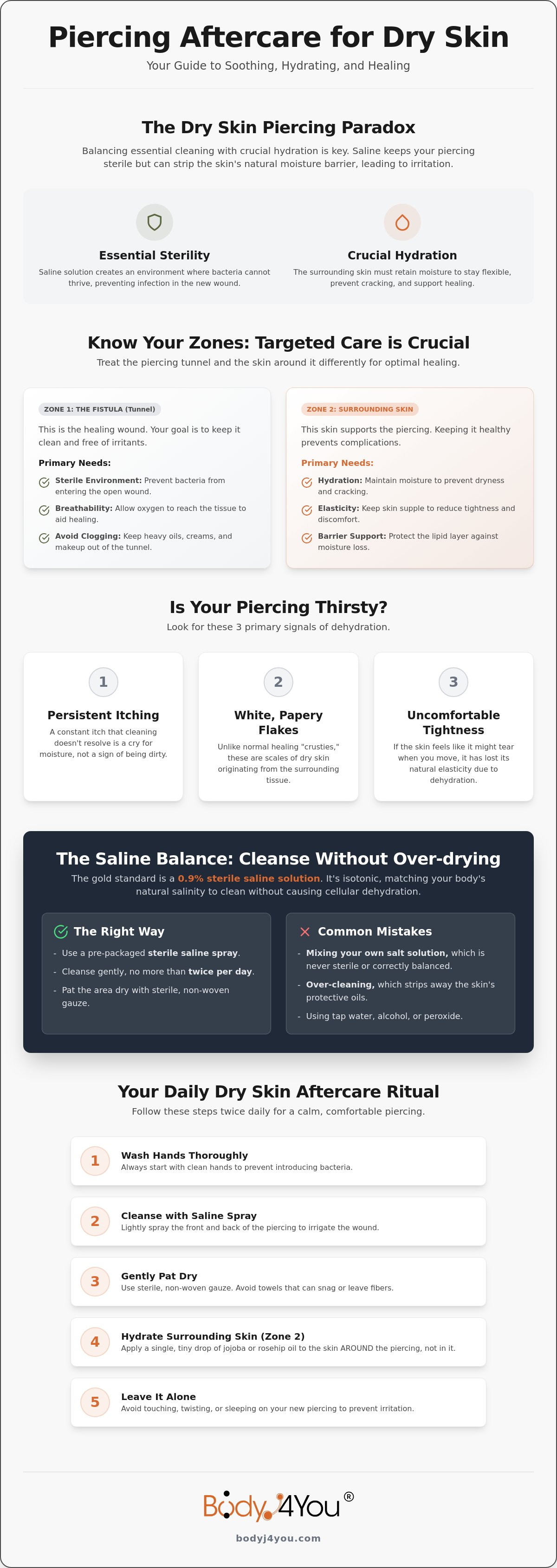
You've just committed to a new look. Now comes the maintenance. Proper piercing aftercare for dry skin often feels like a contradiction. You're told to use saline, which is a salt solution. Salt, by its nature, is a desiccant. It draws water out of the cells to create an environment where bacteria cannot thrive. This is the "Dry Skin Piercing Paradox." You need the saline to keep the wound sterile, but that same saline can strip your skin's natural lipid barrier. This barrier is a delicate layer of fats and oils that keeps moisture in and irritants out. When it's compromised, your skin loses its ability to remain supple, leading to that familiar, uncomfortable tightness.
It's vital to distinguish between biological discharge and skin distress. During the piercing healing process, your body produces lymph fluid. This fluid dries into "crusties," which are usually yellowish or clear. These are a sign of healthy cellular repair. Actual skin flaking, however, looks like white, papery scales that originate from the skin itself, not the wound. If the skin around the jewelry is peeling away in sheets, you aren't looking at healing; you're looking at dehydration. External factors like harsh winter air, low indoor humidity, and even the mineral content in hard water can accelerate this moisture loss, making the healing journey feel like an uphill battle.
The Difference Between the Wound and the Surrounding Skin
Precision is everything. We categorize your piercing site into two distinct areas. Zone 1 is the fistula, the actual tunnel where the jewelry sits. This area must remain sterile, breathable, and free of heavy oils to prevent clogging. Zone 2 is the surrounding tissue, the canvas for your jewelry. This area requires hydration to maintain its integrity. When Zone 2 becomes excessively dry, it cracks. These microscopic fissures act as open doors for bacteria to travel directly into Zone 1, increasing your risk of infection. Effective piercing aftercare for dry skin means treating these two zones with different, targeted levels of care.
Common Symptoms of Dehydrated Piercings
How do you know if your piercing is thirsty? Look for these three primary signals. First, persistent itching that cleaning doesn't fix. This is often a cry for moisture, not a sign of dirt. Second, observe the texture. White, papery flakes that cling to the jewelry indicate the lipid barrier is failing. Finally, pay attention to "tightness." If your skin feels like it might snap or tear when you move or smile, the tissue has lost its elasticity. Addressing these symptoms early prevents the formation of irritation bumps and ensures a smoother, more aesthetic recovery.
The Saline Balance: Cleaning Without Over-Drying
Clinical safety begins with the right solution. A sterile saline spray for piercings is the non-negotiable gold standard for a reason. It utilizes a precise 0.9% sodium chloride concentration, which is exactly isotonic to human blood. This means the solution matches the salt levels already present in your body's cells. It cleanses the wound without causing the osmotic shock that leads to cellular dehydration. For those managing piercing aftercare for dry skin, this chemical precision is the difference between a calm piercing and a flared, itchy mess.
Don't fall into the over-cleaning trap. While it's tempting to spray the area every time you notice a flake or feel a slight itch, doing so more than twice a day is destructive. Excessive exposure to even the highest quality saline will eventually wick away the essential moisture your skin is trying to retain. It's a matter of discipline, consistency, and restraint. You want to remove debris and bacteria, not strip your skin of its last remaining defenses. If you find yourself needing a reliable, mess-free option, a pre-packaged Saline Piercing Aftercare Spray provides the controlled, sterile application your healing tissue requires.
Why DIY Salt Solutions Ruin Dry Skin
Mixing salt and water in your kitchen is a recipe for irritation. Without laboratory-grade measurements, you'll likely create a hypertonic solution that is far too strong. This high salt concentration aggressively draws moisture out of your skin cells via osmosis, leaving the area brittle and prone to painful cracking. Tap water also introduces chlorine, minerals, and potential contaminants into sensitive, dry tissue that lacks a robust lipid barrier. A 0.9% sodium chloride concentration is the only biologically optimal balance for effective cellular repair and safe wound irrigation.
The 'Rinse and Dry' Method
Leaving saline to air-dry is a common mistake that many enthusiasts make. As the water evaporates, a concentrated salt residue remains on the skin surface. This leads to "saline burn," a chemical irritation that mimics a rash and significantly increases flaking. Always rinse the area with a small amount of distilled water about sixty seconds after your saline application. Once rinsed, use piercing cleaning swabs to gently pat the area dry. This removes excess moisture and residue without the harsh friction of a towel, protecting the fragile new skin cells as they migrate across the wound.
Safe Moisturizing Agents: Jojoba, Rosehip, and Healing Oils
The transition from cleaning to hydrating is the most critical phase of piercing aftercare for dry skin. While many guides warn you to avoid lotions, they often fail to provide a safe, effective alternative. Conventional moisturizers frequently contain alcohols, synthetic thickeners, and fragrances that can clog the healing fistula. These ingredients don't just irritate the wound; they trap bacteria and heat. Instead, we advocate for the use of non-comedogenic, botanical oils. These substances offer genuine biocompatibility, meaning they closely mimic the molecular structure of human sebum. By using what the body already recognizes, you support the skin’s natural defenses without risking a breakout or an infection.
Purity is a non-negotiable requirement. Any oil you introduce to your piercing site must be 100% pure and entirely fragrance-free. Fragrances are a leading cause of contact dermatitis, which is easily mistaken for a piercing infection. Additionally, prioritize oils rich in Vitamin E. This nutrient is essential for supporting tissue elasticity and preventing the brittle, "tight" feeling that often accompanies healing in dry climates. By choosing high-quality, ethically sourced oils, you provide a stabilizing force for your skin’s recovery. It's about aesthetic refinement, biological safety, and long-term wellness.
Jojoba Oil: The Gold Standard for Skin Elasticity
Jojoba oil is the cornerstone of a sophisticated aftercare routine. Technically, it's a liquid wax ester rather than a traditional fat. This distinction is vital because wax esters are more stable and less likely to turn rancid or clog pores. It is particularly beneficial for those with stretched lobes, as it keeps the tissue supple and prevents "blowouts" caused by dry, inelastic skin. To apply it safely, place a single drop on a clean swab and gently massage it into Zone 2, the tissue surrounding the jewelry. Never apply oil directly into the piercing hole itself, as the fistula must remain clear to breathe and drain.
Rosehip and Castor Oils for Advanced Care
For those dealing with more than just dryness, specialized botanical oils offer targeted solutions. Rosehip oil is a powerful ally for aesthetic refinement. A 2024 review confirmed that rosehip oil effectively treats hyperpigmentation and inhibits the inflammatory cytokines that lead to excessive scarring. It's a proven tool for reducing redness and discoloration during the long-term healing phase. Castor oil provides a much thicker moisture barrier, making it ideal for individuals living in extremely arid climates. These natural options are always preferred over petroleum-based products. Petroleum creates an occlusive seal that suffocates the wound, whereas botanical oils allow the skin to maintain its natural respiratory functions.
Step-by-Step Care Routine for Dry Skin Piercings
Establishing a daily ritual for piercing aftercare for dry skin requires more than just the right products. It demands a disciplined, methodical approach that prioritizes both hygiene and tissue integrity. Safety is a commitment you make every time you touch your jewelry. Before you begin, wash your hands thoroughly with an antimicrobial soap to eliminate the risk of cross-contamination. Once your hands are clean, apply your sterile saline spray directly to the site. Let the solution sit for 30 to 60 seconds. This duration allows the isotonic solution to break down any debris or "crusties" without over-saturating the delicate tissue.
Moisture management is the next critical phase. After the saline has done its work, gently pat the area bone-dry using a fresh, disposable paper towel or a sterile swab. Moisture trapped against the skin can lead to maceration, which weakens the tissue and invites irritation. Once the skin is dry, apply a microscopic amount of your chosen biocompatible oil. This oil should only touch the skin *around* the piercing, never the wound itself. This targeted hydration supports the surrounding lipid barrier while keeping the fistula clear. For those seeking a professional-grade solution, explore our piercing aftercare essentials to find the perfect balance for your skin type.
The Precision Application Technique
Precision is the key to avoiding complications. Use a clean cotton swab to map out the "Safe Zone" for moisture, which starts approximately two millimeters away from the jewelry. By maintaining this distance, you ensure that oils do not migrate into the piercing hole. Trapped oil inside the fistula can block drainage and lead to the development of painful piercing bumps. For most skin types, moisturizing once a day is sufficient to maintain elasticity without overwhelming the skin's natural respiratory functions.
Managing Itchiness and Irritation
Dryness often manifests as an intense, distracting itch. While your first instinct might be to scratch, doing so introduces bacteria and causes micro-tears in the fragile new skin. Instead, use a clean cold compress to soothe the area. The cold constricts blood vessels and numbs the nerve endings, providing immediate relief without physical trauma. Adhere strictly to the "hands-off" rule; picking at flakes only restarts the healing clock and increases scarring risks. If the dryness persists despite your best efforts, it's likely time to switch from a standard saline routine to a more intensive, hydrating aftercare oil.
Targeted Solutions: BodyJ4You Aftercare for Sensitive Skin
Healing is a delicate journey that requires patience, precision, and the right tools. When you're managing piercing aftercare for dry skin, the quality of your products determines the longevity and comfort of your results. We provide a stabilizing force for your skin with formulations that prioritize biological safety and aesthetic refinement. Our BodyJ4You Saline Piercing Aftercare Spray is designed for this exact purpose. It offers a gentle, sterile cleaning experience that removes debris without the harsh chemical additives found in generic wound washes. This ensures your recovery is defined by progress, not irritation.
Beyond simple cleaning, our Piercing Bump Treatment Oil acts as a dual-purpose hydrator and healer. It targets the inflammation that often leads to unsightly bumps while providing the essential moisture that parched skin craves. For those who prefer pure botanical solutions, our Jojoba and Rosehip oils offer 100% ingredient integrity. These oils are ethically sourced, fragrance-free, and meticulously tested to meet high dermatological standards. With over 20 years of heritage and a commitment to US-made quality control, we ensure that every bottle supports your journey toward self-expression. Purity. Precision. Protection.
Why Our Formulations Work for Dry Skin
Quality is never an accident. Our saline solution is strictly isotonic, containing only 0.9% sodium chloride and purified water. This "no-additive" approach ensures that sensitive tissue isn't exposed to unnecessary preservatives that trigger flaking. Because we manufacture locally, we maintain total ingredient transparency and rigorous quality standards that imported alternatives often lack. These pure formulations are especially critical for maintaining the skin elasticity required for stretched ears, where the tissue is under constant physical stress.
Building Your Personalized Aftercare Kit
A successful routine is built on a steady, logical rhythm. We recommend a "Day and Night" approach to manage your healing. Use our saline spray in the morning to refresh and sterilize the site. In the evening, apply our healing oils to provide deep, overnight nourishment that mimics your skin's natural sebum. Utilizing specialized cleaning swabs allows for the precision care required to keep the wound sterile and the surrounding tissue hydrated. This organized flow ensures your skin remains resilient and flake-free throughout the entire recovery process. Shop the BodyJ4You Aftercare Collection today for a healing journey that respects your body’s natural biology.
Master the Balance of Healing and Hydration
Achieving a flake-free recovery is a matter of biological precision. You've learned how to navigate the "Dry Skin Paradox" by prioritizing 0.9% sterile saline for cleaning while safeguarding your skin’s lipid barrier. By utilizing biocompatible oils like jojoba and rosehip, you can maintain essential elasticity without compromising the sterility of the wound site. Effective piercing aftercare for dry skin isn't just about avoiding infection; it's about supporting your body’s natural ability to thrive through targeted, expert care.
We provide the stabilizing force you need for a successful journey toward self-expression. With 20+ years of industry expertise and a dedicated US-manufactured skincare line, our products are trusted by professional piercers worldwide. We prioritize purity, safety, and ethics in every formulation to ensure your aesthetic goals are met with clinical excellence. Your style is a long-term investment. Treat it with the professional care and nurturing attention it deserves.
Nourish your skin and heal your piercing with our Professional Aftercare Collection
Stay disciplined in your routine and patient with your body. You're well on your way to a beautiful, healthy, and perfectly healed piercing.
Frequently Asked Questions
Can I use regular face moisturizer on my new piercing?
No, you should avoid applying standard face moisturizers to a healing piercing. These products often contain synthetic fragrances, alcohols, and thickeners that can irritate the wound and clog the fistula. This leads to trapped bacteria and increased inflammation. Stick to pure, non-comedogenic oils that offer biocompatibility with your skin's natural lipid barrier.
Why does my piercing itch so much if it's not infected?
Itching is a primary symptom of dehydration and the "Dry Skin Piercing Paradox." When saline solution strips away your natural oils, the skin becomes tight and develops microscopic cracks. This nerve irritation signals a need for moisture rather than a sign of infection. Addressing piercing aftercare for dry skin with a soothing oil will usually resolve the discomfort immediately.
Is it okay to put coconut oil on a healing piercing?
Coconut oil is generally not recommended for piercing sites. While it is natural, it is highly comedogenic, which means it can easily clog the piercing hole and trap heat or debris. This creates an environment where bacteria can thrive. Opt for lighter, more stable options like jojoba or rosehip oil to provide hydration without the risk of blockages.
How do I know if my skin is just dry or if the piercing is rejecting?
Dry skin typically presents as white, papery flakes and localized tightness. Rejection is a structural issue where the jewelry physically moves closer to the surface or the skin between holes begins to thin. If the area is merely flaky but the jewelry remains stable, you're likely dealing with dehydration. If you see the metal through the skin, consult a professional piercer immediately.
Should I stop using saline spray if my skin is cracking?
Don't stop using your saline spray, as it remains your primary defense against infection. Instead, reduce your application to twice daily and always rinse the area with distilled water afterward. This removes the salt residue that causes "saline burn." Following up with a microscopic amount of oil around the site will help manage the cracking while keeping the wound sterile.
What is the best oil for dry skin around an ear piercing?
Jojoba oil is the gold standard for ear tissue. Because it is technically a liquid wax, it mimics human sebum more closely than any other botanical fat. It provides the necessary elasticity to prevent cracking and "blowouts," especially in stretched ears. It is stable, pure, and non-greasy, making it the ideal choice for long-term skin health.
Can winter weather cause my piercing to take longer to heal?
Yes, winter weather can significantly delay the healing process. Cold air and low indoor humidity strip moisture from your skin, leading to brittle tissue that is prone to micro-tears. These fissures can introduce bacteria and cause your body to divert resources away from the primary wound to repair the surrounding skin barrier. Using a thicker moisture barrier, like castor oil, can help mitigate these seasonal effects.
How do I remove dry skin flakes without hurting the piercing?
Never pick at dry flakes with your fingernails. Instead, saturate a sterile cleaning swab with saline or warm distilled water and hold it against the flakes for 60 seconds. This softens the dead skin, allowing it to be wiped away with minimal pressure. This gentle approach prevents physical trauma and ensures you don't restart the healing clock by causing new micro-tears.


