

Your new piercing is a delicate balance of art and biology. When the temperature drops, metal jewelry becomes a thermal conductor that saps heat directly from your skin. You've likely felt that sharp sting when the wind hits or noticed the skin around the site becoming tight and brittle. Healing a piercing in a cold climate requires more than just luck; it demands a clinical approach to environmental protection. Precision matters. Safety is paramount. Your self-expression should never be painful.
It's frustrating to manage jewelry that feels like ice or skin that cracks under the pressure of indoor heating. We understand the vulnerability of your skin during these freezing months and the desire to protect your investment. This guide provides the expertise you need to master winter aftercare, preventing irritation and ensuring consistent healing progress. You'll learn how to balance sterile saline cleansing with lipid-based barriers to protect against windburn and dehydration. We'll explore the essential shifts in your routine, from managing indoor humidity to selecting snag-free winter wear, so your journey remains vibrant, healthy, and resilient.
Key Takeaways
- Understand the biological impact of vasoconstriction and how reduced oxygen delivery can delay your recovery during the winter months.
- Learn to select jewelry based on thermal conductivity to prevent your piercing from becoming painfully cold or putting pressure on sensitive tissue.
- Refine your daily ritual for healing a piercing in a cold climate by balancing sterile saline cleansing with targeted moisture protection.
- Identify environmental hazards in your winter wardrobe, such as high-risk knit patterns and tight-fitting headwear that cause snags or pressure sores.
- Implement a professional-grade survival protocol that shields your skin from windburn while maintaining the clinical integrity of the piercing site.
The Biological Impact of Cold Climates on Piercing Healing
The environment plays a decisive role in how your body repairs itself. While many focus on the external aesthetic, the internal biological response determines the success of your new modification. Healing a piercing in a cold climate introduces specific physiological hurdles that can stall progress if left unaddressed. Understanding these shifts allows you to act as a guardian for your skin, ensuring a stable and healthy recovery even when the mercury drops.
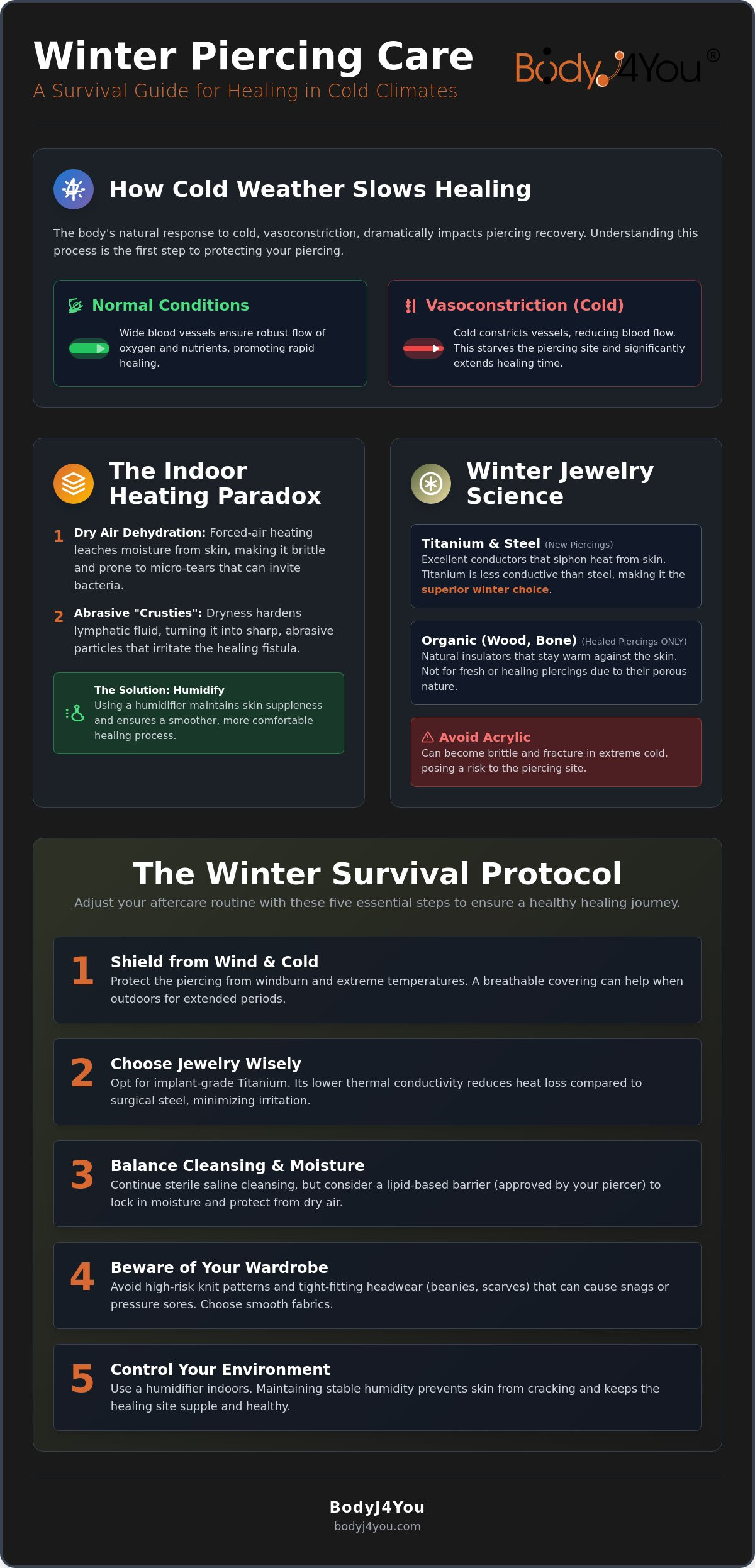
Vasoconstriction is the narrowing of blood vessels in response to cold, which restricts blood flow and significantly extends piercing recovery times. When the body senses a drop in temperature, it prioritizes core warmth. It pulls blood away from the skin and extremities to protect vital organs. This survival mechanism is efficient for the body but detrimental to a healing wound. Oxygen and vital nutrients, which are the building blocks of new tissue, arrive more slowly at the piercing site. This lack of fuel can leave the wound in a state of suspended animation, making it more susceptible to prolonged irritation and environmental stress.
Vasoconstriction and Delayed Wound Closure
Reduced blood flow directly impacts the inflammatory phase of healing. This initial stage requires a robust immune response to clear debris and prevent pathogens from taking hold. In cold weather, the delivery of white blood cells is throttled. This is particularly noticeable in cartilage piercings, such as the helix or nostril. Unlike the highly vascular earlobe, cartilage has a limited blood supply to begin with. Cold weather starves these areas, making them the most vulnerable zones during winter. You might notice your piercing looks flushed after coming indoors. This is often cold-induced hyperemia rather than an infection. Following standard piercing aftercare remains essential to distinguish between environmental stress and actual health concerns.
The Indoor Heating Paradox
Cold air outside is only half the battle. Indoors, forced-air heating systems create a desert-like environment. This dry air aggressively leaches moisture from your skin, compromising the natural barrier. When skin loses elasticity, it becomes prone to micro-tears that invite bacteria. Dryness also changes the nature of crusties, the lymphatic fluid that naturally accumulates around the jewelry. In winter, these secretions become hard and abrasive. They act like tiny shards of glass against the tender fistula. Using a humidifier helps maintain skin suppleness, ensuring that healing a piercing in a cold climate remains a smooth and comfortable process.
Jewelry Material Science: What to Wear When Temperatures Drop
Jewelry acts as a thermal bridge between your body and the environment. It's a biological reality that metal conducts heat. When you're healing a piercing in a cold climate, the material you choose dictates the stability of the healing site. Your jewelry should support your journey, not hinder it. Precision in material selection is your first line of defense against the biting winter air.
Metal jewelry doesn't just feel cold; it actively siphons heat from your skin. This creates a localized "cold zone" that can impair blood flow. Steel and titanium are excellent conductors. They reach sub-zero temperatures much faster than human tissue can compensate for. This thermal shock can irritate the delicate fistula, especially during the early stages of recovery. When the skin is already struggling to maintain its barrier, this constant temperature fluctuation is an unnecessary stressor.
Cold also causes physical contraction. While the change is microscopic, it can increase the mechanical pressure on tissue that is already swollen or sensitive. This is why precision matters. Utilizing internal threaded labret studs is a superior choice for winter. The smooth, threadless post reduces internal friction, while the high-polish finish ensures no bacteria-trapping nicks exist. It's a clean, clinical, and protective solution for your self-expression. During the winter, staying with hypoallergenic, non-porous materials is essential to prevent the micro-tears that dry air often causes.
Metal vs. Organic Materials
Surgical steel and titanium are the primary choices for new modifications due to their biocompatibility. Titanium is often the preferred winter companion because it's less thermally conductive than steel. For those with fully healed sites, organic materials like wood or bone offer natural insulation. They stay warm against the skin. Avoid acrylic in extreme cold. It can become brittle and fracture, leading to unnecessary trauma or sharp edges that can damage the skin.
Extreme Cold and Stretched Ears
Stretched ears require additional vigilance. As you progress through the ear gauge sizes, the increased surface area of the jewelry accelerates heat loss. Heavy metal plugs act as heat sinks, chilling the earlobe and potentially leading to frostbite in extreme conditions. Protect your lobes with scarves, hoods, or high-collar coats. If your piercings are healed, switching to silicone hiders can provide a buffer against the bite of the wind. Explore our range of surgical steel jewelry to find the perfect balance of style and safety for your winter routine.
Adjusting Your Aftercare Routine for Winter Dryness
Winter air is a relentless thief. It steals moisture from your skin, leaving your healing modification vulnerable to environmental stress. While your summer routine might have been effortless, healing a piercing in a cold climate requires a more nuanced, protective strategy. You must find the equilibrium between clinical cleanliness and environmental hydration. Our philosophy remains consistent: Purity. Safety. Resilience.
A consistent application of sterile saline spray for piercings remains your primary defense against pathogens. However, the biting winter wind and dry indoor heat change the rules. Over-cleaning can be just as damaging as neglect. Excessive saline use in a dry environment can strip away the delicate oils your skin produces to protect itself. Limit your cleansing to twice daily. If you notice the skin becoming tight or flaky, consider a single daily spray followed by a gentle pat-dry with a sterile gauze. This prevents the saline from crystallizing and further dehydrating the tissue.
Precision is your ally during the freezing months. Using piercing cleaning swabs allows you to target the jewelry and the immediate entry point without saturating the surrounding dry skin. This localized approach ensures the wound remains sterile while the adjacent tissue is spared from unnecessary dehydration. It's a sophisticated way to maintain hygiene without compromising skin integrity.
The Role of Healing Oils
Natural oils act as a secondary barrier against the elements. Jojoba oil is particularly effective because it closely mimics human sebum, providing a breathable layer that locks in moisture. Rosehip and castor oils are equally valuable for soothing the surrounding area without clogging the skin's pores. The golden rule is placement. Apply these oils only to the skin surrounding the site. Never allow oils, lotions, or balms to enter the open piercing channel. This prevents trapping bacteria and ensures the wound can breathe as it heals.
Managing Piercing Bumps in Winter
Dryness often masquerades as a more serious issue. When skin loses its suppleness, it becomes brittle and easily irritated by jewelry movement, frequently resulting in piercing bumps. These localized swellings are often the body's response to mechanical friction on dry tissue. A dedicated piercing bump treatment oil can soothe this inflammation effectively. Combine this with the 'Leave It Alone' method. Avoid touching, rotating, or sleeping on the site. Your body knows how to heal; your job is simply to provide the right conditions.
Environmental Hazards: Clothing, Accessories, and Activities
Winter layers provide essential warmth but introduce mechanical risks that can jeopardize your progress. When healing a piercing in a cold climate, your wardrobe becomes a minefield of snags, pressure, and friction. Precision in your accessory choices is just as vital as your cleaning routine. Cleanliness. Vigilance. Protection. These are the pillars of a successful winter recovery.
Loosely knit wool is the primary culprit for jewelry trauma. Cable knit patterns and crochet textures feature open loops that easily catch on captive bead rings or industrial barbells. A single snag can cause a micro-tear, leading to localized swelling or a significant setback in your healing timeline. If you must wear wool, ensure it remains a safe distance from your jewelry. A successful journey of healing a piercing in a cold climate depends on your ability to navigate these daily environmental hazards with intention.
Tight-fitting beanies present a different challenge: constant pressure. When a hat presses jewelry against the skin for hours, it can cause "pressure sores" or even jewelry migration. This is particularly dangerous for fresh ear piercings where the tissue is already compromised by vasoconstriction. Trapped moisture under a hat also creates a warm, humid microclimate. This environment encourages bacterial growth, which contradicts the sterile conditions you've worked to maintain through your aftercare ritual.
The Scarf and Beanie Strategy
Choose silk or satin-lined headwear. These smooth fabrics allow jewelry to glide rather than catch, providing a protective barrier without the risk of entanglement. When protecting a septum piercing from windburn, wrap your scarf loosely. This allows for necessary airflow while blocking the direct bite of the frost. For those with a fresh industrial piercing, loose hoods are far safer than ear muffs. Muffs apply direct, concentrated pressure to the barbell ends, which can lead to irritation bumps.
Hygiene for Winter Accessories
Winter gear is often neglected in the laundry cycle. Scarves and hats harbor skin cells, sweat, and environmental pollutants that can migrate to your piercing site. Wash your accessories at least once a week using a fragrance-free, hypoallergenic detergent. When removing heavy layers, move with steady, deliberate motions. Pull garments outward and away from your head to avoid catching jewelry. For the best protection against environmental bacteria, keep your site clean with our sterile saline aftercare spray.
The BodyJ4You Winter Survival Protocol
Mastering the elements requires more than just endurance; it requires a structured strategy. We've developed a curated approach to ensure your self-expression remains uninterrupted by the frost. This protocol bridges the gap between clinical necessity and environmental defense. By following these three steps, you can maintain the integrity of your skin while supporting the body's natural recovery process. Cleanse. Protect. Persist.
Step 1: Clinical Cleansing. Your foundation is a sterile environment. Use the Saline Piercing Aftercare Spray to flush the site twice daily. This removes pathogens and environmental pollutants without causing the mechanical irritation associated with manual scrubbing. In the winter, this step is vital to clear away the hardened lymphatic secretions that dry air produces. It ensures the wound channel remains open and healthy.
Step 2: Lipid Barrier Protection. Once the site is clean, you must address the surrounding tissue. Apply a thin layer of Gauges balm or Jojoba oil to the skin immediately adjacent to the piercing. This mimics your natural sebum, creating a breathable shield against the biting wind. It locks in moisture and prevents the micro-tears that lead to seasonal irritation. This step is the secret to successfully healing a piercing in a cold climate, as it maintains the elasticity required for the skin to move without cracking.
Step 3: Vigilant Monitoring. Observe your body's signals daily. You must distinguish between "winter irritation"—which presents as dry, flaky skin—and signs of actual rejection or infection. Cold-weather stress often causes redness that fades once you're warm. However, persistent heat, yellow discharge, or jewelry that appears to be moving closer to the surface requires immediate attention. Early detection is the hallmark of a responsible collector.
Essential Winter Aftercare Kit
Your kit should be as resilient as you are. The Saline Piercing Aftercare Spray is the non-negotiable foundation of your routine, providing a pH-balanced solution that respects your biology. Pair this with Jojoba oil to maintain skin suppleness when the humidity drops. We recommend keeping a travel-sized aftercare solution in your coat pocket. Cold-weather emergencies, such as a snagged scarf or a sudden blast of windburn, require immediate soothing. Being prepared ensures a minor irritation doesn't become a major setback.
When to Consult a Professional
While most winter issues are environmental, some require expert intervention. If you experience significant swelling that causes your jewelry to press into the skin, you may need to upsize your post. Metal contracts, but your tissue may inflame in response to the cold. Consult a professional if you notice signs of secondary infection, such as localized throbbing or dark streaks. Empowering your self-expression means knowing when to seek guidance. We're here to support your journey toward a safe, year-round aesthetic that reflects your unique identity.
Mastering the Winter Recovery Journey
Healing a piercing in a cold climate is a journey of precision, patience, and proactive protection. You now have the expertise to manage vasoconstriction, select low-conductivity jewelry, and navigate the hazards of winter wardrobe snags. By balancing sterile saline cleansing with high-purity oils, you ensure your skin remains resilient against the biting wind and dry indoor heat. Your self-expression deserves a guardian that understands the biology of beauty. Safety is your foundation. Quality is your shield. Resilience is your result.
With over two decades of industry experience, we provide locally manufactured skincare solutions that meet strict quality standards. We believe in affordable, high-quality aftercare that empowers your aesthetic journey without compromise. Don't let the freezing months stall your progress or irritate your skin. Shop the BodyJ4You Aftercare Collection for Winter Protection and give your modification the clinical support it needs to thrive. Stay warm, stay sterile, and stay inspired.
Winter Aftercare: Frequently Asked Questions
Is it harder to heal a piercing in the winter?
Healing a piercing in a cold climate is more challenging due to physiological changes like vasoconstriction. This process reduces blood flow and oxygen delivery to the wound site, which can slow the initial inflammatory phase. Additionally, dry indoor heating strips the skin of its natural moisture. These factors require a more disciplined approach to aftercare to ensure your recovery remains on track during the freezing months.
Can cold weather cause a piercing to get infected?
Cold weather doesn't directly cause infection, but it creates environmental vulnerabilities. Freezing air and low humidity cause micro-tears in the skin, which act as entry points for pathogens. When the skin's barrier is compromised by dryness, bacteria can take hold more easily. Maintaining a sterile environment with a saline spray is essential to prevent these opportunistic infections when temperatures drop.
Should I take my jewelry out if it feels too cold?
You should never remove jewelry from a healing piercing, even if the metal feels painfully cold. Removing the jewelry allows the fistula to close almost immediately, often trapping bacteria inside. Instead, focus on external insulation. Use loose hoods, scarves, or satin-lined beanies to provide a thermal barrier. This protects the site from the elements without risking the integrity of the healing channel.
How do I protect my nose piercing from the wind?
Protect your nose piercing by using high collars or loose-knit scarves that allow for breathability. Avoid tight face masks for extended periods, as they trap moisture and heat against the skin, which can lead to bacterial growth. A light application of jojoba oil on the skin around the nostril can also provide a breathable shield against windburn and environmental dehydration.
Can I use regular moisturizer on a healing piercing?
Regular moisturizers should be avoided on and around a healing piercing. Most commercial lotions contain fragrances, preservatives, and thickeners that can irritate the wound or clog the channel. If you're healing a piercing in a cold climate, use a pure, non-comedogenic oil like jojoba or rosehip on the surrounding skin. Always keep these products away from the actual entry and exit points of the jewelry.
Why does my earlobe feel tight and itchy in the cold?
Tightness and itching are common signs of environmental dehydration. Cold air causes the skin to lose its suppleness, while metal jewelry can contract slightly, applying mechanical pressure to the tissue. This combination creates a sensation of irritation. Using a humidifier indoors and ensuring you aren't over-cleaning with saline will help restore the skin's elasticity and alleviate that uncomfortable winter itch.
Is it safe to go skiing with a fresh piercing?
Skiing with a fresh piercing is safe as long as you prioritize protection from impact and wind. Helmets and goggles must not apply direct pressure to the piercing site, as this can cause migration or pressure sores. Ensure your gear is clean and use a buff or scarf to shield facial piercings from the biting wind. Always clean the site immediately after your session to remove sweat and debris.
How often should I clean my piercing during winter?
Stick to a twice-daily cleaning routine, even in the winter. While you might be tempted to clean more often if the site feels dry, over-cleaning can actually worsen skin dehydration. Use a sterile saline spray to remove "crusties" gently. If the skin feels exceptionally brittle, you might reduce cleaning to once a day, provided you are keeping the area protected from environmental contaminants.


