


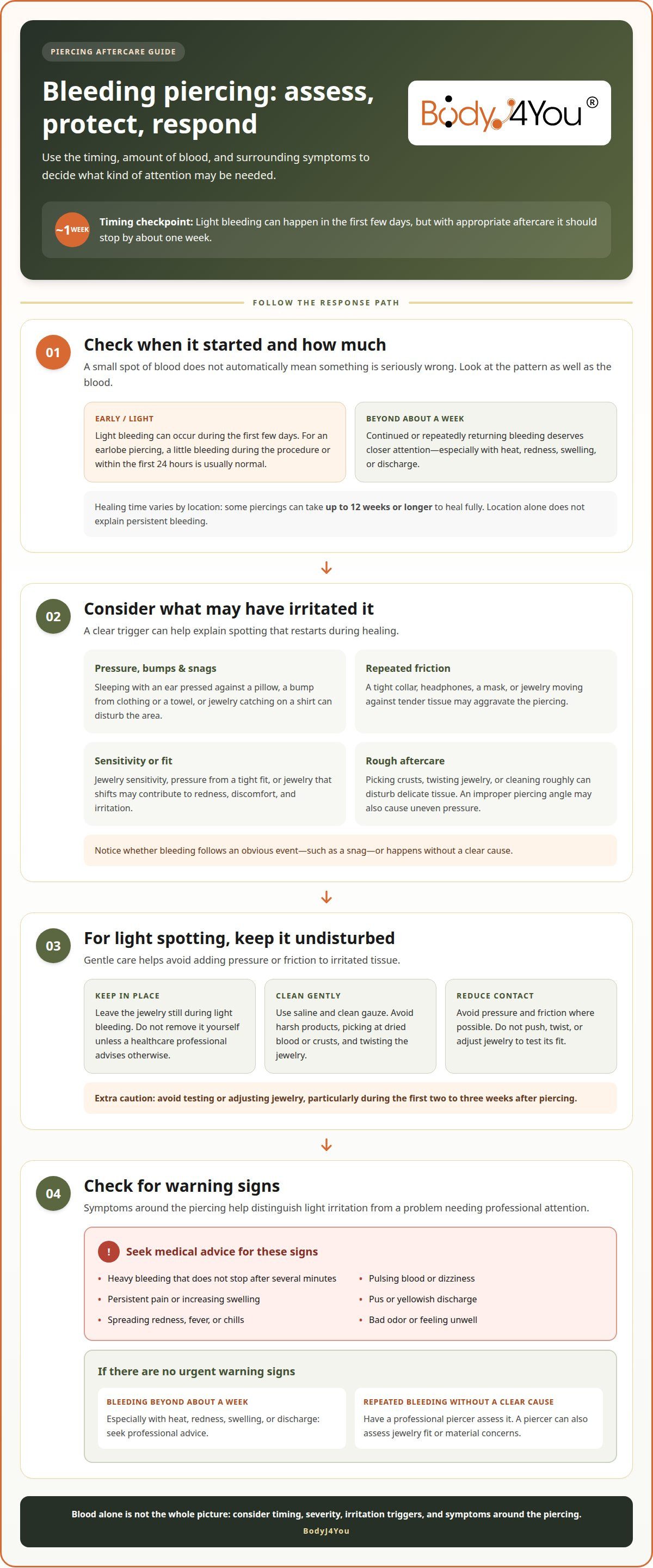
Bleeding from a new piercing can happen during the first few days, but it should stop by about one week with appropriate aftercare. If you have a piercing bleeding after a week, irritation or a knock may be the cause. Ongoing bleeding with heat, redness, pus, or swelling needs attention.
It’s understandable to worry when a fresh piercing starts bleeding again. A small spot of blood doesn’t automatically mean something is seriously wrong, and removing the jewelry yourself may not be the best first step.
This guide explains common reasons for bleeding, how to clean the area gently without disturbing it, and when to seek medical care or advice from a piercer. You’ll also learn which warning signs matter and how to reduce irritation while the piercing heals.
Key Takeaways
- Notice whether bleeding is light and short-lived or continues beyond about a week, particularly with heat, spreading redness, swelling, or discharge.
- Consider pressure, accidental bumps, and friction as possible sources of irritation that can restart bleeding.
- For light spotting, keep the jewelry still and avoid removing it without professional advice.
- Clean gently with saline and clean gauze; avoid harsh products and disturbing dried blood around the piercing.
Bleeding Piercing: Causes, Solutions, and When to Worry?
Light bleeding can occur during the first few days of healing, but it should stop by about one week with appropriate aftercare. Bleeding that continues, returns repeatedly, or appears with signs of infection deserves closer attention.
Expected Bleeding and Infection Signs
A small amount of blood early in healing differs from ongoing bleeding with inflammation. Light bleeding from an earlobe piercing is usually normal during the procedure or within the first 24 hours. By about one week, continued bleeding, especially with heat, redness, swelling, or pus, may indicate infection. Notice changes around the piercing rather than judging by blood alone; those accompanying symptoms help distinguish irritation from a problem needing advice.
Warning Signs That Need Professional Advice
Warning signs are symptoms that accompany bleeding and suggest a piercing needs prompt professional attention. Seek medical advice for heavy bleeding that does not stop after several minutes, pulsing blood, or dizziness. Persistent pain, increasing swelling, pus or yellowish discharge, spreading redness, fever, or chills also warrant attention. A bad odor or feeling unwell adds to the concern. These signs matter because infection or substantial bleeding may require assessment beyond routine aftercare.
Piercing Locations and Complication Risk
Location affects how a piercing may bleed and how long healing takes. Septum piercings can bleed more because the area has many blood vessels. Healing time also varies by location: some piercings can take up to 12 weeks to heal fully, and sometimes longer. This makes the site relevant when judging continued sensitivity or bleeding. A piercing’s location alone cannot explain persistent bleeding, so consider accompanying symptoms and the amount of blood.
If bleeding lasts more than a week, particularly with heat, redness, or inflammation, infection may be involved. Don’t wait for symptoms to accumulate: pus, spreading redness, fever, or chills are reasons to seek professional advice. Heavy or pulsing bleeding, or dizziness, calls for medical attention. If light bleeding keeps returning without an obvious cause, have a professional piercer assess the piercing. The pattern, severity, and surrounding symptoms help determine what kind of care is appropriate.
Common causes of piercing bleeding
A fresh piercing can bleed again when pressure or movement irritates healing tissue. During sleep, an ear pressed against a pillow may be under prolonged pressure; sleeping on the other side reduces contact. A bump from clothing, a towel, or a hand can reopen the small wound. Even a brief snag may cause spotting, especially if the jewelry shifts through the piercing.
Friction is another common trigger. A tight collar brushing a neck piercing, headphones pressing against an ear piercing, or repeated contact from a mask can aggravate the area. Jewelry moving against tender tissue may cause small amounts of blood. Jewelry allergies can also irritate the skin; redness or discomfort around the opening may indicate ongoing irritation.
Healing can be disrupted by more than accidental contact. Inadequate aftercare may leave dried blood or debris around the opening, while rough cleaning can disturb delicate tissue. Handle the area gently, and avoid picking at crusts or twisting jewelry to inspect the site. An improper piercing angle may also contribute to repeated irritation if the jewelry presses unevenly against the surrounding tissue.
A piercing bleeding after a week may still be reacting to pressure, friction, or an accidental snag, but identifying the trigger matters. Note whether bleeding follows a clear event, such as catching a stud on a shirt, or happens without an obvious cause. A new nose piercing that is repeatedly touched or twirled may become irritated and bleed. If bleeding continues after a week without a clear trigger, or comes with increasing redness, heat, or discharge, seek professional advice rather than assuming irritation is the cause.
Should I remove the jewelry if a piercing is bleeding?
For light bleeding, keep the jewelry still rather than removing it yourself. A new piercing may bleed occasionally during its first few weeks of healing, so avoid disturbing it while you assess the irritation.
Removing Jewelry During Bleeding
Leave jewelry in place during light spotting unless a healthcare professional advises otherwise. Removing it without professional advice can disturb an already irritated piercing, and repeated handling may add friction. For light bleeding from an earlobe, use clean gauze and keep the jewelry still. If bleeding is heavy, persistent, or accompanied by concerning symptoms, seek medical care instead of trying to manage it by removing the jewelry.
Jewelry Quality and Irritation
Jewelry material can contribute to irritation, especially if you’re sensitive to it. An allergy may cause discomfort and inflammation around the opening, while rubbing can make the area bleed. Notice whether irritation appears where the jewelry touches the skin or worsens after it moves. Don’t change jewelry while the piercing is bleeding. A professional piercer can assess the jewelry and advise whether a change is appropriate.
Jewelry Fit and Irritation
Fit matters because jewelry that presses or shifts can repeatedly irritate healing tissue. A piece that feels tight against swelling may rub the opening; jewelry that catches on clothing can tug unexpectedly. Don’t push, twist, or adjust it to test the fit, particularly during the first two to three weeks after piercing. Keep the area undisturbed, and ask a professional piercer to assess persistent pressure or movement.
If you suspect friction or jewelry sensitivity, focus on reducing contact rather than making an abrupt change. Clean the area gently with saline, keep the jewelry still, and note whether bleeding follows an accidental snag or happens without a clear trigger. Repeated bleeding, ongoing pain, or signs of infection call for professional advice. A piercer can assess fit and material; heavy or continuing bleeding needs medical attention.
Cleaning a new piercing
Careful cleaning removes surface blood without repeatedly disturbing healing tissue. For a new piercing, use saline and a light touch; scrubbing, twisting jewelry, or pulling away a dry crust can reopen tender skin. A steady routine matters more than aggressive cleaning, especially if spotting appears after the piercing contacts clothing or bedding.
Clean the piercing twice a day for two to three weeks. If blood has dried around an earlobe piercing, let sterile saline soften it before gently wiping the area with clean gauze or a cotton swab. Don’t peel off a crust that resists gentle cleaning. Leave it in place and avoid tugging the jewelry while cleaning the nearby skin.
- Wash your hands before touching the area.
- Dampen clean gauze with sterile saline, then gently dab blood or loosened residue.
- Use a fresh section of gauze for each pass, so you don’t rub residue back onto the piercing.
- Let the area dry gently, without twisting or moving the jewelry to reach hidden spots.
Skip alcohol and hydrogen peroxide. These harsh products can dry out and weaken the skin around a piercing, making delicate tissue more vulnerable to irritation. Don’t force dried blood off, and don’t pick, scratch, or twirl a new nose piercing. Each movement can disturb the healing channel and trigger fresh spotting.
Keep your routine gentle if the piercing bleeds during cleaning. Dab rather than wipe, and stop if contact causes pain or renewed bleeding. Saline can soften dried blood, but persistent bleeding or signs of infection need professional advice, not more frequent scrubbing. Avoid adding extra cleaning sessions to compensate; friction from repeated handling can hinder healing.
A saline piercing aftercare spray can be a convenient way to apply saline during this gentle routine. Use it as directed, and keep gauze or a clean cotton swab handy for carefully softening dried blood without disturbing the jewelry.
BodyJ4You: Saline Piercing Aftercare Spray
BodyJ4You’s Saline Piercing Aftercare Spray offers a convenient way to apply saline during gentle piercing cleaning. Use it as part of a careful routine to soften residue around the piercing, without twisting jewelry or scrubbing delicate skin. Keep handling light, especially if cleaning has caused fresh spotting.
The spray supports aftercare, but it isn’t a treatment for ongoing bleeding or signs of infection. Heavy bleeding, spreading redness, increasing swelling, pus, fever, or feeling unwell calls for professional medical advice. If bleeding keeps returning without an obvious trigger, a professional piercer can assess possible irritation or jewelry fit.
Choose gentle care, avoid disturbing the jewelry, and pay attention to changes around the piercing. For questions about BodyJ4You’s Saline Piercing Aftercare Spray, contact BodyJ4You.
Choose a Clear Next Step for Your Piercing
If a piercing is bleeding after a week, pay attention to what happens next rather than repeatedly experimenting with jewelry or cleaning methods. Keep a brief note of when bleeding appears, what happened beforehand, and any changes in comfort or appearance. These details can help a healthcare professional or piercer understand the situation and recommend an appropriate next step.
For guidance related to piercing aftercare, contact BodyJ4You for piercing advice. If symptoms are severe or you feel unwell, prioritize medical care. Thoughtful aftercare and timely help can support a calmer healing process, while letting you make informed choices about your piercing. Take it one step at a time, and give your healing the care it deserves.
Frequently Asked Questions
Is it normal for a piercing to bleed after 1 month, 3 months, or 6 months?
Bleeding at these stages needs a closer look rather than being assumed normal. A piercing can remain sensitive one month after placement, and full healing may take up to 12 weeks or longer, depending on its location. Bleeding after 3 or 6 months should prompt you to look for a specific cause, such as recent pressure, friction, or jewelry movement.
How do blood thinners and health factors affect bleeding?
Blood-thinning medication and some health conditions can affect bleeding or how quickly it stops. If a piercing bleeds longer than expected, tell your healthcare professional which medicines you take and when the bleeding began. Don’t stop or change prescribed medication on your own. Seek prompt medical advice for heavy bleeding, dizziness, or bleeding that continues despite steady pressure.
Is bleeding after changing earrings normal?
Changing earrings can stretch or scrape a piercing and cause a small spot of blood, especially while the channel is still healing. Stop handling the jewelry, keep it still, and clean gently with saline rather than attempting repeated insertions. If bleeding recurs, pain increases, or redness spreads, seek advice. Avoid changing jewelry during early healing unless a professional recommends it.
What should you do immediately if your earlobe piercing is bleeding?
Wash your hands, then hold sterile cotton gauze against the bleeding earlobe with steady pressure. For an earlobe, applying gentle pressure from both sides can help. Keep the jewelry still, and don’t wipe repeatedly to check whether bleeding has stopped. If bleeding is heavy or continues after several minutes of pressure, seek medical advice rather than continuing to manage it at home.
When should I go to urgent care?
Seek urgent medical attention for heavy or pulsing bleeding, dizziness, or bleeding that won’t stop after several minutes of steady pressure. Fever with chills, spreading redness, worsening swelling, pus, or feeling unwell also needs prompt medical assessment. If you feel faint or the bleeding is severe, treat it as urgent rather than waiting for a routine piercing check.
When should I seek advice for a bleeding piercing?
Seek advice if bleeding continues beyond about a week, keeps returning without an obvious trigger, or appears with persistent pain, swelling, heat, redness, or discharge. A professional piercer can assess repeated bleeding and possible jewelry irritation. For fever, chills, spreading redness, or feeling unwell, contact a healthcare professional, as these symptoms may need medical evaluation.


