

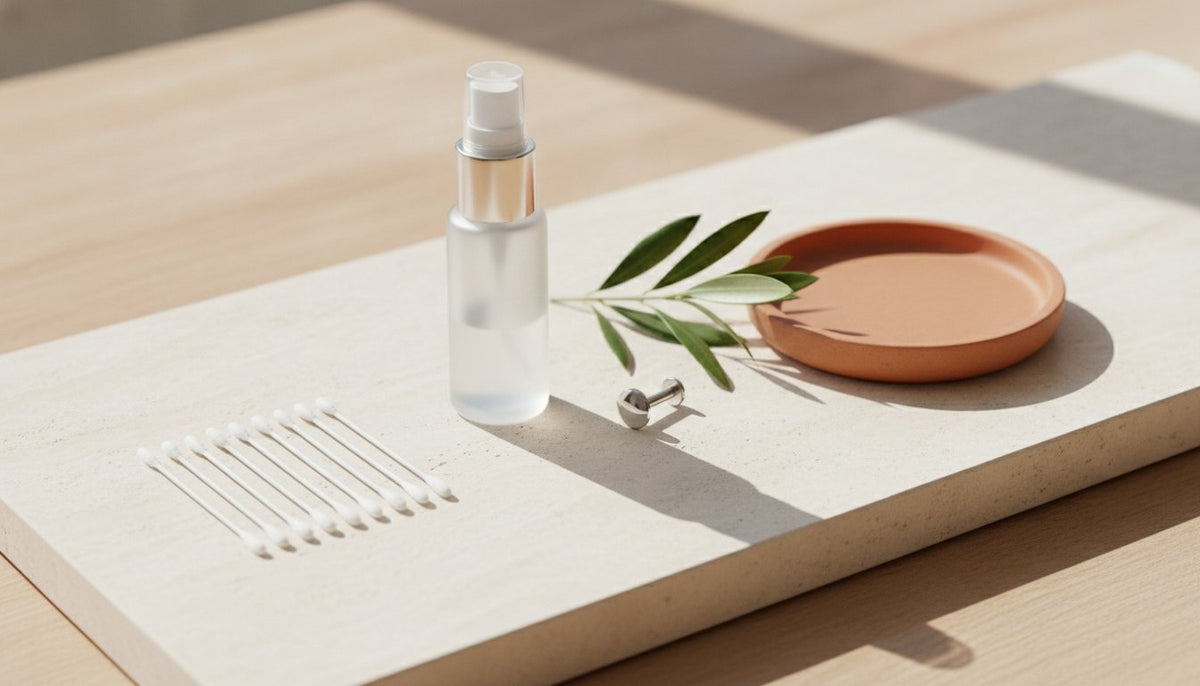
Could the tool you trust for cleaning be the very thing sabotaging your healing? Most enthusiasts reach for standard cotton buds without realizing they leave behind microscopic fibers that trap bacteria and irritate delicate tissue. Using professional piercing cleaning swabs is the most effective way to ensure a medical-grade, lint-free environment for your new aesthetic investment. It's a choice that prioritizes safety, purity, and precision.
We know the frustration of reaching the tight spaces of a tragus or the hidden angles of an industrial bar. You deserve a routine that's simple, safe, and reliable. This guide reveals why specialized swabs are the secret to irritation-free healing and how to use them for professional-grade maintenance. As the essential companion to our US-made saline spray, these tools help you achieve reduced swelling, minimal crusting, and a clean piercing that reflects your unique style. We'll walk you through every step to ensure your healing journey is as beautiful as the jewelry itself.
Key Takeaways
- Protect your healing fistula by adopting the "Precision-Prevention" method, which targets debris without causing unnecessary tissue trauma.
- Eliminate the risk of fiber-related irritation by switching from generic cotton buds to professional-grade, lint-free piercing cleaning swabs.
- Identify the ideal tip shapes and handle materials needed to navigate complex anatomy like industrial or tragus placements with ease.
- Master the "Circular Sweep" technique to effectively clear crusting and bacteria from jewelry exit points while maintaining a sterile environment.
- Enhance your recovery by pairing specialized applicators with a US-made saline spray for a streamlined, expert-approved aftercare routine.
Why Precision Matters: The Role of Swabs in Piercing Aftercare
Precision is not just a preference; it's a prerequisite for health. When you choose specialized piercing cleaning swabs, you're opting for medical-grade applicators designed specifically for the unique needs of a healing wound. Unlike household items, these tools provide the clinical accuracy required to maintain hygiene without compromising the integrity of your skin. This choice reflects a commitment to both safety and the long-term beauty of your self-expression.
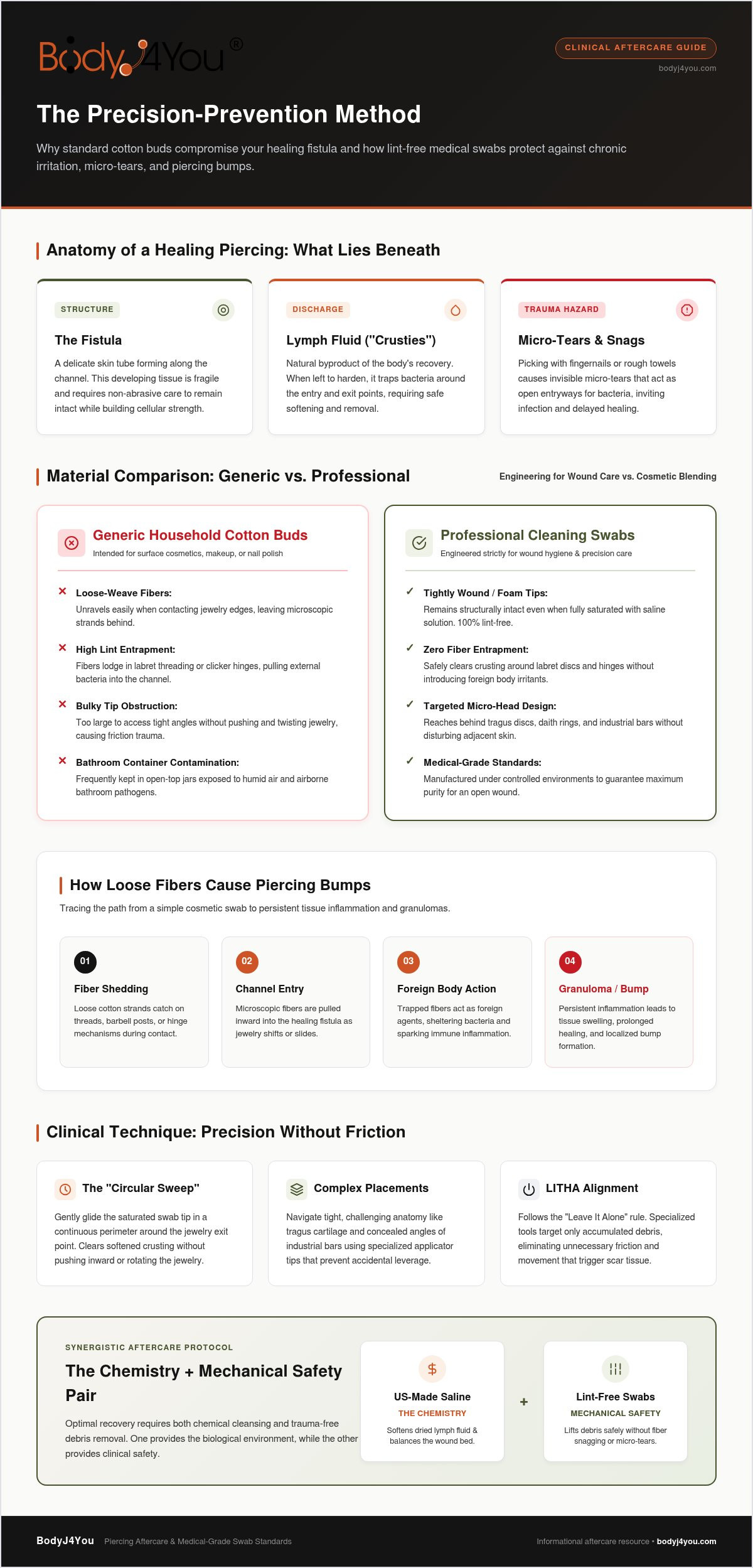
The concept of Precision-Prevention focuses on one goal: hygiene without trauma. Standard cotton buds often have a loose weave that sheds fibers into the wound, causing inflammation. In contrast, professional piercing cleaning swabs feature tightly wound or foam tips that stay intact. This ensures that your cleaning routine remains a stabilizing force for your body's natural healing process. Choosing the right tool is just as critical as the saline solution you apply; one provides the chemistry for healing, while the other provides the mechanical safety to deliver it.
The Anatomy of a Healing Piercing
Understanding body piercing aftercare begins with recognizing the complexity of the fistula. The fistula is the delicate skin tube that requires non-abrasive care to remain healthy and intact. During the healing process, your body produces lymph fluid, often called "crusties," which can trap bacteria if left to harden. However, picking at these deposits with fingernails or rough towels creates micro-tears. These microscopic wounds are invisible to the eye but act as open doors for bacteria, inviting infection and significantly prolonging your recovery time. Gentle, targeted removal is the only way to protect this developing tissue.
Preventing the Dreaded Piercing Bump
Improper cleaning tools are a primary culprit in the development of unsightly irritation. When bulky or fibrous materials snag on jewelry, they cause physical trauma that leads to swelling and localized granulomas. Our Precision-Prevention approach ensures you remove debris while strictly following the "Leave It Alone" (LITHA) principle. By using a precise tool, you minimize movement and friction, which are the leading triggers for scar tissue formation. If you're already dealing with a flare-up, you can learn how to get rid of piercing bumps fast through our dedicated expert guide. Utilizing specialized swabs allows you to maintain a high-end, wellness-oriented routine that supports your body's journey toward a fully healed and vibrant aesthetic.
Professional Swabs vs. Generic Cotton Buds: A Material Comparison
Many enthusiasts make the mistake of assuming all cotton applicators are created equal. This misconception often leads to unnecessary complications during the recovery phase. Generic cosmetic buds are designed for surface-level application, such as blending makeup or removing nail polish. In contrast, professional piercing cleaning swabs are engineered specifically for wound care. They prioritize stability, safety, and structural integrity to support your body's natural defense mechanisms.
The primary material difference lies in the weave. Cosmetic buds feature a loose-weave cotton that easily unravels when it encounters the sharp edges of jewelry or the textured surface of a healing fistula. This creates a high risk of lint entrapment. When these tiny fibers become lodged in your piercing, they act as a foreign body, triggering a persistent inflammatory response. Choosing a specialized tool ensures your routine remains clean and effective.
The Danger of Lint Entrapment
Lint is the silent enemy of a successful piercing. When loose fibers get caught in the threading of a labret stud or the hinge of a clicker, they can be pulled directly into the piercing channel. This introduces external bacteria into an open wound, which often leads to localized infections. Following Mayo Clinic piercing aftercare recommendations highlights the importance of keeping the area clean and free of debris. Professional swabs utilize a tight-wound or foam-tipped design that remains lint-free, even when saturated with saline. This mechanical reliability prevents the chronic irritation that often stalls the healing process.
Medical-Grade Standards
Purity is the cornerstone of our aftercare philosophy. Household buds are typically stored in large, open-top containers in bathrooms, where they are exposed to humidity and airborne bacteria. Medical-grade standards demand a higher level of hygiene. Professional applicators are often produced in controlled environments to ensure they are free from contaminants. Our US-manufactured line reflects this commitment to quality control and dermatological safety.
Beyond material purity, the physical design of the tool matters. Professional applicators often feature longer, more flexible handles. This extra length is vital for navigating difficult anatomy, such as the back of a tragus or the complex angles of an industrial bar. It allows you to maintain a steady hand without putting unnecessary pressure on the jewelry. For those seeking a truly refined routine, using specialized piercing cleaning swabs provides the precision needed for a seamless, infection-free recovery.
What to Look for in a Piercing Cleaning Swab
Selecting the right tool is an act of self-care. It requires an eye for detail and an understanding of your body's healing geometry. High-quality piercing cleaning swabs must meet specific criteria to be effective. They should be hypoallergenic, structurally sound, and purpose-built for the task. When you prioritize these features, you ensure your routine is both safe and sophisticated.
Material integrity is the first pillar of selection. You should look for swabs made from medical-grade materials that won't react with your skin or your jewelry. Handle material is equally vital. Flexible stems allow you to reach behind a tragus without tugging on the jewelry, while rigid handles provide the stability needed for external ear cleaning. This balance of strength and flexibility is what separates professional tools from generic alternatives.
Tip Shapes and Their Functions
The shape of the applicator head determines its utility. A one-size-fits-all approach often leads to missed spots or unnecessary irritation. Consider these three specific needs:
- Pointed Tips: These are essential for cleaning under internal threaded labret studs or navigating the tight crevices of a rook piercing.
- Rounded Tips: Ideal for general surface maintenance and the gentle application of healing oils, such as Jojoba or Rosehip oil.
- Foam vs. Cotton: While both have their place, foam tips offer a completely lint-free experience for those with high-sensitivity piercings.
BodyJ4You offers a variety of aftercare tools designed to meet these exact specifications. By matching the tip shape to your jewelry type, you minimize movement and maximize hygiene.
Absorbency and Solution Delivery
A high-quality swab acts as a sophisticated reservoir for your cleaning solution. It should be absorbent enough to hold a sufficient amount of Sterile Saline Spray without dripping or becoming oversaturated. This allows for a controlled application where the solution is delivered exactly where it's needed. Proper saturation softens "crusties" without the need for aggressive scrubbing.
Remember that "less is more" when applying pressure. The goal is to let the solution do the work while the swab provides the mechanical vehicle for removal. After cleaning, use the dry end of your piercing cleaning swabs to gently "soak up" excess moisture. Leaving the area too damp can lead to skin maceration, which weakens the tissue. This two-step process of hydration and drying ensures the fistula remains in a perfect state for regeneration. It's a disciplined approach that builds deep consumer trust through visible results.
Step-by-Step: How to Use Precision Swabs for Safe Healing
Hand hygiene is the non-negotiable foundation of a professional-grade routine. Once your hands are thoroughly washed, saturate your piercing cleaning swabs with a high-quality saline spray. A fully moistened tip is essential; it ensures you don't introduce dry friction to the hypersensitive healing tissue. This simple preparation protects the integrity of the wound and sets the stage for a successful recovery.
The "Circular Sweep" technique remains the gold standard for daily maintenance. Gently guide the saturated applicator around the jewelry's entry and exit points in a smooth, continuous motion. This action effectively lifts debris without rotating the jewelry, which is crucial for protecting the delicate fistula. If you encounter stubborn crusting, resist the urge to pick with your fingernails. Instead, hold the wet tip against the area for thirty seconds to soften the lymph fluid before wiping it away. This "soak and swipe" method is the most effective way to manage buildup without causing trauma.
Always finish by using a fresh, dry applicator to pat the area. Moisture is a catalyst for bacterial growth and skin maceration. A dry, clean, and stable environment is your best defense against chronic irritation and delayed healing. It's a disciplined approach that mirrors the standards of a high-end clinical environment.
Techniques for Hard-to-Reach Piercings
Navigating nostrils or the complex folds of the ear requires both patience and the right tools. For a septum, use a mirror and a pointed-tip swab to ensure you're cleaning the actual piercing site rather than just the visible jewelry. You can find more detail on this specific anatomy in our Septum Piercing Guide. Industrial piercings often hide debris on the "back" side of the ear, where the bar rests against the cartilage. Use a flexible handle to reach these hidden angles without putting pressure on the bar, which prevents the development of pressure-induced bumps.
Common Mistakes to Avoid
Discipline is key to recovery, but enthusiasm must be tempered with knowledge. Avoid these three common pitfalls to keep your healing on track:
- Over-cleaning: Twice a day is the optimal frequency. Cleaning more often can strip natural oils and lead to "friction bumps."
- Cross-contamination: Never use the same swab for multiple piercings. Each site requires its own sterile applicator to prevent the spread of bacteria.
- Aggressive pressure: Be gentle. Your body needs a protective environment, not a scrubbed one.
To ensure your routine remains sterile and effective, explore our collection of professional piercing cleaning swabs and aftercare essentials.
BodyJ4You Piercing Cleaning Swabs: The Professional Choice
Choosing the right tools is the final step in mastering your aftercare journey. Our specialized piercing cleaning swabs represent the logical conclusion for anyone dedicated to safe, irritation-free healing. They aren't just applicators; they're precision instruments designed to protect your aesthetic investment. By selecting tools that mirror the quality of your jewelry, you embrace a standard of care that prioritizes both health and self-expression.
These swabs serve as the essential companion to our Saline Piercing Aftercare Spray. While the spray provides the necessary sterile environment, the swab offers the mechanical control needed to remove debris without disturbing the delicate fistula. Together, they create a seamless system that bridges the gap between biology and beauty. This synergy ensures your routine is efficient, effective, and entirely professional.
With over 20 years of industry experience, we understand the nuances of body modification. We've seen how the right tool can transform a difficult recovery into a smooth transition. This long-standing heritage is baked into every product we offer, ensuring you receive a specialist's level of care. We take quiet pride in acting as a protective force for our community, offering the stabilizing support you need during the vulnerable healing phase.
Why Our Community Trusts BodyJ4You
Our commitment to quality is rooted in our regional heritage and transparent manufacturing. We prioritize US-based production for our skincare and aftercare line, ensuring strict quality control and regulatory trust that generic imports simply can't match. As a supportive specialist, we're with you from your first stretch to your final heal. We act as a mentor in your journey of personal growth, providing the disciplined tools required for a high-end wellness aesthetic. It's about empowering you to express yourself with confidence and safety.
Ready to elevate your maintenance routine? Shop BodyJ4You Aftercare Essentials to find the precision tools your body deserves.
Complete Your Aftercare Kit
Effective maintenance follows a simple, rhythmic philosophy. We recommend the "Rule of Three" to ensure long-term success: Cleanse, Protect, and Heal. This structured approach creates a predictable path to recovery.
- Cleanse: Use our sterile saline spray and professional piercing cleaning swabs twice daily to remove bacteria and lymph buildup.
- Protect: Minimize movement and avoid harsh chemicals that could traumatize the healing tissue.
- Heal: Support the skin's elasticity with complementary products like Jojoba oil or target localized irritation with our specialized bump treatments.
Maintaining a healthy, vibrant piercing shouldn't be a source of fear or frustration. With the right tools and a steady routine, you can protect your self-expression and enjoy a seamless healing process. Trust in the expertise of a wise guardian to keep your aesthetic journey safe and beautiful.
Master the Art of Precise Healing
Your journey toward self-expression deserves a foundation of safety and clinical precision. By choosing specialized piercing cleaning swabs, you've moved beyond the risks of lint entrapment and physical trauma. You've embraced a routine that prioritizes the integrity of your skin, the longevity of your jewelry, and the beauty of your aesthetic vision. Successful aftercare is a rhythmic commitment to hygiene, stability, and patience.
With over 20 years of industry presence, we're proud to serve as your supportive specialist. Our US-manufactured skincare and expert-approved aftercare tools provide the reliability you need to heal with confidence. You don't have to settle for generic solutions when professional-grade results are within reach. It's time to treat your body with the expert care it requires for a vibrant, infection-free recovery.
Upgrade your aftercare with BodyJ4You Precision Swabs and discover the difference that two decades of expertise can make. Your style is an investment; protect it with the right tools and watch your vision come to life.
Frequently Asked Questions
Can I use regular Q-tips for my piercing?
No, you should avoid regular cosmetic buds for your aftercare. These tools feature a loose-weave cotton that easily sheds microscopic fibers into your healing wound. When lint becomes trapped in the piercing channel, it causes persistent irritation and increases the risk of infection. Professional piercing cleaning swabs are designed with a tight-wound or foam-tipped head to remain lint-free. This ensures a stable environment for your body to heal without the interference of foreign debris.
How often should I use cleaning swabs on a new piercing?
Cleaning your piercing twice daily is the optimal frequency for safe recovery. Over-cleaning can lead to dryness and irritation by stripping the skin of its natural protective oils. Use your swabs once in the morning and once in the evening to gently remove lymph fluid. This disciplined routine keeps the area hygienic, reduces swelling, and supports the regeneration of the delicate fistula. Consistency is the secret to a successful and infection-free healing journey.
Are foam-tipped swabs better than cotton for piercings?
Foam-tipped swabs are often superior for high-sensitivity piercings because they are guaranteed to be lint-free. While professional-grade cotton swabs are tightly wound to minimize shedding, foam tips offer a smooth surface that won't snag on jewelry. They act as an excellent reservoir for saline solution without dripping. If you have complex jewelry like an industrial bar or a captive bead ring, foam tips provide the precision needed to clean without causing physical trauma.
Should I dip the swab in the bottle or spray it?
You should always spray your saline directly onto the swab rather than dipping it. Dipping an applicator into a bottle can introduce bacteria into the solution, compromising the sterility of the entire container. By saturating the tip with a mist from your saline spray, you ensure each cleaning session remains hygienic. This method allows you to control the level of moisture, preventing excess runoff while providing enough solution to soften stubborn crusting.
Can I reuse a piercing cleaning swab if it looks clean?
Never reuse a swab, even if it appears pristine after a single use. Piercing cleaning swabs are designed for single-use application to prevent cross-contamination. Once a swab touches your skin or jewelry, it picks up microscopic bacteria and lymph fluid. Reintroducing these elements to your piercing during a second session can lead to localized infections. For maximum safety, always use a fresh applicator for each side of the piercing and discard it immediately after use.
What should I do if a cotton fiber gets stuck in my piercing?
If you notice a fiber caught in your jewelry, flush the area generously with sterile saline spray. Avoid using your fingernails or tweezers, as this can cause micro-tears in the healing tissue. If the fiber remains after flushing, gently use a fresh, lint-free swab to nudge it away once it is fully saturated. If the debris is pulled into the piercing channel and causes pain, consult your professional piercer for a safe and sterile removal.
Are BodyJ4You swabs sterile?
Our swabs are manufactured in controlled, medical-grade environments to ensure the highest standards of hygiene. We prioritize US-based production for our aftercare line to maintain strict quality control and regulatory trust. While they are produced to be free from common contaminants found in household items, they are intended for single-use to maintain that purity. This commitment to hygiene reflects our 20-year heritage of providing safe, reliable tools for the body modification community.
Can I use these swabs to apply piercing bump treatment oil?
Yes, these applicators are the ideal tool for applying specialized oils like Jojoba, Castor, or Rosehip oil. The precision tips allow you to target the specific area of irritation without wasting product or saturating the surrounding skin. Using a clean swab prevents the introduction of bacteria from your hands into the bottle or onto the piercing. This targeted approach ensures your bump treatment remains effective while maintaining the integrity of the surrounding tissue.


