

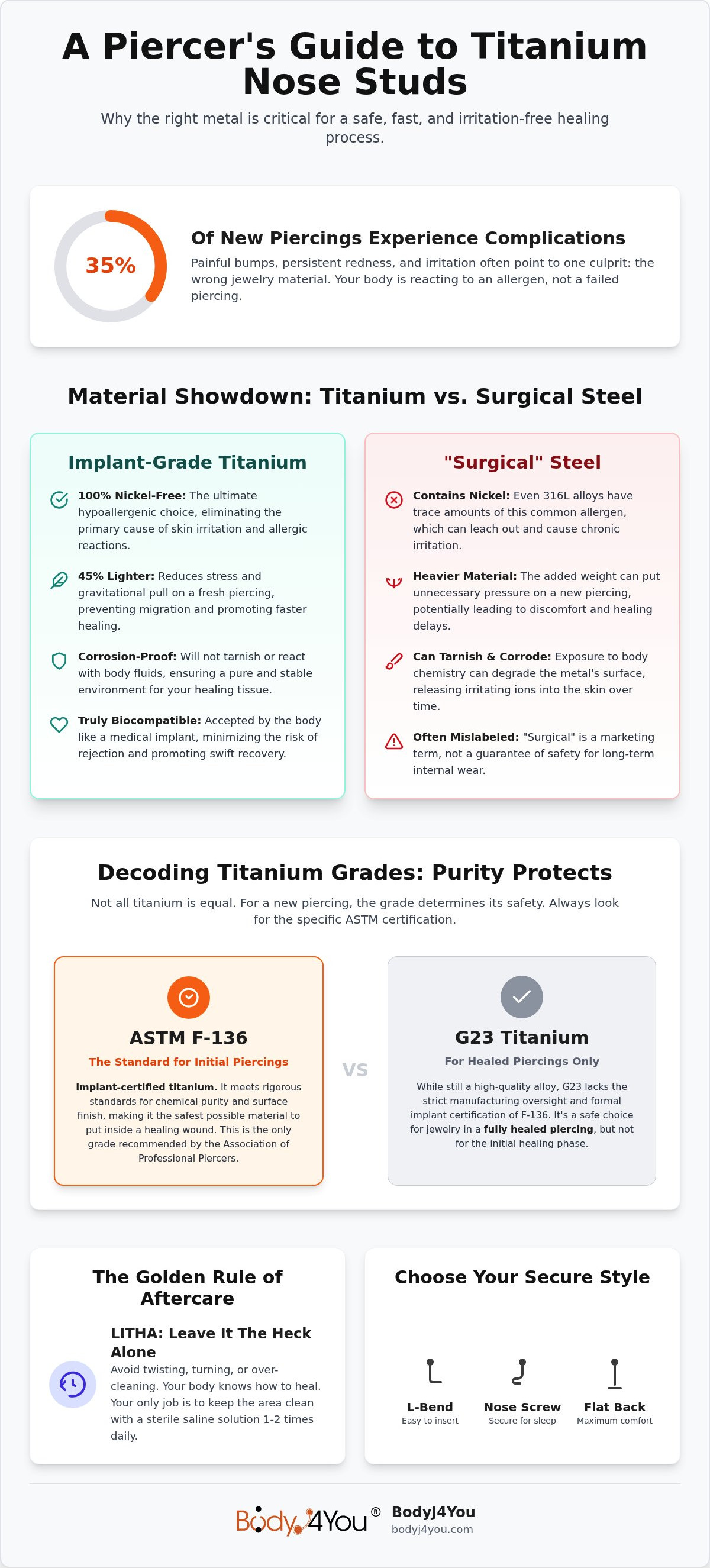
Did you know that 35% of people with new piercings experience complications like redness, bumps, or persistent irritation? It's frustrating when a journey toward self-expression is interrupted by the physical vulnerability of a healing wound. You want high-quality titanium nose studs that reflect your style without the constant worry of metal sensitivities or a jewelry piece that disappears while you sleep. We understand that your piercing is an investment in your identity, and it deserves a material that prioritizes your safety.
Titanium acts as the ultimate biological insurance for your skin. It offers a pure, hypoallergenic barrier that supports faster recovery, lasting comfort, and effortless style. Because titanium is biocompatible and non-tarnishing, it provides the stability your body needs to heal without the risk of rejection. It's the gold standard for anyone seeking a clean, wellness-oriented, and high-end aesthetic that feels both safe and aspirational.
This guide provides the technical insight you need to heal with confidence. We'll demystify the difference between L-bends and screws, explore the safety of ASTM F136 standards, and share expert protocols for maintaining a healthy piercing. You'll learn how to balance clinical precision with aesthetic refinement to ensure your jewelry remains a source of pride rather than a source of irritation.
Key Takeaways
- Master the technical distinction between ASTM F-136 and G23 to ensure you're choosing the highest implant-grade material for your skin's safety.
- Discover how the right shape, from secure nose screws to easy-to-change L-bends, can prevent your jewelry from falling out during sleep or activity.
- Learn why selecting the correct length and gauge for titanium nose studs is the most effective way to avoid painful swelling or embedding.
- Implement the "LITHA" rule alongside a sterile saline cleaning protocol to accelerate your healing journey and minimize the risk of piercing bumps.
- Identify why nickel-free titanium is the essential solution for anyone struggling with redness, itching, or chronic irritation from traditional jewelry.
Why Titanium is the Professional Choice for Nose Piercings
Choosing a metal for your piercing is a decision that bridges the gap between clinical safety and personal style. Professional piercers consistently recommend titanium nose studs because they act as a stabilizing force for your body. This metal isn't just a jewelry choice; it's a biocompatible material used extensively in heart valves and joint replacements. It is pure, protective, and permanent. Unlike mystery metals found in budget jewelry, titanium provides the high-end integrity your skin requires during the delicate healing phase.
Metal sensitivity remains the primary cause of piercing rejection and chronic redness. Most "cheap" jewelry contains nickel, a common allergen that triggers the body's immune defenses. Titanium is naturally nickel-free, offering an immediate solution to the itching and inflammation that plague many enthusiasts. It is the ultimate insurance policy for your nose, ensuring that your journey toward self-expression isn't derailed by preventable irritation. By removing the allergen, you allow your body to focus entirely on building healthy new tissue.
Beyond chemical purity, the physical properties of titanium nose studs offer a distinct mechanical advantage. Titanium is approximately 45% lighter than surgical steel, which significantly reduces the gravitational pull on the fistula. This lightness prevents the jewelry from "dragging" or migrating, especially in fresh piercings where the tissue is still soft. Furthermore, titanium possesses an incredible resistance to corrosion. It stands up to the constant presence of body fluids and the necessary application of saline aftercare without tarnishing or leaching metallic ions into your wound.
The Science of Biocompatibility
In the context of body jewelry, biocompatibility refers to the ability of a material to remain in contact with living tissue without causing harmful systemic or local effects. Titanium achieves this through a natural oxide layer that prevents the metal from reacting with your internal chemistry. This makes it the safest choice for initial piercings and healing tissue. Your body doesn't see the stud as a threat; it sees a smooth, stable surface that allows for a faster, more predictable recovery.
Titanium vs. Surgical Steel: A Quick Comparison
While many people start with surgical steel, it's a common misconception that "surgical" means "hypoallergenic." Most 316L surgical steel alloys still contain trace amounts of nickel which can leach out over time as the metal is exposed to the acidic environment of the human body. If you've ever experienced a "piercing bump" that won't go away, your jewelry material might be the silent culprit. For a deeper dive into these technical differences, read our Surgical Steel vs. Titanium: Material Safety Guide. Ultimately, titanium wins for long-term wear because it offers a higher standard of dermatological safety, a lighter weight for comfort, and superior longevity that won't tarnish with age.
ASTM F-136 vs. G23: Understanding Titanium Grades
Accuracy matters. Purity protects. Safety endures. Understanding the nuances of metal grades is the first step toward a successful piercing experience. While many retailers claim to sell medical grade jewelry, the reality often hides behind vague terminology. To truly protect your healing tissue, you must look for specific industrial certifications that guarantee the material's safety, longevity, and biocompatibility.
Professional piercers almost exclusively prioritize implant certified titanium (ASTM F-136) for new procedures. This standard isn't just a label; it's a rigorous set of requirements for chemical composition, mechanical properties, and surface finish. Choosing titanium nose studs that meet this criteria ensures you aren't introducing harmful impurities into your body. It is the most reliable way to avoid the piercing bumps and chronic irritation discussed in the previous section.
You may frequently encounter G23 titanium in your search for jewelry. While G23 is a high-quality alloy, it often lacks the strict manufacturing oversight and testing protocols required for the F-136 designation. It's perfectly suitable for healed piercings, but for a fresh or temperamental site, the F-136 standard provides an extra layer of security. Always verify the quality by checking for these specific ASTM codes in product descriptions; transparency is the mark of a reputable supplier.
What is ASTM F-136 Titanium?
This specific grade undergoes exhaustive testing to ensure it is free from microscopic voids and surface imperfections. These flaws, though invisible to the eye, can harbor bacteria or cause friction against healing skin. ASTM F-136 is the same material used in heart valves and joint replacements. It offers the highest level of stability, ensuring your body accepts the stud as a permanent part of your aesthetic journey.
Anodization: Color Without Chemicals
One of the most vibrant benefits of this material is its ability to change color through anodization. This electrochemical process thickens the natural oxide layer of the metal, creating a spectrum of light-refracting colors without the use of dyes, paints, or toxic plating. Anodized titanium is significantly safer than gold-plated steel, as there is no thin layer of gold to flake off and irritate your skin. You can achieve a stunning rose gold, a deep vibrant blue, or a high-polish silver look while maintaining the purity of the metal. For those seeking safe, colorful options, browsing our collection of high-quality titanium studs offers a glimpse into how science meets style.
Choosing Your Style: L-Bend, Screw, and Flat-Back Studs
Material purity provides the foundation for a healthy piercing, but the geometry of your jewelry dictates your daily experience. Style evolves. Comfort endures. Safety remains. Finding the perfect fit requires balancing your activity level with your desire for aesthetic flexibility. Not all titanium nose studs are designed for the same lifestyle; choosing the right shape is essential for long-term satisfaction.
The L-bend stud features a classic 90-degree angle. It is the preferred choice for those who value simplicity and frequent jewelry changes. Because it slides in easily, it minimizes trauma to the fistula during swaps. Conversely, the nose screw offers a curved, corkscrew-like tail. It provides enhanced security for active lifestyles and restless sleepers. It stays firmly in place, acting as a protective barrier against accidental loss during your busiest moments.
Safety is also found in the mechanical details of the post itself. Internal threading is the only standard we recommend for healing tissue. Unlike external threading, which can scrape the delicate interior of your piercing like a saw, internal threading ensures the post is perfectly smooth. This aligns with the Association of Professional Piercers' guidelines on initial piercing jewelry, prioritizing the integrity of your skin above fleeting trends.
The Rise of the Flat-Back Nose Stud
Many enthusiasts are moving away from traditional bends in favor of 18G or 20G flat-back labrets. These studs offer unparalleled comfort by eliminating the "poking" sensation inside the nostril that often leads to irritation. They are the secret to a restful sleep; the flat disc sits flush against the skin, preventing the jewelry from snagging or shifting. For those seeking maximum security and a seamless fit, our Internal Threaded Labret Studs represent the pinnacle of modern piercing design.
Selecting the Right Gemstone and Top
The top of your stud is where your personality shines. Bezel-set gems are ideal for daily wear because the metal rim completely surrounds the stone, making it less likely to snag on towels or pillowcases. Prong-set gems allow more light to enter the stone for maximum brilliance but require more care. Popular sizes range from a subtle 1.5mm for a minimalist look to a bold 3mm for a statement piece. Choosing a low-profile top is a disciplined way to avoid accidental snags, ensuring your titanium nose studs remain a source of joy rather than a source of frustration.
Sizing and Troubleshooting Your Titanium Nose Stud
Precision is the cornerstone of comfort. A stud that fits perfectly feels like a natural extension of your body, while an ill-fitting piece can lead to chronic discomfort or even permanent scarring. Selecting the right titanium nose studs requires an understanding of your unique anatomy and the healing stage of your piercing. When you prioritize accurate measurements, you protect the integrity of your skin.
Standard nostril piercings typically utilize either a 20G (0.8mm) or an 18G (1.0mm) post. While the difference seems negligible, forcing a larger gauge into a fistula that has shrunk can cause micro-tears and inflammation. Conversely, the length of the post is equally critical. A post that is too short will "sink" or embed into the tissue, especially during the initial swelling phase. A post that is too long will snag on clothing, leading to migration and irritation.
Measuring your current jewelry is the most reliable way to ensure a seamless transition. Use a digital caliper for exactness, or compare your existing stud against a known reference. Measure twice. Fit once. Heal forever. If you're unsure of your current size, our collection of professionally sized titanium studs offers a variety of dimensions to suit every nose shape.
Common Gauge and Length Standards
Most healed nose piercings thrive with a 20G post, offering a delicate and refined look. However, 18G remains popular for those who prefer the stability of a slightly thicker post. For a comprehensive look at how these measurements translate across different piercing types, consult our Ear Gauge Size Chart. Never attempt to "force" a thicker gauge into a healed piercing; if it doesn't slide in smoothly, your body is signaling that the fit is incorrect.
Troubleshooting Irritation and Bumps
Irritation bumps are a common signal of physical trauma or improper sizing. While a metal allergy often presents as a widespread rash or persistent itching, a localized "bubble" usually indicates that the jewelry is shifting too much or is being snagged. If you notice a bump forming, it's essential to act quickly. You can find a detailed protocol in our guide on How to Get Rid of a Piercing Bump Fast. Remember that "downsizing" your stud after the initial 4 to 8 weeks of swelling is a vital step; a shorter post reduces movement and provides the stability needed for the final stages of healing.
Proper Aftercare for Your Titanium Jewelry
Healing is a disciplined process. It requires patience, consistency, and the right materials. While titanium nose studs provide the biological foundation for success, your daily habits determine the final outcome. We act as your supportive specialist, guiding you through the delicate months of recovery with clinical precision. A successful piercing is a balance of biology and behavior, and your commitment to aftercare ensures your jewelry remains a source of pride rather than a source of irritation.
The "LITHA" rule, which stands for Leave It The Hell Alone, is the most effective strategy for a fresh piercing. Constant touching, twisting, or rotating causes micro-trauma to the fistula. It introduces bacteria. It delays stabilization. It creates irritation. By minimizing movement, you allow the titanium's natural oxide layer to interact peacefully with your healing tissue. This stability is the secret to avoiding the "piercing bumps" often caused by excessive friction and jewelry movement.
Cleanse your piercing twice daily using a sterile saline spray. Avoid cross-contamination by skipping Q-tips, which can leave behind irritating fibers, and avoid harsh soaps that strip away beneficial oils. These chemicals can cause the skin to become brittle and prone to cracking. If your initial jewelry wasn't implant-grade, wait at least 4 to 8 weeks before swapping to a high-quality titanium stud to ensure the site is stable enough for the change. This waiting period is crucial for the long-term integrity of the fistula.
The Saline Solution
Sterile saline is the only safe cleaning agent for your new investment. It is gentle, effective, and pure. Unlike "DIY" salt water mixtures, which are often non-sterile and improperly balanced, professional sprays ensure the correct 0.9% sodium chloride concentration. For a deeper understanding of why this matters, read our Sterile Saline Spray for Piercings: The 2026 Expert Aftercare Guide. Unbalanced home solutions carry a risk of contamination and can actually damage the finish of your jewelry while dehydrating healing cells.
Signs of a Healthy Piercing
During the first 6 months, expect some clear or pale yellow discharge; this is a normal part of the body's regenerative process. It is the body's way of cleaning the wound from the inside out. However, persistent redness, excessive heat, or green fluid are signals to consult a professional immediately. Because titanium nose studs are non-reactive, they speed up the "stabilization" phase by providing a surface your body doesn't need to fight. This allows the internal channel to smooth over faster, moving you closer to your goal of effortless self-expression. Ready to upgrade your healing journey? Browse BodyJ4You’s Premium Titanium Nose Stud Collection.
Step into Your Healing Future with Confidence
Your piercing journey is a transition toward aesthetic refinement and personal growth. By choosing titanium nose studs, you prioritize the purity, precision, and protection your body deserves. Selecting implant-grade ASTM F-136 material and the correct post geometry are the most effective ways to ensure a lifetime of comfort. With over 20 years of industry expertise, we remain committed to supporting your self-expression through high-quality jewelry and dermatologist-approved aftercare solutions. You don't have to choose between style and safety; the right material provides both.
We invite you to explore a collection where wellness meets beauty. Enjoy free shipping on orders over $25 and the peace of mind that comes from professional-grade standards. Shop Implant Grade Titanium Nose Studs at BodyJ4You today to secure the biological insurance your piercing needs. Your path to a perfectly healed, vibrant piercing starts with a single, disciplined choice. Embrace your new look with the confidence of a specialist watching over your skin's health.
Frequently Asked Questions
Can I use a titanium nose stud for my initial piercing?
Yes, titanium is the safest choice for initial piercings due to its exceptional biocompatibility. Unlike surgical steel which can contain trace nickel, titanium is naturally hypoallergenic. It allows your body to focus on healing without fighting off metallic allergens. Professional piercers prioritize this material to reduce the risk of rejection and irritation. Starting with a high-quality stud ensures a stable foundation for your new aesthetic journey.
Will titanium nose jewelry turn my skin green?
No, titanium will never turn your skin green because it doesn't contain copper or reactive alloys that oxidize. The "green skin" effect is usually caused by cheap fashion jewelry made of brass or copper reacting with sweat and skin oils. Titanium is an inert metal that remains stable even in the presence of moisture and body fluids. This makes it a reliable, long-term option for those who value purity and dermatological safety.
How do I know if my nose stud is G23 or ASTM F-136 titanium?
Verification requires checking the product's technical specifications and certifications. Reputable sellers will explicitly state if their titanium nose studs meet the ASTM F-136 standard for surgical implants. While G23 is a high-quality alloy, ASTM F-136 undergoes more rigorous testing for microstructure and purity. If the documentation is vague, it may not meet the implant-grade standard. Always choose transparent brands that provide clear material standards to protect your healing tissue.
Is titanium better than 14K gold for nose piercings?
Titanium is generally superior for healing and sensitive skin because it is 100% nickel-free. Even high-quality 14K gold is alloyed with other metals like copper, silver, or nickel to achieve its hardness and color. These alloys can trigger sensitivities in fresh piercings. Titanium is also lighter and more durable than gold, providing a stable environment for your fistula. For a permanent, worry-free choice, titanium remains the clinical gold standard for safety and comfort.
How often should I clean my titanium nose stud?
You should clean your piercing twice daily using a sterile saline spray. Consistency is key to preventing crust build-up and bacterial growth. Over-cleaning or using harsh chemicals can irritate the site and delay the stabilization phase. Simply spray the area and let it air dry or gently pat it with a clean swab. Maintaining a disciplined routine supports the natural healing process and keeps your jewelry looking its best for years to come.
Can I sleep in a titanium flat-back nose stud?
Yes, sleeping in a flat-back labret is highly recommended for maximum comfort. The flat disc sits flush against the inside of your nostril; this prevents the jewelry from poking your septum or snagging on your pillowcase. This design is significantly more secure than L-bends or screws during sleep. It provides the stability your body needs to recover without the risk of the stud falling out or causing accidental trauma during the night.
What should I do if my titanium stud is sinking into my nose?
If your stud is sinking, you likely need a longer post to accommodate swelling. This is a common issue during the first few weeks of healing. Embedding can lead to infection or permanent scarring if the skin grows over the jewelry. Do not attempt to force it out yourself. Consult a professional piercer immediately to have the jewelry swapped for a longer titanium piece. This ensures your piercing has the space it needs to breathe.
How do I change an L-bend nose stud for the first time?
Wait at least 4 to 8 weeks before your first change to ensure the fistula is stable. Wash your hands thoroughly and clean the area with saline. Tilt the stud upward until the bend aligns with the piercing hole, then gently slide the jewelry out. When inserting the new piece, go slowly to avoid internal scratches. If you feel resistance or pain, stop immediately and seek professional assistance. Rushing this process can cause unnecessary trauma.


