

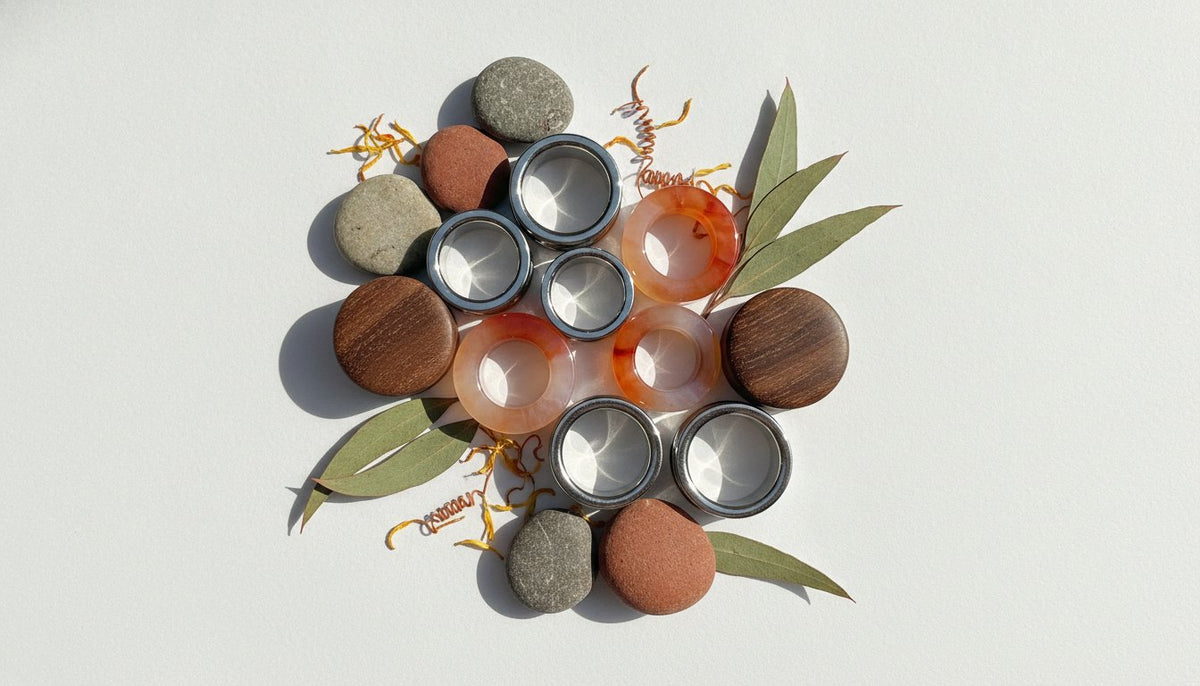
Your choice of jewelry is a medical decision disguised as a fashion statement. Choosing the wrong material can lead to more than just a bad look; it can compromise the very health of your skin. You likely started stretching your lobes to express your unique identity, yet you've probably faced the stinging frustration of irritation, the confusion of flare styles, or the fear of a permanent blowout. It's a common hurdle in the journey toward self-expression.
You deserve a stretch that's safe, comfortable, and beautiful. We believe in protecting your progress while celebrating your style. This 2026 guide clarifies the diverse types of ear plugs for gauges to ensure your jewelry supports your body's natural healing process. We'll examine the technical benefits of different materials, explain the functional differences between single and double flares, and provide a clear roadmap for daily maintenance. Discover how to balance aesthetic refinement with clinical safety for a look that feels as good as it looks.
Key Takeaways
- Master the distinction between gauge sizes and plug styles to ensure a precise, healthy fit for your unique anatomy.
- Explore the various types of ear plugs for gauges, prioritizing biocompatible materials like surgical steel for active stretching phases.
- Learn why single-flare designs are the clinical gold standard for safety during the early and middle stages of your stretching journey.
- Protect your skin's integrity by integrating a daily regimen of cleansing and natural oil massages to prevent irritation.
- Build a curated collection of jewelry that balances aesthetic expression with the long-term wellness of your stretched lobes.
Understanding the Basics: Plugs vs. Tunnels for Gauges
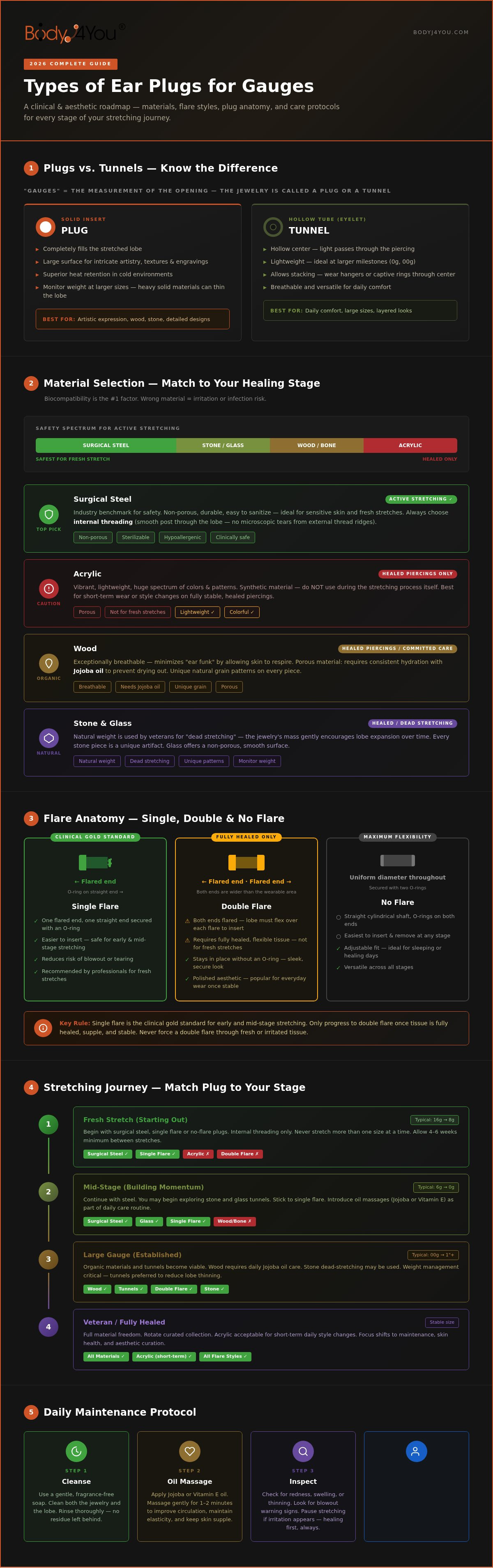
Clarity is the foundation of a successful stretching journey. While many enthusiasts use the term "gauges" to describe their jewelry, this actually refers to the measurement of the opening itself. The jewelry you place within that opening is either a plug or a tunnel. Understanding the physical properties of these different types of ear plugs for gauges helps you make informed choices that prioritize both your personal style and your dermatological health.
The anatomy of a plug is straightforward: it's a solid, cylindrical piece of jewelry that fills the stretched lobe completely. This design provides a substantial surface area for artistic expression. In contrast, a tunnel, often called an eyelet, features a hollow, tube-like structure. This design allows light to pass through the piercing, emphasizing the "hollow" aesthetic that many find appealing. Choosing between them involves more than just visual preference; it involves physics. As you progress to larger sizes, the weight of your jewelry becomes a critical factor. Solid stone or glass plugs can be heavy, potentially causing uneven tension or thinning of the lobe over time. Tunnels offer a lightweight alternative that maintains your size while reducing the physical strain on your tissue.
When to Choose Plugs
A plug is a solid decorative insert for a stretched piercing. Plugs are the premier choice for those who view their lobes as a gallery for intricate artistry. Because they're solid, they showcase the deep textures of natural wood, the complex patterns of stone, or detailed laser-engraved designs. Beyond aesthetics, plugs offer a functional benefit in colder environments. Solid materials provide superior heat retention compared to thin metal tunnels, which helps protect your delicate lobe tissue from the biting cold. They are stabilizing, decorative, and substantial.
When to Choose Tunnels
Tunnels define the classic stretched aesthetic by highlighting the negative space within the lobe. They're indispensable for daily comfort as you reach larger milestones, such as 0g or 00g, where the weight of solid jewelry might become cumbersome. Tunnels also provide incredible versatility for those who enjoy "stacking" their look. You can easily wear captive bead rings or heavy hangers through the center of a tunnel, allowing you to layer different types of ear plugs for gauges without removing your primary jewelry. They are breathable, versatile, and iconic.
Material Matters: Choosing Between Acrylic, Steel, and Organic Plugs
Material selection is the primary determinant of long-term success. Your skin interacts constantly with your jewelry, making biocompatibility the most critical factor in preventing irritation or infection. When exploring the different types of ear plugs for gauges, you must match the material to the current state of your healing. A fresh stretch requires a sterile, non-porous surface, while a seasoned piercing thrives on breathable, organic textures. Choosing wisely ensures your journey remains a source of pride rather than a source of discomfort.
Metal and Synthetic Options
Surgical steel is the industry benchmark for safety. It is non-porous, incredibly durable, and easy to sanitize, making it the ideal choice for those with sensitive skin or active stretches. If you prefer screw-on styles, always prioritize internal threading. This design ensures the smooth part of the post passes through your lobe, preventing the microscopic tears often caused by the sharp ridges of external threads. It is clinical, safe, and reliable.
Acrylic serves as a vibrant, lightweight alternative for those with fully healed piercings. While it offers an unmatched spectrum of colors and patterns, it is a synthetic material that shouldn't be used for the stretching process itself. It is best suited for short-term wear or daily style changes once your ears are stable. For those starting their journey, a foundational BodyJ4You kit provides the medical-grade materials necessary for a healthy transition.
Organic and Natural Materials
Organic materials like wood, stone, and bone are prized for their unique relationship with the body. Wood is exceptionally breathable, which helps minimize "ear funk" by allowing the skin to respire. However, wood is porous and requires consistent hydration with Jojoba oil to prevent it from drying out or absorbing moisture from your skin. It requires commitment, care, and attention.
Stone plugs provide a natural weight that many veterans use for "dead stretching," where the jewelry's mass gently encourages the lobe to expand over time. Each piece of stone jewelry is a unique artifact of nature, offering textures and colors that synthetic materials cannot replicate. You must remember a vital safety rule: never wear organic materials in a fresh or irritated stretch. Their porous nature can allow healing tissue to grow into the jewelry, leading to painful removals and potential damage. Use organics only when your skin is fully settled and resilient.
Anatomy of a Plug: Single Flare, Double Flare, and No Flare Styles
The geometry of your jewelry is just as vital as the material itself. A flare is the wider, protruding edge of a plug designed to anchor the piece securely within your lobe. When selecting between different types of ear plugs for gauges, the flare style determines how easily the jewelry is inserted, how safely it sits during healing, and how it frames your aesthetic. Choosing the wrong geometry for your current stage can lead to unnecessary pressure or tissue damage.
There are three primary configurations: single flare, double flare, and no flare. Single flares are the standard for active stretching. Double flares, often called saddle plugs, offer a symmetrical look but require a matured piercing. No flare styles or screw-fit plugs provide a straight cylinder that is easy to insert and secure with threaded backings. Each serves a specific purpose in your journey toward self-expression.
The Single Flare Advantage
Safety is the primary reason high-quality ear stretching kits almost exclusively feature single flare designs. These plugs have one flared decorative end and one smooth, straight end that passes through the lobe without resistance. They are safe, simple, and effective. You secure the jewelry with a small rubber O-ring that slides onto the back. To prevent irritation, ensure your O-rings are made of medical-grade nitrile if you have a latex sensitivity. Always check that the ring sits snugly in its groove; this prevents your jewelry from sliding out during sleep or daily activity.
Mastering the Double Flare
Double flare plugs are designed for seasoned, fully healed stretches. Because both ends are wider than the center, your lobe must be flexible enough to stretch over the flare during insertion. Never attempt a double flare if your piercing is fresh, tender, or irritated. Your skin should be resilient, elastic, and calm. To insert them safely, use the button method: angle one edge of the flare into the lobe and gently rock the rest of the plug through, similar to how you would fasten a button on a shirt. If you feel pain, resistance, or redness, stop immediately. Your ears aren't ready, and forcing the jewelry could cause a blowout or a tear. Patience is the ultimate guardian of your lobe health.
For those who want the look of a double flare with the ease of a single flare, screw-fit plugs are an excellent middle ground. These feature a threaded back that unscrews, allowing you to slide the straight cylinder through your ear before securing the second flare. They offer the perfect balance of security and comfort for daily wear across many types of ear plugs for gauges.
Selection Guide: Matching Plug Types to Your Stretching Journey
Successful stretching is a patient progression. It requires discipline, timing, and the right equipment. Your choice among the various types of ear plugs for gauges should mirror your current milestone, as the needs of a fresh piercing differ vastly from those of a seasoned lobe. Matching the jewelry to your phase ensures your skin remains resilient, healthy, and elastic.
Phase 1 involves the foundational steps from 14g to 10g. During this initial period, your focus should be on hygiene, stability, and precision. Using Surgical Steel Taper and Plug Kits provides the clinical reliability needed to establish a healthy channel. Steel is non-porous, predictable, and exceptionally easy to sanitize.
Phase 2 covers the middle gauges from 8g to 2g. Your tissue is becoming more resilient, allowing for a wider variety of materials. This is a common time to transition between steel for active stretches and lightweight acrylic for daily wear, provided the piercing is fully settled. In Phase 3, reaching 0g and beyond, you enter the advanced stage. Here, managing jewelry weight is paramount to prevent the thinning of the lower lobe. Many enthusiasts wonder if their ears will ever close if they change their minds. While the "point of no return" varies for every individual, maintaining skin elasticity through slow stretching and high-quality jewelry is the best way to keep your options open.
Stretching vs. Wearing
Tapers are tools, not jewelry. Wearing tapers as long-term plugs creates uneven weight distribution that can lead to lopsided piercings, irritation, or discomfort. Use them only to guide your new jewelry into place. For larger sizes, many veterans prefer dead stretching, which utilizes the natural weight of heavy-gauge metal or glass plugs to encourage the lobe to expand. Stretching should always be a slow, pain-free process.
Milestone Sizes: 0g and 00g
The 0g and 00g milestones are the most popular targets because they offer the broadest selection of decorative styles. However, the transition from 2g (6mm) to 0g (8mm) represents a significant 2mm jump. This is double the usual increment and requires extra caution. We recommend using specialized "in-between" sizes, such as 7mm or 9mm, to bridge these gaps without risking a blowout. Once you reach these milestones, you can finally invest in your first pair of high-end goal plugs. To ensure you have the right tools for every step, browse our Surgical Steel Taper and Plug Kits for a safe and supported journey.
Caring for Your Stretched Ears: The BodyJ4You Maintenance Protocol
Your journey doesn't end with choosing the right types of ear plugs for gauges; it begins with how you maintain them. Consistent care is the difference between a healthy, resilient lobe and one prone to irritation. Without a structured routine, dead skin cells and natural sebum can accumulate, leading to the unpleasant odor commonly known as "ear cheese." This buildup isn't just a social concern. It is a hygiene issue that can compromise your skin's integrity and slow your progress. Daily hygiene. Moisture retention. Consistent massage. These are the pillars of a successful stretch.
The Daily Cleaning Routine
Hygiene should be a non-negotiable part of your morning ritual. We recommend using a Saline Piercing Aftercare Spray to flush away debris and bacteria without the use of harsh, drying chemicals. This gentle solution maintains the biological balance of your skin while ensuring your jewelry remains sterile. After cleaning, dry your lobes thoroughly with a clean paper towel. Trapped moisture is a primary cause of fungal irritation and skin maceration, especially with non-porous materials.
Cleaning methods must be tailored to your jewelry material:
- Surgical Steel: Can be washed with mild, fragrance-free soap and warm water or wiped with sterile saline.
- Acrylic: Use lukewarm water and mild soap; never use alcohol, as it can cause the material to crack or craze.
- Organic (Wood/Stone): Wipe with a damp cloth and dry immediately. Wood is porous and should never be submerged in water.
Moisturizing for Elasticity
Maintaining the elasticity of your skin is vital for long-term health, particularly at larger milestones like 00g. A daily lobe massage using Jojoba oil mimics your skin's natural sebum, providing deep hydration that keeps the tissue supple and resilient. For those who spend time in harsh climates, our specialized Gauges Balm acts as a protective barrier, preventing the micro-tears and dryness that lead to irritation.
The best time for this ritual is after a warm shower when your pores are open and blood circulation is naturally increased. Gently massage the oil or balm into the lobe for 2 to 3 minutes. This practice stimulates blood flow, encourages collagen production, and ensures your skin remains thick enough to support the different types of ear plugs for gauges in your collection. It is a moment of self-care that protects your physical investment and supports your journey of self-expression. Purity. Integrity. Expression.
Elevating Your Stretching Journey with Confidence
Your stretching journey is a personal evolution that requires a balance of clinical safety and aesthetic vision. By understanding the diverse types of ear plugs for gauges, you can select materials and flare styles that support your skin's long-term health. Prioritizing biocompatible surgical steel and integrating a daily ritual of saline cleansing and oil massages will ensure your lobes remain resilient and thick. This disciplined approach prevents common setbacks like irritation or blowouts, allowing your self-expression to thrive without compromise.
With over two decades of industry expertise, we're dedicated to providing you with safe, ethically produced stretching kits and locally manufactured aftercare solutions. You don't have to navigate this path alone; we're here to act as your protective and stabilizing force. Ready to find your next milestone piece? Explore the BodyJ4You Collection of High-Quality Plugs and Aftercare today. Your body is a canvas, and we're proud to support its growth with the care and precision it deserves. Stay patient, stay healthy, and keep expressing your unique style.
Frequently Asked Questions
What is the safest material for a new ear stretch?
Surgical steel is the clinical gold standard for active stretching. It is non-porous, durable, and exceptionally easy to sanitize, which minimizes the risk of infection or irritation. Unlike organic materials, it won't absorb moisture or bacteria during the healing process. We recommend starting with a surgical steel taper and plug kit to provide your tissue with the stabilizing environment it needs for a successful, healthy transition.
Can I wear double flare plugs if I just stretched my ears?
No, you should never wear double flare plugs in a fresh or active stretch. Because both ends are wider than the center, your lobe must be fully healed and elastic enough to stretch over the flare without resistance. Forcing a double flare into a tender lobe can cause tears, blowouts, or permanent scarring. Wait until your skin is completely calm, resilient, and settled before attempting this style.
How do I stop my ear gauges from smelling?
Consistent daily hygiene is the only way to prevent the buildup of "ear cheese." This odor is caused by dead skin cells and sebum accumulating on your jewelry. You should remove your jewelry daily, cleanse your lobes with saline piercing aftercare spray, and massage the tissue with jojoba oil. This routine keeps the skin healthy, promotes blood flow, and ensures your collection of different types of ear plugs for gauges remains fresh.
Is acrylic safe for long-term wear in stretched ears?
Acrylic is best suited for short-term wear in fully healed piercings. While it is lightweight and offers vibrant aesthetic variety, it is a non-biocompatible plastic that can harbor bacteria over time. It shouldn't be used for the stretching process or worn in irritated ears. If you enjoy the look of acrylic, ensure you maintain a strict daily cleaning regimen and rotate it with high-quality metals or organic materials.
How often should I clean my ear plugs and tunnels?
You should clean your jewelry and your lobes every single day. Removing your plugs during a warm shower allows you to wash away debris and assess the health of your skin. Use a gentle saline spray or mild soap to sanitize your jewelry before reinsertion. This frequent maintenance prevents irritation, maintains skin elasticity, and ensures a comfortable fit for all types of ear plugs for gauges you choose to wear.
What is the difference between a gauge and a plug?
The term "gauge" refers specifically to the diameter or size of the piercing hole, while a "plug" is the solid piece of jewelry worn within it. While many people use the terms interchangeably, understanding the distinction helps you communicate clearly with professionals. You "gauge" your ears to a specific size so that you can wear different styles of jewelry, such as solid plugs, hollow tunnels, or decorative hangers.
Why do my ears get irritated when I wear wood plugs?
Wood is a porous material that can absorb moisture from your skin, leading to dryness and irritation. If your ears feel itchy or tender, the wood may be drying out or your piercing may not be fully healed. Organic materials should only be worn in seasoned stretches. To prevent discomfort, always hydrate your wood jewelry with jojoba oil and ensure your lobes are healthy and resilient before insertion.
What should I do if my ear lobe feels tight or painful after changing plugs?
Listen to your body immediately. If you experience persistent pain, throbbing, or extreme tightness, the jewelry may be too large or the material may be causing an allergic reaction. Remove the plug and downsize to a comfortable, smaller gauge until the swelling subsides. Applying a soothing saline spray or gauges balm can help calm the tissue. Never ignore pain, as it is often the first sign of a potential blowout.


