


A snake bites piercing is the only body modification where a single millimeter of error transforms a bold aesthetic into a frustrating mistake. You aren't just looking for two holes in your lower lip; you are seeking perfect, mirror-image symmetry that respects your unique facial anatomy. It’s natural to feel a bit of anxiety about the double-needle sting or the 15% risk of gum recession often cited by dental professionals in oral piercing studies. You want the edge of this look without sacrificing the health of your smile.
We understand that you deserve a transformation that is striking, safe, and expertly executed. This comprehensive guide helps you master everything from the initial sting to long-term dental safety with our expert-led approach to the snake bites piercing. We will walk you through the precision of placement, the 3-step cleaning routine for both oral and external skin, and how to choose hypoallergenic materials like Grade 23 Titanium to ensure a fast, bump-free healing process. From the first mark of the pen to your final jewelry downsize, we are here to support your journey toward empowered self-expression.
Key Takeaways
- Discover the anatomy of a snake bites piercing and how this iconic "fang" aesthetic creates a bold, symmetrical statement.
- Navigate the "Double Sting" with confidence by understanding the step-by-step procedure and the psychological reality of the process.
- Master the "Inside-Outside" cleaning protocol to maintain a healthy environment for both the oral and dermal sides of your skin.
- Level up your jewelry selection by learning why implant-grade titanium and specific gauges are essential for safe, long-term wear.
- Safeguard your dental health with expert strategies for proper placement and downsizing to prevent gum recession and enamel erosion.
What is a Snake Bites Piercing? Anatomy and Aesthetics
A snake bites piercing is a distinctive form of body modification that involves two separate piercings placed symmetrically near the outer corners of the lower lip. This style creates a visual metaphor for fangs, giving the wearer a sharp, edgy aesthetic that remains a staple in alternative fashion. While many Lip piercing styles focus on a single point of entry, snake bites rely on the power of two. This symmetry defines the look, offering a balanced frame for the mouth that enhances the natural contours of the face. It's essential to distinguish them from similar setups. Spider bites feature two piercings clustered on one side, while dolphin bites sit closely together in the center of the lip. Snake bites provide a wider, more expansive appearance that commands attention.
The Anatomy of the Lower Lip
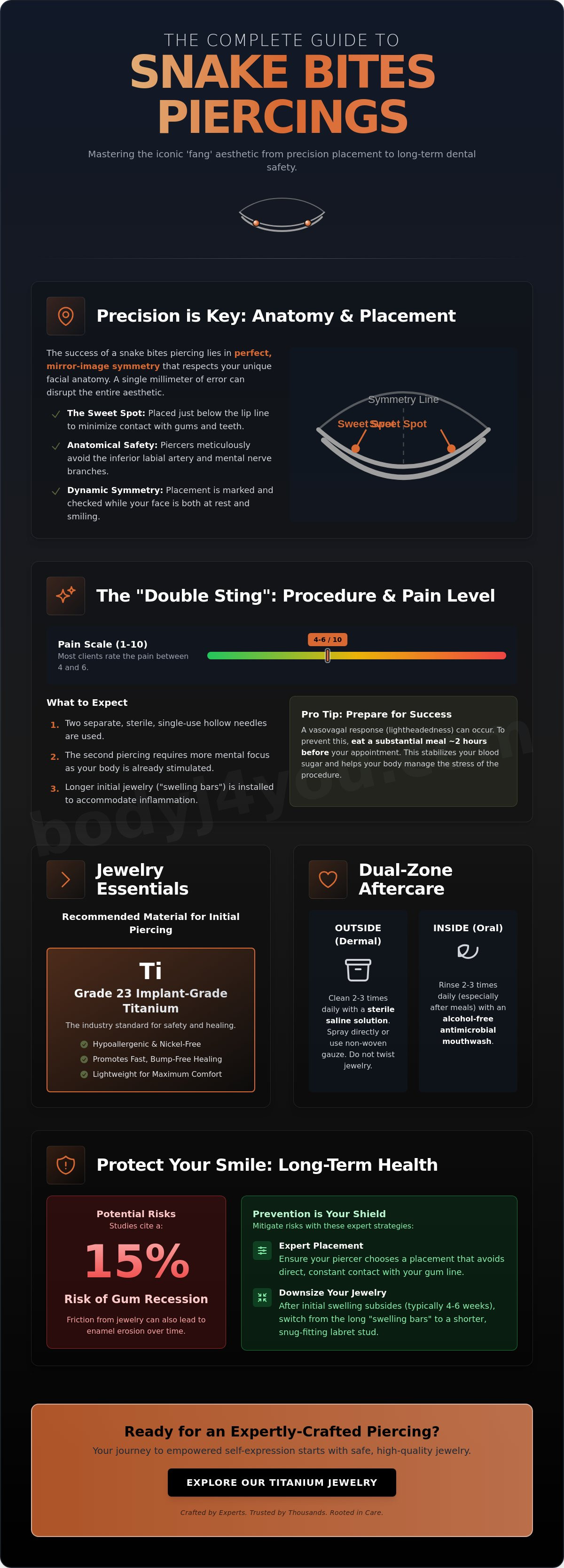
The procedure requires a deep understanding of facial biology to ensure the results are healthy, safe, and effective. A professional piercer focuses on the transition from the vermilion border, the visible reddish edge of your lip, to the labial mucosa inside the mouth. Precision is mandatory here. Experts meticulously avoid the inferior labial artery and the mental nerve branches that provide sensation to the chin area. The ideal "sweet spot" for a snake bites piercing sits just below the lip line. This specific placement is chosen to minimize contact between the jewelry and your lower gums. Reducing this friction is a vital step in protecting your tooth enamel and preventing long-term gum recession. We prioritize the integrity of your skin and oral health over fleeting trends.
Symmetry: The Key to a Successful Look
Symmetry is the foundation of this aesthetic. Professional marking is the most critical step before the needle ever touches your skin. Your piercer will mark the spots while your face is at rest and while you're smiling. Natural facial movements can shift how jewelry sits, so the placement must look perfect in every expression. The labial frenulum, the small fold of tissue connecting your lip to your gums, also dictates how far apart the piercings can be. Level up your look by ensuring your piercer accounts for your unique dental structure and jawline. With over 20 years of experience in the industry, we know that successful piercings are rooted in care and clinical precision. Every mark made is a commitment to your self-expression and long-term well-being. Our approach is simple: Crafted by Experts. Trusted by Thousands. Rooted in Care.
The Procedure: Pain Levels and What to Expect
Getting a snake bites piercing is a journey in precision and patience. The process begins with a clinical sterilization of the lower lip area followed by meticulous marking to ensure perfect symmetry. Your piercer will then use a hollow, medical-grade needle to create the first channel. The "Double Sting" is a unique challenge of this style. While the first puncture is a quick, sharp sensation, the second requires more mental focus as your body is already reacting to the initial stimulus. Most clients rate the pain between a 4/10 and 6/10. This is slightly more intense than a septum piercing because the lip contains a higher density of nerve endings.
Preparation is vital for a stable experience. A sudden drop in blood pressure, known as a vasovagal response, can lead to lightheadedness or fainting. You must eat a substantial meal two hours before your appointment to maintain your glucose levels. This simple step transforms the procedure from a stressful event into a controlled, empowering moment of self-expression. Staying hydrated and well-fed ensures your body has the resources to begin the healing process immediately.
The Two-Needle Technique
Professional piercers always use two separate, single-use needles for a snake bites piercing. Reusing a needle, even on the same client, risks dulling the tip and causing unnecessary tissue trauma. Receiving both piercings in a single session is generally recommended. This approach ensures the angles are perfectly matched and allows the body to move through the initial inflammatory phase once rather than twice. During this stage, your piercer will install "swelling bars." These are longer labret studs designed to accommodate the significant expansion of the lip tissue without cutting into the skin. Choosing high-quality titanium for these initial pieces helps mitigate the dental health risks of oral piercings by providing a hypoallergenic foundation that promotes steady healing.
Managing the Initial Swelling
The lower lip is highly vascular, meaning it is prone to significant "duck lip" swelling within the first 72 hours. This is a standard biological response to the procedure. To manage this, apply cold compresses to the outside of the lip for 10 minutes at a time and keep your head elevated while sleeping for the first three nights. These steps reduce blood flow to the area and minimize fluid retention. Nesting is the natural process where the inner lip tissue forms a small, shallow pocket for the jewelry's flat back to sit in comfortably. To ensure your healing stays on track, you can level up your routine with specialized care products designed for sensitive oral tissues.
Advanced Aftercare: The Dual-Zone Cleaning Protocol
Healing a snake bites piercing requires a strategic, clinical approach. You aren't just managing one wound; you're managing two distinct biological environments. We utilize the 'Inside-Outside' rule to ensure total safety. This protocol treats the oral mucosa and the external dermal layer as separate zones with unique needs. During the critical 6-to-8-week primary healing window, your focus must remain on precision and hygiene. Consistency prevents complications and ensures your journey toward self-expression is healthy, safe, and effective.
External Care: Preventing Piercing Bumps
The external site demands a wellness-centric routine. Use a USP-certified Saline Piercing Aftercare Spray twice daily to flush away cellular debris and discharge. This specific concentration matches your body's natural chemistry to prevent dehydration. We advocate for the 'LITHA' method: Leave It The Hell Alone. The old advice to rotate or twist jewelry is a dangerous myth. Moving the metal causes micro-tears in the delicate new tissue and introduces bacteria. If localized irritation or redness occurs, a Piercing Bump Treatment Oil can soothe the area. This targeted care supports the skin's integrity without the use of harsh chemicals or irritants.
Internal Care: Oral Hygiene and Diet
The internal side of your piercing faces constant exposure to oral bacteria. WebMD provides a guide to oral piercing safety which highlights how the mouth's environment can complicate the healing process. Alcohol-based mouthwashes are the primary enemy of a healing snake bites piercing. These products are far too aggressive; they strip away beneficial cells and delay tissue regeneration. Instead, use a gentle salt-water rinse after every meal, snack, or drink other than water. This simple habit keeps the internal bars clean and minimizes the risk of plaque buildup on the jewelry.
Your lifestyle must adapt during the first 60 days of recovery. Follow these guidelines to protect your investment:
- Avoid Specific Foods: Stay away from spicy, acidic, or crunchy items. These can cause chemical irritation or physically snag the jewelry.
- The 'No Shared Fluids' Rule: Kissing and sharing drinks must wait until the primary healing is complete. Foreign bacteria are the leading cause of localized infections.
- Monitor Swelling: Use cold compresses and sleep with your head elevated during the first 72 hours to manage the initial inflammatory response.
By following this disciplined dual-zone protocol, you protect the health of your skin and the longevity of your style. Our expert-led approach is rooted in care, ensuring you level up your aesthetic with confidence and clinical safety.
Jewelry Selection: Materials and Sizing for Safety
Choosing the right hardware for your snake bites piercing is a decision that balances biological safety with personal expression. Your lip tissue is highly vascular and sensitive, meaning the jewelry must support rapid cellular repair while resisting the bacteria present in the oral cavity. We prioritize materials that are healthy, safe, and effective for long-term wear.
Implant-Grade Titanium (ASTM F-136) stands as the gold standard for initial piercings. It's 100% biocompatible, lightweight, and entirely nickel-free. For those seeking a classic look, 316L Surgical Steel is a durable and polished alternative. While steel is a high-quality choice, it contains trace amounts of nickel. If you have a history of skin sensitivity, titanium is the superior option to ensure a complication-free healing journey.
The standard thickness for a snake bites piercing is 16 gauge (1.2mm). This specific size provides a stable foundation that resists migration. You must avoid thin jewelry, such as 20 gauge or 22 gauge, during the first few months. Thin wires can cause the "cheese-cutter effect," where the jewelry exerts high pressure on a small surface area, potentially slicing through the lip or causing permanent scarring. A thicker 16g post distributes pressure evenly, protecting the integrity of your skin.
Precision sizing involves a two-step process. Your piercer will initially install longer bars to accommodate the natural swelling that occurs in the first 72 hours. However, you must return for a downsizing appointment exactly 4 weeks after your appointment. Switching to a shorter, snug-fitting bar prevents the jewelry from snagging on your teeth or shifting excessively, which can lead to irritation bumps or gum recession. Level up your healing process by staying disciplined with this transition.
Flat Back Labrets vs. Hoops
Flat back labret studs are mandatory for the initial healing phase. The flat disk sits flush against the inside of your lip, providing a stable surface that minimizes friction against your gums. Hoops are popular but risky for fresh piercings. They rotate constantly, which drags crust and bacteria into the open wound. This movement disrupts the forming fistula and often leads to persistent swelling. Wait at least 4 to 6 months before switching to hoops. When you're ready, choose a diameter that allows the ring to sit comfortably without pulling downward on the piercing site.
Material Science: Protecting Your Enamel
Long-term oral health requires smart material choices to protect your teeth. BioFlex and PTFE are flexible, medical-grade plastics that offer a "soft" alternative to metal. These materials are ideal for individuals worried about enamel chipping or gum erosion because they absorb impact rather than resisting it. We also insist on internally threaded jewelry for every change. This design ensures the smooth part of the post passes through the piercing, which prevents the painful micro-tears caused by external screw threads. High-purity metals prevent allergic contact dermatitis by eliminating reactive alloys from the healing site.
Crafted by experts and trusted by thousands, our collection is rooted in care for your body modification journey. Explore our premium selection to find your perfect fit.
Shop Professional Snake Bites JewelryLong-Term Health: Protecting Your Teeth and Gums
Maintaining a snake bites piercing requires a commitment to oral health that extends far beyond the initial healing phase. The primary concerns for any lip piercing are gum recession and enamel erosion. These issues arise when metal jewelry repeatedly strikes the teeth or rubs against the delicate gingival tissue. While these risks are real, they are almost entirely preventable through professional placement and disciplined jewelry management. High-quality materials and precise positioning ensure your style doesn't come at the cost of your dental integrity.
Downsizing is the most critical step for long-term safety. Your piercer initially installs longer labret studs to accommodate the natural swelling that occurs in the first two weeks. Once that swelling subsides, usually between 4 and 8 weeks, you must return to the studio for shorter posts. A flush fit prevents the jewelry from "clinking" against your teeth during speech or eating. Industry data suggests that over 85% of piercing-related dental damage occurs when clients skip their downsizing appointment, leaving long bars to snag and scrape against their mouth.
Monitoring for Gum Recession
Check your lower gums every seven days in a bright mirror. Look for signs of thinning tissue or a receding gum line where the tooth root begins to show. Early irritation is a warning sign; don't ignore it. You should also distinguish between nesting and embedding. Nesting is a healthy, natural process where a small pocket forms in the inner lip tissue to "seat" the jewelry back. It prevents the metal from touching your teeth. However, if the skin grows completely over the jewelry disk, it's embedding. This requires immediate professional attention. Regular dental checkups every six months are essential to catch micro-fractures or enamel wear before they become permanent.
Living with Your Piercings
Your lifestyle will naturally adapt to your new aesthetic. If you play a wind instrument, expect a 14 to 21-day adjustment period to find your mouth's new rhythm. For those in contact sports, a custom-fit mouthguard is a non-negotiable tool to protect your inner lips from the jewelry during impact. When you're ready to change your jewelry for the first time, wait at least 12 weeks to ensure the fistula is stable. Always use clean hands and lubricate the jewelry with a drop of saline. You can level up your look with BodyJ4You's curated sets to find biocompatible options that prioritize your health. Your snake bites piercing is a powerful tool for self-expression. When managed with precision and care, it remains a safe, stunning addition to your personal style.
Level Up Your Self-Expression with Confidence
A snake bites piercing represents a bold step in your personal aesthetic journey, but it requires a balance of style and biological safety. Success hinges on three core elements: precise anatomical placement, a dedicated dual-zone aftercare routine, and the selection of professional-grade jewelry. By prioritizing hypoallergenic materials, you protect your long-term dental health and ensure your gums remain irritation-free. We bring over 20 years of industry expertise to every product we create, ensuring your skin receives the nurturing care it deserves. Our skincare solutions are locally manufactured right here in the USA, allowing us to maintain the strict quality control standards you expect. We've supported thousands of individuals in their pursuit of safe, vibrant body modification. Your journey toward a healed, healthy piercing starts with the right tools and a commitment to wellness-centric care. It's time to embrace your new look with the support of specialists who understand the art and science of your skin.
Shop our Expert-Crafted Snake Bite Jewelry and Aftercare Kits
You've got the vision; we've got the expertise to help you make it permanent and beautiful.
Frequently Asked Questions
How much do snake bite piercings usually cost?
Snake bite piercings typically cost between $60 and $120 for the pair depending on the studio's location and the jewelry material chosen. This price usually covers the professional service fee and basic titanium or surgical steel studs. High-end studios in metropolitan areas may charge 20% more for premium gold options. Always confirm if the price includes the mandatory aftercare solution or if that's an additional cost.
Can I get snake bites if I have a job that requires a professional look?
You can maintain a professional appearance with snake bites by using glass or flesh-colored acrylic retainers once the initial 8-week healing phase is complete. Many corporate environments now accept subtle facial piercings, but retainers offer a 100% discreet solution for strict dress codes. These clear alternatives hide the piercing channel effectively. You should wait until the tissue is stable before swapping to ensure you don't compromise the healing process.
What is the best way to eat with new snake bite piercings?
The best way to eat with new snake bites piercing is to take small bites and chew slowly using your back molars. Avoid spicy or acidic foods for the first 14 days to prevent chemical irritation to the open wounds. Rushing your meals increases the risk of biting down on the long initial labret studs, which can lead to chipped teeth or 30% more swelling in the lip area.
How long do I have to wait before I can change my jewelry to hoops?
You must wait at least 3 to 6 months before switching your initial studs to hoops. While the skin might look healed on the surface after 6 weeks, the internal fistula takes much longer to strengthen. Changing to rings too early often causes the "cheese-cutter effect," where the curved jewelry puts pressure on the healing tissue. This leads to irritation bumps in 40% of premature jewelry changes.
Will snake bites leave permanent scars if I take them out?
Snake bites will likely leave small, permanent indentations known as "pitting" once the jewelry is removed. These marks are usually 1 to 2 millimeters in diameter and resemble a small pore or chickenpox scar. If you've worn the jewelry for more than 12 months, the holes may never fully close. Proper aftercare during the initial healing reduces the risk of larger hypertrophic scarring or discoloration.
Is it normal for my snake bites to leak a white or clear fluid?
It's completely normal for your snake bites piercing to secrete a clear or pale white fluid called lymph during the first 21 days. This substance dries into "crusties" and is a sign that your body is actively repairing the tissue. Lymph is different from infection-related pus, which is usually thick, yellow or green, and accompanied by heat. Clean these secretions twice daily with a sterile saline spray to maintain hygiene.
Can I use a DIY sea salt soak instead of a saline spray?
You should avoid DIY sea salt soaks because it's difficult to achieve the precise 0.9% sodium chloride concentration required for safe healing. Homemade mixtures are often too salty, which dehydrates new skin cells and slows recovery by 25%. A sterile, pressurized saline spray ensures a germ-free application every time. This professional approach follows the standards set by the Association of Professional Piercers for optimal skin health.
How do I know if my snake bites are infected or just irritated?
You'll know it's an infection if you experience throbbing pain, localized heat, and thick green discharge rather than just redness. Irritation usually subsides within 48 hours if you remove the source of friction, like a tight mask or harsh soap. If symptoms persist beyond 3 days or you develop a fever over 100.4 degrees Fahrenheit, consult a medical professional immediately. Early detection prevents 90% of piercing complications.


