

Your piercing is a deliberate act of self-expression, yet choosing the wrong hardware can transform a beautiful aesthetic into a cycle of chronic irritation. Most enthusiasts don't realize that 72% of piercing complications arise from non-specialized settings where low-quality materials are the norm. We understand the frustration of stubborn "piercing bumps," the fear of metal allergies, and the difficulty of finding reliable internal threaded labret studs. You deserve a healing experience that is predictable, comfortable, and refined.
This guide empowers you to master the technical and aesthetic nuances of high-end jewelry to ensure your journey is as seamless as your style. We will explore the updated 2026 ASTM F136 standards for implant-grade titanium, ensuring your jewelry meets the highest benchmarks for purity and biocompatibility. From understanding why 15% of men and many women suffer from nickel allergies to curating a "quiet luxury" look, we provide the expert mentorship you need for a secure, irritation-free fit. You will learn to prioritize your biological well-being without compromising on your personal creative vision.
Key Takeaways
- Protect your healing tissue by choosing a mechanical design that eliminates the abrasive "saw" effect of external threads.
- Prioritize long-term health with biocompatible materials like implant-grade titanium to prevent common irritation and metal sensitivities.
- Master the technical "Rule of Three" to ensure your internal threaded labret studs provide a secure, personalized, and comfortable fit.
- Develop a professional maintenance routine to keep your jewelry clean and perfectly tightened for maximum security and style.
- Bridge the gap between biology and beauty by selecting jewelry that supports your body’s natural healing process while reflecting your aesthetic.
What are Internal Threaded Labret Studs?
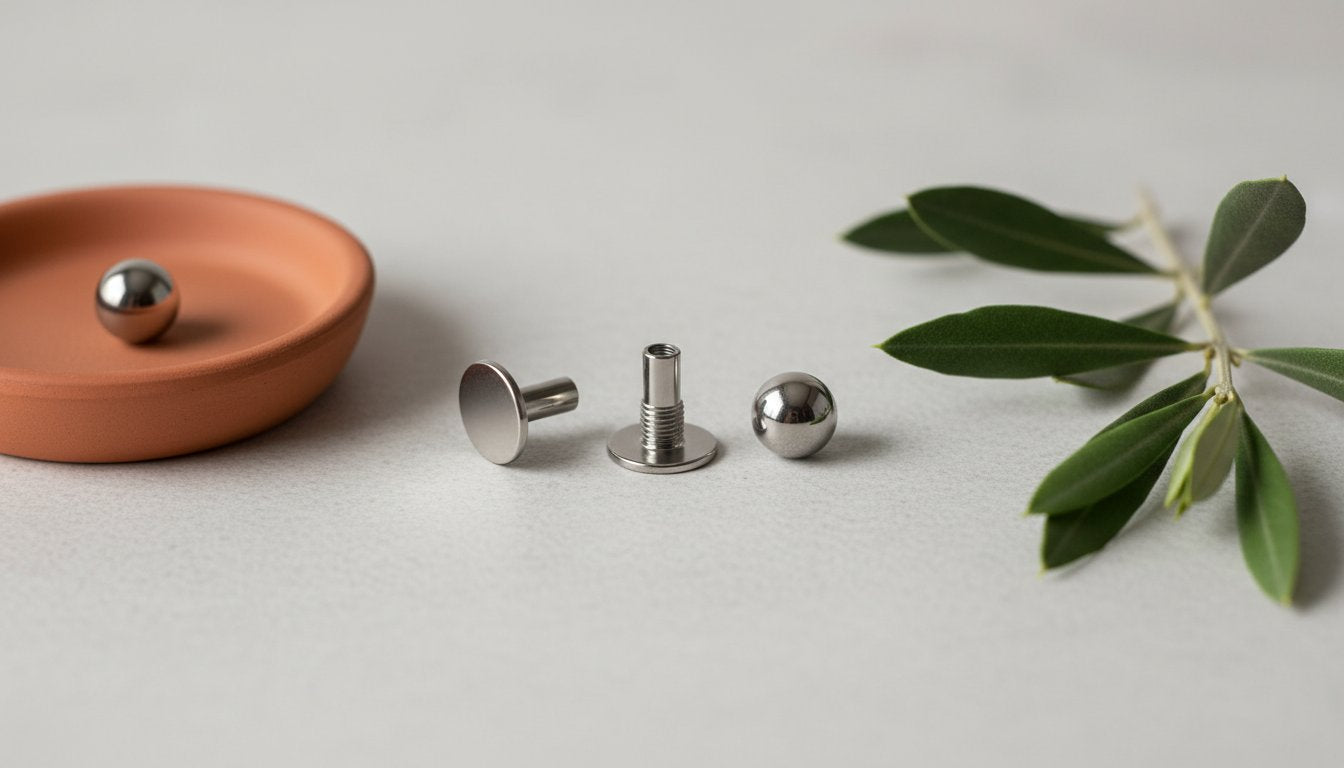
Precision engineering defines the modern piercing experience. An internal threaded labret stud consists of a smooth, solid post with a flat-back disc and a decorative top that features a protruding screw. This design ensures that the part of the jewelry passing through your skin is entirely smooth. It's a fundamental safety innovation that separates high-end professional jewelry from budget alternatives. While external jewelry places the threads on the post itself, internal threaded labret studs hide the mechanics inside the jewelry's core. This protects your delicate tissue from unnecessary trauma during insertion and removal.
Understanding the anatomy of these pieces is the first step toward a healthier piercing. Every internal threaded labret stud features three distinct components: the flat-back disc, the hollow post, and the decorative top. This tripartite structure allows for maximum versatility and security. You can change the aesthetic top without removing the post, which minimizes irritation to the healing fistula. Whether you're building a curated ear or seeking a subtle lip accent, these studs provide the structural integrity required for long-term wear. In the complex world of body piercing jewelry, this mechanical choice is often the deciding factor in a successful healing journey.
Internal vs. External Threading: The Crucial Difference
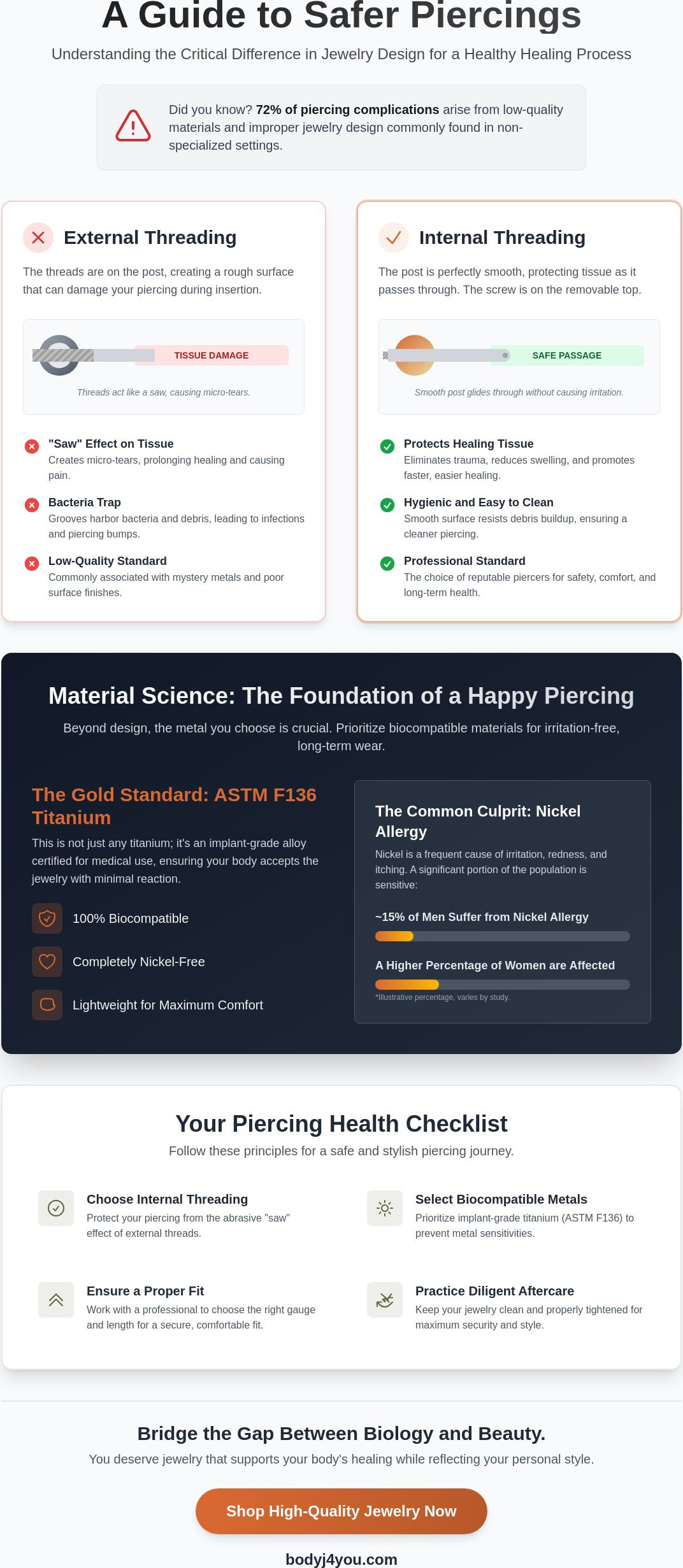
The visual difference between these two styles is immediate and telling. External threading looks like a tiny bolt; the threads are exposed on the outside of the post. As this passes through your piercing, it acts like a miniature saw, creating micro-tears in the tissue. In contrast, internal threaded labret studs ensure the post remains perfectly sleek. This mechanical integrity prevents irritation and reduces the risk of piercing bumps. For a deeper look at how this impacts specific placements, our Labret Piercing Guide 2026 offers comprehensive context on placement safety and expert aftercare.
Why the Flat-Back Design is Essential
Comfort is not a luxury; it's a requirement for consistent healing. The flat-back disc provides a low-profile finish that sits flush against the skin or oral mucosa. In lip piercings, this design is vital for oral health because it significantly reduces the risk of gum recession and tooth enamel erosion. For ear piercings, the flat-back makes your jewelry nap-safe, allowing you to sleep without the sharp poke of a traditional butterfly back. This aesthetic refinement creates a clean, high-end look that feels as good as it looks. It's a choice that prioritizes your biological well-being while supporting your creative self-expression.
The Biological Advantage: Why Threading Matters for Healing
Healing is a delicate biological negotiation between your body and a foreign object. When you introduce jewelry into a fresh piercing, the goal is to create a healthy, stable channel of skin known as a fistula. External threads are essentially miniature serrated blades. As they pass through your tissue, they act like a tiny saw, creating micro-tears that the naked eye cannot see. These microscopic injuries trigger an inflammatory response, leading to prolonged swelling and redness. By choosing internal threaded labret studs, you eliminate this mechanical trauma entirely. A smooth, mirror-polished post slides into place without catching, ensuring your body can focus on recovery rather than repairing new damage.
Micro-tears are the primary catalyst for the dreaded "piercing bump." These bumps often signal that the tissue is under constant stress or that bacteria have found a home in the wound. If you're already noticing a localized irritation, our guide on How to Get Rid of a Piercing Bump Fast provides a targeted recovery plan. Preventing these complications starts with the right hardware. High-quality internal threaded labret studs provide a protective barrier against the friction that disrupts the healing process. It's a simple choice that offers long-term stability and peace of mind.
Bacteria Resistance and Hygiene
Hygiene is the cornerstone of piercing success. External threads feature deep grooves that act as microscopic traps for lymph, dead skin cells, and opportunistic bacteria. This debris is incredibly difficult to remove with standard cleaning routines, often leading to chronic low-grade infections. Internal threading keeps the mechanical parts sealed away from the wound. This design creates a sterile environment that supports your immune system. Professional piercers prioritize appropriate materials for initial piercings specifically because they understand that smooth surfaces are easier to maintain. Cleanliness, security, and integrity are the three pillars of a healthy piercing.
Minimizing Irritation During Jewelry Changes
Changing your jewelry shouldn't be a source of anxiety. For beginners, the fear of "losing the hole" or causing pain is common. A smooth post removes the friction that makes jewelry swaps difficult. It glides through the matured channel with ease, reducing the risk of irritation or sudden flare-ups. Fistula integrity is the maintenance of a healthy, epithelialized skin tube that remains free from internal scarring or trauma. When you prioritize this integrity, you ensure your piercing remains viable for years to follow. For those ready to upgrade their collection, choosing premium internal threaded labret studs is the most effective way to protect your body's hard work.
Material Science: Choosing Your Metal Wisely
Selecting the right material is a biological imperative. Your choice determines the success of your healing journey and the longevity of your aesthetic. For those with high sensitivities, internal threaded labret studs made from implant-grade titanium represent the pinnacle of safety. This material is biocompatible, lightweight, and entirely nickel-free. If durability and value are your primary concerns, 316L surgical stainless steel offers a resilient alternative. While it contains trace amounts of nickel, its high-polish finish makes it a staple for many enthusiasts. For those who have reached the milestone of a fully healed piercing, 14K solid gold provides an unmatched level of aesthetic refinement. It is the ultimate investment in your personal style.
Safety, purity, and performance are the three pillars of high-end jewelry. We believe that what you wear inside your body should meet the same standards as medical equipment. This disciplined approach to material science ensures that your self-expression never comes at the cost of your health. By choosing the correct metal, you transform your jewelry from a simple accessory into a protective barrier that supports your body's natural healing rhythm. It's about finding that perfect balance between clinical precision and creative flair.
ASTM Standards: What "Implant-Grade" Actually Means
The term "implant-grade" is often used loosely, but its true meaning is found in rigorous certification. ASTM F136 is the specific metallurgical standard for titanium used in medical implants. This isn't generic titanium; it's a specialized alloy designed to live inside the human body without causing adverse reactions. We prioritize these standards to ensure every piece of jewelry acts as a stabilizing force for your well-being. For a more technical comparison of materials used in different piercing types, our Industrial Barbells Guide details how these standards apply to complex cartilage placements. Purity, traceability, and domestic quality control remain our non-negotiable benchmarks.
PVD Coating vs. Solid Metal
Self-expression often requires a splash of color. Physical Vapor Deposition, or PVD, is a high-tech coating process that bonds vibrant hues like gold, rose gold, or black to a metal base. Unlike traditional plating, PVD is exceptionally durable and biocompatible. This is particularly effective on internal threaded labret studs because the coating doesn't chip away into the piercing channel. A mirror-polish finish is the final, essential step. A smooth, reflective surface prevents bacterial adhesion and ensures the jewelry feels like a natural extension of your body. Whether you choose solid metal or a PVD finish, the goal is always a clean, high-end aesthetic that prioritizes your comfort.
Selection Guide: Sizing Your Internal Threaded Labret
Precision sizing is the final bridge between clinical safety and personal style. To achieve a perfect fit, you must master the "Rule of Three": gauge, length, and top diameter. A stud that is too long will snag; a stud that is too short will pinch. Finding your "wearable length" involves measuring the distance between the flat-back disc and the decorative top when the jewelry is seated flush against your skin. This measurement is not static. It changes as your body heals and the tissue settles into its permanent state.
Downsizing is a non-negotiable step in the healing journey. Professional piercers initially install longer posts to accommodate the body's natural inflammatory response. Once the swelling subsides, usually within four to eight weeks, switching to shorter internal threaded labret studs prevents the jewelry from shifting or leaning. This stability protects the angle of the piercing and reduces the risk of long-term tissue migration. Whether you are adorning a Philtrum or a Conch, the anatomical demands of your placement dictate your hardware requirements. Ears often require shorter, snugger fits, while lip placements need a slight buffer to prevent the flat-back from nesting too deeply into the oral mucosa.
Gauge and Length Breakdown
Gauge refers to the thickness of the post. For most cartilage and lip piercings, 16G (1.2mm) is the industry standard. It offers a balance of strength and subtlety. For thicker tissue or specific facial placements, 14G (1.6mm) provides additional stability. Length selection is equally critical. A 6mm (1/4") post is typically the "sweet spot" for fully healed ear piercings. Initial piercings require 8mm to 10mm to allow for the necessary biological expansion. Accuracy, comfort, and stability are the goals of every measurement.
Choosing the Decorative Top
The top is where your creative vision comes to life. Gemstone settings generally fall into two categories: prong and bezel. Prong settings allow more light to enter the stone for maximum sparkle; bezel settings offer a smooth, snag-free profile that is ideal for daily wear. Top diameters range from discreet 1.5mm micro-studs to bold 4mm clusters. Most internal threaded labret studs feature universal threading. This means 16G and 18G tops are often interchangeable, allowing you to evolve your look without replacing your entire jewelry collection. Ready to find your perfect fit? Explore our curated collection of internal threaded labret studs to upgrade your style safely.
Maintenance and Expert Care for Your Jewelry
Establishing a ritual of care is the final step in protecting your investment and your body. For two decades, BodyJ4You has provided the expert mentorship required to balance clinical safety with creative flair. Maintaining internal threaded labret studs requires a disciplined approach to hygiene and mechanical security. By following a steady, logical care routine, you protect the biological integrity of your tissue while preserving the high-end look of your collection. Cleanliness, security, and integrity are the three pillars of long-term piercing success.
The "Righty-Tighty" Rule for Security
Security is the foundation of confidence. Internal threads are recessed within the post, which means they are naturally more resistant to backing out than external alternatives. However, the movement of daily life can occasionally loosen even the most secure fit. We recommend a daily check using the "righty-tighty" rule to ensure your decorative top remains perfectly seated. For a superior grip during jewelry changes or tightening, using nitrile gloves provides the necessary friction without the need for excessive force. This simple habit prevents the loss of your favorite pieces and ensures your internal threaded labret studs provide the reliable, snug fit you deserve.
Cleaning and Aftercare Integration
Hygiene is a continuous biological requirement. To keep your jewelry and the surrounding tissue in peak condition, use a high-quality saline aftercare spray to gently clear away any buildup from around the flat-back disc. Precision cleaning swabs are invaluable for reaching the narrow space behind the ear or under the lip without disturbing the post. After cleaning, ensure the threading area is thoroughly dried; moisture traps can lead to bacterial growth or weaken the security of the fit over time. The integrity of ingredients in your aftercare mirrors the integrity of the metal in your jewelry. Taking these small, disciplined steps ensures your self-expression remains vibrant and irritation-free.
Expert care is about more than just aesthetics; it is about respecting the biological process of healing. By choosing high-quality hardware and following a professional maintenance routine, you empower your body to thrive. Ready to find your next piece? Explore the BodyJ4You collection of internal threaded labret studs to discover jewelry that meets the highest standards of purity and performance.
Embrace a Future of Refined Healing
Mastering the nuances of your jewelry is the ultimate act of self-care. By choosing internal threaded labret studs, you prioritize the biological integrity of your skin while achieving a high-end aesthetic. You now understand the technical necessity of smooth insertion, the clinical importance of implant-grade materials, and the structural value of a precise fit. These choices transform your piercing from a simple adornment into a stable, healthy expression of your identity. It's a commitment to your body that pays dividends in comfort and longevity.
At BodyJ4You, we bring over 20 years of industry experience to every piece we curate. Our commitment to your well-being is reflected in our ethical production and the consistent use of high-grade biocompatible materials. We combine this with quality-controlled US-based aftercare manufacturing to ensure your journey is supported at every stage. You don't have to choose between safety and style when you have an expert mentor in your corner. It's time to invest in hardware that respects your body's natural healing rhythm. Your path to a perfectly healed, curated look begins with the right foundation.
Upgrade Your Piercing with BodyJ4You Internally Threaded Jewelry
Stay inspired, stay informed, and enjoy the journey toward your most vibrant self.
Frequently Asked Questions
Are internal threaded labrets better for healing?
Internal threading is significantly better for healing because it eliminates the abrasive "saw" effect of external threads. By ensuring the post is perfectly smooth, you protect the delicate fistula from micro-tears and unnecessary inflammation. This design facilitates a calmer recovery, reduces the risk of piercing bumps, and supports long-term tissue stability. It is the gold standard for anyone prioritizing biological safety alongside their personal aesthetic.
How do I know if my labret is internally or externally threaded?
You can identify the threading type by examining the assembly of the piece. If the post is hollow and the decorative top has a protruding screw, it is internally threaded. In contrast, external threading features the screw-thread on the outside of the post itself. This distinction is crucial for your comfort; a smooth post is the hallmark of high-quality internal threaded labret studs designed for safe wear.
Can I use an 18G top on a 16G internal threaded post?
Most high-quality 16G and 18G internal threaded posts use the same universal thread pattern, making the tops interchangeable. This versatility allows you to evolve your style without needing to replace your entire hardware collection. Always ensure the fit is snug and secure before long-term wear. This compatibility provides a cost-effective way to curate your look while maintaining the structural integrity of your piercing.
Why does my internal threaded top keep coming loose?
Jewelry often loosens due to the natural movement of your facial muscles or accidental snags during sleep. To prevent loss, we recommend a daily "righty-tighty" check to ensure the top remains firmly seated. If the issue persists, moisture or debris may be trapped in the threads. Clean the area thoroughly and use nitrile gloves to achieve a more secure, non-slip grip during the tightening process.
Is titanium better than surgical steel for internal threaded studs?
Implant-grade titanium (ASTM F136) is the superior choice for individuals with nickel sensitivities or fresh piercings. It is lighter, stronger, and entirely biocompatible, whereas surgical steel may contain trace amounts of nickel. While both materials are durable, titanium offers a higher level of clinical safety. Choosing titanium internal threaded labret studs ensures a stabilizing, irritation-free experience that supports your body's natural healing rhythm.
How do I measure the length of my labret stud at home?
To measure your labret stud, use a millimeter ruler or calipers to find the distance of the post alone. Do not include the thickness of the flat-back disc or the decorative top in your measurement. This value is your "wearable length," which determines how snugly the jewelry sits against your skin. Accuracy is essential; a precise fit prevents the jewelry from leaning or causing irritation to the surrounding tissue.
Can I wear an internal threaded labret in my nose piercing?
Internal threaded labrets are an exceptional choice for nostril piercings because the flat-back disc provides a low-profile, "snag-free" finish inside the nose. This design is much more secure than traditional L-shaped pins or bone studs, which can easily fall out. The smooth post ensures that the delicate nasal tissue remains undisturbed. It is a sophisticated solution for those seeking both security and a refined, flush aesthetic.
What should I do if I cannot unscrew my internal threaded jewelry?
If your jewelry is stuck, the most effective solution is to use nitrile or latex gloves to increase your grip. The extra friction often provides the leverage needed to break the seal of dried lymph or tight threading. Never use pliers or metal tools, as these can damage the finish or the threads. If the jewelry remains stubborn, visit a professional piercer who can safely remove it without traumatizing your tissue.


