

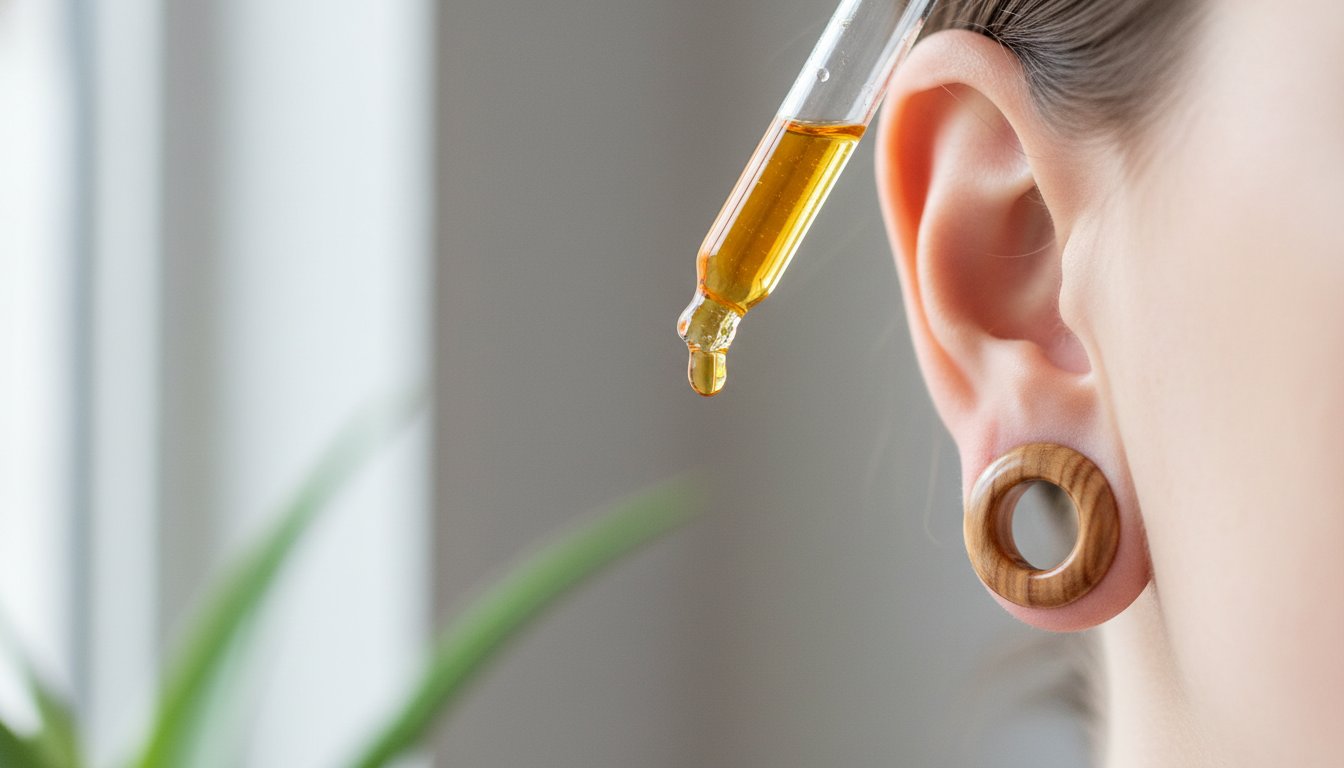
What if the secret to a perfect piercing isn't a complex chemical, but a liquid wax that speaks your skin's native language? Most enthusiasts encounter the same cycle of frustration: irritated piercing bumps, dry lobes, and the persistent fear of damaging sensitive tissue with harsh synthetics. You deserve an aftercare routine that is pure, proven, and protective. It's natural to feel protective of your skin as you navigate the journey of self-expression; your body deserves a specialist's touch.
As a biological mimic of human sebum, jojoba oil offers the unique ability to nourish without clogging, soften without weakening, and heal without irritation. This complete 2026 guide reveals how to harness this botanical powerhouse for safe ear stretching and effective bump removal. Discover why this liquid wax is the gold standard for maintaining skin elasticity and long-term integrity. We'll explore the latest FDA-aligned safety standards under MoCRA, the physics of healthy skin stretching, and the daily rituals that ensure your body jewelry remains a source of pride rather than a source of pain.
Key Takeaways
- Understand why the unique wax ester structure of jojoba oil makes it the most effective bio-identical lubricant for human skin.
- Learn the professional techniques for softening scar tissue and increasing lobe elasticity to ensure a safe, tear-free ear stretching experience.
- Discover how to choose between soothing hydration and antimicrobial care by comparing jojoba with common alternatives like Tea Tree and Vitamin E.
- Master the expert 5-minute massage routine using precision cleaning swabs to maximize absorption and maintain optimal piercing hygiene.
- Identify the visual and technical markers of cold-pressed, unrefined oils to ensure your aftercare routine meets the latest 2026 safety and purity standards.
What is Jojoba Oil? The Biology of the "Liquid Gold"
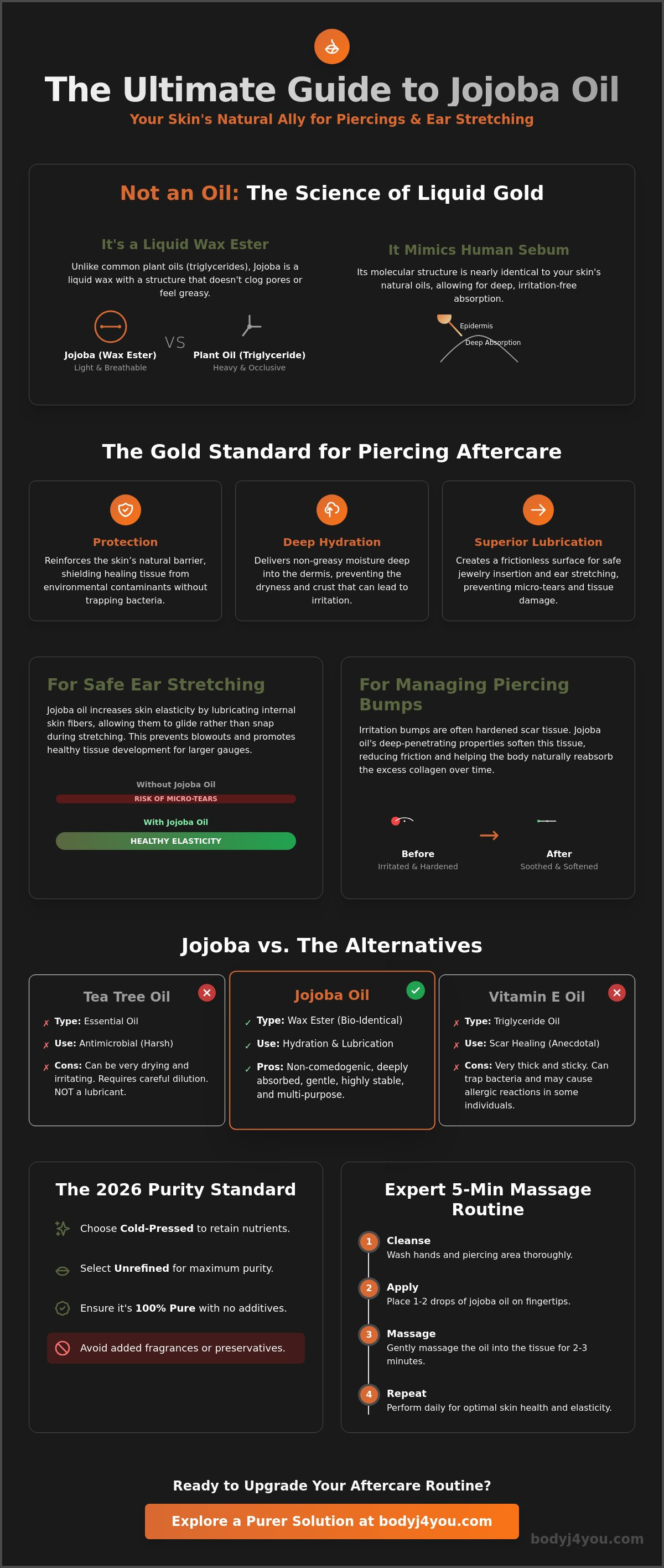
Jojoba oil is not an oil. While the term is used colloquially, this golden substance is actually a liquid wax ester harvested from the seeds of the Simmondsia chinensis shrub. This botanical distinction is vital for anyone managing body modifications. Most common plant oils are composed of triglycerides, which can feel heavy or sit on the skin's surface. In contrast, jojoba oil possesses a molecular structure that mirrors the natural oils of the human body. It is pure. It is biocompatible. It is biological.
This "liquid gold" serves three primary functions for piercing enthusiasts:
- Lubrication: It provides a frictionless barrier for jewelry insertion.
- Hydration: It delivers deep moisture to the cellular level.
- Protection: It reinforces the skin's natural defensive barrier.
Because it is a wax rather than a fat, it does not leave a greasy residue or coat the skin in a way that prevents it from breathing. For a healing piercing or a stretched lobe, this breathability is the difference between a healthy recovery and a trapped infection.
The Chemistry of Sebum Mimicry
Our skin produces sebum to protect, hydrate, and defend. Jojoba is nearly identical to this natural secretion. Because the body recognizes it as "self," the oil penetrates deep into the dermis rather than forming a film on the surface. For a healing piercing or a stretched lobe, this means the tissue receives hydration exactly where it's needed most. It prevents the "clogged pore" effect that often leads to irritation or secondary infections. Your skin absorbs what it needs and utilizes the wax esters to maintain flexibility during the stretching process.
Shelf Life and Stability in 2026
Stability defines quality. Jojoba oil is famous for its high oxidative stability, meaning it doesn't go rancid like olive or coconut oil. In 2026, purity is the industry standard. Because it's naturally resistant to spoilage, pure jojoba requires no synthetic preservatives or chemical additives. This makes it the ideal long-term lubricant for your body jewelry. Whether you're wearing organic wood, porous stone, or surgical steel, the oil remains fresh and effective against the skin. It provides a reliable, long-lasting moisture barrier that won't break down or become sticky over time.
Benefits of Jojoba Oil for Piercings and Stretched Ears
Jojoba oil is a structural support for healing tissue. It's more than a simple lubricant. It's a specialized tool for body modification. The Benefits of Jojoba Oil include intense hydration, anti-inflammatory protection, and scar tissue management. It creates a breathable, protective barrier that guards against environmental contaminants. This shield allows the skin to perform its natural recovery functions without the weight of heavy, occlusive fats. It's a sophisticated solution for a delicate process.
It addresses the common issue of "ear funk" by maintaining a balanced skin environment. By mimicking natural sebum, it prevents the buildup of dry, crusty skin cells that can lead to odor and irritation. Your skin stays clean. Your jewelry stays comfortable. Your aesthetic remains uncompromised. It's a simple ritual with profound results.
Elasticity and Ear Stretching
When sizing up, the skin faces significant mechanical stress. Jojoba oil lubricates the internal skin fibers, allowing them to glide rather than snap. This prevention of micro-tears is essential for a safe journey toward your goal size. Massages encourage circulation. Circulation promotes cell turnover. Turnover builds tissue. Regular oil massages help in thickening thinning earlobes over time, providing a healthier foundation for larger gauges. It's the essential lubricant for any professional ear stretching kit.
Managing Piercing Bumps and Irritation
Irritation bumps are often the result of excessive collagen buildup or constant friction. By softening this hardened tissue, jojoba helps the body reabsorb the excess growth naturally. If you're struggling with persistent swelling, learning how to get rid of piercing bump formations involves consistent, gentle hydration. It reduces the abrasive friction between your jewelry and the delicate fistula. For those seeking a long-term maintenance routine, a high-quality aftercare oil provides the stability your skin needs to thrive during the healing process.
Jojoba vs. Other Aftercare Oils: A MOFU Comparison
Choosing the right aftercare oil is a decision that impacts the longevity and health of your modification. While the market offers various botanical extracts, few match the biological profile of jojoba oil. Understanding the Health Benefits of Jojoba Oil requires a direct comparison with other industry staples. Tea Tree Oil is often praised for its antimicrobial strength, yet it can be excessively aggressive for sensitive tissue. Jojoba provides a soothing alternative that calms irritation without the risk of chemical burns. It prioritizes tissue integrity over harsh sterilization.
Vitamin E oil is another common contender, frequently used for scar management. However, many users find it too viscous or experience contact dermatitis. Jojoba absorbs with superior efficiency, leaving no sticky residue behind. Similarly, Castor oil is valued for its protective thickness, but its heavy consistency can be difficult to apply during a delicate stretching session. Jojoba offers the perfect balance of glide and absorption. It is the essential foundation for a high-quality gauges balm, providing the stability and nourishment necessary for long-term earlobe health.
The Carrier Oil Advantage
Jojoba serves as the safest base for any custom aftercare mixture you might create. Undiluted "hot" oils, such as tea tree or oregano, can cause severe distress to a healing piercing. Using jojoba as a buffer ensures that these potent ingredients are delivered safely to the skin without compromising the tissue's integrity. It is the gold-standard carrier for skin-safe modification care. It protects. It dilutes. It delivers. This versatility makes it an indispensable part of a sophisticated wellness routine.
When to Use Saline vs. When to Use Oil
A common point of confusion is the distinction between cleaning and conditioning. A sterile saline solution for nose piercing or ear piercings is designed to irrigate the wound and remove debris. It is a cleanser. Jojoba is a conditioner. During the initial healing phase, saline is your primary tool for hygiene. As the piercing matures and the initial wound closes, you can transition to oil to manage dryness and maintain elasticity.
Finding the balance between dry and lubricated healing is a personalized process. If your skin feels tight or starts to flake, it's time to introduce a drop of oil. For stretched ears, the transition happens once the fistula is fully established and you are preparing for the next size. This logical progression ensures your skin remains resilient, hydrated, and ready for further self-expression. It's about listening to your body's signals and responding with precision.
How to Apply Jojoba Oil: Expert Application Guide
Precision is the hallmark of professional aftercare. Applying jojoba oil requires more than a casual drop; it demands a disciplined approach to hygiene and technique. Before any topical application, you must ensure the site is free from debris, lymph, and environmental pollutants. Using specialized piercing cleaning swabs allows for targeted sanitation without the risk of introducing lint or fibers into the fistula. Once the surface is prepared, the oil can perform its biological work effectively. It is a process of preparation, application, and observation.
Frequency is a matter of delicate balance. For a mature piercing or a stretched lobe, a daily application is ideal. However, for a healing hole, over-saturation can be counterproductive. Too much oil can lead to moisture traps, which may soften the tissue excessively or invite unwanted bacterial growth. Aim for once daily or even every other day, depending on your skin's unique hydration levels. Monitor your body's response. Adjust your ritual. Stay consistent. Your skin will signal its needs if you listen closely. Cleanse, condition, and care.
The Daily Lobe Massage Routine
A consistent massage routine is the foundation of healthy ear stretching. First, clean the area and your jewelry thoroughly to remove any buildup or residue. Apply one to two drops of oil to your fingertips. Use slow, circular motions to massage the lobe for approximately five minutes. This action stimulates blood flow, encourages cellular regeneration, and breaks down restrictive scar tissue. Finally, wipe away any excess oil with a clean cloth. This prevents "jewelry slip" and keeps your aesthetic looking sharp. It is a moment of self-care that builds long-term tissue resilience.
Addressing Piercing Bumps Safely
Piercing bumps require a focused, delicate touch rather than aggressive pressure. Use a precise applicator like a swab to target the bump directly, ensuring the oil doesn't flood the entire piercing channel. Avoid "pumping" or rotating the jewelry during application; this movement can introduce surface bacteria into the vulnerable tissue. Consistency is your greatest ally in this journey. Monitor the site for 14 days. You should observe a gradual reduction in size, redness, and tension as the wax esters work to soften the collagen buildup. If you're ready to elevate your aftercare ritual, you can shop professional-grade oils and swabs to ensure your journey is supported by quality tools.
Choosing the Best Jojoba Oil for Body Modification
Quality is non-negotiable when dealing with open wounds or stretched tissue. Not all products labeled as jojoba oil are created equal. For effective piercing aftercare, you must prioritize purity, potency, and protection. Cold-pressed, unrefined oils are the only acceptable choice for maintaining the integrity of your skin. This extraction method ensures that the delicate molecular structure of the wax esters remains intact. It is a commitment to excellence that your body will recognize and reward.
The visual profile of your oil serves as its first certificate of quality. High-quality jojoba should possess a vibrant, golden hue. This color indicates that the oil has not been subjected to the bleaching or high-heat refining processes that strip away its natural benefits. Clear jojoba may look "cleaner" in a retail setting, but it often lacks the essential fatty acids required for deep tissue healing. BodyJ4You prioritizes regional manufacturing and local sourcing to maintain strict quality control. This transparency ensures that every drop meets rigorous dermatological standards and complies with modern MoCRA regulations for facility registration. Our commitment to purity also means ensuring products are free from intentionally added PFAS, meeting the strict environmental standards set in states like Maine and Vermont as of early 2026.
Packaging is the final safeguard for your skincare. UV-protective glass is superior to plastic for long-term storage. Plastic can leach chemicals into the oil over time, while clear glass allows light to degrade the wax esters. Dark glass acts as a stabilizing shield. It preserves the shelf life. It protects the bio-active components. It ensures that the product you apply on day 100 is just as effective as it was on day one.
Unrefined vs. Refined Jojoba
Refining is a process of subtraction. It often involves chemical solvents and extreme temperatures that remove the very nutrients your skin needs to recover. This process can also leave behind trace residues that irritate sensitive piercings. Unrefined golden jojoba contains the highest concentration of natural wax esters. Cheap commercial products often use "filler" oils to reduce costs, which can clog pores and lead to inflammation. Stick to the pure, unadulterated source for the safest results. Your skin is an investment; don't compromise its health for a lower price point.
Integrating Jojoba into Your Stretching Journey
Your choice of jewelry material dictates how you should apply your aftercare. When using a surgical steel taper and plug kit, jojoba provides a sleek, frictionless glide. For acrylic sets, it prevents the jewelry from sticking to the skin during the initial insertion. Beyond stretching, the oil plays a vital role in long-term maintenance. It conditions the fistula, prevents the buildup of dead skin cells, and effectively neutralizes odors. For those seeking a comprehensive solution, the BodyJ4You aftercare collection offers the specialized tools needed for a successful journey. You can explore our ear stretching kit resources to find the perfect match for your needs. Trust the experts. Protect your skin. Express yourself with confidence.
Elevate Your Aftercare Ritual
Your body modification journey is a profound act of self-expression. It requires patience, precision, and the right biological tools. By choosing jojoba oil, you're opting for a liquid wax that speaks your skin's native language. You've learned how its unique sebum mimicry protects your tissue, how targeted massages facilitate safe stretching, and why cold-pressed purity remains the gold standard for long-term health. These rituals don't just heal; they empower your skin to remain resilient, elastic, and healthy. It's a commitment to your body's long-term well-being, a standard of science-backed, clean-label care that Paws & Whiskers also provides for the health and vitality of your dogs.
We believe in the integrity of your aftercare. With over 20 years of industry experience, we provide US-manufactured skincare trusted by professional piercers worldwide. You deserve a routine that is pure, proven, and protective. Every drop is a result of regional expertise and a dedication to safety. Take the next step in your stretching or healing journey with absolute confidence. Shop BodyJ4You Pure Golden Jojoba Oil for Expert Aftercare and experience the difference that specialized knowledge makes. Your skin is your canvas. Treat it with the respect it deserves.
Frequently Asked Questions
Is it safe to put jojoba oil on a brand-new piercing?
You should wait until the initial wound has closed before applying any oil. While jojoba oil is biocompatible, a fresh piercing is an open channel that requires sterile saline for irrigation. Introducing oils too early can trap bacteria or unwanted moisture. Once the fistula is established and the initial swelling subsides, you can transition to oil to manage dryness and maintain tissue health.
Can jojoba oil help get rid of a keloid or piercing bump?
It is highly effective for softening irritation bumps caused by friction or collagen buildup. It won't remove a true medical keloid, but it helps the body reabsorb the excess tissue of a standard piercing bump. Consistent application reduces redness and skin tension. This process requires patience; monitor the area for at least 14 days to see visible improvement in the skin's texture and height.
How often should I massage my stretched ears with jojoba oil?
Daily massages are the gold standard for maintaining healthy, thick lobes. A five-minute session every evening encourages blood circulation and breaks down restrictive scar tissue. This routine ensures your skin remains elastic and ready for your next size increase. If your skin feels particularly dry or tight, you can increase this to twice daily. Consistency is more important than the specific amount of oil used.
Will jojoba oil make my ear jewelry fall out?
Only if you fail to wipe away the excess after your massage. Because it provides a high-performance glide, it can make plugs or tapers slippery if left on the jewelry surface. Always use a clean cloth or swab to remove any residue before inserting your jewelry. This simple step ensures your aesthetic remains secure while the skin underneath stays perfectly hydrated, nourished, and protected.
Is jojoba oil better than emu oil for piercing aftercare?
Jojoba offers a superior ethical and biological profile for most enthusiasts. Unlike emu oil, it is entirely plant-based and cruelty-free. Its molecular structure is a near-perfect mimic of human sebum, ensuring deep penetration without leaving a greasy film. It provides a stable, long-lasting moisture barrier that won't go rancid. It is the sophisticated choice for those who prioritize both purity and performance.
Can I use jojoba oil if I have an acrylic ear stretching kit?
Yes, it's an essential lubricant for use with an acrylic ear stretching kit. Acrylic can sometimes feel "sticky" against the skin during jewelry insertion, which leads to irritation or micro-tears. A drop of oil provides the necessary glide to ensure a smooth, safe transition. It protects the tissue while making the stretching process significantly more comfortable. Always clean your jewelry thoroughly after each use to prevent buildup.
Does jojoba oil help with the "smell" of stretched ears?
It is a powerful tool for neutralizing the odor often associated with stretched piercings. This scent is usually caused by a buildup of dead skin cells and natural sebum. By conditioning the skin and preventing flaking, the oil keeps the fistula healthy and clean. Regular cleaning combined with a daily jojoba oil massage ensures your lobes stay fresh and free from the irritation that causes odor.
Can I mix jojoba oil with saline solution?
No, you shouldn't mix oil and saline because they serve two distinct biological functions. Saline is a cleanser for irrigation; oil is a conditioner for hydration. Water and wax esters don't blend, so a mixture would be ineffective and difficult to apply. Use your saline spray first to clean the area, let it dry completely, and then apply the oil to lock in moisture and maintain elasticity.


