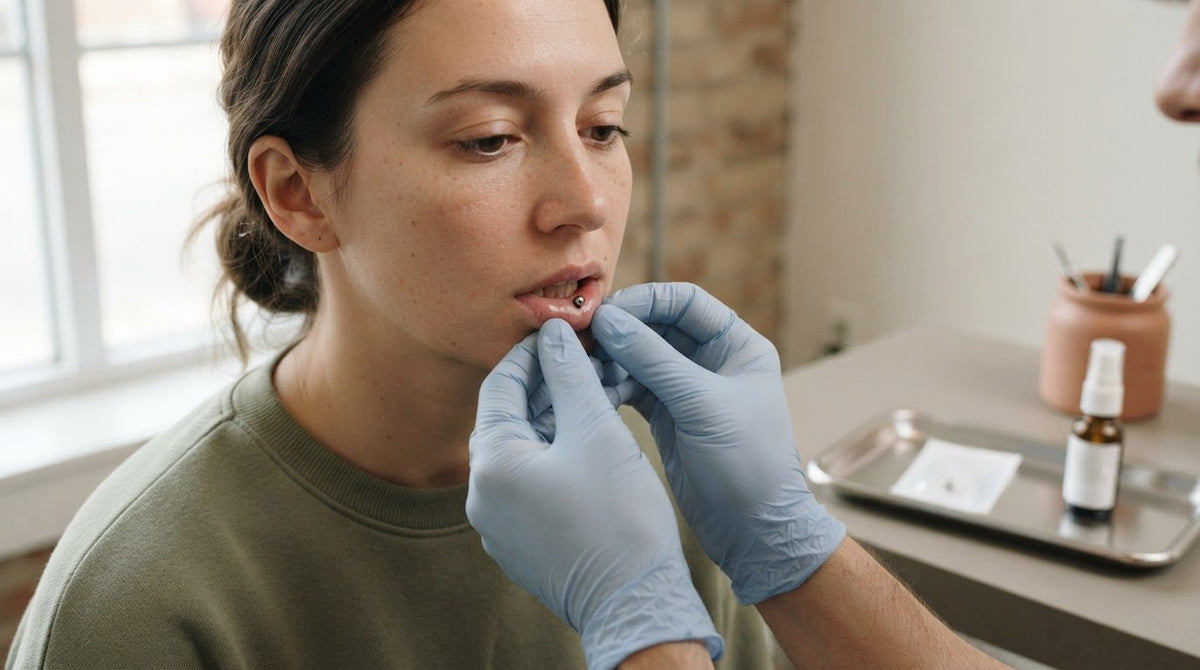
A lip piercing bar should be downsized to a shorter post once swelling has settled, with a qualified piercer fitting it. Knowing when to change the bar on a lip piercing is less about following a fixed calendar and more about allowing the initial swelling to ease before changing the jewelry. Healing can take 6 to 10 weeks, depending on the piercing location and aftercare.
It’s natural to wonder whether the longer starter bar is still helping or has become a source of irritation. If it stays long after swelling settles, it can rub against your teeth and gums, so timing the change matters for comfort as well as appearance.
This guide explains when downsizing may be appropriate, how healing varies by lip piercing, and why a properly fitted post matters. You’ll also learn which aftercare habits to avoid while the piercing heals, so you can care for it without rushing the change.
Key Takeaways
- Look for signs that swelling has settled before considering a shorter post; the right fit matters more than a calendar date.
- Notice whether a long bar moves or contacts your teeth and gums, as this can signal that its fit needs attention.
- Keep aftercare gentle and avoid habits that disturb the piercing while it heals.
- Changing jewelry too soon can irritate a healing piercing, so understand what to watch for before making a change.
When to downsize initial lip piercing jewelry
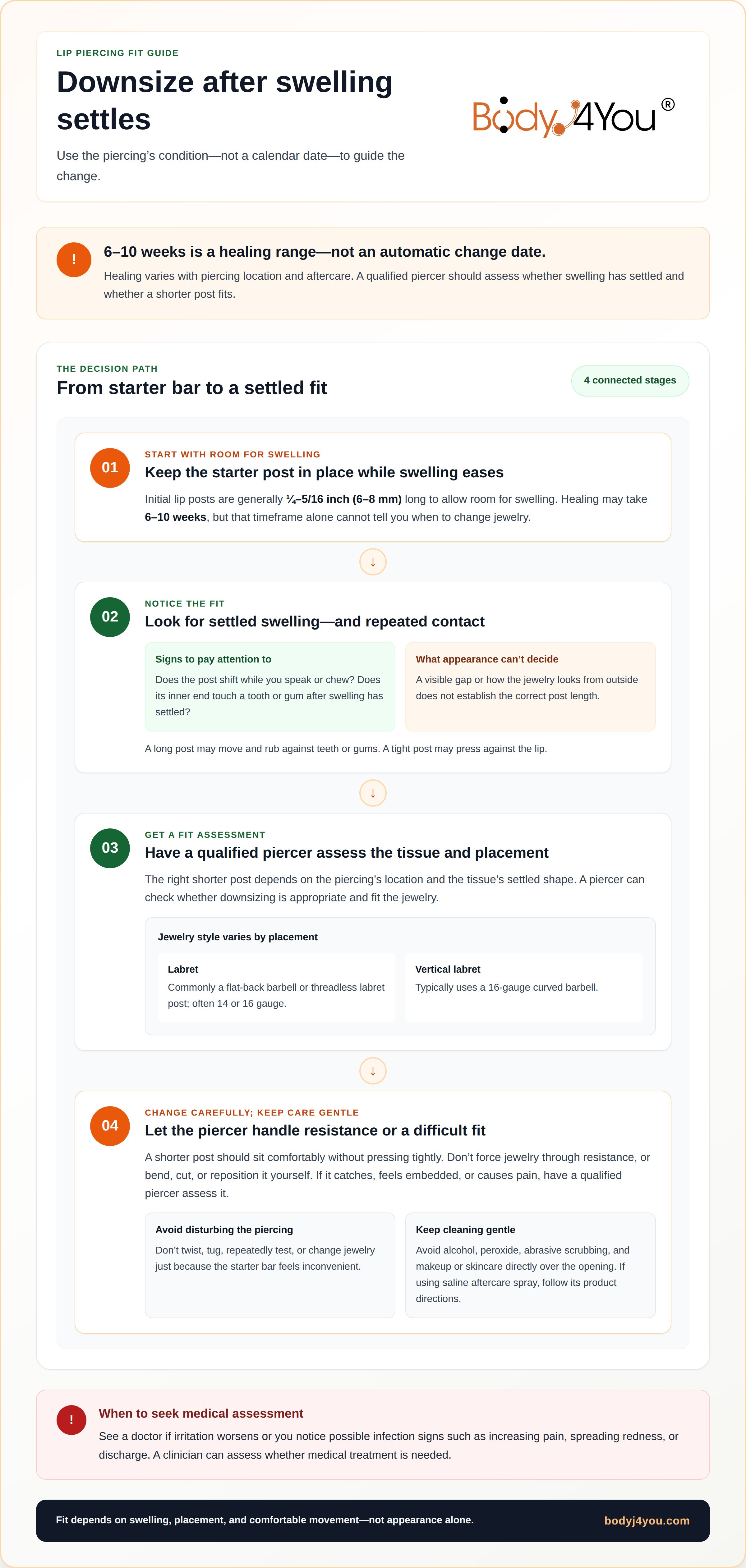
Initial lip jewelry needs room for swelling, so downsizing depends on the swelling settling, not a fixed date. A qualified piercer should assess whether the piercing is ready and fit the shorter post.
Initial lip posts are generally 1/4 inch to 5/16 inch (6-8 mm) long. Once swelling settles, a shorter post can reduce excess movement. Healing varies by placement: lip piercings may take 6 to 10 weeks, and that range is not an automatic signal to change jewelry. A piercer can assess the tissue and fit before replacing the starter post.
Labret jewelry commonly includes a flat-back barbell or threadless labret post, often in 14 gauge or 16 gauge. Vertical labrets typically use a 16-gauge curved barbell, so the right style depends on piercing placement. In the United States, a professional jewelry-change charge depends on the studio and whether a replacement post is included. For a safer change at home, don’t force jewelry through resistance; having a qualified piercer change it is the safer choice, especially during healing.
Risks of Changing Jewelry Too Early
Changing jewelry too early means replacing the starter post before swelling has settled and the piercing is ready for a shorter fit. Moving jewelry through healing tissue can irritate the channel and make the area uncomfortable. A calendar estimate alone can’t show whether swelling has eased enough. For example, a piercing that’s still swollen after several weeks may need assessment before downsizing.
Fit Problems and Medical Concerns
A tight bar presses against the lip, while an overly long one may move and rub the teeth or gums once swelling settles. Don’t force a change if the jewelry catches, feels embedded, or causes pain; have a qualified piercer assess its fit. See a doctor if irritation worsens or you notice possible infection signs, such as increasing pain, spreading redness, or discharge. A clinician can assess whether medical treatment is needed.
Long posts and risks to teeth and gums
A labret post left long after swelling settles can rub against teeth and gums. The extra length may let the jewelry shift inside the lip, bringing its inner end into contact with nearby teeth. The key issue isn’t how the post looks from outside, but whether its length causes repeated contact inside your mouth.
Notice where the flat back sits during ordinary movement. For example, if it brushes a tooth while you talk or eat, the post may have more room than the settled piercing needs. A visible gap between the lip and jewelry can also prompt a fit assessment, but appearance alone can’t determine the correct post length. A qualified piercer can assess the piercing and select a shorter fit.
Repeated rubbing is worth addressing because contact with teeth and gums is the specific concern with an overly long labret. Pay attention to contact rather than trying to shorten the post yourself. Don’t bend, cut, or force jewelry to change its position. Those actions can alter the fit without resolving where the post rests inside your mouth.
- Notice whether the post shifts while you speak or chew.
- Pay attention if the inner end touches a tooth or gum.
- Arrange a fit assessment if contact continues after swelling settles.
A shorter post should sit comfortably without pressing tightly against the lip. The right length depends on the piercing’s placement and the tissue’s settled shape, so one person’s fit isn’t a template for another’s. A qualified piercer can assess the position and replace a post that moves against the teeth or gums. Don’t use a standard measurement instead of an in-person fit assessment.
When deciding when to change the bar on a lip piercing, consider both swelling and jewelry contact. If the post still rubs after swelling settles, have its fit assessed rather than waiting for discomfort. A well-fitted post should avoid unnecessary movement and contact while leaving room for the lip.
Things to avoid during aftercare
Aftercare is easier to keep consistent when you avoid actions that disturb the lip piercing. Don’t twist the bar, pull at the ends, or handle it unnecessarily. For example, fiddling with the jewelry while talking or eating adds movement around the piercing. Keep routine care gentle, and leave the bar in place unless a qualified piercer advises a change.
Avoid changing jewelry simply because the starter bar feels inconvenient. A healing piercing can still be sensitive even when it looks calm, and swapping the post yourself may involve unnecessary handling. Don’t force jewelry through resistance or use a tight-fitting replacement to solve a long-post problem. A qualified piercer can assess the fit and advise whether downsizing is appropriate.
Skip improvised cleaning mixtures and harsh products around the piercing. Alcohol, peroxide, and abrasive scrubbing can be irritating, so don’t use them instead of gentle care. A saline piercing aftercare spray is one option for cleaning; follow its product directions rather than applying extra products around the opening. Avoid layering oils, cosmetics, or other topical products directly over the piercing without professional guidance.
- Don’t twist, tug, or repeatedly test whether the bar moves.
- Avoid forcing a replacement post through the piercing.
- Keep makeup and skincare products away from the opening.
- Use gentle cleaning rather than scrubbing or harsh solutions.
Daily habits matter, too. Take care while brushing your teeth, eating, and wiping your mouth so towels, toothbrushes, and food don’t catch the jewelry. Avoid biting or playing with the bar; repeated contact can disturb the piercing and bring the jewelry against your teeth or gums. If cleaning or normal movement causes persistent discomfort, stop manipulating the area and have the jewelry assessed by a qualified piercer. Consistent, gentle care is better than repeatedly changing products or handling the bar.
What are the risks of changing a lip piercing bar too early?
Changing a lip bar before swelling settles can leave the jewelry too short for the tissue. A snug post may press against the lip instead of allowing comfortable movement. If swelling increases again, the jewelry can feel tight, irritate the piercing, or become difficult to handle. For example, a bar that fits during a calm moment may feel constricting if the lip swells later.
Removing and reinserting jewelry also moves it through a healing channel. Forcing a post through resistance can cause further irritation or bleeding. A piercing that looks settled on the outside may still be healing inside, so appearance alone isn’t a reliable reason to switch jewelry. Lip piercing healing can range from 6 to 10 weeks, depending on placement and aftercare, but that period doesn’t establish an automatic change date.
Pay attention to what happens during ordinary care. If a replacement post causes pressure, catches, or won’t pass smoothly, stop rather than pushing it through. Don’t repeatedly remove jewelry to test the fit. A qualified piercer can assess swelling, jewelry length, and whether the current post should stay in place.
- Wait for swelling to settle before considering a shorter post.
- Stop if jewelry meets resistance during insertion.
- Seek a professional fit assessment if the bar feels tight.
Keep care gentle while the piercing heals. Avoid twisting the jewelry or applying harsh products to calm irritation. A saline piercing aftercare spray can support routine cleaning; follow its directions and avoid overhandling the area. For a gentle aftercare option, explore saline piercing aftercare spray. The key is to address discomfort without rushing a jewelry change, since the right fit depends on the piercing’s current condition.
BodyJ4You
BodyJ4You is a natural next step for readers looking for piercing-related jewelry and aftercare products. Its range includes piercing accessories and care options such as Saline Piercing Aftercare Spray and Piercing Bump Treatment Oil. These products can complement a careful routine, but they don’t replace a qualified piercer’s assessment or determine whether a healing lip piercing is ready for a shorter bar.
Consider BodyJ4You when you’re choosing supplies to support ongoing piercing care. Keep the decision about bar length separate: a qualified piercer should assess fit and timing, especially if the post feels tight or keeps rubbing against teeth or gums.
For questions about the product range, contact BodyJ4You.
Make your next step a considered one
Choose your next move based on the piercing’s condition, not impatience or a desire to change your look. If you’re unsure when to change the bar on a lip piercing, a qualified piercer can assess the fit and help you decide what’s appropriate. Persistent discomfort or signs of infection call for medical attention, not an experiment with different jewelry.
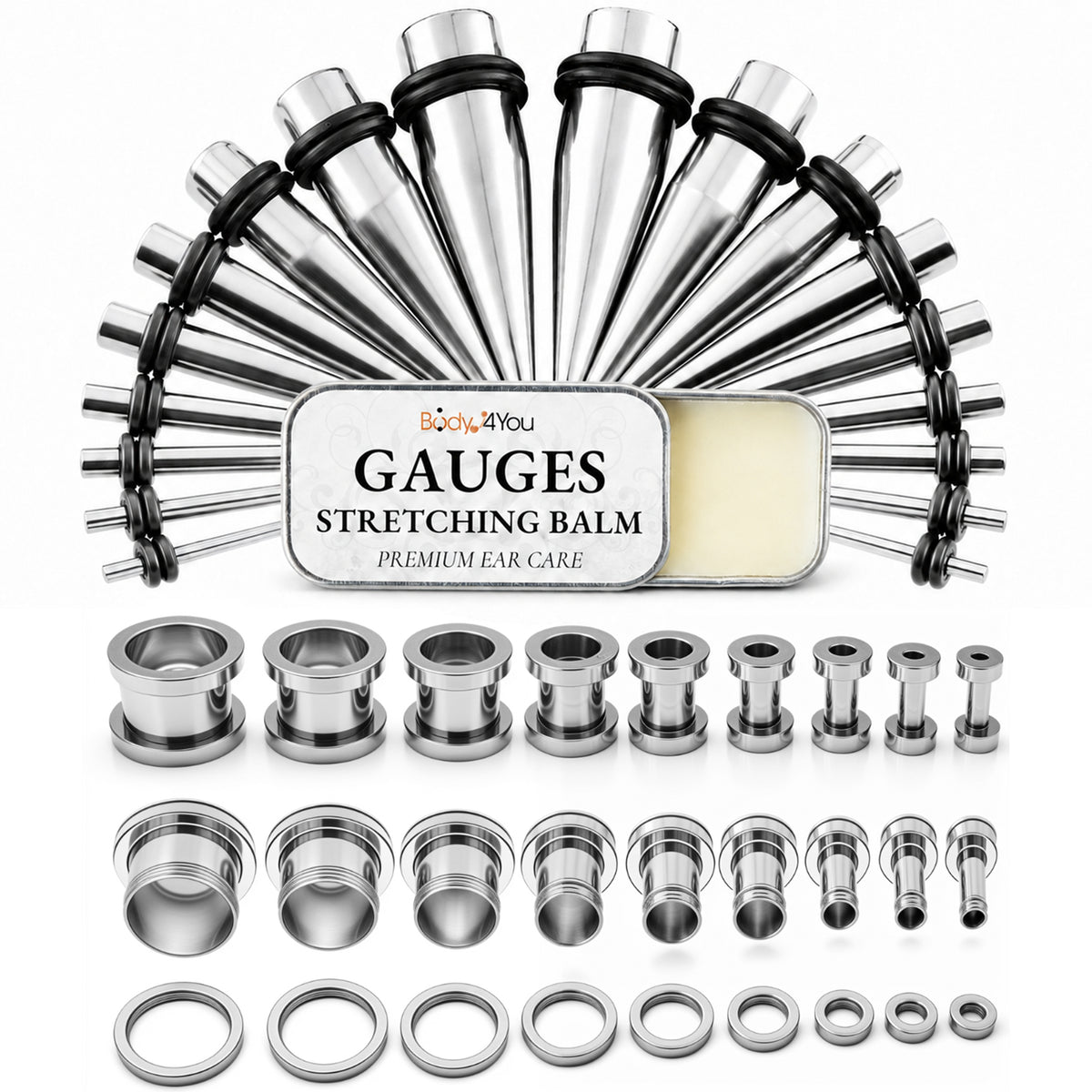
For piercing-related supplies, BodyJ4You offers an Acrylic Ear Stretching Kit, a Surgical Steel Taper and Plug Kit, and Saline Piercing Aftercare Spray. These offerings support different piercing needs, while jewelry-fit decisions are best guided by a professional assessment.
For questions about BodyJ4You’s products, contact BodyJ4You with your questions. Take your next step with care, and let comfort guide your choices.
Frequently Asked Questions
How Long Does a Lip Piercing Take to Heal?
Lip piercing healing can range from 6 to 10 weeks, depending on placement and aftercare. A lower-lip labret and vertical labret typically heal in 6 to 8 weeks, while Madonna and Monroe piercings commonly take 2 to 3 months. These estimates vary by piercing type, so one person’s healing timeline may not match another’s.
How long does a lip piercing take to heal before changing the bar?
A bar may be downsized once swelling has settled, which doesn’t necessarily mean the piercing is fully healed. Healing estimates range from 6 to 10 weeks, depending on placement and aftercare, so don’t treat the end of that range as a required change date. A qualified piercer can assess whether a shorter post will fit comfortably.
When can a lip piercing be downsized by a professional piercer?
A professional piercer can assess downsizing after the initial swelling has gone down. They consider the piercing’s placement and how the jewelry sits against the lip, rather than choosing a shorter post by appearance alone. If the jewelry feels compressed or the lip remains swollen, a fit assessment can help determine whether the original post should stay in place longer.
How do you know a lip piercing is healed enough to change jewelry?
There isn’t one at-home sign that confirms a lip piercing is ready for a jewelry change. A calm appearance doesn’t show how the piercing channel has healed internally. Consider the timeline for your specific placement, and have a qualified piercer assess the piercing before changing jewelry. If it remains tender or swollen, don’t treat appearance alone as clearance to switch posts.
What bar length and gauge should a lip piercing use after swelling goes down?
A settled side labret may use a 3/16-inch (5 mm) post, but that example isn’t universal. Labret jewelry commonly uses 14-gauge or 16-gauge posts. Gauge refers to jewelry thickness; post length is a separate measurement. The suitable combination depends on placement and fit, so another person’s jewelry size isn’t a reliable guide for your piercing.
Should a piercer change the bar in a new lip piercing?
Yes. A qualified piercer should assess and fit a replacement bar in a new lip piercing, particularly if downsizing is being considered. They can evaluate the piercing’s condition and select jewelry suited to its placement. If a bar catches or meets resistance during a change, don’t push it through. Stop and have a qualified piercer assess the fit.