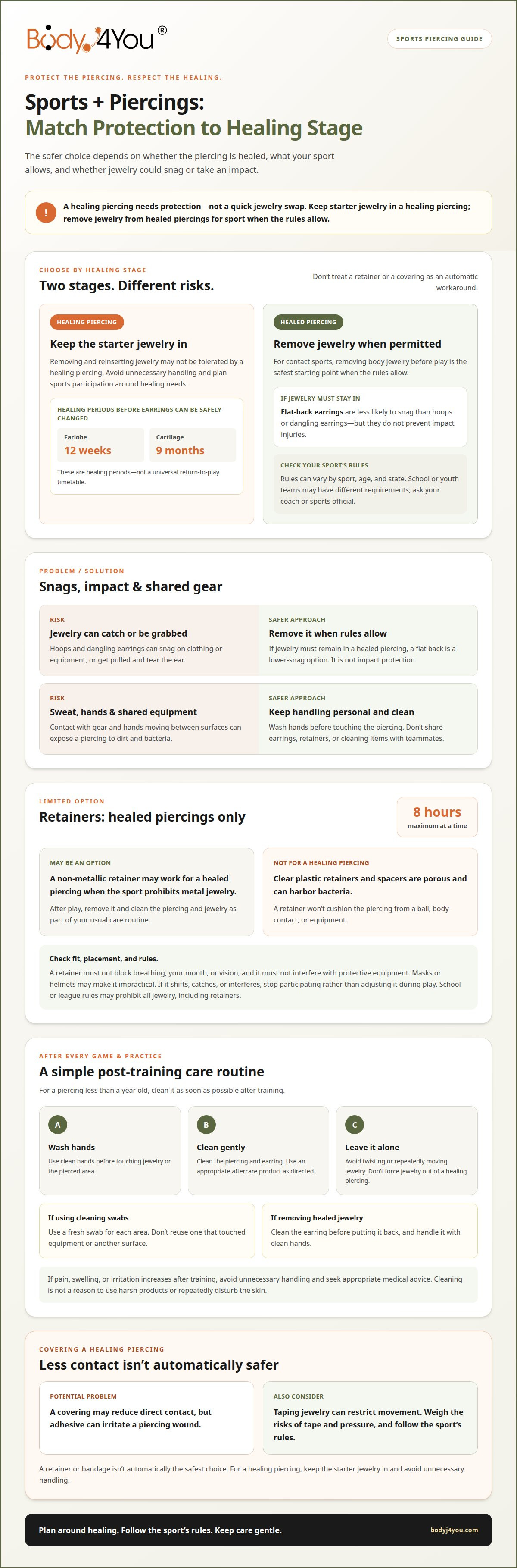
A healing piercing needs protection, not a quick jewelry swap. To learn how to protect piercings while playing sports, keep starter jewelry in a healing piercing and remove jewelry from healed piercings when the sport allows; flat-back earrings are a lower-snag option when jewelry can stay in.
It’s reasonable to worry about a piercing catching on clothing or equipment, or becoming irritated by sweat after training. The right approach depends on whether the piercing is healed and what your sport permits. A retainer or bandage isn’t automatically the safest choice.
Here, you’ll learn which earrings are more practical for sports, how to clean a piercing after training, when retainers may be suitable, and how to protect a healing piercing while avoiding the risks of tape or pressure. A few careful choices can help you keep both your routine and your piercing on track.
Key Takeaways
- Reduce exposure to sweat and shared equipment by handling piercings with clean hands and keeping jewelry personal.
- Build a simple after-training cleaning routine, especially for newer piercings, and avoid unnecessary handling.
- Use non-metallic retainers only in healed piercings, and limit wear to no more than 8 hours at a time.
- For an unhealed piercing, weigh the risks of tape and pressure, and follow the sport’s rules before choosing any covering.
1. What Earrings Should I Wear While Participating in Sports?
For contact sports, removing body jewelry before play is the safest starting point when the rules allow. Hoops and dangling earrings can catch on clothing or equipment, or get grabbed and tear the ear. If jewelry must stay in place, flat-back earrings are less likely to snag, but they don’t prevent impact injuries. Sports rules vary by sport, age, and state, so school and youth teams may have different requirements. Follow your team’s rules and ask the coach or sports official whether jewelry is allowed.
Clean handling matters around shared equipment. Sweat and bacteria on gear can expose a piercing to infection risk, so wash your hands before touching jewelry or the pierced area. Don’t share earrings, since sharing can expose you to infection. The Centers for Disease Control and Prevention notes that piercing-related infections can range from superficial skin infections to abscesses and necrosis requiring surgery.
There isn’t one wait that fits every contact sport and piercing location. Plan a new piercing around the sports calendar, leaving enough time for healing and less exposure to bumps or snags. A new earlobe piercing takes 12 weeks to heal before earrings can be safely changed, while a new cartilage piercing takes 9 months to heal. These are healing periods, not a universal return-to-play timetable.
Think through your season before booking a piercing: getting pierced during a break may be easier to manage than just before tournaments or regular practices. Discuss the timing with your coach or sports official and healthcare provider, especially if your sport involves close contact or shared headgear. This can help you plan around team rules and the piercing’s location.
During a game or practice, don’t assume a low-profile earring makes contact safe. If jewelry must come out, remember that a healing piercing may not tolerate removal and reinsertion. Keep it clean, avoid unnecessary handling, and plan sports participation around its healing needs.
School and youth team rules can differ by sport, age, and state. Follow your team’s rules and ask the coach or sports official whether piercing jewelry is allowed.
2. Cleaning earrings and piercings after training
Make post-training cleaning part of your routine after every game and practice. Sweat, contact with equipment, and hands moving between surfaces can expose a piercing to dirt and bacteria. Wash your hands, then gently clean the piercing and earring. Avoid twisting or repeatedly moving jewelry to reach the skin, since extra handling can irritate a healing piercing.
If your piercing is less than a year old, clean it as soon as possible after training. For example, after practice, change out of sweaty gear, wash your hands, and care for the piercing before moving on with your routine. A healed piercing still benefits from regular hygiene, especially after close contact or use of shared equipment. This simple sequence is one practical way to protect piercings while playing sports.
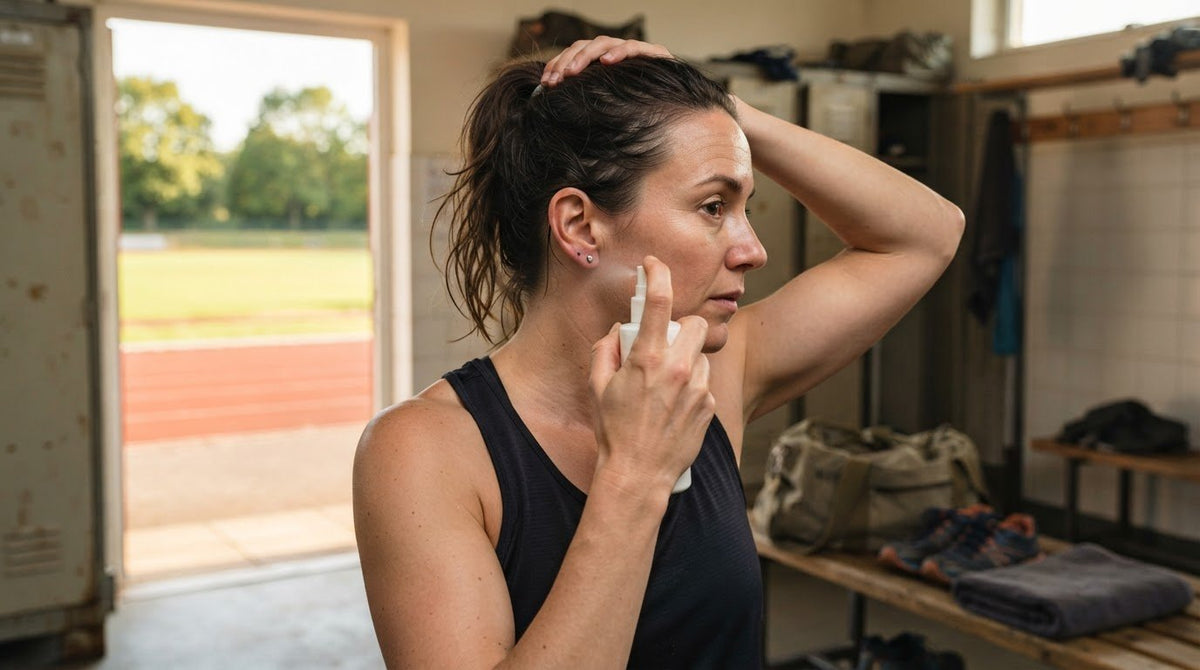
Use an appropriate aftercare product as directed. Saline Piercing Aftercare Spray can be part of your cleaning routine; follow its product directions. Clean around the jewelry without forcing it out of a healing piercing. If you use cleaning swabs, use a fresh one for each area, and don’t reuse a swab that has touched equipment or another surface.
Keep the process simple and consistent: wash your hands, clean the pierced area, then avoid touching it unless needed. If you remove jewelry from a healed piercing for sport, clean the earring before putting it back and handle it with clean hands. Don’t share earrings or cleaning items with teammates. Personal supplies make post-practice care easier, even when you’re changing quickly in a locker room. Make this routine part of training days to protect piercings while playing sports.
Pay attention to changes rather than scrubbing harder. If the piercing becomes increasingly painful, swollen, or irritated after training, avoid unnecessary handling and seek appropriate medical advice. Cleaning is a care step, not a reason to use harsh products or repeatedly disturb the skin.
3. Non-metallic retainers for sports
A clear retainer may seem like an easy way to keep jewelry discreet during sports. But clear plastic retainers and spacers are porous and can harbor bacteria, so they’re intended for healed piercings. Don’t swap one into a healing piercing for practice or a game. Its appearance doesn’t make it suitable for a fresh wound, and it won’t cushion the piercing from a ball, body contact, or equipment.
For a healed piercing, a non-metallic retainer may be an option when a sport’s rules prohibit metal jewelry. Keep wear to no more than 8 hours at a time. After play, remove it and clean the piercing and jewelry as part of your usual care routine. Don’t share a retainer with a teammate, and don’t leave it in longer simply because the piercing feels comfortable.
Facial piercings need extra attention to placement. A retainer or covering must not block your nostrils, mouth, or vision; anything near the nose, for example, should leave breathing clear. If a retainer shifts, catches, or interferes with protective equipment, stop participating rather than adjusting it during play. A sport that requires a mask or helmet may make a retainer impractical, even when it’s non-metallic.
Before choosing a retainer, consider whether the piercing is fully healed, whether the sport permits it, and whether it stays clear of equipment. A school or league may prohibit all jewelry, including retainers, so follow the applicable policy. If the piercing is still healing, don’t use a retainer to work around a jewelry restriction. Plan around the healing process and the sport’s rules instead. Retainers are a limited option for healed piercings, not a universal solution for contact, impact, or facial protection.
4. Protecting an unhealed piercing during sports
Covering a healing piercing can reduce direct contact, but tape isn’t automatically safe. Adhesive may irritate a piercing wound, and taping jewelry can restrict movement. Medical-grade paper tape may be gentler for sensitive skin, including skin sensitive to latex or adhesives, but it can still irritate the area.
For an ear piercing during football, wrestling, or another contact sport, first ask the coach whether covering jewelry is allowed. If permitted, a bandage cut to fit over the ear may cover the earring. Keep it secure without pressing jewelry into the skin or restricting movement. If the rules forbid jewelry or taping, don’t use a cover to bypass them; avoid contact play while the piercing is healing.
Jewelry can catch on clothing or equipment, get grabbed, and tear the ear. A hit can also injure the piercing, while sweat and bacteria on shared equipment can raise infection concerns. A cover may reduce snagging, but it can’t eliminate impact or pulling risks. This matters in wrestling, where close contact makes pressure and friction difficult to avoid.
If a piercing is hit, torn, or bleeding, stop playing and tell the coach. Don’t tug at jewelry or force it back through injured tissue. Arrange prompt medical assessment for a tear, ongoing bleeding, or worsening pain, and protect the area from further contact until it’s assessed.
Before practice or a game, use this decision order: follow the sport’s jewelry rules, consider whether contact could hit the piercing, then decide whether an allowed cover can stay in place without pressure. If those conditions don’t work for a healing piercing, sitting out contact play is the safer choice. For after-play care, explore saline piercing aftercare spray as part of your routine, following its product directions.
BodyJ4You
BodyJ4You offers body piercing jewelry and aftercare products to support your routine before and after training. If you need supplies for post-practice care, Saline Piercing Aftercare Spray and Piercing Cleaning Swabs can fit into a simple cleaning routine. The right choice depends on your piercing’s healing stage and the sport’s rules; aftercare products don’t make contact play safe or replace medical care for an injury.
For readers exploring ear stretching, BodyJ4You also offers an Acrylic Ear Stretching Kit and a Surgical Steel Taper and Plug Kit. These are for stretching, not solutions for protecting a fresh piercing during sports. Keep your priority clear: follow team rules, avoid disturbing healing tissue, and choose products that match your actual piercing-care needs.
For questions about BodyJ4You’s piercing jewelry and aftercare products, contact BodyJ4You.
Make Your Next Training Plan Piercing-Friendly
A thoughtful plan to protect piercings while playing sports starts before the season: consider your schedule, the demands of your sport, and the time your piercing needs to heal. That gives you room to make choices that support both your training and your personal style, rather than rushing a jewelry change or covering an injury. Just as athletes manage physical strain and mobility with professional support like Active Foot Care, taking a proactive approach to piercing safety keeps you competing comfortably without unexpected interruptions.
When you’re choosing piercing-care products for your routine, BodyJ4You offers Saline Piercing Aftercare Spray, along with an Acrylic Ear Stretching Kit and a Surgical Steel Taper and Plug Kit for stretching needs. These products serve different purposes, so choose according to your care needs rather than treating them as sports protection.
For guidance on piercing-care options, contact BodyJ4You for piercing advice. Keep your next step simple, informed, and suited to your sport. You can protect your well-being while making space for self-expression.
Frequently Asked Questions
What Earrings Should I Wear While Participating in Sports?
If your sport permits earrings, choose a flat-back style that sits close to the ear and is less likely to snag. Avoid hoops and dangling designs during activity, especially where clothing, helmets, or other equipment could catch them. In a contact sport, a low-profile earring still won’t prevent impact injuries. Follow your team’s jewelry rules and consider how much close contact the sport involves before deciding what to wear.
How should you protect a new piercing while playing sports?
Don’t treat a new piercing like a healed one: keep its starter jewelry in place and avoid contact that could strike or pull it. If the sport allows a cover, a bandage fitted over an ear may help shield it, but adhesive can irritate the wound and pressure can restrict movement. If a cover won’t stay clear of equipment, sitting out contact play is safer than forcing a workaround.
Should you remove jewelry before playing sports, and what are the risks?
Removing jewelry before sports is recommended when the piercing is healed and the sport’s rules allow it. Jewelry can catch on clothing or equipment, get grabbed, or tear the ear during contact. Don’t remove jewelry from a healing piercing just to meet a game rule, since it may be difficult to reinsert. Keep removed earrings separate from teammates’ belongings and handle them with clean hands.
Are piercing retainers safe to wear during sports and healing?
Clear plastic retainers are intended for healed piercings, not healing ones, because their porous material can harbor bacteria. For a healed piercing, a non-metallic retainer may suit a sport that restricts metal jewelry, but wear it for no more than 8 hours at a time. It won’t protect against impact, and it must not interfere with breathing, vision, or protective equipment.