A rook piercing can feel sharper than its small placement suggests. If you’re wondering how bad a rook piercing hurts, it’s commonly rated around five or six out of 10, with 10 representing the most painful. The initial sensation is typically a sharp sting, followed by a more general throbbing ache.
That number is a useful guide, not a guarantee of exactly how your piercing will feel. The rook sits in a firm fold of ear cartilage, so its location and precise placement shape the experience. The pressure and sound during the procedure can also feel startling, even though the piercing itself is brief.
This guide explains what rook piercing pain may feel like, how the cartilage location affects it, and what to expect as the area settles. You’ll also learn how placement and gentle aftercare can help you feel prepared, so you can decide with clear expectations.
Key Takeaways
- Plan for a long healing process: a rook piercing may take six to nine months to heal fully, so patience with jewelry changes matters.
- Learn how the rook’s cartilage fold and individual ear anatomy influence placement and the overall piercing experience.
- Explore how to reduce pressure on a healing rook, including being mindful of sleep position and headphones.
- Know which changes deserve attention: symptoms that worsen or last longer than a week call for medical care.
How Much Does It Hurt to Get the Rook of Your Ear Pierced?
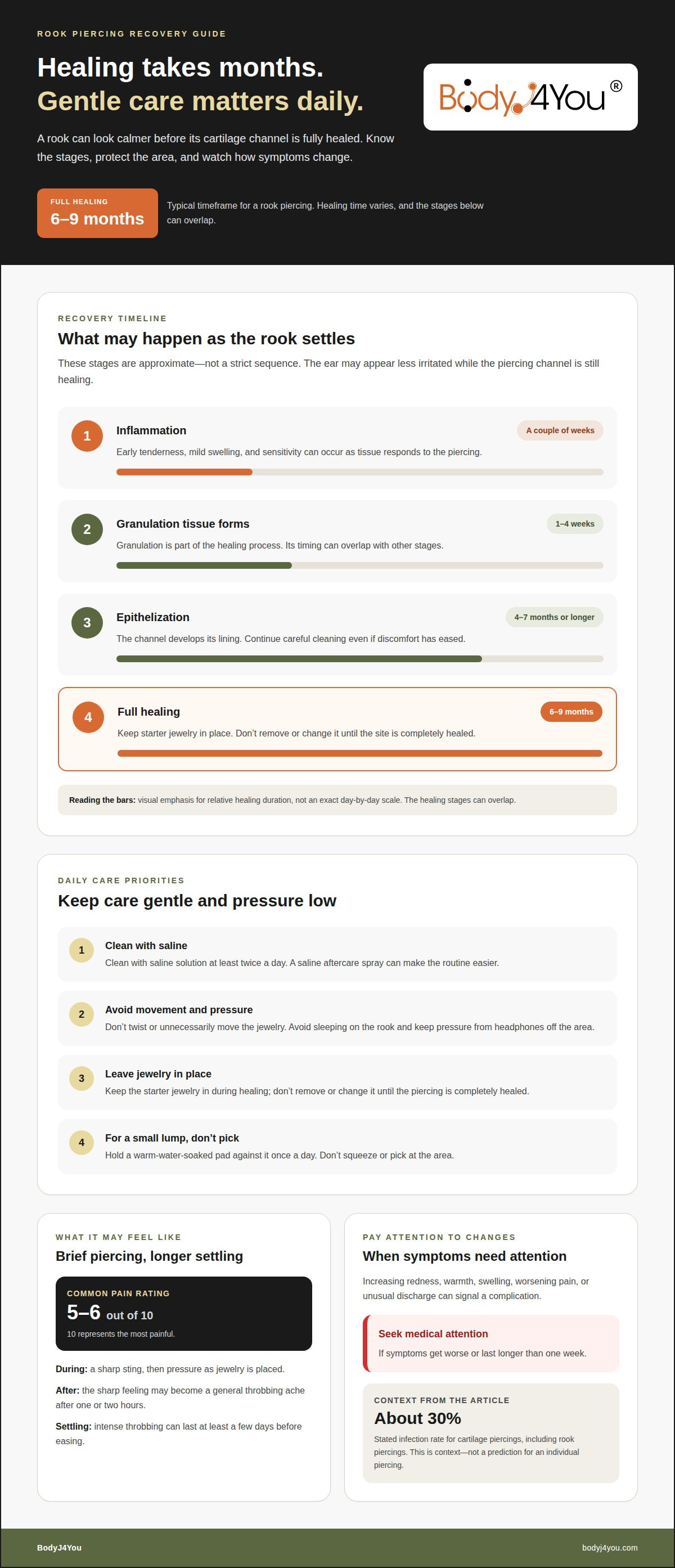
The piercing itself is brief, but healing takes much longer. A rook piercing typically needs six to nine months to heal fully because the jewelry passes through firm ear cartilage.
Healing happens in stages, and the timing varies. Inflammation can last a couple of weeks, while granulation tissue forms over one to four weeks. Epithelization, when the channel develops its lining, can take four to seven months or longer. These stages can overlap, so the ear may look calmer before the channel is fully healed.
During the first few months, leave the starter jewelry in place while the piercing heals. Don’t remove or change it until the site is completely healed. Early tenderness, mild swelling, and sensitivity can occur as the tissue responds to the piercing. Touching or pressure may increase irritation. A short-lived change differs from symptoms that worsen or persist.
Keep cleaning gentle and consistent. Clean with saline solution at least twice a day; a saline aftercare spray can make the routine easier. Avoid unnecessary movement or pressure on the jewelry, especially while sleeping. If a small lump appears, hold a warm-water-soaked pad against it once a day. Don’t squeeze or pick at the area.
Pay attention to how symptoms change, not just how long they last. Worsening symptoms, or symptoms lasting longer than one week, call for medical attention. A rook can take months to heal even after discomfort eases, so keep the jewelry in place and continue careful cleaning throughout recovery.
Rook piercing pain rating and what it feels like
A rook piercing is commonly rated five or six out of ten, with ten representing the most painful. The sensation may shift from a sharp sting to pressure, followed by a lingering ache.
Pain Rating and Sensation
The pain rating gives a rough reference, while the sensations offer a clearer idea of what to expect. The needle passing through the rook can cause a brief, sharp feeling. A crunching sensation or sound may feel more uncomfortable than the piercing itself. Afterward, the area may feel tender or sore rather than sharply painful.
Pain Compared With Other Ear Piercings
On a relative pain scale, a rook piercing is one step above a daith and two steps above a tragus piercing. These comparisons provide context, not a precise prediction for your ear. Each piercing passes through a different area, and sensations vary. Use the comparison to set expectations, not to assume a rook will feel exactly like another cartilage piercing.
Cartilage Thickness and Pain Differences
The rook sits in a firm fold of cartilage, where pressure can feel concentrated during piercing. Cartilage thickness and the shape of the fold affect how the needle moves through the tissue. A pain-scale number can’t capture those sensations. The ear’s anatomy also helps explain why a rook may feel different from a softer earlobe piercing.
Pain and Pressure During Piercing
During the piercing, expect a sharp sensation followed by pressure as the jewelry is placed. The sharp feeling may turn into a general throbbing ache after one or two hours. Intense throbbing can last at least a few days before easing. To limit irritation, avoid sleeping on the rook and clean it with saline solution twice daily. Keep pressure off the jewelry, including from headphones. These habits support comfortable care as swelling and tenderness settle.
Rook piercing location and cartilage anatomy
The rook is the raised fold of cartilage in the upper inner ear, above the daith and beside the outer ridge. Unlike an earlobe piercing, it passes through cartilage rather than soft tissue. This firm, curved location helps explain why pressure can feel concentrated and healing may take more patience. The fold’s shape also affects where jewelry can sit comfortably.
Cartilage has less direct blood supply than the earlobe, which can influence how tissue repairs itself after piercing. A rook piercing typically takes six to nine months to heal fully. During that time, sleeping on the ear or wearing headphones that press against the jewelry can irritate the area. Avoiding repeated friction helps limit unnecessary trauma while the cartilage settles.
Cartilage piercings need careful attention because infection is a possible complication. The stated infection rate for cartilage piercings, including rook piercings, is about 30%. That figure is context, not a prediction for an individual piercing. Gentle cleaning and keeping hands, hair, and objects from rubbing the jewelry can help reduce avoidable irritation. Don’t twist or remove jewelry during healing.
Watch for symptoms that worsen instead of gradually settling. Increasing redness, warmth, swelling, worsening pain, or unusual discharge can signal a complication. Seek medical attention if symptoms get worse or last longer than one week. A small bump alone doesn’t confirm infection, but squeezing or picking at it can further irritate the cartilage. For a minor lump, hold a warm-water-soaked pad against it once a day. Persistent or worsening symptoms need medical attention.
Rook piercing placement
The rook sits in the raised cartilage fold of the inner upper ear, above the daith. Its position depends on the fold’s shape and depth. A clear, defined ridge can provide room for jewelry, while a shallow fold may make placement difficult or leave little space. The entry and exit points should follow the ear’s anatomy, not a fixed template.
Suitability depends on how the fold accommodates a piercing channel and jewelry. For example, a tight curve can affect how a barbell rests and whether its ends press against nearby tissue. Placement also needs to account for the outer ear’s contours and pressure from headphones. These details matter because friction on a healing rook can irritate the area and make recovery less comfortable.
Rook jewelry commonly uses a 16g or 14g gauge. A curved barbell is recommended as initial jewelry, following the curve of the ear fold. A hoop is an option once the piercing is fully healed, but its shape moves differently and may press against surrounding cartilage. Jewelry choice should suit both the piercing channel and the individual ear’s anatomy.
Before committing, consider how the placement will fit your daily routine. A rook can be difficult to protect if you sleep on that side or wear headphones that press against the fold. Healing takes six to nine months, so those habits may matter well beyond the initial soreness. Avoid changing jewelry before the site is fully healed. Planning gentle care alongside a placement that fits your ear can support a more comfortable healing experience. Explore saline piercing aftercare essentials as part of that preparation.
BodyJ4You
BodyJ4You helps you prepare for a rook piercing and care for it afterward with practical piercing products. Once you understand the likely sensation, healing timeline, and importance of placement, thoughtful aftercare is the next part of the picture.
For routine cleaning, a Saline Piercing Aftercare Spray offers a convenient saline option. If a bump develops, Piercing Bump Treatment Oil is another product in the range. These products support your care routine, but they don’t replace medical attention for worsening symptoms or signs of infection.
Choose products that fit the needs of your piercing and follow appropriate care guidance throughout healing. For questions about BodyJ4You products, contact BodyJ4You.
Make Your Next Step Feel Considered
If you’re still weighing how bad a rook piercing may hurt, use the question to prepare, not rush your decision. Consider whether you can protect the area from everyday pressure and keep up with gentle care. The right choice is one that feels personal and manageable for your routine, not simply one that looks appealing in a photo.
Before moving forward, consider what support would make you feel more prepared. BodyJ4You offers piercing care products, including a Saline Piercing Aftercare Spray, to support a cleaning routine. For product questions related to your piercing plans, contact BodyJ4You about your piercing.
Take your time, choose what feels right for you, and approach your next step with confidence.
Frequently Asked Questions
How bad does a rook piercing hurt on a 1-10 scale?
A rook piercing is commonly rated five or six out of 10, with 10 representing the most painful. People asking “how bad does a rook piercing hurt?” are looking for a useful benchmark, but the number can’t predict an individual experience. Ear shape and exact placement affect how pressure feels, so use the rating to set expectations rather than as a guarantee.
How does rook piercing pain compare with other ear piercings?
On the comparison scale described here, a rook is one step above a daith piercing and two steps above a tragus piercing. This offers a relative guide, not a guarantee that one piercing will feel exactly like another. Their locations differ, and the rook passes through a firm fold. Comparing sensations can help you prepare, but it can’t predict your individual experience.
What does rook piercing pain feel like, and is it sharp or intense?
The piercing may begin with a sharp sting, then feel like pressure or a dull ache. A crunching sensation or sound can be more unsettling than the sharp feeling itself. After one or two hours, pain may shift into throbbing, which can remain intense for at least a few days before easing. Avoid pressing or bumping the jewelry during this period.
How long does a rook piercing take to heal?
A rook piercing typically takes six to nine months to heal fully. The surface can look settled before the channel has finished healing, so appearance alone isn’t a reason to change jewelry. Keep the starter jewelry in place until the site is completely healed. Repeated bumps or pressure can make healing less straightforward.
What is normal rook piercing pain during healing, and when should it improve?
Tenderness, mild swelling, and soreness can occur as the tissue heals. The sharper sensation should give way to a more general ache, and intense throbbing may ease after a few days. Clean gently with saline solution twice daily and avoid pressure on the ear. Seek medical attention if symptoms worsen or last longer than one week.
Does ear anatomy affect whether a rook piercing is possible or how much it hurts?
Yes. A rook needs a defined fold of cartilage in the upper inner ear, and the fold’s depth and curve affect whether jewelry can sit comfortably. A shallow or tight fold may make placement difficult or unsuitable. Anatomy also affects how pressure feels, so the exact position should follow your ear’s contours rather than a standard point.