

What if an alcohol-free piercing spray still isn’t the right choice for your piercing? Avoiding alcohol may be one useful filter, especially if your skin is healing or easily irritated, but the label alone doesn’t tell you whether the spray is sterile saline or what else it contains.
That distinction matters. The Association of Professional Piercers recommends packaged sterile saline wound wash with no additives. “Alcohol-free” alone makes no promise about sterility, ingredients, or intended use. Instead of relying on broad healing claims, compare the product’s full label and directions.
This guide explains what alcohol-free means, how it differs from sterile saline, and which ingredients and product details to check. Use the practical checklist to compare options and decide whether a spray’s stated purpose and instructions fit your aftercare routine. If key information is missing, find out what to verify before using the product.
Key Takeaways
- Compare the full ingredient list, intended use, directions, and storage instructions rather than relying on front-label claims.
- An alcohol-free piercing spray label alone doesn’t confirm sterility or show that the formula is intended for piercing aftercare.
- Use the checklist to assess packaging and product instructions before choosing a spray for your routine.
- Before considering BodyJ4You Saline Piercing Aftercare Spray, verify its current ingredients, sterility claims, directions, and intended use on the product listing.
Alcohol-Free Piercing Spray: What the Claim Does, and Does Not, Tell You
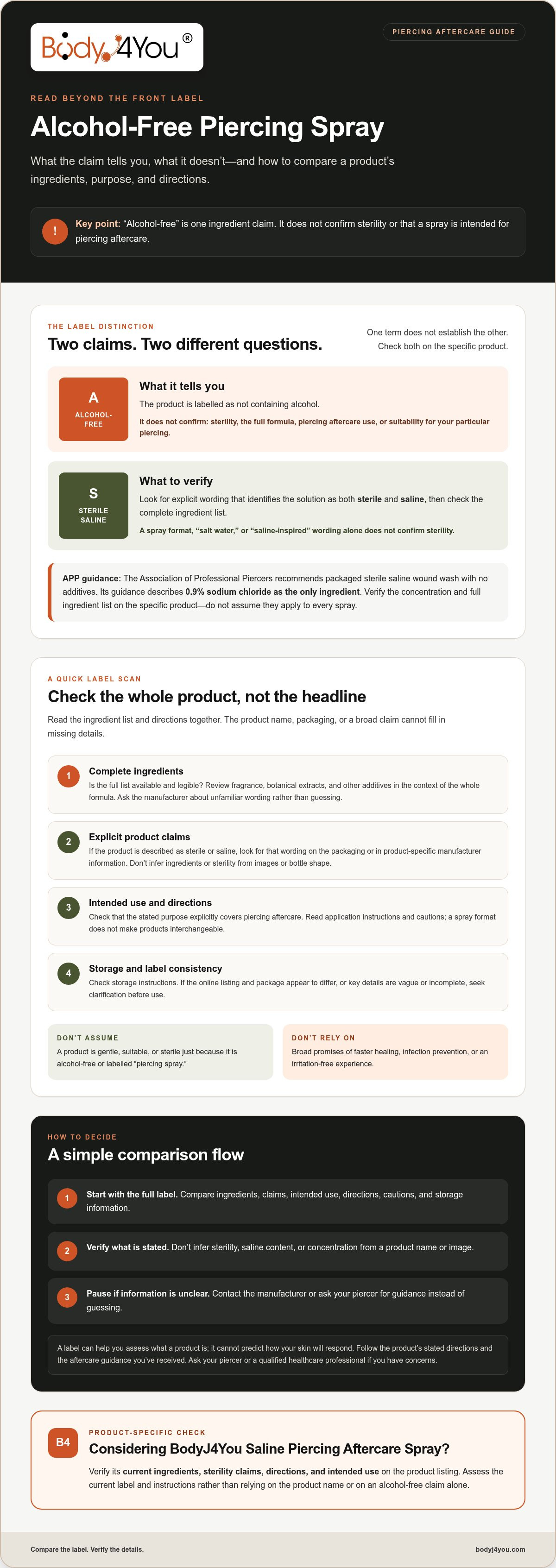
“Alcohol-free” answers one narrow question: the product is labelled as not containing alcohol. It doesn’t confirm that the spray is sterile, made for piercing aftercare, or suitable for your particular piercing. Treat the phrase as a starting point for comparing labels, not as proof of a product’s overall suitability.
People often look for an alcohol-free piercing spray because they want to avoid ingredients that may feel drying or irritating on delicate, healing skin. But removing one ingredient doesn’t tell you how the rest of a formula may feel or whether the product is intended for a healing piercing. Formulas vary, so check the complete ingredient list, directions, and cautions. If a label leaves a detail unclear, don’t guess what the product contains or how it should be used.
Aftercare also depends on the piercing and the guidance you’ve received. General information about Body piercing aftercare can provide background, but it can’t determine whether a specific spray suits your situation. Follow the product’s stated directions and ask your piercer or a qualified healthcare professional if you have concerns.
Does alcohol-free automatically mean gentle or safe for piercings?
No. “Alcohol-free” describes one ingredient claim. It doesn’t prove that a formula is gentle or intended for piercing aftercare. Check the full ingredient list and look for directions that explicitly cover piercings. Be cautious of claims that promise faster healing, prevent infection, or guarantee an irritation-free experience. A clear label helps you assess what a product is; it can’t predict how your skin will respond.
Alcohol-free spray versus sterile saline
These terms describe different things. “Alcohol-free” refers to the product’s alcohol claim, while “sterile saline” describes a product’s stated contents and sterility. One claim doesn’t establish the other. Look for explicit sterile and saline wording on the packaging, then check the ingredient list. For more detail on the distinction, see this sterile saline piercing aftercare guide.
Assess the whole label: ingredients, intended use, and directions. A spray format doesn’t make products interchangeable. Compare the product’s stated purpose with the aftercare advice you’ve received before choosing.
Which Ingredients and Label Details Should You Check?
A product name or polished package won’t tell you everything about a formula. Before choosing an alcohol-free piercing spray, read the label and directions together. Check the complete ingredient list, intended use, application instructions, and storage information. Those details help you compare products without relying on broad claims.
If a product is described as sterile or saline, look for that wording on its packaging or in product-specific manufacturer information. Don’t infer sterility, ingredients, or concentration from a phrase such as “piercing spray,” a salt-themed image, or the shape of the bottle. If the online listing and package appear to differ, seek clarification before buying.
How to read an alcohol-free piercing spray ingredient list
Read the full list rather than relying on “alcohol-free” on the front label. If you’re trying to identify alcohol-related ingredients, use the names provided and ask the manufacturer about unfamiliar wording. Don’t assume an ingredient is present or absent based on product imagery. Review fragrance, botanical extracts, and other additives in the context of the complete formula. Their presence alone doesn’t establish how a product will affect your skin, so compare the ingredients with the stated purpose and directions.
Check the use instructions and cautions, too. The Association of Professional Piercers (APP) guidelines recommend packaged sterile saline wound wash with no additives for piercing aftercare. If a product’s claims or directions are vague, incomplete, or hard to verify, pause and contact the manufacturer or ask your piercer for guidance.
What sterile saline wording should shoppers look for?
Look for the label to identify the solution as both sterile and saline. “Salt water” or “saline-inspired” doesn’t confirm sterility. The APP guidance describes sterile saline wound wash with 0.9% sodium chloride as the only ingredient. Treat that as guidance for comparison, not a specification to assume applies to every spray. Verify the concentration and complete ingredient list on the specific product’s label. For more context, read this saline solution aftercare guide.
- Ingredients: Is the full list available and legible?
- Claims: Does the packaging explicitly state “sterile” or “saline”?
- Use: Are directions, intended use, and storage instructions clear?
BodyJ4You offers a saline piercing aftercare spray. Check its current product listing and packaging for these details, and ask for clarification if a key claim isn’t clear.
Alcohol-Free Piercing Spray Compared With Other Aftercare Options
A spray bottle describes how a product is applied, not what it contains or whether it’s suitable for piercing aftercare. Use the label and directions to compare options before treating them as interchangeable.
| Option | Alcohol-free wording | Sterile saline claim | Ingredients and intended use |
|---|---|---|---|
| Alcohol-free spray | May indicate that alcohol isn’t listed or included, according to the product’s wording. | Not confirmed by “alcohol-free” alone. | Check the full ingredient list and whether the directions specify piercing aftercare. |
| Packaged sterile saline | Check the label rather than assuming. | Look for an explicit sterile saline claim on the packaging. | Review the ingredients and use instructions. The Association of Professional Piercers (APP) guidelines recommend packaged sterile saline wound wash without additives. |
| Homemade salt water | Depends on what is used to prepare it. | Don’t assume a home mixture is sterile. | Preparation and proportions may vary, and it isn’t the same as a packaged product with stated ingredients and directions. The APP no longer recommends mixing your own sea salt solution. See this homemade piercing saline explanation for related context. |
The comparison shows why an alcohol-free piercing spray isn’t automatically interchangeable with sterile saline or a homemade mixture. Read the actual packaging for ingredients, intended use, and instructions. Don’t infer sterility from “saline” alone or assume a mist is appropriate simply because it comes in a spray bottle.
Routine product choice versus a piercing concern
Choosing an aftercare product is a routine decision. New or worsening symptoms call for a different response. Increasing pain, swelling, heat, redness, unusual discharge, or feeling unwell can warrant professional assessment, but these signs don’t confirm a particular cause on their own. Seek medical care for significant or worsening symptoms, especially if you feel systemically unwell.
For jewelry fit or routine-care questions, contact a qualified piercer. If you’re unsure whether a product’s directions suit your piercing, ask before using it rather than adding products or changing your care based on guesswork. A clear label helps you compare options, but it can’t replace individualized advice when symptoms are concerning.
A Practical Checklist for Choosing and Using a Piercing Spray
A few deliberate checks make product labels easier to compare. Use this checklist before buying, then follow the chosen product’s directions and the aftercare advice you’ve received. A spray is one part of care, not a substitute for clean hands, appropriate hygiene, or professional guidance.
Before buying: five label checks
- Confirm the intended use. Look for wording that says the product is for piercing aftercare. Don’t assume a general-purpose spray is appropriate just because it comes in a mist bottle.
- Read the complete ingredient list. Check the whole formula rather than relying on “alcohol-free” or other front-label language.
- Verify specific claims. If the product is described as sterile or saline, confirm that wording on the packaging or in current product-specific information. Don’t infer sterility from the name or imagery.
- Review directions and warnings. Check how the manufacturer says to apply the spray and whether any cautions or restrictions are listed.
- Check storage details and contact information. Clear storage instructions and a way to contact the manufacturer are useful when a label leaves questions unanswered.
If a key detail is missing, unclear, or unsupported, pause and ask the manufacturer or your piercer before purchasing. Choose based on information you can verify, not assumptions drawn from the product name.
During aftercare: follow instructions and watch for changes
Use your alcohol-free piercing spray only as directed. There isn’t one spray frequency that suits every product and situation, so follow the label and your piercer’s guidance. More cleaning isn’t automatically better. Avoid adding steps or products without a clear reason. Wash your hands before touching the area, and don’t twist, handle, or change jewelry unnecessarily unless a qualified professional advises you otherwise.
Pay attention to changes rather than trying to diagnose them yourself. If you notice a bump or persistent irritation, review the piercing bump aftercare guide and seek appropriate advice from a qualified piercer or healthcare professional. Significant or worsening symptoms should be assessed medically.
Choosing a saline spray? You can explore BodyJ4You’s Saline Piercing Aftercare Spray and check the current product information against this checklist before deciding.
Choosing BodyJ4You Saline Piercing Aftercare Spray
Once you know which details matter, compare a specific product against your checklist. BodyJ4You sells a Saline Piercing Aftercare Spray, making it relevant to shoppers comparing saline aftercare options. The product name alone doesn’t confirm its complete formula, sterility, sodium chloride concentration, or suitability for a particular piercing.
BodyJ4You has more than two decades of industry experience. That provides context about the retailer, not evidence of a medical outcome. As with any alcohol-free piercing spray or saline product, base your decision on current, product-specific information rather than general claims or assumptions.
Does BodyJ4You’s saline spray match your checklist?
Before deciding, review the current product listing and packaging. Confirm the complete ingredient list, whether sterility is explicitly stated, the intended use, and the application and storage directions. If you’re looking for a specific sodium chloride concentration, check whether it’s stated for this product. Don’t infer these details from “saline” in the name or claims about a broader product range.
Compare the verified information with your priorities. If you want clearly disclosed ingredients, look for a complete list. If you’re following advice to use sterile saline, look for an explicit sterility claim. If a detail isn’t provided, ask the seller or manufacturer for clarification before relying on it. No label can guarantee faster healing, universal suitability, or freedom from irritation. If your piercer has recommended a particular type of aftercare, include that guidance in your decision.
Where to go next if you are still comparing
Keep the main distinction in view: alcohol-free wording is only one factor. Ingredients, sterile or saline claims, stated purpose, and clear directions matter too. If you’re unsure what your individual aftercare needs call for, ask a qualified piercer rather than choosing based on a broad marketing claim. Discuss significant or worsening symptoms with a healthcare professional.
When you’re ready to compare the available product information, explore BodyJ4You aftercare products. Review the listing alongside the packaging and your care guidance, and choose only if the details fit your needs.
Choose Your Aftercare With Confidence
An alcohol-free piercing spray may be worth considering, but the wording alone doesn’t confirm that a product is sterile, intended for piercings, or right for your routine. Check the complete ingredient list, product directions, and any sterile or saline claims on the packaging. Then compare those details with the aftercare guidance you’ve received.
BodyJ4You’s product range includes Saline Piercing Aftercare Spray, and the company has more than two decades of body-piercing industry experience. That experience offers retail context, not a promise of a particular healing outcome. Review current product information carefully and ask a qualified piercer if you’re unsure what your individual aftercare needs require.
Ready to review the available options? Compare BodyJ4You’s piercing aftercare products and use the label checklist to decide whether the details fit your needs. Choose based on clear instructions and product information, and seek professional guidance when needed.
Frequently Asked Questions
Is alcohol-free piercing spray better for a new piercing?
Not automatically. An alcohol-free piercing spray describes one formula attribute, but that wording doesn’t confirm sterility, saline content, or suitability for a fresh piercing. Read the complete ingredients and directions, then follow your qualified piercer’s aftercare advice. If symptoms worsen or concern you, seek medical advice rather than relying on a spray alone. A product label can guide use, but it can’t assess your piercing.
Can I use any alcohol-free spray on a piercing?
No. Alcohol-free products can contain different ingredients and may be intended for different uses. Check whether the label specifically identifies piercing aftercare as an intended use, then read the full directions and verify any sterile or saline claims on the packaging. If you’re unsure whether a product suits your piercing, ask your qualified piercer before applying it. Don’t assume a general-purpose spray is appropriate just because it’s alcohol-free.
What is the difference between alcohol-free spray and saline piercing spray?
Alcohol-free describes a claim about alcohol content, while saline refers to a salt-water solution. They’re different attributes, so one doesn’t prove the other. Check the product’s ingredients, intended use, and explicit claims about sterility on its label. A name or image that suggests salt water isn’t enough to establish what’s in the bottle. Confirm the details from product-specific packaging or manufacturer information before use.
How often should I use alcohol-free piercing spray?
Follow the specific product directions and the aftercare instructions from your qualified piercer. There isn’t one frequency that applies to every spray and piercing. Using a product more often than directed isn’t automatically helpful, so avoid extra applications based on guesswork. If the area becomes increasingly irritated or symptoms worsen, contact your piercer or a healthcare professional rather than simply changing the frequency.
Can alcohol-free piercing spray prevent infection?
No alcohol-free claim proves that a spray prevents infection or guarantees a particular outcome. It describes a formula attribute, not a medical result. Use products only as directed and follow professional aftercare guidance. If you notice worsening pain, spreading redness, unusual discharge, fever, or other concerning symptoms, seek medical advice promptly. Don’t try to manage potentially serious or worsening symptoms with spray alone.
Is sterile saline the same as alcohol-free piercing spray?
No. Sterile saline identifies a solution and its stated sterility, while alcohol-free describes a product’s claim about alcohol. A spray could meet one description without meeting the other. Read the label to confirm ingredients, intended use, and any explicit sterility information. Don’t infer that a spray is sterile saline from its product name, packaging, or general alcohol-free claim.
What should I check before buying a piercing aftercare spray?
First, confirm that the product is intended for piercing aftercare. Then review the complete ingredient list, directions, warnings, and storage instructions. Check any sterile or saline claim directly on the packaging or product-specific information. Clear details are more useful than broad promises. If you have a known sensitivity or a concern about your healing piercing, ask a qualified professional whether the product and its instructions fit your needs.
What should I do if a piercing gets worse while using spray?
Don’t assume that switching sprays will resolve worsening symptoms. Avoid adding products or increasing use beyond the label directions, and contact a qualified piercer for routine-care or jewelry questions. Seek medical care for significant or worsening pain, spreading redness, unusual discharge, fever, or other concerning symptoms. A spray can’t assess what’s happening, and it isn’t a substitute for professional attention when a piercing may need it.


