


What if the biggest challenge of an Ashley piercing isn’t the first few days, but knowing what’s normal as it heals? Swelling, tenderness, and slight jewelry movement can raise questions, especially when care advice for an oral-area piercing seems to conflict. This ashley piercing healing guide offers a calm starting point: healing commonly takes about 2 to 4 months, but your experience may vary.
You’ll learn what changes to expect, how to build a gentle routine for the outside of the lip and inside the mouth, and why minimizing irritation matters. Simple, consistent care is more useful than repeatedly adjusting the jewelry or trying harsh products.
We’ll also cover when a longer starter post may need professional assessment for downsizing, which symptoms deserve prompt attention, and when to contact a reputable piercer or healthcare professional. Clear expectations and low-trauma habits can help you care for the piercing while protecting your comfort and oral health.
Key Takeaways
- An Ashley piercing passes through the lip, so jewelry fit and care for both openings matter.
- Use this ashley piercing healing guide to understand healing as an individual process, not a set of guaranteed milestones.
- Keep aftercare gentle: follow your piercer’s instructions, wash your hands, and avoid unnecessary handling or pressure.
- Know when changing symptoms call for prompt advice from a qualified professional rather than self-diagnosis.
- Have a reputable piercer assess healing and jewelry fit before changing or downsizing the jewelry.
What Is an Ashley Piercing, and What Makes Its Healing Different?
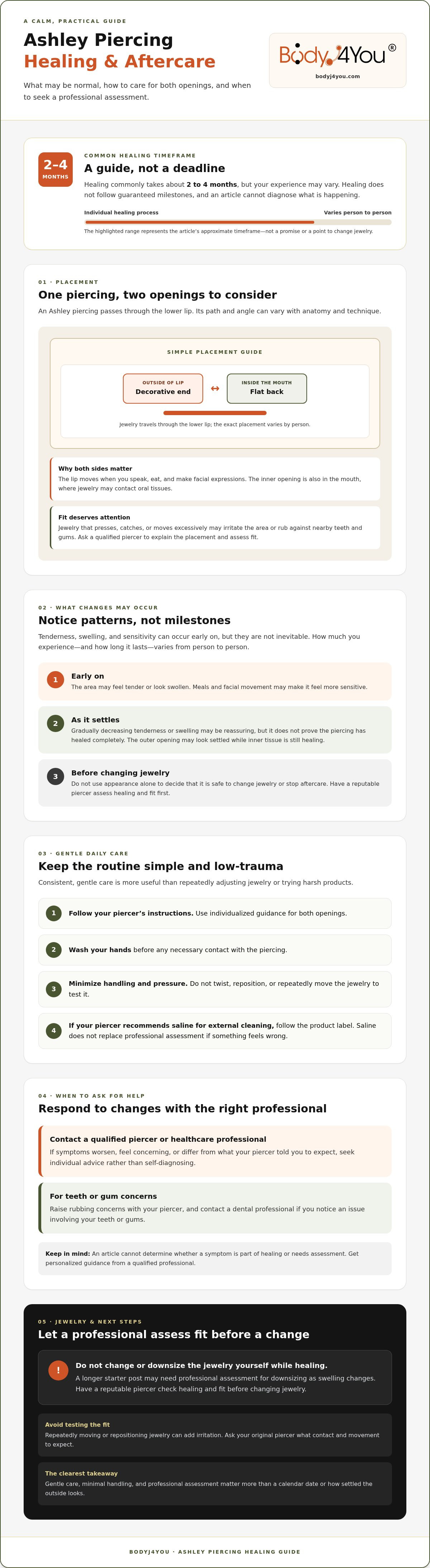
An Ashley piercing passes through the lower lip, creating an opening on the outer lip and an exit inside the mouth. The exact angle and placement can vary with anatomy and piercing technique. Ask a qualified piercer to confirm the path of your jewelry rather than relying on the piercing name or a photo.
Where is an Ashley piercing placed?
Typically, the piercing travels through the lower lip, with a decorative end visible on the front and a flat back resting against the inner lip. That inside-and-outside path distinguishes it from nearby lip piercings that enter the skin beside the lip or pass through a different part of it. Placement varies from person to person. If you’re unsure where either opening sits, ask your piercer to explain the placement and check that the jewelry suits your anatomy.
Why does the oral location affect healing?
The lip is active tissue. It moves while you speak, eat, and make everyday facial expressions, so the piercing experiences regular movement. Its inner opening is also in the mouth, where it may contact oral tissues. An Ashley piercing passes through the lip, not the tongue, but both openings need attention during healing.
Jewelry fit matters as well. Jewelry that presses, catches, or moves excessively may irritate the area or rub against nearby teeth and gums. Don’t twist or reposition it to test the fit. Ask the original piercer what contact and movement to expect, and whether the jewelry needs an assessment as swelling changes. Avoid changing it yourself while the piercing is healing.
Healing doesn’t follow a guaranteed calendar. Tenderness, swelling, and how quickly the area settles can differ from person to person. An article can’t diagnose what’s happening in your lip. The general lip piercing aftercare overview offers broader context, but follow individualized guidance from a qualified professional. This ashley piercing healing guide focuses on what makes the placement distinct: a moving area, an opening inside the mouth, and jewelry that needs a suitable fit on both sides of the lip.
Ashley Piercing Healing Stages: What Changes Can You Expect?
Healing is a changing process, not a countdown with guaranteed milestones. An Ashley piercing passes through the lip, so the outside may appear calm while the inner opening is still settling. Swelling, tenderness, and sensitivity can occur early on, but they aren’t inevitable. The amount and duration vary from person to person.
Healing time varies from person to person, and a qualified piercer should assess how your piercing is progressing. Use this ashley piercing healing guide to understand general patterns, not to diagnose symptoms or set a deadline for changing jewelry.
What may happen in the early healing period?
At first, the area may feel tender or look swollen. It may also feel more sensitive during meals or facial movement. Experiences differ, so follow the care instructions your piercer gave you rather than comparing your progress with someone else’s. Keep handling to a minimum, and don’t repeatedly move the jewelry to check whether it feels loose or settled.
Pay attention to changes over time. If symptoms worsen, feel concerning, or differ from what your piercer told you to expect, contact a qualified piercer or healthcare professional for individual advice. An article can’t determine whether a symptom is part of healing or needs assessment.
How can you tell healing is progressing?
Gradually decreasing tenderness or swelling may be reassuring, but it doesn’t prove the piercing has healed completely. The outer opening can look settled before the inner tissue is ready for a jewelry change. Don’t rely on appearance alone to decide that it’s safe to change the jewelry or stop your aftercare routine.
Ask your piercer to assess the piercing before changing jewelry or ending care. This is also a good time to raise concerns about rubbing against teeth or gums. The American Dental Association outlines potential dangers of oral piercings, including possible dental and gum effects. Contact a dental professional if you notice a concern involving your teeth or gums.
Keep care simple and consistent while you wait for an assessment. If your piercer recommends saline for external cleaning, you can review saline piercing aftercare options and follow the product label. Saline products don’t replace professional assessment when something feels wrong.
Normal Ashley Piercing Healing or a Problem? How to Respond
Some tenderness or swelling may occur during healing, but appearance alone can’t show whether a piercing is healing as expected. Irritation and infection can have overlapping signs, so avoid self-diagnosing from a photo or article. If something feels wrong, a qualified professional can assess it in person.
Worsening or alarming symptoms need professional assessment, not guesswork. Keep track of changes and seek advice based on how symptoms are evolving, rather than relying on a single snapshot.
Which changes should you monitor?
Notice changes in pain, swelling, redness, discharge, and how the jewelry fits. These observations don’t confirm a specific problem, but they can help a piercer or healthcare professional understand what has changed. Note when symptoms began, whether they’re improving or worsening, and whether any recent pressure or movement may have irritated the area.
Don’t remove the jewelry or apply medication on your own unless a qualified healthcare professional advises you to. Changing or removing jewelry may complicate assessment, and the right response depends on what’s causing the symptoms.
When should you contact a piercer or healthcare professional?
Contact a qualified piercer with questions about jewelry fit, movement, or routine aftercare. If symptoms are significant, worsening, or accompanied by feeling generally unwell, contact a healthcare professional promptly. Seek urgent medical care for severe swelling or difficulty breathing or swallowing. If you’re unsure which professional to contact, start with a clinician for concerning health symptoms.
A bump near the piercing can have different possible causes and shouldn’t be treated as a diagnosis. The piercing bump aftercare guide offers general care information, but it can’t determine what a bump is or replace an in-person assessment. Avoid applying oils, ointments, or other medication to a healing piercing unless a qualified professional recommends it.
This ashley piercing healing guide is a starting point, not a substitute for individualized care. Keep your notes simple and factual, then share them with the professional assessing you. Clear information about timing and changes can help them decide what next steps are appropriate.
Ashley Piercing Aftercare: A Gentle Daily Routine
A simple routine is easier to follow and less likely to disturb a healing piercing. Use your piercer’s instructions as your main reference, since they can account for your placement and jewelry. Keep care gentle: clean hands, light external care, and as little unnecessary contact as possible.
What should a low-trauma care routine include?
Before cleaning or touching the area for a necessary reason, wash your hands thoroughly. Follow your piercer’s directions for cleaning the outside of the lip. If they recommend a saline product, use it only as directed on its label and by your piercer. Saline is for appropriate external care, not a substitute for oral hygiene or individualized advice.
For the inside of your mouth, continue routine oral hygiene carefully and ask your piercer or a healthcare professional whether a mouth rinse is appropriate for you. Don’t add products or change your routine based on guesswork. Gentle care means avoiding friction and extra handling, not scrubbing or repeatedly checking the openings.
Keep your hands off the jewelry unless your care instructions require contact. Don’t twist, pull, or slide it back and forth. Repeated movement can irritate the site, and checking the jewelry isn’t a reliable way to judge healing.
What should you avoid while it heals?
Reduce avoidable pressure and contact. Be mindful of habits such as playing with the jewelry, biting or tugging at it, or allowing clothing and hands to rub the area. If an activity repeatedly catches or presses on the piercing, adjust the habit where practical and ask your piercer for tailored advice.
Avoid harsh cleaners, homemade mixtures, and unverified remedies as universal aftercare. Don’t apply oils or bump treatments inside your mouth or directly to the piercing unless a qualified professional advises you to. A product intended for other skincare needs may not be suitable for a healing piercing or oral tissue.
For general information about using saline products, see this sterile saline spray aftercare guide. It offers broad product-use context, not Ashley-specific medical instructions. Always follow the product label and your piercer’s guidance, and contact a healthcare professional about concerning symptoms.
Looking for a saline option for external piercing care? Explore saline piercing aftercare spray, and use it only as directed. An ashley piercing healing guide can help you build consistent habits, but personalized advice should come from a qualified professional familiar with your piercing.
Jewelry Changes and Next Steps for a Safely Healing Ashley Piercing
Jewelry changes should follow an assessment, not a calendar reminder or a guess based on how the outer opening looks. Swelling, placement, and the way the jewelry sits can all affect fit. A qualified piercer can check whether the jewelry needs attention and advise whether it’s appropriate to change or shorten the post.
When is it appropriate to change Ashley piercing jewelry?
There’s no universal date that’s right for everyone. Before changing jewelry, contact the original piercer, especially if the piercing is still tender, swollen, or changing. Don’t shorten the post or swap jewelry yourself just because the outside appears settled. The inner opening may still be healing, and forcing jewelry through can cause further irritation or injury.
If jewelry feels tight, presses into the lip, catches, or rubs against teeth or gums, ask a professional to assess the fit. Don’t push, pull, or rotate it to see whether it will move. If it seems embedded or you have significant swelling, seek prompt advice from a healthcare professional rather than trying to remove it yourself.
How can you choose a careful next step?
Make your follow-up more useful by preparing a few specific questions. Ask whether healing appears ready for a change, whether the jewelry’s material and fit are suitable, and what to do about any symptoms you’ve noticed. Share when the symptoms began and whether they’re improving or worsening. A reputable piercer can advise on jewelry and routine care; health concerns should go to a healthcare professional.
BodyJ4You is an online retailer of piercing jewelry and aftercare products, not a piercing studio, so it can’t assess your piercing in person. Its Saline Piercing Aftercare Spray may be an option for external care if it suits your piercer’s instructions and the product label. It doesn’t replace professional advice or evaluation of concerning symptoms.
Choose the next step that fits your needs: get a professional assessment for questions about healing or jewelry, and follow clear product directions for routine external care. To browse aftercare options, explore BodyJ4You piercing aftercare. This ashley piercing healing guide can help you prepare, but a qualified professional is the right person to assess your individual piercing.
Keep Your Healing Routine Gentle and Informed
Ashley piercing healing takes patience, and progress won’t look the same for everyone. Keep handling to a minimum, follow your piercer’s care instructions, and don’t change the jewelry just because the outer opening looks settled. If symptoms worsen or concern you, seek an in-person assessment from a qualified piercer or healthcare professional.
This ashley piercing healing guide is a practical reference, not a diagnosis or a substitute for personalized care. BodyJ4You has more than two decades of industry experience and offers piercing aftercare products; its skincare line is manufactured in the United States. Choose products thoughtfully, follow their labels, and use them only when they suit your piercer’s guidance.
For saline aftercare and other piercing-care options, explore BodyJ4You piercing aftercare. Your next step can be simple: care gently, ask questions when you’re unsure, and give your body the time and professional support it needs to heal.
Frequently Asked Questions
How long does an Ashley piercing take to heal?
An Ashley piercing commonly takes about 2 to 4 months to heal, but this is an estimate, not a deadline. Healing varies with individual anatomy, jewelry fit, care, and irritation. The outer opening may look settled before the tissue inside the lip has finished healing. Follow your piercer’s aftercare advice, and ask them to assess your piercing before changing jewelry or stopping your routine.
Is swelling normal after an Ashley piercing?
Some swelling can occur after a new Ashley piercing, but the amount and duration differ from person to person. Monitor whether it’s settling or getting worse, and note any changes in pain, redness, discharge, or jewelry fit. Don’t assume a symptom is normal or infected based on an article. Contact your piercer for concerns about fit, or a healthcare professional for significant or worsening symptoms.
Can I change my Ashley piercing jewelry while it is healing?
Don’t change healing Ashley jewelry on your own unless a qualified professional advises you to. Even if the outside looks calm, the inner tissue may still be healing, and forcing jewelry through can irritate or injure the channel. Ask your piercer to check healing, swelling, and fit before changing or shortening the post. If jewelry feels tight or presses into tissue, seek professional guidance rather than adjusting it yourself.
How do you clean an Ashley piercing?
Clean your hands before necessary contact, then follow your piercer’s instructions for gentle care of the outside opening. Avoid twisting, pulling, or repeatedly moving the jewelry. For the inside of the mouth, maintain routine oral hygiene and ask your piercer or healthcare professional about rinsing advice. Skip harsh cleaners and homemade mixtures unless a qualified professional specifically recommends an approach for your situation.
Can I eat and talk normally with a new Ashley piercing?
You can generally speak and eat, though lip movement may feel tender or unfamiliar at first. Move carefully and avoid habits that tug, bite, or play with the jewelry. Follow your piercer’s guidance about foods that may irritate the area, and keep oral care gentle. If talking or eating becomes difficult, or discomfort is worsening rather than settling, contact a healthcare professional for assessment.
What should I do if my Ashley piercing looks infected?
Contact a healthcare professional promptly if you’re concerned about possible infection, especially if symptoms are worsening or you feel unwell. Irritation and infection can look similar, so don’t try to diagnose the cause yourself. Don’t remove the jewelry or apply medication unless a healthcare professional advises you to. Seek urgent medical attention for severe swelling or difficulty breathing or swallowing.
Can I use saline spray on an Ashley piercing?
Saline spray may be appropriate for external cleaning if it matches your piercer’s instructions and the product label. Use it only as directed, and don’t spray it inside your mouth unless the label and a qualified professional specifically say it’s suitable. Saline aftercare products don’t diagnose or treat infection. If symptoms concern you, seek professional assessment rather than relying on a spray or changing your routine.


