

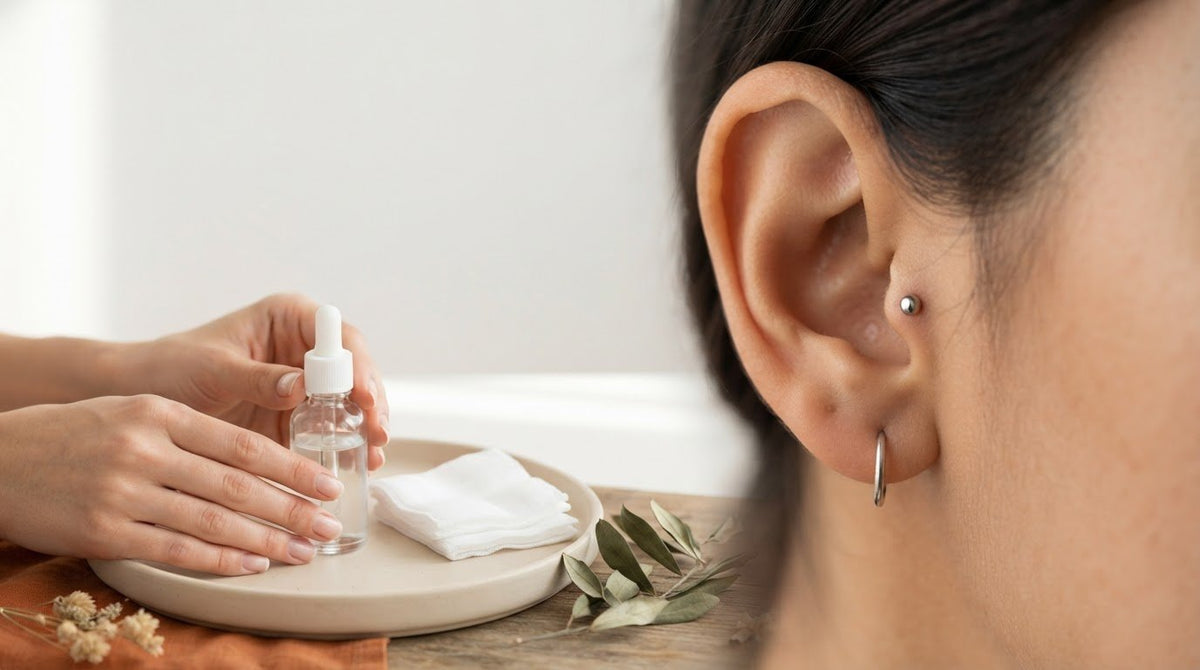
Could pressure on your ear matter as much as what you use to clean it? With anti-tragus piercing care, it can. This cartilage placement can bump against a pillow, headphones, or your hand during everyday routines. Repeated friction may keep tenderness stirred up.
It’s understandable to wonder how often to clean, which products are gentle enough, and whether redness or soreness is part of healing or a reason to seek help. A steady routine matters, as does giving the piercing space. This guide explains how to clean an anti-tragus piercing with a simple saline-based approach, reduce pressure and contact, and recognize symptoms that call for timely medical advice.
You’ll also learn which habits can cause avoidable irritation, why not to fiddle with the jewelry, and why a piercing that looks calm on the outside may still need protection. Small, consistent choices can support a more comfortable healing process while preserving the self-expression that made you choose this placement.
Key Takeaways
- Because an anti-tragus piercing passes through cartilage, healing can be gradual and may vary from person to person.
- Build anti-tragus piercing care around clean hands and gentle, consistent aftercare, following product directions and your piercer’s guidance.
- Learn which changes can occur during healing and which signs, such as spreading redness or fever, warrant prompt medical attention.
- Choose aftercare supplies for their intended purpose; no product can guarantee a particular healing outcome.
- Recognize how pressure and repeated contact may irritate the area, and make small adjustments to protect it day to day.
What Is an Anti-Tragus Piercing, and Why Does Its Care Need Extra Attention?
The anti-tragus is the small cartilage ridge on the outer ear, opposite the tragus and just above the earlobe. A piercing here passes through cartilage rather than the soft tissue of the lobe. That difference affects healing expectations and daily comfort: the jewelry sits in a firm area that can be pressed by a pillow, earbuds, or other contact.
Because an anti-tragus piercing sits in cartilage, aftercare should minimize pressure and friction while allowing more patience than a soft-lobe piercing may need. This is the central idea behind thoughtful anti-tragus piercing care. The placement can look settled before the tissue is fully comfortable, so don’t judge healing by appearance alone.
Where is the anti-tragus, and what makes the placement distinctive?
Find the tragus, the small flap in front of the ear canal. Across from it, above the lobe, is the anti-tragus ridge. This differs from a tragus piercing, which goes through the front flap; a helix piercing, placed along the upper outer rim; and a lobe piercing, which passes through softer tissue. You can explore the placement in this overview of Antitragus piercing.
The ridge is compact, and its shape and available space vary between ears. That means the same jewelry position or angle won’t suit everyone. A trained piercer can assess whether the anatomy offers appropriate room for the placement. Your anatomy, exact placement, and healing experience all influence what care feels comfortable, so avoid comparing your progress too closely with someone else’s.
Why can cartilage need more patience during healing?
Cartilage is firm connective tissue with a different structure and blood supply from the soft tissue of the earlobe. Irritation in a cartilage piercing can persist, and healing may progress gradually. There isn’t one reliable timeline that applies to everyone. Follow your piercer’s aftercare guidance and keep protecting the area even if it looks calm on the surface.
Pressure can be easy to miss because it often happens during ordinary routines: sleeping on that side, pressing an earbud against the ridge, or catching the jewelry while changing clothes. Notice which activities leave the area more tender and adjust where practical. You don’t need to keep the ear untouched at all times; focus on reducing repeated, unnecessary contact while the tissue settles.
For general saline information, the sterile saline spray for piercings guide can help you understand this common aftercare option. Use any product according to its label and your piercer’s instructions, since sprays may have different directions. A calm routine, less pressure, and patience give you a practical foundation for caring for this cartilage placement.
How Anti-Tragus Piercing Healing Progresses, and What Can Feel Normal
Healing is gradual, not a switch that flips from sore to fully settled. An anti-tragus piercing may feel different from one day to the next, and the pace varies with anatomy, placement, daily habits, and how the area responds. Healing experiences can vary widely, so no single timeline guarantees when an anti-tragus piercing is fully healed.
A small amount of tenderness or localized swelling may occur during healing, especially after accidental contact or pressure. That alone can’t tell you whether the piercing is healing as expected or needs attention. Consider how the area feels over time, whether symptoms are changing, and what may have irritated it. Don’t use a single moment, or someone else’s experience, to diagnose your piercing.
What changes may occur during early healing?
Early on, the area may feel sensitive to touch, and mild swelling close to the piercing may come and go. Even routine contact, such as catching the jewelry while dressing, can make it temporarily more noticeable. Follow the aftercare plan for your piercing, and avoid adding products or steps just because the area feels different one day.
Pay attention to patterns without repeatedly touching or inspecting the jewelry. Note whether tenderness follows a known bump or pressure, or whether discomfort continues to increase without an obvious cause. These details can help you describe what you’re experiencing to a qualified professional, but they aren’t a substitute for assessment. If symptoms concern you or worsen, seek medical advice rather than trying to diagnose the cause yourself.
Why should jewelry changes wait until healing is established?
Changing jewelry means handling the piercing and moving an item through healing tissue. Unnecessary movement can irritate the channel, and a new piece may not fit comfortably. Less soreness or a calm-looking surface doesn’t prove the tissue inside has finished healing, so don’t use those signs alone as a reason to switch jewelry.
If the jewelry seems too tight, catches repeatedly, or otherwise feels unsuitable, don’t force a change yourself. A qualified piercer can assess the fit and advise whether an adjustment is appropriate. If you suspect a medical problem, consult a healthcare professional; jewelry advice and medical assessment serve different purposes.
Consistency matters more than reacting to every small fluctuation. Follow your piercer’s instructions, handle the area gently, and give the tissue time to settle. A saline aftercare spray can be convenient for routine care when used according to its label and your piercer’s guidance. You can explore saline piercing aftercare spray as a care-supply option, not as a promise of healing or a remedy for symptoms.
Irritation or Infection? Anti-Tragus Piercing Signs You Should Not Ignore
A tender anti-tragus piercing can be reacting to pressure or contact, but some changes need medical assessment. Symptoms can overlap, and no short checklist can confirm the cause. Look at the pattern: whether discomfort follows a known bump or snag, whether symptoms settle after the irritation stops, and whether they are getting worse or spreading.
Seek medical attention for severe, spreading, or worsening symptoms, especially if you also feel unwell. Worsening pain, spreading redness, warmth, significant swelling, unusual discharge, or fever are reasons to get prompt medical advice. These signs don’t prove an infection, but they shouldn’t be dismissed or managed by changing aftercare products alone.
What can cause avoidable irritation around anti-tragus jewelry?
Repeated pressure, snagging, excessive touching, and unnecessary jewelry movement can aggravate the area. A headphone that presses against the ridge or jewelry caught while changing clothes may lead to localized tenderness. If discomfort appears after a particular activity, reduce that contact where practical and observe whether things improve. Avoid pressing or turning the jewelry to check it.
Irritation has several possible causes, and a bump or sore spot can’t be diagnosed from appearance or a symptom list alone. For broader information about bumps and aftercare, consult a piercing bump aftercare guide. If a change is persistent, worsening, or worrying, seek individual advice instead of assuming it’s routine irritation.
When should symptoms prompt medical advice?
Contact a healthcare professional promptly if pain is worsening, redness is spreading, swelling is significant, discharge seems unusual, or you develop a fever or feel unwell. Pay particular attention to symptoms that are progressing rather than settling. A healthcare professional can assess your situation and advise on next steps.
If you suspect infection, don’t remove the jewelry on your own unless a healthcare professional advises you to do so. Removing or manipulating it without guidance may complicate decisions about care. A piercer may advise about jewelry fit or mechanical irritation, but medical symptoms call for a healthcare professional, not a product change or jewelry adjustment alone.
For severe or rapidly worsening symptoms, seek urgent medical care. Otherwise, note when changes began, what seems to trigger them, and whether they’re spreading or intensifying. These observations can help you explain the situation clearly. Keep routine anti-tragus piercing care gentle, but don’t rely on saline spray or other aftercare supplies to treat a possible medical problem. Routine cleaning products aren’t a substitute for professional assessment.
A Simple Daily Anti-Tragus Piercing Care Routine
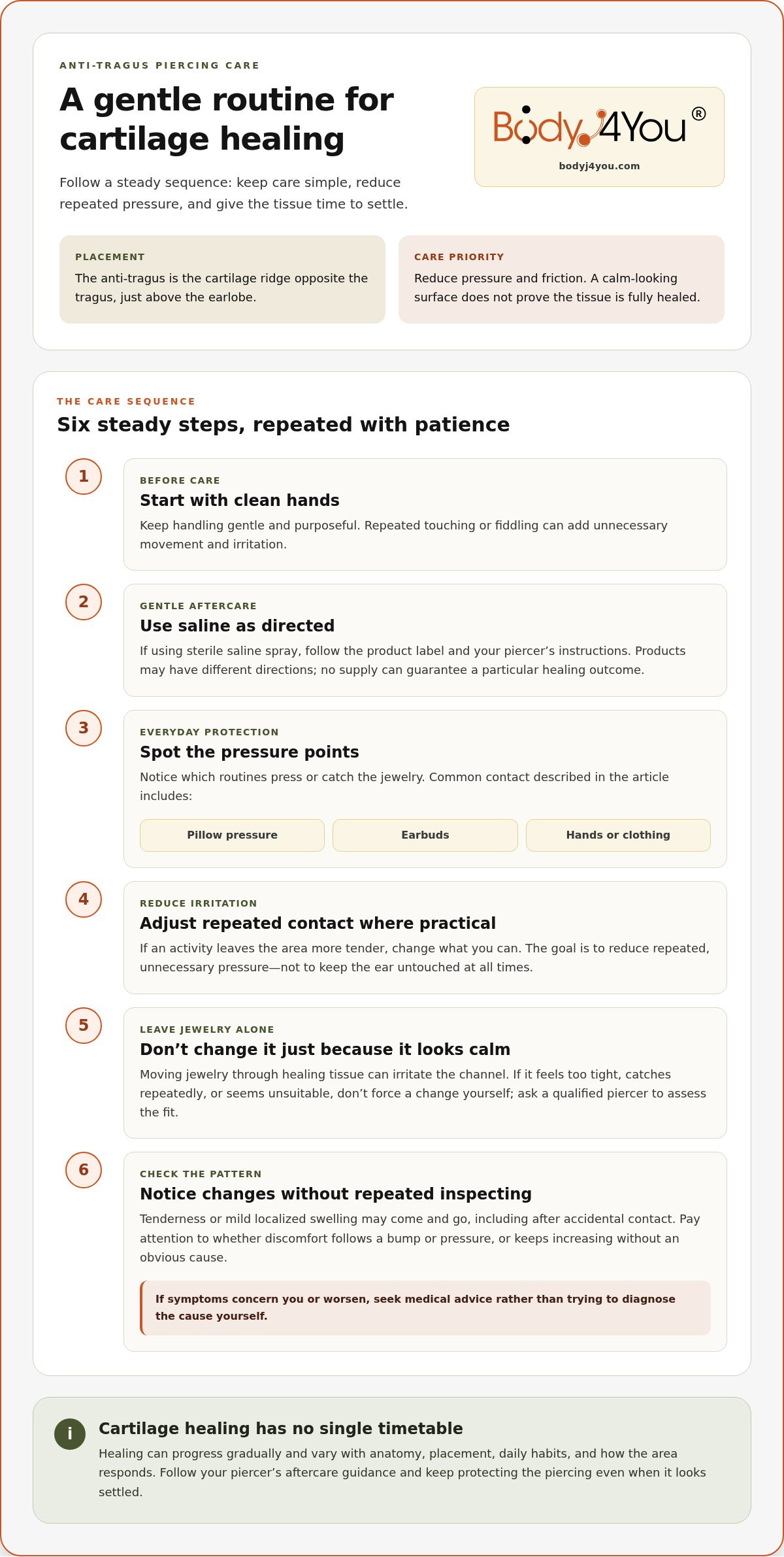
Keep care gentle and repeatable. The goal is to clean without adding friction or unnecessary handling. Follow your piercer’s aftercare plan, and use sterile saline only according to its product label and that guidance. A commonly recommended routine is saline care twice daily, but more cleaning isn’t automatically better; excessive handling or cleaning may irritate the area.
How should you clean an anti-tragus piercing?
Use this simple sequence as a guide, adjusting it to your piercer’s instructions and the saline product label:
- Wash your hands thoroughly before necessary contact with the piercing or jewelry.
- Apply sterile saline gently as directed. Let it reach the area without twisting, rotating, or pushing the jewelry.
- If crust softens, allow it to release during gentle rinsing or cleaning. Don’t pick, scrape, or pull it off.
- Pat the area dry with a clean, disposable material, taking care not to rub or snag the jewelry.
Avoid alcohol, hydrogen peroxide, and harsh cleansers, which may irritate healing tissue. Don’t mix a homemade salt solution unless a qualified clinician specifically directs you to; concentrations and preparation can vary. Keep the routine simple instead of adding products whenever the piercing feels sensitive. If your piercer’s instructions differ from general guidance, follow the plan given for your piercing.
How can you reduce pressure and friction while it heals?
Cleaning is only one part of daily care. Reduce repeated pressure wherever practical. Try sleeping on the opposite side, or adjust your sleep setup so the pierced ear isn’t pressed into a pillow. If you wake with tenderness after sleeping on that ear, change position rather than repeatedly touching the site to check it.
Notice other everyday contact points, too. Earbuds or over-ear headphones may press on the ridge; a phone held tightly to the ear, hair caught around jewelry, or clothing pulled over the head can create friction or snags. Choose audio options that don’t rest against the piercing when possible, keep hair away gently, and take care while dressing. If an activity repeatedly irritates the area, pause it or change how you do it.
Make the routine easy to follow: clean hands, gentle saline use, careful drying, and less pressure. BodyJ4You’s Saline Piercing Aftercare Spray is a convenient saline-care option. Use it according to its label and your piercer’s guidance. No aftercare product can guarantee a healing outcome, so let practical care and professional advice guide your next steps.
Choosing Anti-Tragus Aftercare Supplies and Your Next Safe Steps
Good aftercare supplies support a simple routine. They don’t replace careful handling, your piercer’s instructions, or medical advice when symptoms are concerning. For anti-tragus piercing care, choose products for a clear purpose and resist layering on extra steps or treatments. A product can make routine care more convenient, but it can’t guarantee how quickly or smoothly a piercing heals.
What should you look for in a piercing aftercare product?
Start with the label. Look for clear directions and wording that indicates the product is intended for piercing aftercare. Follow those directions alongside your piercer’s guidance, and don’t assume every saline spray has the same ingredients, use instructions, or specifications. Check the current label for product details.
A saline aftercare spray, such as BodyJ4You Saline Piercing Aftercare Spray, is one option for routine care when used as directed. Piercing cleaning swabs may help apply or manage care in specific situations, but they shouldn’t become a reason to rub, probe, or repeatedly handle the piercing. Choose the format that fits your instructions and allows gentle use.
Avoid applying oils, ointments, or ordinary cosmetic products to a fresh piercing unless a qualified clinician specifically directs you to do so. Products made for other purposes aren’t automatically appropriate for healing tissue. Keep the routine focused, and stop using a product if it causes a concerning reaction. Seek professional advice if symptoms persist or worsen.
When should you return to your care instructions or seek help?
For routine questions, revisit your piercer’s aftercare guidance. If jewelry keeps snagging, feels poorly fitted, or seems to press against the area, ask a qualified piercer for advice about fit or adjustment rather than changing it yourself. A piercer can advise on jewelry; a healthcare professional is the right person to assess symptoms that may indicate a medical concern.
Keep those roles clear. Worsening pain, spreading redness, significant swelling, unusual discharge, fever, or feeling unwell call for medical advice, not a different spray or home treatment. If symptoms are severe or rapidly worsening, seek urgent medical care. Routine supplies are for routine care, not for treating infection or another medical condition.
Choose a product with clear directions, follow the label, and keep your care gentle and consistent. BodyJ4You offers saline piercing aftercare spray for routine care. Follow the product label and your piercer’s guidance, and seek medical advice for concerning symptoms.
Make Gentle Care Part of Your Routine
Make care easy to maintain by choosing a regular moment in your day to follow your aftercare instructions and keeping supplies together. If something changes, note what you’re experiencing and seek appropriate guidance rather than adding products or adjusting jewelry on impulse. Small, considered choices can help you care for your piercing while giving it room to settle.
BodyJ4You brings more than two decades of industry experience, and its skincare line is manufactured in the United States. For a convenient addition to your routine, explore BodyJ4You piercing aftercare essentials. Follow the product label and your piercer’s guidance, and remember that aftercare supplies support routine care, not medical treatment.
There’s no need to rush the process. Let steady, thoughtful anti-tragus piercing care guide your next steps, and seek professional advice whenever a concern doesn’t feel right. With patience and a consistent approach, you can support your healing while enjoying the personal style your piercing represents.
Frequently Asked Questions
How long does an anti-tragus piercing take to heal?
There’s no exact healing timeline that applies to everyone. Anatomy, placement, jewelry fit, aftercare, and repeated pressure can all affect how an anti-tragus piercing progresses. Less tenderness is encouraging, but it doesn’t confirm that the piercing channel has fully healed. Follow your aftercare guidance and ask a qualified piercer about routine healing questions. If symptoms worsen or concern you, seek medical advice rather than relying on a timeline.
Can I sleep on my anti-tragus piercing?
It’s best to avoid sleeping directly on a healing anti-tragus piercing, since pressure over several hours can irritate the area. Try sleeping on the other side or using a travel pillow arranged so your ear rests in the opening. If you tend to change positions in your sleep, notice whether you wake with increased discomfort. Worsening pain or swelling is a reason to avoid further pressure and seek professional advice.
Can I wear earbuds or headphones with an anti-tragus piercing?
Only if the device sits comfortably without touching, pressing, or catching the jewelry. An earbud may fit one person but press against another person’s piercing because placement and ear shape differ. Don’t force a device into place or keep using it through discomfort. Keep headphones clean, and pause use if they repeatedly irritate the area. For guidance tailored to your jewelry position, ask your piercer.
Is redness around an anti-tragus piercing always a sign of infection?
No. Localized redness can occur during healing or after irritation, and color alone can’t identify the cause. Notice whether it’s spreading or worsening, and whether the area also feels unusually warm or painful. Fever or feeling unwell alongside piercing symptoms deserves prompt medical advice. Don’t try to diagnose an infection from a photo or treat one with aftercare spray. A healthcare professional can assess concerning symptoms and advise you on care.
Can I swim with a healing anti-tragus piercing?
It’s wise to be cautious about swimming while a piercing is healing. Water conditions vary, and a pool, lake, ocean, or hot tub can expose the area to different irritants or contaminants. Follow your piercer’s specific advice about water exposure, and ask a healthcare professional if you have a health concern. Don’t assume rinsing afterward removes every risk. If the piercing is already irritated or symptoms are worsening, avoid swimming and seek appropriate advice.
Should I twist or rotate my anti-tragus jewelry when cleaning it?
No. Twisting or rotating the jewelry isn’t needed for routine cleaning and may disturb healing tissue. Wash your hands before necessary contact, then clean gently according to your aftercare instructions without turning the jewelry back and forth. Leave any crust alone rather than picking at it. If the jewelry feels tight, catches often, or causes ongoing discomfort, don’t try to reposition or replace it yourself. Ask a qualified piercer to advise on fit.
What should I do if my anti-tragus piercing becomes swollen?
Mild, localized swelling may happen, but significant or worsening swelling needs attention, particularly alongside increasing pain, warmth, spreading redness, unusual discharge, fever, or feeling unwell. Don’t force the jewelry to move or remove it without appropriate advice. Contact a healthcare professional for concerning or rapidly worsening symptoms. If your concern is jewelry fit without other medical symptoms, a qualified piercer can assess the fit and suggest the right next step.


