


A calendar date can’t tell you on its own whether a bridge piercing is healing well. It’s understandable to want a clear finish line, especially when estimates vary and you’re watching for migration, rejection, infection, or irritation from glasses. Bridge piercing healing and risks are easier to understand when you focus on how the skin is changing, not just how many weeks have passed.
Initial healing is often estimated at 8 to 12 weeks, but deeper tissue can take 6 to 12 months to heal fully. These timelines are guides, not guarantees. A piercing can look calmer before it’s ready for less careful handling. This article explains what changes may be expected over time, which warning signs need prompt medical attention, and how a gentle routine can support healing.
You’ll also learn why surface piercings can migrate or reject, how pressure from glasses and facial products may aggravate the area, and what to avoid while it settles. The goal is practical guidance, so you can make informed choices without treating every small change as a crisis.
Key Takeaways
- Use healing timelines as a guide, not a deadline. Visible improvement doesn’t always mean the piercing channel is fully healed.
- Understand bridge piercing healing and risks by learning how migration, rejection, infection, irritation, and scarring can differ.
- Track changes over time, and seek medical advice for symptoms that are worsening, persistent, or concerning.
- Keep aftercare gentle: wash your hands, handle the jewelry as little as possible, and reduce friction.
- Saline aftercare spray can be an optional part of your routine. Follow the product directions.
Bridge Piercing Healing: What the Timeline Can, and Cannot, Tell You
A bridge piercing is a surface piercing through the skin over the nasal bridge, rather than through bone or cartilage. The jewelry sits in a shallow channel beneath the skin, so movement and irritation can affect it. Bridge Piercing: Wikipedia offers a general overview of its placement and jewelry.
Healing-time definition: Healing time is the variable period your body needs to settle the piercing channel. It can be influenced by your anatomy, irritation, health, and care. A piercing that looks calm isn’t necessarily fully healed.
Why bridge piercing healing estimates differ
Published estimates don’t give one clear finish line. WebMD describes leaving the barbell in for 8-10 weeks, while Vital Piercing gives an 8-12-week estimate and Oufer Body Jewelry reports 3-6 months. These ranges may refer to different milestones, and none can predict an individual result. A shorter estimate may describe initial improvement, not a fully settled channel.
Anatomy, general health, repeated pressure or snagging, and aftercare can all influence progress. Less redness or tenderness can be encouraging, but it doesn’t prove the tissue around the jewelry has finished healing. Don’t remove or change jewelry just because a predicted date has passed. If a change seems necessary, get an appropriate assessment instead of relying on the calendar alone.
What healing progress may look like over time
At first, the area may feel tender or look mildly irritated. As it settles, those signs may gradually become less noticeable. Small flare-ups can happen after accidental contact or pressure. Experiences vary, so treat these as possible patterns, not a required sequence or a test you must pass by a certain week.
Pay attention to the direction of change. Is tenderness easing overall, or becoming more persistent? Is redness settling, or spreading and worsening? A brief, mild reaction after friction differs from symptoms that keep intensifying, but appearance alone can’t confirm what’s happening.
For a simple check-in, note changes over several days rather than repeatedly touching or moving the jewelry to test it. If symptoms persist, worsen, or concern you, seek assessment from a healthcare professional instead of trying to diagnose the cause yourself. Irritation, infection, sensitivity, and migration can overlap in appearance but may need different responses. The key to understanding bridge piercing healing and risks is to look at the pattern, not treat a target date as proof that healing is complete.
Bridge Piercing Risks: Rejection, Infection, Migration, and Scarring
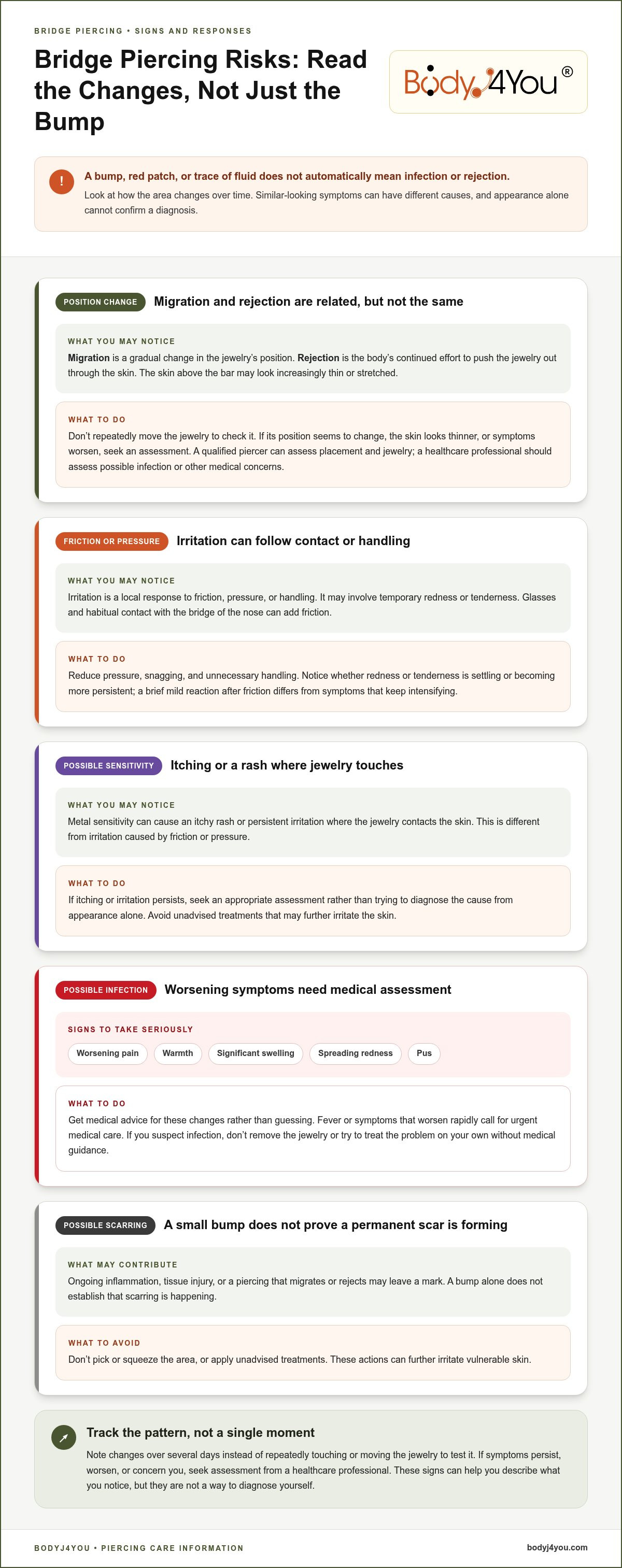
A bridge piercing passes through surface tissue, so the body may gradually shift the jewelry toward the skin’s surface. That possibility deserves attention, but a bump, red patch, or trace of fluid doesn’t automatically signal rejection or infection. These concerns can look similar at first, yet they have different causes and may call for different responses.
How migration and rejection can differ
Migration is a gradual change in the jewelry’s position; rejection is the body’s continued effort to push the jewelry out through the skin. The terms are related, but not interchangeable. A bar may appear to sit differently as the piercing shifts, while the skin above it may look increasingly thin or stretched. Appearance alone can’t confirm what’s happening, so avoid repeatedly moving the jewelry to check.
Ongoing pressure, snagging, or jewelry that doesn’t suit the placement can irritate the area and may contribute to problems. Glasses or habitual contact with the bridge of the nose can add friction. If the jewelry seems to move, the skin over it looks thinner, or symptoms are getting worse, seek prompt assessment. A qualified piercer can assess placement and jewelry. A healthcare professional should assess symptoms that suggest infection or another medical concern.
Not every bump means infection
Irritation is a local response to friction, pressure, or handling. It may involve temporary redness or tenderness. Metal sensitivity is different: it can cause an itchy rash or persistent irritation where the jewelry touches the skin. Infection involves microbial growth and may present with worsening pain, warmth, swelling, spreading redness, or pus. None of these signs, alone or together, lets you diagnose the cause with certainty.
Scarring is another distinct outcome. Ongoing inflammation, tissue injury, or a piercing that migrates or rejects may leave a mark, but a small bump doesn’t automatically mean a permanent scar is forming. Avoid picking, squeezing, or applying unadvised treatments, which can further irritate vulnerable skin.
Signs that need medical attention
Get medical advice for spreading redness, worsening pain, warmth, significant swelling, or pus. These changes warrant assessment rather than guesswork. Fever or symptoms that worsen rapidly call for urgent medical care. If you suspect infection, don’t remove the jewelry or try to treat the problem on your own without medical guidance. A clinician can advise what to do next.
- Possible migration: The position appears to change, or the skin over the bar looks thinner.
- Possible infection: Pain, warmth, swelling, redness, or discharge is worsening.
- Possible sensitivity: Persistent itching or a rash appears where jewelry contacts the skin.
These distinctions can help you describe what you notice, but they aren’t a way to diagnose yourself. For gentle day-to-day care, explore saline piercing aftercare essentials and follow the product directions. Products can support a routine, but they can’t diagnose or guarantee an outcome. Understanding these differences is a practical part of managing bridge piercing healing and risks with care.
Normal Irritation or a Problem? Read Bridge Piercing Symptoms Carefully
A healing bridge piercing can become briefly tender after an accidental bump or pressure from glasses. Look at the pattern: mild symptoms that settle after the trigger is reduced differ from signs that persist, spread, or intensify. Use the comparison below to organize what you notice, not to label the cause.
| Possible short-lived irritation | Worsening or persistent symptoms |
|---|---|
| Mild tenderness after a bump or brief pressure | Pain that steadily increases or doesn’t settle |
| Temporary redness or slight swelling that eases | Redness that spreads or swelling that worsens |
| Minor irritation after friction or snagging | Increasing warmth, worsening discharge, or fever |
| Symptoms improve when avoidable contact is reduced | Symptoms persist or continue to worsen despite less friction |
This table supports awareness, but it can’t diagnose infection, allergy, or rejection. Similar-looking symptoms can have different causes. A clinician can assess symptoms that are persistent, worsening, or concerning.
Changes that may reflect irritation
A little tenderness or temporary redness may follow pressure from glasses, a snag while changing clothes, or an unintentional touch. These are possible triggers, not proof of the cause. Repeated avoidable contact can keep a healing surface piercing unsettled. Reduce friction where practical, keep your hands off the jewelry, and observe whether the area settles. Don’t test it by moving or pressing it.
When symptoms are worsening rather than settling
A general trend toward less discomfort differs from pain or swelling that keeps increasing. Spreading redness, fever, or worsening discharge calls for medical care. Seek urgent help if symptoms change rapidly or you feel acutely unwell. Don’t assume a rash means infection: jewelry sensitivity and infection need different professional assessment, and appearance alone may not tell them apart.
Check how your glasses sit. Notice whether the frames rest on or rub the piercing, and reduce that contact if you can do so safely. Also consider repeated snags from towels, clothing, or facial care. Don’t twist, press, or remove the jewelry to investigate a symptom. Handling can add irritation and make changes harder to interpret.
Keep a simple record instead. Note when a change began, whether it is improving or worsening, and any recent pressure or accidental contact. A quick note or photo taken without touching the area can help you describe the pattern during an assessment. If you’re uncertain, especially when symptoms persist or progress, seek professional advice rather than waiting for a particular sign to appear. Careful observation is useful for understanding bridge piercing healing and risks, but it isn’t a substitute for diagnosis.
Bridge Piercing Aftercare: Reduce Friction and Keep the Routine Simple
Good aftercare is gentle, consistent, and easy to follow. A bridge piercing can be disturbed during cleaning or by everyday pressure from glasses, bedding, towels, clothing, and facial products. Small adjustments can reduce avoidable contact while the area heals. They can’t guarantee a particular outcome, but they help keep your routine calm and low-irritation.
A low-irritation daily care routine
Keep care simple. Follow these steps, and use any aftercare product only as its label directs:
- Wash your hands before care. Avoid touching the piercing at other times.
- Clean gently with an appropriate saline aftercare product, following its directions. Don’t substitute homemade mixtures or harsh cleaners such as alcohol or hydrogen peroxide.
- Pat dry with clean, disposable material. Don’t rub the area or rotate the jewelry.
Resist picking at crusts or repeatedly inspecting the channel by moving the jewelry. Extra handling can irritate the skin. For broader cleaning guidance, see the sterile saline aftercare guide.
Everyday habits that can disturb healing
Check whether your glasses rest on or press against the piercing site. If they do, consider how to reduce rubbing without putting pressure elsewhere. Sleep position matters too: try not to sleep face-down or press the bridge against a pillow. When drying your face, pat around the area rather than dragging a towel across it.
Clothing can snag jewelry during dressing or undressing, so move fabric carefully around your face. Keep makeup, sunscreen, and skincare products away from the piercing itself. Residue or repeated application may irritate the area. If a product accidentally gets near the site, don’t scrub to remove it. Return to gentle care and watch for changes.
A new or unusual bump can have different causes, so don’t assume its appearance tells you what it is or apply an unadvised treatment. The piercing bump aftercare guide offers further context, but persistent or worsening symptoms deserve professional assessment.
For a simple routine, choose clean hands, gentle saline care, and less friction. BodyJ4You’s saline piercing aftercare spray can be an optional part of that routine when used according to its product directions. Explore saline piercing aftercare spray as one practical care essential. Products support everyday care; they don’t diagnose a problem or guarantee healing. Consistent, low-irritation habits are a sensible foundation for bridge piercing healing and risks.
Support Bridge Piercing Aftercare with Simple, Considered Essentials
The plan is straightforward: keep care gentle, reduce repeated friction, and pay attention to how symptoms change. Aftercare essentials can make a routine easier to follow, but they aren’t treatments for infection, rejection, or other complications. No spray or topical product can promise a particular healing result.
What to look for in piercing aftercare essentials
Choose products intended for piercing aftercare and read their directions before use. BodyJ4You’s saline piercing aftercare spray is an optional care essential. Follow the product label and use it only as directed. Saline can support routine cleaning, but it doesn’t prevent complications or replace medical assessment. Avoid putting oils, bump products, makeup, or other cosmetics on a healing piercing unless a qualified professional advises you to do so.
If a product stings, causes a rash, or seems to increase irritation, stop using it and seek appropriate advice. Don’t respond by adding several new products or switching repeatedly. That can make it harder to identify what’s irritating the area. A simple routine is easier to maintain and assess.
A calm plan for the next stage of healing
Leave the jewelry undisturbed unless a qualified professional advises otherwise. Keep reducing pressure from glasses and avoid snagging the bar during dressing, face washing, or towel drying. Continue to notice whether tenderness, redness, or swelling is improving, staying stable, or worsening. A brief note can help you track the overall pattern without repeatedly touching the piercing.
Seek medical advice if symptoms persist, worsen, or concern you. If you suspect infection, don’t rely on a care product or home remedy to decide what to do. Get professional guidance. A product designed for piercing aftercare can support routine care, but it can’t diagnose a problem or take the place of medical treatment.
For bridge piercing healing and risks, keep the priorities clear: gentle care, less friction, and timely attention to concerning changes. BodyJ4You has more than two decades of industry experience, and its skincare line is manufactured in the United States. These details don’t change the need to follow product directions or seek care for symptoms that need assessment.
To choose a simple care essential for your routine, explore BodyJ4You aftercare essentials. Use products thoughtfully, leave the jewelry alone, and let changes over time guide your next step.
Let Your Next Step Be Simple and Steady
Healing can ask for patience, but it doesn’t have to turn every day into a test. Choose a gentle routine you can follow consistently, make small adjustments to avoid unnecessary pressure, and seek medical advice when a change concerns you. With bridge piercing healing and risks, informed attention is more useful than trying to predict exactly what will happen next.
Aftercare essentials can support your routine, but they aren’t a substitute for professional assessment or a promise of a particular result. Select products thoughtfully, follow their directions, and focus on what your piercing needs rather than adding steps without a clear reason.
For an optional addition to your care routine, explore BodyJ4You piercing aftercare essentials. Take it one day at a time. A calm, considered approach can help you feel more confident as healing progresses.
Frequently Asked Questions
Does a bridge piercing hurt?
Pain varies by person, placement, and individual sensitivity, so no single rating applies to everyone. The piercing passes through skin over the nasal bridge, not bone. Temporary tenderness afterward may occur, but severe or worsening pain differs from expected short-term discomfort. If pain increases or comes with spreading redness or swelling, seek medical advice rather than relying on an online pain scale.
Can I wear glasses while a bridge piercing heals?
You may be able to wear glasses if the frames don’t press on or repeatedly touch the piercing. Check how they sit during normal wear, including when you look down or move your head. Don’t force an uncomfortable fit, and don’t adjust or remove the jewelry yourself to make room. If contact is hard to avoid, ask a qualified piercing professional about safe options.
Can I exercise while a bridge piercing is healing?
Many people can continue ordinary activity while taking care to prevent pressure, contact, or snagging around the piercing. For example, check that sports equipment, towels, or clothing won’t catch the jewelry. After sweating, follow your usual aftercare directions rather than scrubbing the area. If a particular activity repeatedly makes symptoms worse, pause or modify it. Seek professional advice if symptoms persist or intensify.
Can I use makeup around a new bridge piercing?
Keep makeup and skincare products away from the piercing and its openings while it heals. Residue may irritate the area, while brushes, sponges, or fingers can add friction or transfer dirt. Apply products carefully around the site, and cleanse without scrubbing or catching the jewelry. If cosmetics get on the piercing, follow your aftercare instructions instead of adding another product to counteract them.
What should I do if I accidentally bump my bridge piercing?
Leave the jewelry alone: don’t twist, push, or keep checking it. Wash your hands before necessary care, then follow your usual aftercare directions and observe how the area changes. A brief reaction may settle, but increasing pain, swelling, bleeding, or visible jewelry movement merits prompt assessment. Seek medical care for severe symptoms, spreading redness, fever, or changes that worsen rapidly.
Can bridge piercing jewelry be changed before it feels healed?
Don’t decide it’s ready based only on comfort or a predicted date. A piercing may look calm while the channel is still vulnerable, so avoid changing jewelry yourself during healing. Ask a qualified piercing professional about timing and fit. If the area is painful, swollen, or irritated, seek assessment before any change. This patient approach is central to managing bridge piercing healing and risks.


