


What if cleaning your new piercing more often actually makes it harder to settle? It’s natural to watch every change and want to keep the area spotless, especially when swelling, crust, or irritation appears. But good vertical labret aftercare instructions focus on gentle, consistent care, not constant handling. Food, makeup, and everyday lip movement can add to the uncertainty, too.
A simple routine can help you avoid over-cleaning and unnecessary contact while supporting a smoother healing process. This guide explains how to clean both openings gently, which habits and products to avoid, and what changes may occur during early healing. It also covers when symptoms such as increasing pain, heat, thick discharge, red streaks, or fever call for prompt medical advice. Clear guidance can help you care for your piercing without disturbing it at every turn.
Key Takeaways
- Understand how a vertical labret passes through the lip and what changes can occur during healing.
- Follow vertical labret aftercare instructions with clean hands, gentle saline care, and minimal handling.
- Appearance alone can’t confirm infection. Know which symptoms warrant prompt medical advice.
- Reduce avoidable friction by keeping makeup, skincare, and hair products away from the piercing.
- Choose saline aftercare by checking the product label, and keep your routine simple and consistent.
Vertical labret aftercare: what to expect as it heals
A calm, consistent routine is usually more helpful than changing products whenever the piercing looks different. Healing tissue can be sensitive, and frequent product switches or extra handling may add irritation rather than solve it. These vertical labret aftercare instructions start with the piercing’s placement and the normal variability of healing, so you can care for the area without expecting every day to look the same.
A vertical labret passes through the lower lip, with one opening on the lip and another on the skin beneath it. Both openings are on the outside of the mouth. This distinguishes it from lip piercings that extend into the oral cavity, although the area still moves during speaking, eating, and facial expressions. For broader background on piercing practices, see this Body Piercing Overview.
How a vertical labret differs from other lip piercings
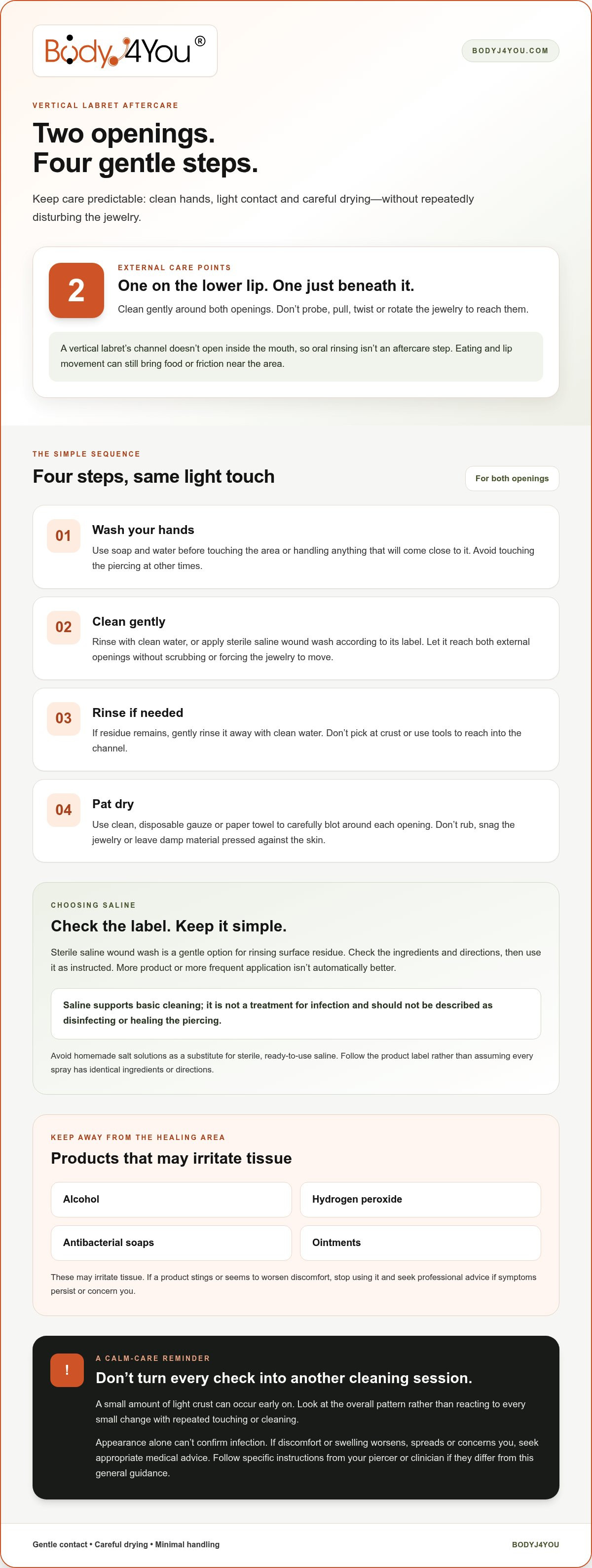
The jewelry sits vertically through the lower lip tissue, with one visible end on the lip and the other just below its edge. Both external openings need gentle attention during routine care. Clean around each one, but don’t probe, pull, or rotate the jewelry to reach them.
A vertical labret has two external care points: one on the lower lip and one on the skin just beneath it. Unlike a traditional labret, its channel doesn’t open inside the mouth. The piercing itself therefore doesn’t require oral rinsing as an aftercare step, although eating and lip movement can still bring food or friction near the area.
What early healing can look and feel like
Some tenderness, localized swelling, and a small amount of light crusting can occur early on. Consider these changes in context: how intense they are, whether they’re improving or worsening, and whether other symptoms appear. A little crust alone doesn’t establish a problem, and appearance by itself can’t show exactly how the tissue is healing.
Healing doesn’t follow a guaranteed calendar. The outside may look calmer before the tissue along the piercing channel has fully settled, and day-to-day changes can follow movement or accidental contact. Notice overall patterns instead of touching, checking, or cleaning repeatedly in response to every small change. If discomfort or swelling worsens, spreads, or concerns you, seek appropriate medical advice rather than relying on an online guide.
This section offers general aftercare education, not a diagnosis. It can help you understand the piercing’s anatomy and possible changes, but it can’t determine whether a particular symptom is irritation, infection, or another issue. A simple cleaning routine can help you care for both openings without overdoing it.
How to clean a vertical labret piercing without overdoing it
Keep the routine simple: clean hands, gentle contact, and careful drying. The aim is to remove surface residue without repeatedly disturbing the jewelry or irritating either opening. The Association of Professional Piercers’ APP Piercing Aftercare Guidelines recommend sterile saline wound wash for healing piercings and caution against harsh cleaning products. Follow specific instructions from your piercer or clinician if they differ from this general guidance.
A simple cleaning sequence for both openings
Use the same light touch at the lip and the skin below it. You don’t need to twist or move the jewelry to clean around the openings.
- Wash your hands. Use soap and water before touching the area or handling anything that will come close to it. Avoid touching the piercing at other times.
- Clean gently. Rinse the area with clean water, or apply sterile saline wound wash according to the product label. Let it reach both external openings without scrubbing or forcing the jewelry to move.
- Rinse if needed. If residue remains, gently rinse it away with clean water. Don’t pick at crust or use tools to reach into the channel.
- Pat dry. Use clean, disposable gauze or paper towel to carefully blot around each opening. Don’t rub, snag the jewelry, or leave damp material pressed against the skin.
This short sequence makes care predictable without turning every check into another cleaning session. For more detail on selecting and using saline, see the sterile saline spray aftercare guide.
Choosing saline and using it as directed
Sterile saline wound wash is a gentle option for rinsing away surface residue. It supports basic cleaning, but it isn’t a treatment for infection and shouldn’t be described as disinfecting or healing the piercing. Check the ingredients and directions on the label, then use the product as instructed. A saline aftercare spray can be convenient, but using more or applying it more often isn’t automatically better.
Avoid mixing homemade salt solutions as a substitute for a sterile, ready-to-use product. Home preparation can make cleanliness and concentration difficult to control. Also avoid alcohol, hydrogen peroxide, antibacterial soaps, and ointments on the healing area, as these may irritate tissue. If a product stings or seems to worsen discomfort, stop using it and seek professional advice if symptoms persist or concern you.
BodyJ4You’s saline piercing aftercare spray is one option for routine care. Read the label and follow its directions rather than assuming every spray has identical ingredients or use instructions. The goal is gentle, measured care, not a shelf full of changing products.
Irritation or infection? How to respond to changing symptoms
A change in appearance can be worrying, but appearance alone can’t confirm or rule out infection. Mild redness, tenderness, or swelling may occur during healing. Friction, pressure, or contact with products can also cause irritation. Consider the whole picture: whether symptoms are easing or worsening, whether they’re spreading, and how you feel overall. These vertical labret aftercare instructions can help you decide what to watch, but they can’t diagnose a condition.
Changes to monitor without self-diagnosing
Notice whether pain, redness, warmth, or swelling is improving, staying the same, or getting worse. A small amount of pale crust or localized tenderness can occur as tissue heals, but increasing discomfort or changes spreading beyond the piercing deserve attention. A bump can have different possible causes, so don’t assume it’s an infection or treat it based on appearance alone.
Pay attention to other changes, too. Thick yellow or green discharge, marked heat, red streaks extending from the area, or feeling unwell, especially with a fever, are reasons to seek medical advice promptly. Clear or pale fluid doesn’t by itself establish what’s happening. Note when a symptom began and whether it’s changing. That context can help a healthcare professional assess the concern.
Suspected infection needs medical assessment, not home diagnosis.
When to seek medical or piercing-professional guidance
Contact a qualified healthcare professional if you suspect infection, feel unwell, or notice symptoms that are severe, worsening, or spreading. Seek urgent medical care for concerning signs such as fever or red streaks. Don’t rely on extra saline, oils, or other home treatments for a possible infection, and don’t delay assessment while waiting to see whether a product helps.
A reputable piercer can offer guidance about jewelry fit or possible mechanical irritation, such as pressure or repeated snagging. That’s different from diagnosing infection or other medical conditions, which requires a healthcare professional. If the jewelry seems to be pressing into tissue or moving in a way that concerns you, avoid adjusting it yourself and seek appropriate guidance.
- Improving: Keep observing the overall trend and avoid unnecessary handling.
- Worsening or spreading: Arrange medical assessment rather than trying new products.
- Systemic symptoms or severe signs: Seek prompt medical care.
For background on bumps and irritation, BodyJ4You’s piercing bump aftercare guide offers related education. A bump’s appearance alone can’t identify its cause, so use general information as context, not as a substitute for professional assessment when symptoms are concerning.
Everyday habits that can irritate a healing vertical labret
Care isn’t only about cleaning. Repeated contact from cosmetics, meals, clothing, or your hands can bother a healing piercing. Focus on reducing friction rather than adding products or cleaning sessions. The goal isn’t to avoid normal life. Notice what catches, presses, or leaves residue around the two openings, then make a practical adjustment.
Use your comfort as a guide. If a habit causes a tug or sting, change how you do it and see whether the contact stops. Don’t assume every moment of sensitivity means harm or treat every ordinary activity as a risk. Gentle, consistent choices are more useful than blanket restrictions.
Food, skincare, and cosmetics around the lip
During healing, keep lipstick, makeup, and non-piercing skincare away from the entry and exit points. Hair products can run or transfer onto the area, too, so apply them carefully and avoid letting treated strands rest against the piercing. If a product accidentally gets near an opening, rinse away residue gently with clean water rather than rubbing or scrubbing.
Eating doesn’t need to become complicated. If wide bites or a particular food’s texture pulls at your lip, take smaller bites, slow down, or choose an easier-to-manage option until movement feels comfortable. Use a clean napkin to dab your mouth, not wipe across the jewelry. If food or liquid residue remains around the piercing, rinse gently instead of repeatedly touching it.
Touching, sleeping, and jewelry movement
Resist the urge to twist the jewelry, pick at crust, or check its position by hand throughout the day. Repeated movement can irritate the openings, and picking may disturb healing tissue. If you need to clean the area, wash your hands first and follow your routine. Otherwise, let the jewelry rest.
At night, try to avoid sleeping with your lip pressed firmly into a pillow. Be mindful of towels, clothing, and bedding that could catch the jewelry, especially while drying your face or changing clothes. You don’t need to control every movement. Focus on repeated pressure or snagging that leaves the area sore.
If the jewelry keeps catching, feels pressed tightly against the tissue, or moves in a way that causes ongoing irritation, get fit advice from a reputable piercer. Don’t try to bend, shorten, or reposition it yourself. Alongside your vertical labret aftercare instructions, these small habit changes can help reduce avoidable contact without making everyday routines stressful.
For simple care essentials to support a gentle routine, explore piercing aftercare products.
Build a calm aftercare routine with suitable saline and jewelry
A reliable routine doesn’t need layers of products or constant adjustments. Keep three principles in view: clean gently, minimize irritation, and monitor changes. Together, they make vertical labret aftercare instructions easier to follow and help you notice when a concern needs attention.
- Clean gently: Use a suitable saline product according to its label, or follow professional guidance for rinsing.
- Minimize irritation: Limit unnecessary contact and avoid adding products that aren’t intended for piercing aftercare.
- Monitor changes: Notice whether discomfort is settling or getting worse, and seek medical advice for concerning symptoms.
What to look for in a piercing aftercare spray
Read the label before using any spray. Check its ingredients, directions, and intended use; don’t assume all products described as saline are identical. For a rinse option, look for clear labeling that identifies the product as sterile saline wound wash, and follow its instructions. BodyJ4You’s Saline Piercing Aftercare Spray is one convenient option, and its label should guide how it’s used.
Saline can help rinse away surface residue, but it isn’t a treatment for infection. Don’t use a spray more often or differently than its directions recommend, and don’t layer it with oils, ointments, or other products in an effort to speed healing. If a product causes persistent discomfort or a reaction, stop using it and seek appropriate professional advice.
A practical routine to carry into the next few weeks
Keep the steps manageable: wash your hands before care, clean the area gently as directed, and leave the jewelry alone between cleanings. Continue to reduce avoidable friction from cosmetics, food residue, or accidental snags. A calm routine is easier to maintain than a collection of changing products. Consistency also helps you notice meaningful changes rather than react to every small variation.
Jewelry fit can affect comfort, but don’t shorten, remove, or reposition it yourself while the piercing is healing. A reputable piercer can assess whether the jewelry fits appropriately, especially if it feels tight, catches repeatedly, or continues to irritate the area. For symptoms that may indicate infection or another medical concern, seek assessment from a qualified healthcare professional instead.
Healing can take patience, but your next step can stay simple: follow the product label, keep contact gentle, and get help when a symptom or fit concern persists. For saline and other piercing care essentials, Explore BodyJ4You aftercare essentials. A thoughtful routine supports comfort without promising to treat complications.
Keep your next steps simple and steady
Healing isn’t a performance to perfect. Give your piercing a calm, consistent routine, and let changes over time guide your attention instead of adding steps whenever you feel uncertain. Keep your vertical labret aftercare instructions easy to follow, and seek medical advice if symptoms become severe, worsen, or leave you concerned. A qualified piercer can help assess jewelry fit, while health concerns belong with a healthcare professional.
If you’re choosing aftercare essentials, check each product’s label and use it only as directed. BodyJ4You brings more than two decades of industry experience to its piercing and care products, including Saline Piercing Aftercare Spray as an option for routine cleaning. Saline supports gentle rinsing; it isn’t a treatment for complications.
Choose the essentials that suit your routine, keep care measured, and give your body time to heal. Explore BodyJ4You piercing aftercare essentials to find products for your care routine. You can move forward with confidence, one gentle step at a time.
Frequently Asked Questions
How often should I clean a vertical labret piercing?
For routine care, follow your piercer’s guidance and the saline product label; the Association of Professional Piercers generally recommends cleaning a healing piercing with sterile saline twice daily. Keep your vertical labret aftercare instructions consistent rather than increasing cleaning whenever you notice residue. If you’ve just eaten and the area feels messy, a gentle water rinse may be enough. Repeated cleaning can add unnecessary irritation.
Can I use mouthwash to clean a vertical labret piercing?
No, mouthwash isn’t intended to clean the two external openings of a vertical labret. The jewelry doesn’t pass into the mouth, so mouth rinses aren’t a substitute for gentle external care. Continue brushing and using oral-care products as usual, taking care not to smear them over the piercing. If mouthwash accidentally touches the outside, rinse the area with clean water rather than applying more product.
Is swelling normal after a vertical labret piercing?
Some swelling can happen early in healing, and the amount can vary from person to person. Notice whether it gradually settles or becomes more pronounced. If swelling increases, spreads, feels hot, or makes the jewelry press tightly into your lip, seek advice instead of waiting it out. Fever, red streaks, or feeling unwell call for prompt medical assessment. A photo can help you track changes, but it can’t diagnose them.
How long does a vertical labret take to heal?
Initial healing is often reported to take about 6 to 8 weeks, but that isn’t a guaranteed finish date. Internal tissue may take 2 to 4 months or longer to fully heal, even if the outside looks settled. Don’t use appearance alone to decide the piercing is ready for a jewelry change. If you’re unsure whether healing is complete, get advice from a qualified piercer before changing jewelry.
What should I do if my vertical labret jewelry feels too tight?
Don’t force the jewelry to move, remove it, or swap it yourself. Tightness may need prompt attention, especially if swelling is increasing or the jewelry looks as if it’s pressing into or disappearing beneath the skin. Contact a qualified healthcare professional for severe symptoms or suspected infection. A reputable piercer can assess fit concerns, but isn’t a substitute for medical care when symptoms suggest a health problem.
Can I put makeup on a healing vertical labret?
Keep makeup off the piercing openings while they heal. Foundation, lipstick, or concealer can transfer onto the area during application or removal, so leave a clear margin around the lip and the skin below it. If makeup gets close by accident, rinse away residue gently rather than rubbing it off. Resume applying products near the openings only once healing is complete, and stop if a product causes irritation.


