

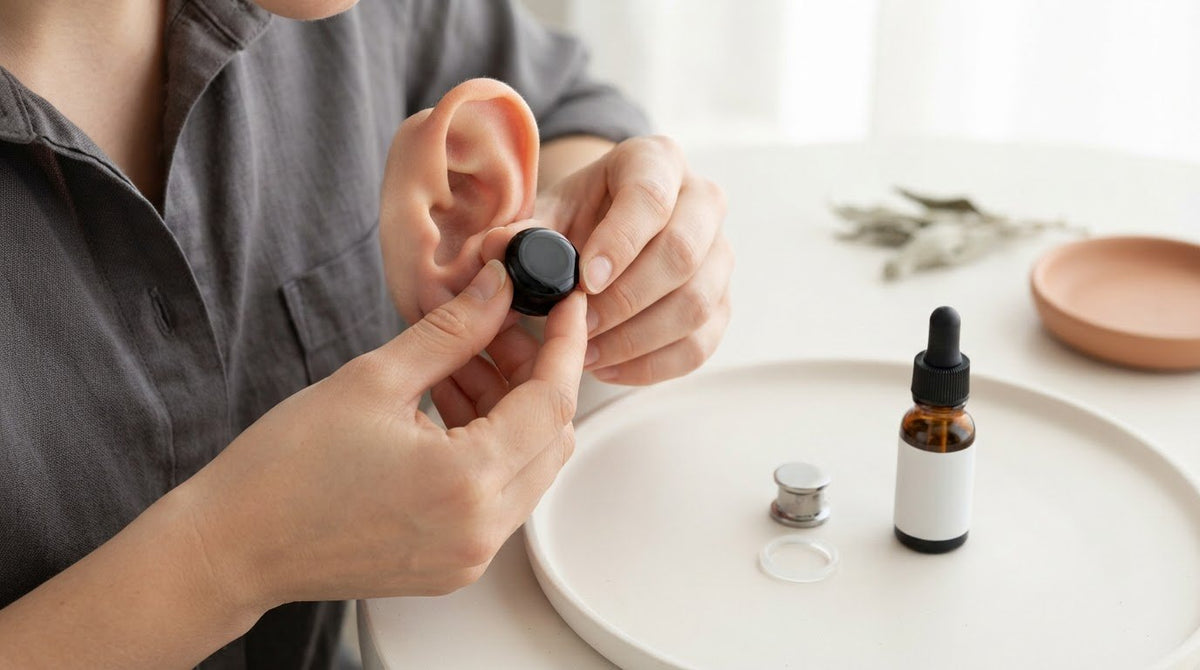
A double-flare plug should slide into a settled piercing, never stretch it. The flared ends are wider than the wearable area, so forcing them through can cause pain or injury. Learning how to insert double flare plugs starts with checking that your piercing is fully healed and comfortable, not with pushing harder.
It’s understandable to feel unsure, especially if you’re new to double-flare jewelry or worried about irritating a stretched lobe. This guide explains how to check readiness, prepare your hands, lobe, and jewelry, and try a gentle insertion method. A plug should go in without sharp pain, bleeding, or force. If it won’t slide in comfortably, choose a single-flare style for now or seek advice from a professional piercer.
You’ll also learn what to do if the plug resists and how to remove it without pulling hard. The key is to stop when you meet resistance and choose a safer next step rather than trying to make the jewelry fit.
Key Takeaways
- Check the plug’s wearable size and widest flare measurement. The gauge label alone may not show how much room the ends need.
- Use clean hands and a gentle technique. Ease the lobe around the flare only if the jewelry moves freely.
- If the plug resists, compare single-flare or no-flare styles instead of pushing through discomfort.
- Notice pressure or irritation while wearing plugs, and remove jewelry slowly. Never pull hard if it feels caught or painful.
How double-flare plugs fit, and when they are appropriate
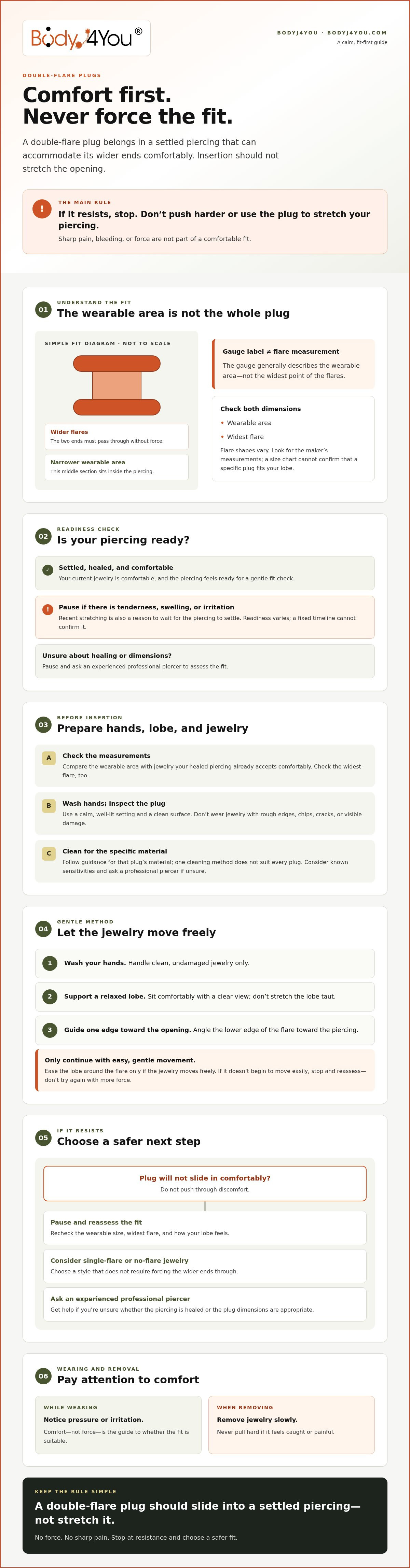
A double-flare plug belongs in a settled piercing that can comfortably accommodate both wider ends. The center may match the size your lobe currently wears, but the flares must also pass through without force. If they don’t, the plug isn’t suitable for insertion right now.
Keep stretching and wearing jewelry separate. Stretching is the deliberate expansion of a healed piercing. Inserting a double-flare plug should not expand the opening. Resistance is a reason to stop, not to push harder or use the jewelry to reach a larger size.
What makes a plug double-flare?
A plug has a narrower middle section, called the wearable area, that sits inside the piercing. A wider edge, or flare, at each end helps keep the jewelry in place without separate O-rings. The wearable gauge describes the middle section, not the full width of the flares. Designs vary, so check the maker’s measurements for both the wearable area and the widest flare before choosing a plug.
Is your stretched piercing ready for double-flare jewelry?
Choose double-flare jewelry only if the piercing is healed, comfortable, and able to accommodate the flares without added stretching. Readiness varies, so a fixed timeline can’t confirm that your lobe is prepared. Recent stretching, tenderness, swelling, or irritation are reasons to pause and let the piercing settle.
Before considering how to insert double flare plugs, think about how your lobe responds to its current jewelry. If you’re unsure whether the piercing is healed or whether the plug’s dimensions are appropriate, ask an experienced professional piercer to assess the fit. A comfortable fit should never depend on force, pain, or hoping the tissue will give way.
Check plug size, material, and lobe comfort before insertion
A plug can have the right gauge label and still be difficult to insert if its flares are too wide for your piercing. Check the actual measurements and your lobe’s comfort before you begin. If anything is unclear, pause rather than relying on the label alone.
How do you confirm the right gauge and flare dimensions?
Compare the plug’s wearable section with the size of jewelry your healed piercing already accepts comfortably. Then check the widest point of both flares. Gauge labels generally describe the wearable section, not the flare diameter, and flare shapes vary between designs. An ear gauge size chart can help you interpret measurements, but it can’t confirm that a particular plug will fit your lobe.
Look for the maker’s measurements of the wearable area and widest flare. If you already own a plug that feels comfortable, compare its dimensions with the new one. If measurements aren’t available or you’re unsure how they relate to your current jewelry, ask the seller or an experienced professional piercer before trying the plug.
Prepare clean hands, jewelry, and a comfortable setting
Set up somewhere calm and well lit, with a clean surface where the jewelry won’t roll away. Wash your hands before handling the plug. Inspect it carefully under good light. Rough edges, chips, cracks, or other visible damage can make it unsuitable to wear, so don’t use a damaged piece.
Clean the jewelry according to guidance for its specific material. Don’t assume one cleaning method works for every plug. Material choice also depends on your piercing and any known sensitivities. The APP guidelines on jewelry for healed piercings explain how jewelry design and material considerations differ for healed piercings. If you’ve reacted to a material before, check with a professional piercer about an appropriate option rather than assuming a material is suitable for everyone.
BodyJ4You’s ear-stretching kit is a related resource for learning about stretching tools, not a way to force a double-flare plug into a piercing. Checking the size, condition, and material first helps you approach insertion gently, without treating it as a stretch.
How to insert double-flare plugs: a gentle step-by-step method
Once you’ve checked the plug’s size and condition, take your time. This method is only for a settled piercing that feels comfortable with the jewelry you currently wear. The flare should pass with gentle movement, not pressure. If the plug doesn’t begin to move easily, stop and reassess. Don’t try a different angle with more force.
A careful insertion sequence
- Wash your hands. Handle the plug only after washing your hands, and make sure the jewelry is clean and undamaged.
- Position your lobe. Sit somewhere comfortable with a clear view. Hold the lobe gently so it’s relaxed and supported, not stretched taut.
- Guide one edge toward the opening. Angle the lower edge of the flare toward the piercing. Let it meet the opening lightly. Don’t push the plug into the lobe.
- Ease the lobe around the flare only if it moves freely. You may gently draw the lobe down around the edge as the plug passes through, but only while there’s no pain or resistance. Never twist aggressively or use the plug to widen the piercing.
- Check how it feels. Once in place, the plug should rest comfortably. If it creates pressure, persistent discomfort, or sudden irritation, remove it gently if you can do so without pain.
Stop immediately if you feel pain, resistance, bleeding, or sudden irritation. Don’t keep trying to push the flare through. The Association of Professional Piercers’ safe stretching practices reinforce the importance of not forcing jewelry into a piercing. If symptoms persist or you can’t remove the jewelry gently, ask an experienced professional piercer for guidance.
Should you use lubricant?
Don’t rely on lubricant to make an oversized flare fit. If you’re considering one, first check that it’s compatible with the jewelry material and follow guidance from a professional piercer. A slippery surface can’t make an unready or irritated piercing suitable for double-flare jewelry.
If insertion remains difficult, end the attempt. Choose a jewelry style that fits comfortably without forcing the flare, or ask a professional piercer to assess the fit. It’s also okay to wait and try again only when the piercing is settled and comfortable.
Safety takeaway: insertion should feel gentle, not like moving up a size.
If a double-flare plug will not go in, compare safer options
If the plug doesn’t move gently, stop. Resistance may mean the flare is too wide, the piercing hasn’t fully settled, or the design isn’t a comfortable match. Repeated attempts and added pressure can irritate or injure the tissue. A different jewelry style may be easier to insert, but no style should be used in a healing or irritated piercing without professional guidance.
Double flare versus single flare and no-flare plugs
The main difference is how each style stays in place. Compare the design and insertion considerations before choosing:
| Style | How it stays in | Fit and insertion consideration |
|---|---|---|
| Double-flare | Wider edges at both ends hold the plug in place. | Both flares must pass through comfortably. The jewelry shouldn’t be forced. |
| Single-flare | One flared edge and a separate O-ring typically secure the jewelry. | May be more practical if a double flare is difficult to insert, provided the size and fit are comfortable. |
| No-flare | A straight-sided plug may use separate O-rings to help keep it in place. | Without wider ends, insertion may be simpler, but check the design and securing method. |
These styles aren’t interchangeable for every wearer. Check the specific jewelry dimensions and securing components, and use only a style that fits a settled, comfortable piercing.
What to do when insertion causes pain or resistance
Stop immediately if the plug won’t move gently, or if you feel pain, notice bleeding, or experience marked irritation. Don’t twist hard, keep retrying, or reach for a taper or larger jewelry to push through. Stretching changes the piercing size. Inserting jewelry should not be used as a substitute for that process.
If discomfort continues, you’re concerned about an injury, or you can’t tell whether the plug is the right size, seek guidance from an experienced professional piercer. For general stretching education, BodyJ4You offers an ear-stretching kit. A kit is a related resource, not a tool for forcing a plug through resistance. Choosing a more suitable jewelry style or waiting until the piercing is settled is safer than pushing past discomfort.
Build a comfortable routine for wearing and removing double-flare plugs
A comfortable fit should stay comfortable. Pay attention to how your lobe feels while wearing a plug, not only during insertion. Pressure, persistent soreness, or irritation are reasons to reassess the jewelry rather than waiting for discomfort to pass.
How can you tell whether the plug is comfortable?
Notice whether the plug feels tight, catches on the lobe, or causes ongoing discomfort. These sensations don’t identify a specific problem, but they may indicate that the fit or style isn’t right for you. If discomfort begins or the jewelry becomes irritating, consider removing it gently if it moves freely. Don’t keep wearing a plug that feels increasingly uncomfortable.
If symptoms persist, worsen, or concern you, seek advice from a qualified professional piercer or healthcare professional. Avoid trying to diagnose the cause yourself or repeatedly changing jewelry in an irritated piercing.
How should you remove a double-flare plug?
Wash your hands, then take your time. Hold the lobe gently and move the plug slowly, allowing the tissue to ease around the flare without pulling or twisting forcefully. Stop if the jewelry feels caught, painful, or resistant. Don’t tug harder to make it move. Ask an experienced professional piercer for guidance if it won’t come out comfortably or you’re concerned about injury.
After removal, check how the lobe feels before deciding whether to wear that plug again. If it was tight or irritating, reconsider its dimensions and design rather than assuming you need to push through or change your piercing size. Knowing how to insert double flare plugs means checking that the jewelry fits comfortably. Appearance alone isn’t a reason to accept pressure or pain.
Choose jewelry for fit, comfort, and the needs of your settled piercing, not appearance alone. For broader stretching education, explore BodyJ4You’s ear-stretching resources. Its ear-stretching kits are a related resource, not a way to force double-flare jewelry into a piercing.
Choose a Fit That Feels Right
The safest approach to double-flare jewelry is simple: check the wearable size and flare measurements, and only try insertion when your piercing is settled and comfortable. Guide the plug gently, and stop if you feel pain, resistance, bleeding, or irritation. If it won’t go in easily, a different jewelry style or advice from an experienced professional piercer is a safer next step.
Knowing how to insert double flare plugs isn’t about pushing past resistance. It’s about recognizing when the fit is right and choosing comfort over appearance. Your jewelry should support self-expression without compromising the wellbeing of your lobe.
BodyJ4You offers ear-stretching kits and piercing-care products, including saline piercing aftercare spray. Explore BodyJ4You’s ear-stretching essentials for stretching resources and care products, and take your next step at a pace that feels comfortable.
Frequently Asked Questions
How do you put in double flare plugs?
Only try if your piercing is settled and comfortable with its current jewelry. Wash your hands and check that the plug is clean, undamaged, and correctly sized. Relax and support your lobe, then guide one edge of the flare toward the opening. Let the lobe ease around it only if the plug moves freely. Stop at resistance, pain, or bleeding. Never push or twist hard to make it fit.
Why won't my double flare plugs go in?
A plug may not go in because its flare is wider than your piercing can comfortably accommodate, its dimensions may not suit your lobe, or the piercing may not be fully settled. Gauge labels describe the wearable section, so check the maker’s measurements for the widest flare too. These possibilities don’t confirm a specific problem. Don’t keep retrying or increase pressure. Pause, and ask an experienced professional piercer if sizing or readiness is unclear.
Do double flare plugs stretch your ears?
Double-flare plugs are jewelry, not tools for intentionally stretching a piercing. Their wider ends need to pass through the opening, so forcing them can irritate or injure tissue and may stretch it unintentionally. Choose a plug only when your settled piercing can accommodate both flares comfortably. If you’re moving up a size, don’t use a double flare to push the piercing wider. Keep stretching separate from wearing jewelry, and stop if insertion meets resistance.
Can you wear double flare plugs in a newly stretched piercing?
Don’t assume a newly stretched piercing is ready for double-flare jewelry. The tissue needs to be settled and comfortable, and the opening must accommodate both flared ends without force. Readiness varies between people, so a fixed timeline can’t confirm that it’s safe for you. Keep to jewelry that fits comfortably, and ask an experienced professional piercer if you’re unsure whether the stretch has healed enough for a different style.
Should double flare plugs hurt when you put them in?
No. Insertion should feel gentle, not painful or like you’re moving up a size. Pain, resistance, bleeding, or sudden irritation are signs to stop, not sensations to push through. Don’t twist aggressively or keep trying to force the flare past the opening. If the plug won’t move easily, stop and reassess the size, design, or piercing readiness. Seek professional guidance if discomfort persists or you’re concerned.
Are double flare plugs harder to insert than single flare plugs?
They can be, because a double-flare plug has wider retaining edges at both ends, and both must pass through the piercing. A single-flare plug has one wider edge and typically uses a separate O-ring to help secure it, which may feel more practical if double flares are difficult to insert. Fit still matters with either style. Use only jewelry that suits a settled, comfortable piercing, and never force a plug through irritation.
How do you remove a double flare plug that feels stuck?
Don’t pull hard or twist forcefully. Wash your hands, relax your lobe, and try only slow, gentle movement if it feels comfortable. If the plug catches, hurts, or won’t move easily, stop rather than increasing force. Repeated pulling may irritate the tissue. Ask an experienced professional piercer for help if you can’t remove it comfortably, or if you’re concerned about pain, bleeding, or possible injury.


