

Your new navel piercing is much more than a fashion statement. It is a biological commitment that requires a nine to twelve month marathon of dedicated, disciplined care. It's natural to feel a blend of excitement and deep seated anxiety when you look at that fresh sparkle. You've likely encountered conflicting advice, heard horror stories about rejection, or spent late nights worrying about the first sign of redness. Proper belly button piercing aftercare shouldn't feel like a high stakes guessing game played with your own health.
We believe your body deserves clinical precision, nurturing support, and aesthetic refinement. This guide serves as your expert mentor, stripping away the confusion to provide a clear roadmap for safe healing. You'll learn how to master essential cleaning protocols, identify the difference between normal irritation and infection, and choose the professional products that protect your investment. We will explore the gold standard of saline care, the role of botanical oils, and the specific timelines for jewelry changes. You are about to transform a vulnerable new piercing into a beautiful, permanent expression of your unique identity.
Key Takeaways
- Healing a navel piercing is a biological marathon that requires nine to twelve months of patient, consistent dedication.
- Master the gold standard of belly button piercing aftercare by prioritizing sterile saline sprays over irritating homemade solutions.
- Identify the subtle differences between normal healing, common irritation bumps, and signs that require professional medical attention.
- Protect your aesthetic investment with strategic lifestyle adjustments, including wardrobe choices that minimize friction and moisture traps.
- Prioritize purity, safety, and ethics by selecting high-quality materials like surgical steel for your initial healing journey.
Navigating the Navel Piercing Healing Timeline
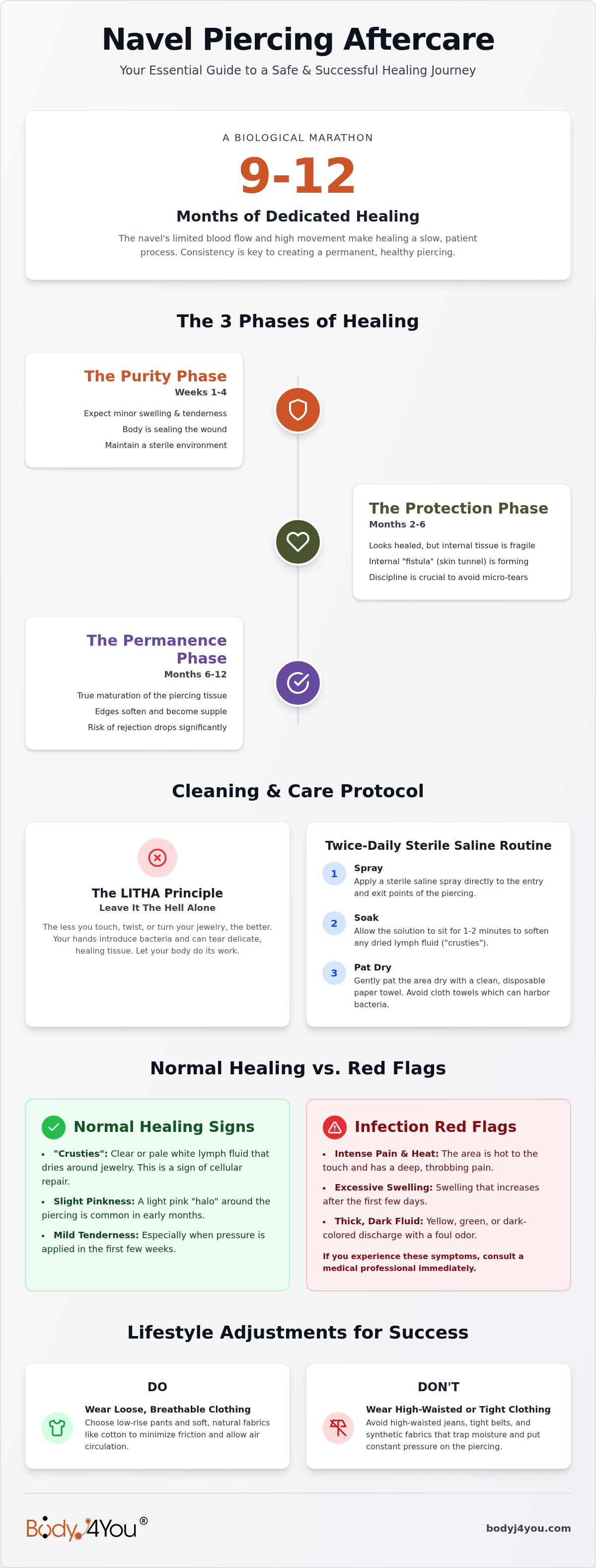
A navel piercing is a unique biological commitment. Unlike an earlobe, which might heal in weeks, the navel area is a complex anatomical site. The Navel piercing healing process is famously slow, often spanning nine to twelve months. This journey requires a structured approach to belly button piercing aftercare to ensure the tissue stabilizes without migration. Your body is not just healing a wound; it is creating a permanent channel of skin through a high-movement area.
The Purity Phase (Weeks 1-4): This is the stage of immediate response. Expect minor swelling, localized tenderness, and slight bruising. Your body is busy sealing the wound. It's critical to use a sterile Saline Piercing Aftercare Spray during this window, especially when wearing high-quality surgical steel jewelry, to flush out debris without disrupting the new cells. This phase is about minimizing trauma and maintaining a sterile environment.
The Protection Phase (Months 2-6): This is the "deception" stage. The piercing often looks pristine on the surface, but the internal "fistula" or skin tunnel is still fragile. Any sudden snag or premature jewelry change can cause micro-tears. You must remain disciplined even when the discomfort has vanished. It's a period of internal stabilization, cellular growth, and structural reinforcement.
The Permanence Phase (Months 6-12): True maturation happens here. The edges of the piercing soften, and the tissue becomes supple. Only after this full year can you consider the piercing truly established. This is when the risk of rejection significantly drops and the jewelry site feels like a natural part of your anatomy.
Why Navel Piercings Take Longer to Heal
The navel shelf area lacks the robust vascularity found in other parts of the body. This limited blood flow slows the delivery of oxygen and healing nutrients to the wound site. Your "core" is also the center of physical movement. Every time you sit, twist, or walk, the jewelry shifts slightly. Constant friction from waistbands, high-waisted jeans, and belts creates a persistent challenge for the delicate new skin. These factors combine to make the navel a demanding site for modification. It requires clinical purity, botanical support, and industry expertise to navigate successfully.
Normal Healing vs. Early Red Flags
Distinguishing between healthy progress and potential complications is essential for peace of mind. Lymph fluid, which is clear or pale white, often dries into "crusties" around the jewelry. This is a sign of cellular repair, not infection. A slight pinkness or "halo" around the entry points is also typical in the first few months. You should focus on three specific markers to identify real trouble: heat, excessive swelling, and deep throbbing. If you notice persistent irritation bumps, a Piercing Bump Treatment Oil can provide soothing support. However, if the area becomes intensely painful or discharges thick, dark fluid, you should consult a medical professional immediately.
How to Clean Your Belly Button Piercing Safely
Effective healing begins with a counterintuitive truth: the less you touch your jewelry, the better your body recovers. We call this the LITHA principle. Leave It The Hell Alone. Every time you twist, turn, or slide the barbell, you risk tearing the delicate new skin forming inside the fistula. Your hands carry bacteria that your immune system shouldn't have to fight while it's busy repairing a wound. Adhering to this "no-touch" policy is the foundation of professional piercing aftercare and the best way to prevent unnecessary trauma.
Purity is paramount when selecting a cleaning agent. You might feel tempted to mix a salt solution in your kitchen, but DIY soaks are a significant risk. It's nearly impossible to achieve the correct pH balance or ensure the water is truly sterile at home. Too much salt dehydrates the tissue; too little fails to clean it effectively. Professional standards for belly button piercing aftercare dictate that sterile saline is the only liquid that should touch your piercing. It's isotonic, gentle, and biologically compatible with your body's natural chemistry.
The 4-Step Sterile Saline Protocol
Establishing a rhythmic, twice-daily cleaning routine ensures maximum efficacy without over-cleaning the site. Follow this structured approach for the best results:
- Spray: Apply a sterile saline spray for piercings directly to the entry and exit points.
- Soak: Allow the solution to sit for one to two minutes. This softens "crusties" or dried lymph fluid naturally. Never pick at these with your fingernails.
- Rinse: If there's excess debris, gently rinse the area with clear, running water in the shower to flush the site.
- Dry: Moisture traps are the enemy of healing. Use a disposable paper towel or a hairdryer on a cool setting to ensure the site is completely dry.
Essential Tools for Delicate Care
The tools you use are just as important as the solution itself. Standard cotton balls often shed tiny fibers that can wrap around the jewelry and cause persistent irritation. Instead, specialized piercing cleaning swabs offer a lint-free, precise application that protects the wound site. Avoid communal towels at all costs. They harbor bacteria and can easily snag on your jewelry. Keep your aftercare products in a cool, dry place to maintain their integrity. For those seeking a reliable foundation for their healing journey, the BodyJ4You aftercare collection provides the clinical purity your body requires.
Managing Piercing Bumps and Irritation
Navel healing isn't always a linear path. Minor setbacks, such as localized bumps, are common but require immediate attention to prevent long-term scarring. Identifying the nature of a "piercing bump" is the first step in effective belly button piercing aftercare. Most bumps are simply your body's response to irritation, friction, or moisture traps. However, it's vital to distinguish these from keloids, which are permanent scar tissue, or abscesses, which are pockets of infection. Understanding the "why" behind the bump empowers you to adjust your routine before the issue escalates.
Common triggers often involve lifestyle factors you can control. Friction is the primary culprit. High-waisted waistbands or tight belts put constant pressure on the jewelry, causing it to shift and irritate the internal fistula. Moisture traps, often caused by failing to dry the site after a shower, create a breeding ground for bacteria. If your jewelry is too long, it may snag frequently, leading to migration. If the barbell feels "roomy" after the initial swelling subsides, consult your professional piercer for a jewelry downsize. This simple adjustment improves stability and reduces the risk of persistent irritation.
Using Targeted Treatment Oils
When irritation occurs, botanical support offers a gentle yet effective solution. Applying a piercing bump treatment oil can calm inflamed tissue and encourage healthy skin barrier repair. Jojoba oil mimics the skin's natural sebum, providing deep hydration, while Rosehip oil is rich in essential fatty acids that support cellular regeneration. Consistency is mandatory for success. Apply the oil twice daily after your saline rinse. Most users see a visible reduction in bump size within a two-week timeline of disciplined care. This rhythmic approach ensures the tissue stays supple and resilient throughout the belly button piercing aftercare journey.
Signs of Infection vs. Rejection
It's essential to distinguish between a "cranky" piercing and a clinical infection. Watch for the Rule of Three: persistent heat, deep-seated throbbing, and excessive swelling. Fever or thick green/yellow discharge are clear indicators of infection that require medical attention. Rejection, however, is a different biological process. This occurs when your body identifies the jewelry as a foreign object and pushes it toward the surface. Perform the "Skin Bridge" test regularly by measuring the distance between the entry and exit holes. If the jewelry appears to be getting shallower or the skin bridge is thinning, your piercing may be migrating. Early intervention by a professional can often save the placement and prevent permanent scarring.
Lifestyle Adjustments for Long-Term Success
Successful belly button piercing aftercare extends far beyond your twice-daily cleaning ritual. It requires a conscious shift in how you interact with your environment. Your wardrobe is your first line of defense. Avoid high-waisted jeans, tight leggings, and heavy belts that exert downward pressure on the jewelry. This pressure can cause the barbell to tilt, leading to uneven healing or migration. Opt for low-rise fits or soft, breathable fabrics that allow for airflow and minimize friction.
Sleeping habits also play a vital role in your recovery. If you're a stomach sleeper, consider using a "donut" or travel pillow positioned around the navel to create a protective void. This prevents the jewelry from being pressed into the wound site overnight. These small adjustments are the hallmarks of expert belly button piercing aftercare. Water safety is equally non-negotiable. You must adhere to a strict 6-month rule for pools, lakes, and hot tubs. These bodies of water are reservoirs for bacteria and chemicals that can easily overwhelm a healing fistula.
Jewelry Materials and Gauge Standards
The foundation of a healthy piercing is the jewelry itself. A 14G barbell is the industry standard for a reason. Thinner gauges can lead to the "cheese cutter" effect, where the jewelry slowly migrates through the skin due to lack of surface area. When choosing your initial metal, prioritize purity and biocompatibility. Surgical steel is a reliable, high-end choice for most, while titanium offers a nickel-free alternative for those with extreme sensitivities. Don't rush to change your jewelry. Follow the 6-Month Rule: wait at least half a year before attempting to swap your starter piece for decorative styles.
Protection During Physical Activity
Maintaining an active lifestyle is possible if you take specific precautions. For contact sports, some professionals recommend using a hard-shell vented eye patch secured with medical tape over the navel. This provides a physical barrier against impact while allowing the wound to breathe. Sweat is a natural byproduct of exercise, but it can act as an irritant. Always perform your saline cleaning protocol immediately following heavy perspiration to remove salt and bacteria. If you notice persistent redness or increased tenderness after workouts, it's a sign that your activity level is hindering your body's ability to repair the tissue.
Ensure you have the right tools for a safe transition by exploring the BodyJ4You collection of surgical steel navel jewelry.
The BodyJ4You Commitment to Aftercare
BodyJ4You stands as a stabilizing force in the body modification community. For over two decades, we've acted as a wise guardian for those embarking on their self-expression journeys. We understand that your piercing is more than a trend; it's an investment in your personal aesthetic and physical well-being. This long-standing industry presence allows us to offer more than just products. We provide a foundation of trust and transparency. Our commitment to belly button piercing aftercare is rooted in the belief that safety and style should never be mutually exclusive.
We take quiet pride in our heritage and regional manufacturing. Our specialized skincare line is produced locally in the USA. This domestic production serves as a shorthand for rigorous quality control and regulatory trust. By maintaining a close relationship with our manufacturing process, we ensure that every bottle meets high dermatological standards. We prioritize the integrity of the individual over fleeting trends, offering a reliable path to healing that bridges the gap between beauty and biology. Our mission is to empower your self-expression through safe, affordable quality.
A Curated Aftercare System
We believe in a holistic approach to recovery. Our curated system combines the clinical precision of our Saline Piercing Aftercare Spray with the nurturing support of targeted healing oils. This dual-action method addresses both daily sanitation and the common mid-healing setbacks that can occur during the long navel recovery marathon. We focus on three core pillars: Purity, Safety, and Ethics.
- Purity: We utilize high-grade materials like surgical steel and medical-grade saline to minimize irritation.
- Safety: Our products are formulated to support the skin's natural barrier without harsh, disruptive chemicals.
- Ethics: We maintain a strict focus on ingredient integrity and animal welfare in every formula we develop.
Professional piercing studios can also access our expertise through our wholesale support program. If you need specialized guidance or have questions about our range, our dedicated support team is always available to mentor you through the nuances of the healing process.
Your Journey, Our Expertise
Your healing milestones are a testament to your discipline. We invite our community to share their progress as they move toward full tissue maturation and stability. Even after the twelve-month mark, long-term maintenance remains essential for the health of your navel shelf. Periodically cleaning your jewelry and inspecting the site ensures your piercing remains a vibrant part of your look for years to come. Remember that patience is the ultimate ingredient in any belly button piercing aftercare routine. Your body is performing a complex biological feat; give it the time, tools, and respect it deserves.
Mastering Your Healing Journey
Your path to a perfectly healed navel piercing is a biological marathon that requires discipline, clinical purity, and unwavering patience. By honoring the twelve month healing timeline and adhering to professional cleaning protocols, you ensure your body can create a resilient, beautiful fistula. Less is more. Don't fall for the temptation of DIY solutions. Prioritize the sterile, pH balanced care your tissue demands. Successful belly button piercing aftercare is built on these small, consistent choices made every single day.
With over 20 years of industry experience, BodyJ4You acts as your supportive specialist. We provide professional grade saline solutions and a skincare line manufactured locally in the USA to guarantee the highest standards of safety. We're here to protect your health while you focus on your aesthetic refinement. Take the next step in your wellness journey today. Shop the BodyJ4You Professional Aftercare Collection to secure the expert tools your body deserves. It's a journey toward confident self-expression, and we're proud to stand with you.
Frequently Asked Questions
How long does it actually take for a belly button piercing to heal?
A navel piercing takes nine to twelve months for full tissue maturation. While the surface might look stable after several weeks, the internal fistula requires nearly a year to become permanent. Consistency in your belly button piercing aftercare routine is vital throughout this entire window. Factors like your immune health and movement levels impact the speed, but rushing the process often leads to setbacks or rejection.
Can I use rubbing alcohol or peroxide to clean my navel piercing?
No, you should never use harsh chemicals like rubbing alcohol or hydrogen peroxide on a healing piercing. These substances are too aggressive; they kill the new, healthy cells your body is trying to produce. They also cause extreme dryness and irritation, which stalls the biological repair process. Stick to sterile saline sprays to maintain a clean, isotonic environment that supports natural cellular growth without chemical trauma.
What should I do if my belly button piercing starts migrating?
You must consult a professional piercer immediately if you notice the skin bridge thinning or the jewelry shifting toward the surface. Migration is often a sign that the body is rejecting the metal or that there is too much tension on the site. If the jewelry is not removed or downsized by a specialist, it can lead to permanent scarring. Professional intervention is the only way to assess if the placement can be saved.
Is it normal for my navel piercing to be red after three months?
Slight pinkness can be normal during the mid-healing phase, but persistent, bright redness often indicates localized irritation. This is frequently caused by friction from high-waisted clothing or a reaction to low-quality jewelry materials. If the redness is accompanied by heat or throbbing, it may signal a deeper issue. Evaluate your lifestyle factors and ensure you are using high-grade surgical steel to minimize these inflammatory responses.
When can I finally change my belly button ring jewelry?
You should wait at least six months before attempting to change your initial jewelry. Rushing this milestone can cause micro-tears in the fragile fistula, leading to swelling or infection. The first change should ideally be performed by a professional to ensure the site is stable enough for a new piece. For the safest results, wait until the full twelve-month mark when the tissue has reached complete maturation and permanent stability.
Can I go swimming in a pool with a new belly button piercing?
You should avoid pools, lakes, and hot tubs for at least six months during the initial healing phase. These bodies of water contain bacteria and chemicals like chlorine that act as major irritants to an open wound. If you must swim, use a waterproof breathable bandage to seal the area completely. Always perform a thorough saline rinse immediately after exiting the water to remove any potential contaminants that may have reached the site.
What does an infected belly button piercing look like compared to irritation?
An infection typically presents with thick, dark yellow or green discharge, persistent heat, and deep throbbing pain. In contrast, irritation usually looks like a localized pink bump or minor dryness without systemic symptoms like fever. While irritation can often be managed with targeted oils, a true infection requires a medical diagnosis. Never ignore signs of spreading redness or extreme swelling, as these require professional healthcare intervention during your belly button piercing aftercare journey.
Why is my navel piercing leaking a clear or white fluid?
This fluid is likely lymph, a natural byproduct of the body's healing process. It often dries into small "crusties" around the jewelry. This is a positive sign that your immune system is active and repairing the tissue. Don't pick at these crusts with your fingers. Instead, use a sterile saline spray to soften and gently flush them away during your daily routine to prevent irritation and maintain a sterile environment.


