

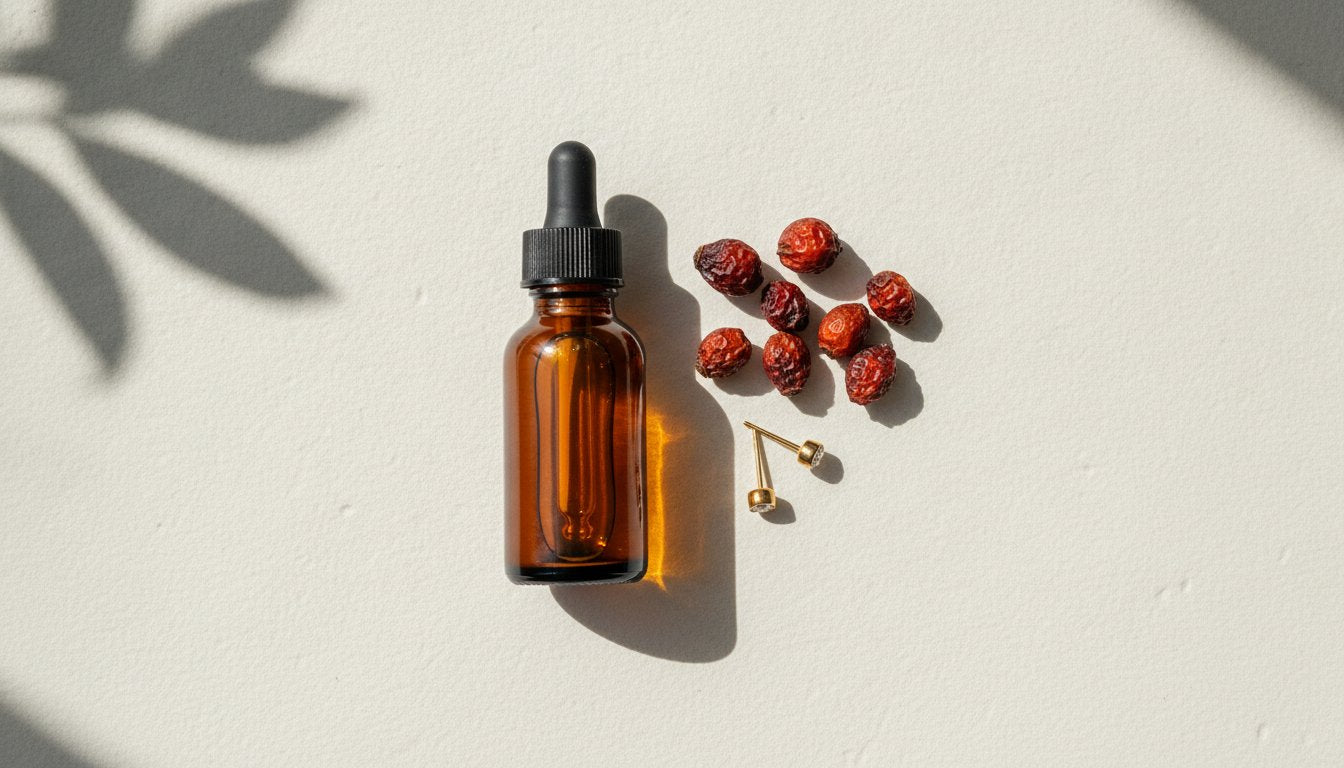
Your piercing isn't truly finished the moment the needle leaves the skin. While most people focus exclusively on the initial cleaning phase, the real secret to a lifelong, aesthetic result lies in the regenerative "skin-finishing" stage. Using rosehip oil for piercings is the professional standard for those seeking to move past the frustration of stubborn granulomas and hypertrophic scars. It's pure. It's potent. It's transformative.
We understand the anxiety that comes with a persistent piercing bump or the discomfort of dry, flaky skin around your stretched lobes. You deserve a solution that is both safe and scientifically backed. This 2026 guide will show you how to transform your aftercare routine, reduce the visibility of scar tissue, and soothe irritation with professional precision. We will examine the latest safety standards for botanical oils, provide a clear protocol for application on healed sites, and help you achieve the healthy, hydrated skin your self-expression deserves. From understanding Vitamin C concentrations to mastering the timing of your application, you'll gain the knowledge needed to protect your investment and your body.
Key Takeaways
- Understand how cold-pressed lipids and essential fatty acids fortify the delicate skin barrier around your modifications.
- Discover why rosehip oil for piercings is a premier choice for softening stubborn cartilage bumps and fading dark marks.
- Compare the unique properties of rosehip, jojoba, and castor oils to determine which botanical specialist suits your specific healing stage.
- Master the "Golden Rule" of timing and safety to ensure your application supports rather than hinders the healing process.
- Learn a structured, professional protocol for integrating regenerative oils into your daily hygiene and maintenance routine.
The Science of Rosehip Oil in Piercing Aftercare
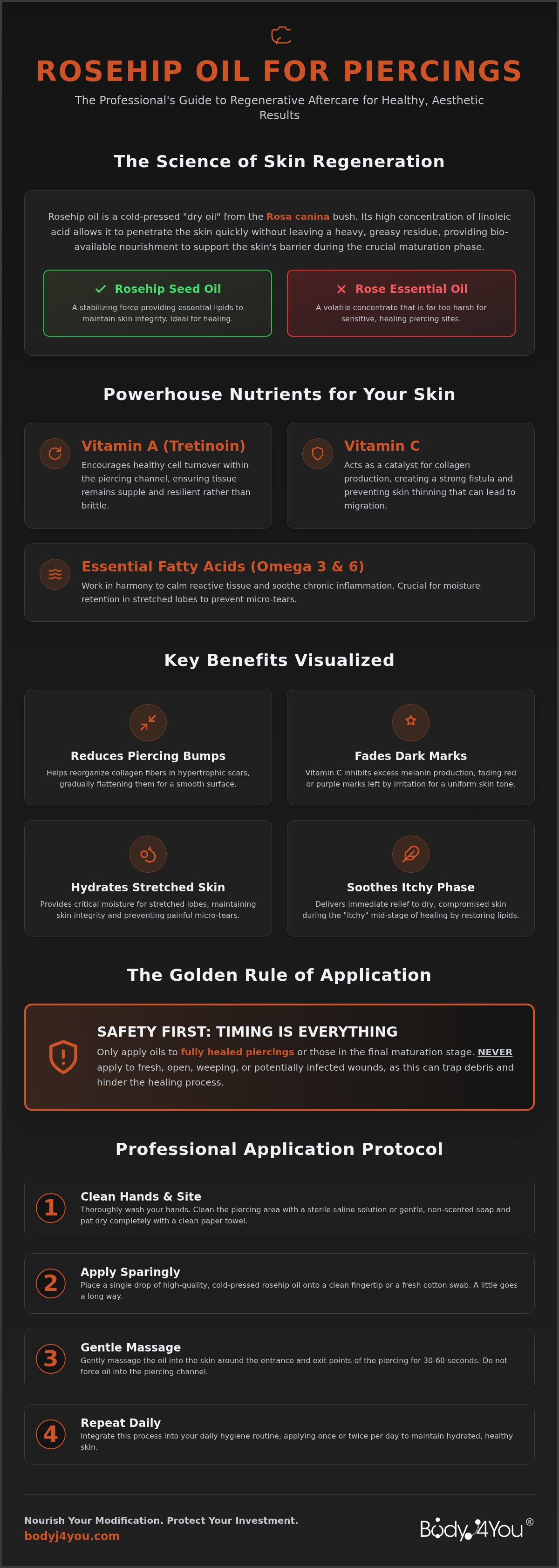
Pure. Potent. Proven. Understanding the biological impact of botanical extracts is the first step toward superior modification care. Rosehip seed oil is a cold-pressed lipid harvested from the seeds of the Rosa canina bush. Unlike heavy mineral oils that sit on the surface, rosehip oil is characterized as a "dry oil." This means it boasts a high concentration of linoleic acid, allowing it to penetrate the skin quickly without leaving a heavy, greasy residue that might trap debris. Using rosehip oil for piercings provides a bio-available source of nourishment that supports the skin's natural barrier during the crucial maturation phase.
It's vital to distinguish between this cold-pressed seed oil and rose essential oil. While they share a name, their chemistry is vastly different. Essential oils are volatile concentrates that are often far too harsh for sensitive piercing sites. In contrast, rosehip seed oil acts as a stabilizing force, providing the lipids necessary to maintain the integrity of the skin around your jewelry. It functions as a protective shield, a regenerative tool, and a soothing balm. This clinical precision ensures your body has the raw materials it needs to thrive.
Vitamins A and C: The Dynamic Duo for Skin
Your body views a piercing as a long-term architectural project. Vitamin A, often recognized in its natural tretinoin form, encourages healthy cell turnover within the piercing channel. This consistent renewal ensures the tissue remains supple rather than brittle. Simultaneously, Vitamin C acts as a biological catalyst for collagen production. Strong collagen fibers are the foundation of a healthy fistula, preventing the thinning of skin that can lead to migration. By neutralizing oxidative stress from environmental pollutants, these vitamins ensure your modification remains vibrant and secure against external irritants.
Essential Fatty Acids and Inflammation
Redness and swelling are natural responses to trauma, but chronic inflammation can lead to unsightly bumps. Rosehip oil is rich in Omega-3 and Omega-6 fatty acids, which work in harmony to calm reactive tissue. These lipids are particularly beneficial for those with stretched ear lobes, where moisture retention is critical to preventing micro-tears. Because rosehip oil for piercings is naturally high in linoleic acid, it maintains a thin, breathable consistency. This prevents the clogged pore issues often seen with heavier oils, ensuring the skin around your industrial barbell or septum remains clear and healthy.
Key Benefits: Why Rosehip Oil is a Piercing Superfood
Aesthetic perfection requires more than just hygiene; it demands a regenerative strategy. Rosehip oil acts as a skin-finisher that softens tissue, brightens marks, and stabilizes the skin barrier. While standard aftercare focuses on the initial wound, rosehip oil for piercings addresses the aesthetic legacy of the modification. It is the ultimate tool for those navigating the "itchy" mid-stage of healing or dealing with the stubborn remnants of a previous irritation.
The "itchy" phase of healing often signals that the skin is dry and the barrier is compromised. Applying a single drop of high-quality oil provides immediate relief, cooling the area while delivering essential lipids. This is also where the oil’s Vitamin C content shines. By inhibiting excess melanin production at the site of trauma, it effectively fades the dark, purple, or red marks left behind by old irritations. This results in a clear, uniform skin tone that complements your jewelry choice perfectly. By addressing both the texture and the tone of the skin, you ensure that the focus remains on your personal expression rather than the trauma of the procedure itself.
Reducing the Appearance of Piercing Bumps
Distinguishing between a standard irritation bump and a clinical infection is crucial for safe care. An infection typically presents with localized heat, throbbing pain, or yellow discharge. Conversely, a piercing bump is often a sign of excess collagen. Hypertrophic scarring is a common, non-permanent reaction to piercing trauma that results in a raised, firm area of tissue. Rosehip oil is uniquely suited to address this. Its high concentration of natural tretinoin (Vitamin A) encourages the body to reorganize these collagen fibers. This process gradually flattens the site and restores a smooth surface, ensuring your jewelry sits as intended.
Hydration for Stretched Ears
For those moving through the Ear Gauge Size Chart, skin integrity is the difference between a successful stretch and a painful blowout. Maintaining elasticity is paramount. While jojoba oil provides excellent surface moisture, rosehip oil offers deeper regenerative benefits. It keeps the lobes supple during the "dead stretching" process, allowing the tissue to expand without micro-tearing. This dual-action hydration ensures your lobes remain thick and healthy, even at larger diameters. Integrating rosehip oil for piercings into your daily massage routine is a protective measure that builds long-term tissue resilience. If you find your skin needs a more robust, pre-blended solution, our specialized Rosehip oil or Piercing Bump Treatment Oil can provide the professional-grade care required for optimal results.
Rosehip Oil vs. Other Piercing Oils: A Comparison
Selecting the right botanical ally requires an understanding of molecular weight and absorption rates. While many enthusiasts suggest a variety of oils, the biological reality is that not all lipids serve the same purpose. Rosehip oil is a "dry oil," meaning it absorbs rapidly into the dermal layers without leaving a suffocating film. Jojoba oil mimics the skin's natural sebum, making it the gold standard for pure moisture. Castor oil, conversely, is a heavy humectant that provides a thick, protective barrier. For those seeking a reduction in scar tissue, rosehip oil for piercings is the superior choice due to its regenerative chemistry.
You should avoid "kitchen oils" such as olive or coconut oil. These are often non-sterile and highly comedogenic, meaning they can clog the pores around your modification and trap bacteria. This creates a risk of localized breakouts or irritation that can set back your healing timeline. If you are dealing with a persistent, raised area, you might choose between a single-ingredient solution or a pre-blended Piercing Bump Treatment Oil. While pure rosehip is excellent for long-term scar fading, a professional blend often incorporates secondary botanicals to address active inflammation and hygiene simultaneously.
Rosehip vs. Tea Tree Oil
These two oils serve fundamentally different roles. Tea tree oil is a powerful antiseptic used to combat bacterial presence, while rosehip is a regenerative agent used to repair tissue. Because tea tree is highly volatile, it must be diluted to avoid chemical burns on sensitive skin. Rosehip is gentle enough to be used "neat" on healed sites. A sophisticated aftercare routine often utilizes both in synergy: tea tree to keep the site clean and rosehip to ensure the resulting scar tissue remains soft and flat. This balanced approach provides clinical hygiene and aesthetic refinement.
Emu Oil vs. Vegan Alternatives
Traditional piercing culture often points to emu oil for its anti-inflammatory properties, but many modern collectors prefer ethical, plant-based alternatives. Rosehip oil for piercings serves as the premier vegan substitute, offering comparable penetration without the use of animal products. Our US-manufactured botanical oils prioritize purity and ingredient integrity, ensuring you receive a high-end product that aligns with your values. Plant oils also tend to feel less greasy on the skin, providing a clean, wellness-oriented experience that supports your journey of self-expression without compromise.
How to Safely Use Rosehip Oil on Piercing Bumps and Scars
Safety first. Results second. The absolute Golden Rule of botanical care is simple: never apply oil to a fresh, bleeding, or oozing piercing. Introducing lipids to an open wound can trap bacteria and hinder the natural oxygen flow required for initial closure. Once your modification has reached the appropriate maturation stage, you can begin using rosehip oil for piercings to refine the skin’s texture and tone. Follow this professional protocol to ensure your application is both safe and effective.
- Perform a Patch Test: Apply a small drop of oil to your inner arm. Wait 24 hours to ensure no redness or sensitivity develops before applying it to your piercing site.
- Cleanse the Area: Use a sterile saline spray to remove any environmental debris or crusties. A clean surface is mandatory for oil absorption.
- Prepare Your Tool: Apply 1 to 2 drops of Rosehip oil to a clean piercing cleaning swab. Avoid touching the dropper directly to your skin to prevent bottle contamination.
- Targeted Massage: Gently massage the bump or scar for 30 seconds. This physical stimulation increases blood flow to the area, which assists the oil’s regenerative nutrients in penetrating the dermal layers.
Consistency is more important than the amount of oil used. If you want to support your skin’s long-term resilience, you can find our premium Rosehip oil designed for professional-grade aftercare.
The Importance of Timing
Patience is a virtue in the world of body modification. The 4 to 6 week mark is usually the earliest you should consider introducing oils. Your piercing is ready for oil when the swelling has subsided, the "crusties" have stopped forming, and the site no longer feels tender to the touch. It should look like a stable, dry channel. If irritation occurs after application, such as increased redness or a throbbing sensation, discontinue use immediately. Return to a strict saline-only regimen until the tissue stabilizes.
Application Frequency
For stubborn hypertrophic scars, a twice-daily rhythm is ideal. Applying the oil once in the morning and once before bed provides a consistent supply of essential fatty acids to the tissue. Remember that "less is more." Saturating the area with too much product can suffocate the piercing channel and lead to localized breakouts. A thin, breathable layer is all that is required for the vitamins to do their work. By maintaining this disciplined schedule, you encourage the skin to reorganize its collagen fibers into a smoother, flatter appearance.
Integrating Rosehip Oil into a Professional Aftercare Regimen
Adopting a "Wise Guardian" approach to body modification means viewing aftercare as a holistic journey rather than a temporary chore. It requires a sophisticated balance between clinical hygiene and botanical restoration. While the initial weeks demand a strict focus on sterilization, the maturation phase is where you transition toward tissue maintenance. BodyJ4You advocates for a balanced regimen where US-manufactured, high-purity products support your body's natural ability to heal and adapt. Using rosehip oil for piercings represents the final, essential step in achieving a seamless, aesthetic result.
This integrated approach is particularly vital for septum piercings and intricate cartilage work. These areas often experience significant tension from jewelry, which can lead to localized dryness or thinning of the skin. By introducing a regenerative lipid, you provide the structural support needed for long-term jewelry maintenance. Our commitment to purity ensures that every drop of oil facilitates self-expression without the risk of low-quality contaminants. It's about protecting your investment, your health, and your personal style.
The Cleanse and Condition Protocol
To avoid the "dryness cycle" often caused by excessive saline use, we recommend a dual-action daily rhythm. In the morning, utilize a saline spray to flush away debris and maintain clinical hygiene. In the evening, apply a targeted dose of rosehip oil to encourage tissue repair and lock in moisture. This protocol ensures the site remains clean during the day while receiving deep nourishment overnight. By alternating these two methods, you prevent the skin from becoming brittle, which is the primary cause of micro-tearing and subsequent irritation bumps. This steady, logical flow creates a sense of reliability in your routine.
Choosing High-Quality Rosehip Oil
Not all oils are created equal. When selecting rosehip oil for piercings, the "Cold-Pressed" and "Organic" labels are non-negotiable standards for safety. Cold-pressing ensures the delicate vitamins and fatty acids aren't destroyed by heat during extraction. You must avoid products with added fragrances, synthetic preservatives, or "filler" oils, as these are the most common culprits for allergic reactions at the piercing site. We pride ourselves on offering single-ingredient solutions that meet rigorous dermatological standards. Ready to elevate your aftercare? Shop BodyJ4You’s Pure Rosehip Oil for your piercing journey and experience the difference that 20 years of industry expertise provides.
Elevate Your Aftercare Strategy
Your journey toward flawless self-expression doesn't end when the initial swelling fades. It's a continuous process of tissue maintenance and aesthetic refinement. By choosing rosehip oil for piercings, you provide your body with the regenerative lipids and vitamins necessary to flatten stubborn bumps and fade hyperpigmentation. We've explored how timing is critical; wait for that 4 to 6 week window before introducing oils to ensure the fistula is stable. A balanced regimen of morning saline hygiene and evening botanical nourishment creates the ideal environment for a healthy, lasting modification.
At BodyJ4You, we've spent over 20 years perfecting the intersection of beauty and biology. Our US-manufactured, dermatologically focused ingredients are designed for those who refuse to compromise on purity, ethics, or efficacy. You deserve a specialized solution that stabilizes your skin barrier while supporting your creative vision. It's time to transition from basic healing to long-term skin health. Trust in a specialist who understands the unique needs of your body and your art. Your skin has a story to tell; let's ensure it's one of resilience and beauty.
Shop Premium Rosehip Oil for Piercing Aftercare
Expert Aftercare: Frequently Asked Questions
Can I use rosehip oil on a new piercing?
No, you should never apply rosehip oil to a fresh or bleeding piercing. During the initial 4 to 6 weeks, your body needs oxygen and sterile saline to close the wound. Applying oils too early can suffocate the channel and trap harmful bacteria. Wait until the site is no longer producing discharge or crusties before introducing rosehip oil for piercings to your routine.
Will rosehip oil get rid of my piercing bump overnight?
Rosehip oil is a regenerative tool, not a magic eraser. While it's highly effective at softening scar tissue, biological remodeling takes time and consistency. You will typically see a reduction in the size and redness of hypertrophic bumps over several weeks of twice-daily application. It's a marathon of care that rewards those who maintain a disciplined and steady approach to their skin health.
Is rosehip oil better than tea tree oil for piercings?
Neither is objectively better; they simply serve different biological functions. Tea tree oil acts as a powerful antiseptic for active irritations, while rosehip oil focuses on tissue repair and scar reduction. If your piercing is currently inflamed, tea tree is often the first line of defense. Once the irritation subsides, rosehip oil for piercings becomes the superior choice for smoothing the skin and restoring elasticity.
Can rosehip oil cause an infection?
High-purity rosehip oil doesn't cause infections, but improper application can lead to complications. If you apply oil to a piercing that hasn't fully healed, you risk trapping debris and bacteria inside the fistula. Always ensure you're using a US-manufactured, single-ingredient oil and applying it only to clean, stable skin. This protective measure keeps your modification safe while promoting a healthy, aesthetic result.
Does rosehip oil help with keloids?
It's important to distinguish between common hypertrophic scars and true keloids. Rosehip oil is excellent for flattening the raised "bumps" caused by piercing trauma, but it cannot remove a medical keloid. Keloids are genetic overgrowths of scar tissue that usually require professional dermatological intervention. If your bump continues to grow significantly beyond the piercing site, consult a healthcare provider for a clinical diagnosis.
Should I dilute rosehip oil before putting it on my nose piercing?
You don't need to dilute rosehip oil because it's a gentle carrier oil rather than a volatile essential oil. Unlike tea tree or lavender oils, rosehip can be applied "neat" directly to the skin. Its "dry oil" consistency allows it to absorb quickly without the harshness associated with concentrates. This makes it an ideal, non-irritating choice for sensitive areas like the nostrils or the delicate tissue of a septum.
Can I use rosehip oil on my industrial piercing?
Yes, rosehip oil is highly beneficial for industrial piercings once they've passed the initial healing phase. Because industrials involve two holes connected by a single bar, they're prone to tension-related bumps. Massaging the oil around both entry points helps maintain tissue flexibility and reduces the pressure that often leads to scarring. It's a stabilizing force for one of the most challenging modifications to heal properly.
Is rosehip oil safe for all skin types?
Rosehip oil is generally safe and beneficial for all skin types due to its non-comedogenic nature. Its high linoleic acid content ensures it won't clog pores, making it suitable even for those with oily or acne-prone skin. However, we always recommend performing a patch test on your inner arm before applying it to a modification. This simple step ensures your unique biology responds positively to the oil's regenerative nutrients.


