


What if that steaming, inviting soak is actually a biological minefield for your delicate new jewelry? It's a question that haunts every vacation: can i go in a hot tub with a new piercing without risking everything? We understand the conflict between wanting to relax and needing to protect your aesthetic investment. You deserve to feel confident, safe, and empowered during your healing journey. It's about maintaining purity, ensuring safety, and respecting your body's natural recovery process.
This guide provides the definitive answer you need to protect your skin. You'll discover the critical risks of bacteria, the precise timeline for safe submersion, and the exact steps to rescue your piercing if you've already taken the plunge. We bridge the gap between beauty and biology by exploring the 2026 safety standards for epithelial recovery. Whether you're looking for a clear yes or no answer or a structured recovery plan, we're here to act as your expert mentor for long-term well-being.
Key Takeaways
- Recognize that a fresh piercing is a delicate puncture wound requiring a sterile environment, total protection, and professional patience.
- Identify the specific biological hazards, including Staphylococcus aureus, that transform a relaxing soak into a serious dermatological risk.
- Understand the mandatory healing windows—spanning from two months for lobes to a full year for cartilage—before you can safely ask "can i go in a hot tub with a new piercing" without consequence.
- Master our expert "rescue plan" to immediately decontaminate and stabilize your skin if accidental submersion has already occurred.
- Discover why high-quality jewelry materials and consistent daily cleaning act as your ultimate defense against vacation-disrupting infections.
The Short Answer: Why Hot Tubs and New Piercings Don’t Mix
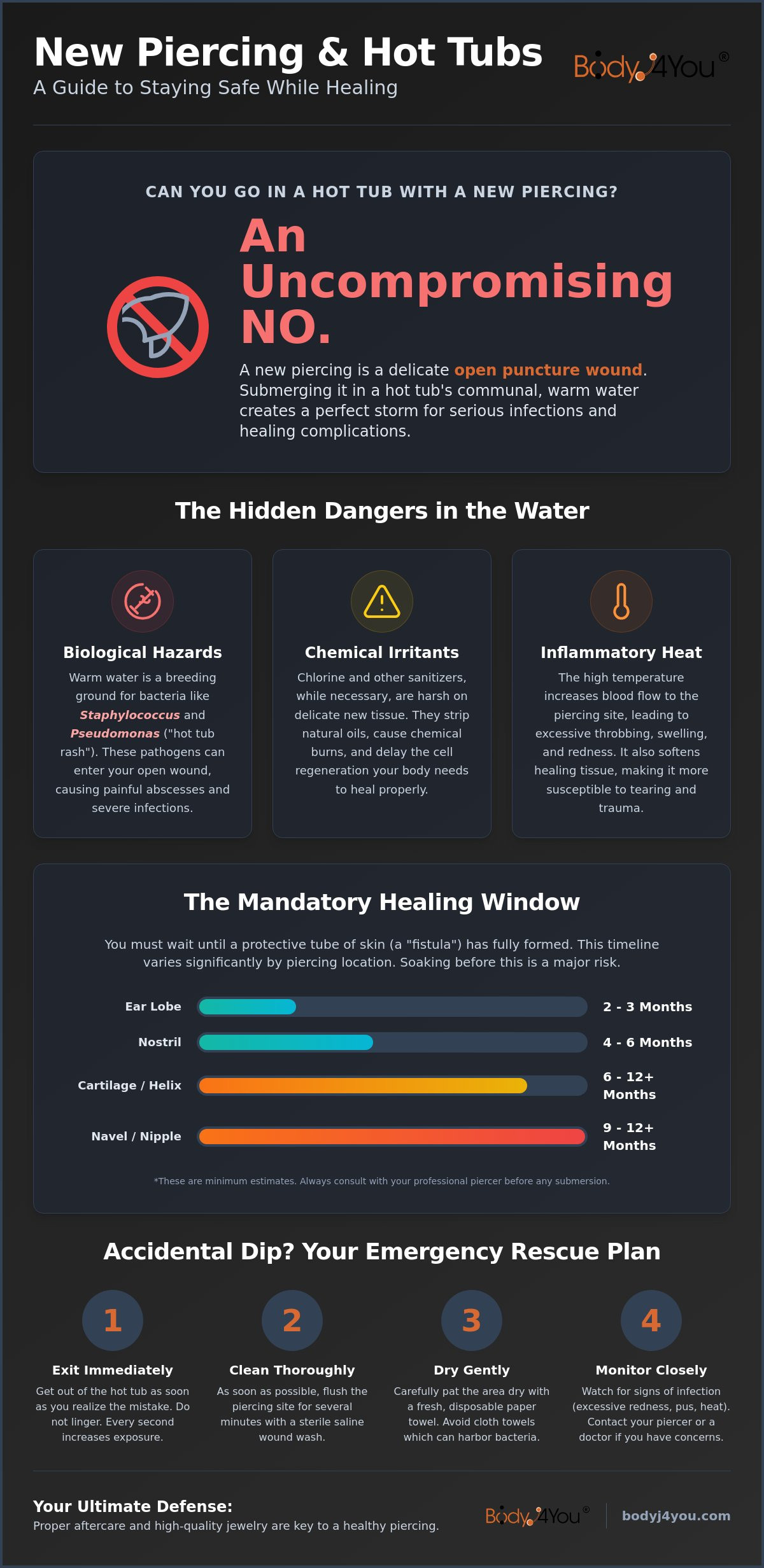
The hard truth is simple: you should never submerge a new piercing in a hot tub. While the steam and swirling water feel like the ultimate luxury, they represent a biological hazard for your healing skin. A new piercing isn't just a surface scratch; it's a deep puncture wound. It requires a sterile, controlled environment to knit itself back together. Hot tubs are essentially communal baths. Even in the most meticulously maintained private spas, the water harbors bacteria that thrive in warm, moist environments. When you ask, can i go in a hot tub with a new piercing, the answer from a health perspective is a firm and uncompromising no.
Safety. Purity. Integrity. These are the pillars of a successful healing journey. For those seeking general information about body piercing and its cultural history, the practice is ancient, but modern safety standards are more rigorous than ever. We view your piercing as an aesthetic investment. Protecting that investment means avoiding the "perfect storm" of infection: high heat that opens your pores, stagnant moisture that breeds pathogens, and harsh chemicals that strip away your body's natural defenses.
The "Open Wound" Concept
Until a fistula forms, the internal tissue of your piercing remains exposed to the world. The fistula is the protective tube of skin that must form before swimming is safe. Without this barrier, contaminated water enters the body directly. This isn't just about surface irritation; it's about deep-tissue vulnerability. Submerging a fresh piercing allows bacteria to bypass your skin's primary defenses, leading to complications that can jeopardize your health and your jewelry's placement.
Why Chlorination Isn’t a Safety Guarantee
Chlorine is a powerful sanitizer, yet it isn't a magic shield. It kills many pathogens, but some bacteria are remarkably resilient in high-temperature environments. Warm water causes chlorine to dissipate rapidly. This often creates "dead zones" in the tub where bacteria flourish despite the chemical smell. Additionally, the chemicals themselves are harsh irritants. They can strip away the delicate epithelial cells trying to heal, leading to a cycle of inflammation, chemical burns, and delayed collagen production. To ensure long-term wellness, your routine should focus on gentle care rather than exposing raw tissue to industrial-strength cleaners. Can i go in a hot tub with a new piercing if the chlorine levels are high? No, because the chemicals that kill bacteria also damage the very cells your body needs to heal.
Protect. Cleanse. Heal. Following these three steps ensures your self-expression remains a source of pride rather than a medical concern. Your body's integrity is our priority, and waiting for a full recovery is the only way to guarantee a beautiful, lasting result.
The Biological and Chemical Threats to Your Healing Skin
Understanding the microscopic environment of a hot tub is essential for anyone wondering, can i go in a hot tub with a new piercing? It isn't just about water; it's about a complex ecosystem of pathogens. Pseudomonas aeruginosa is a primary concern. This bacteria flourishes in warm water and is the leading cause of "hot tub rash." For a fresh piercing, it can lead to localized abscesses or painful, weeping infections. Staphylococcus aureus is even more formidable. This pathogen targets open wounds, potentially causing systemic complications if it enters the bloodstream through your new jewelry site. Our philosophy remains centered on three core values: Safety, Precision, and Aesthetics.
Beyond active bacteria, you must consider biofilms. These are slimy, microscopic layers of bacteria that anchor themselves to tub surfaces and even your jewelry. Once a biofilm attaches to your labret stud or barbell, it becomes incredibly difficult to remove with standard cleaning. Sanitizers like chlorine and bromine are necessary for public health, but they're aggressive on raw tissue. They strip away the natural lipids and oils your body uses to protect the wound. This dehydration halts cell regeneration, leaving your skin brittle and prone to tearing. Following industry-standard aftercare guidelines is the only way to ensure these external factors don't compromise your healing.
The Role of Heat in Inflammation
Heat is a double-edged sword. While it relaxes muscles, it causes significant vasodilation. This increased blood flow to a fresh wound often leads to excessive throbbing, redness, and swelling. High temperatures also soften the delicate epithelial tissue. When this tissue becomes soft and permeable, it's easier for microscopic pathogens to penetrate deep into the piercing track. This inflammation is a primary catalyst for the development of piercing bumps, which can mar the aesthetic of your new look for months.
Chemical Irritation and pH Balance
Hot tub maintenance requires a delicate pH balance, usually between 7.2 and 7.8. However, these levels fluctuate constantly based on usage and temperature. When the pH is off, the water becomes caustic to internal wounds. This can result in "chemical burns" inside the piercing track, causing sharp pain and delayed closure. Cartilage piercings are particularly vulnerable. The drying effect of salt and chlorine on new cartilage cells can lead to permanent scarring. If you're concerned about maintaining the integrity of your skin during the healing process, you can explore our professional aftercare range to find gentle, supportive solutions.
Safe Timelines: When Can You Actually Soak?
Patience is the foundation of beauty. When you ask, can i go in a hot tub with a new piercing, the answer depends entirely on your body's biological clock. Every person heals at a unique pace. Some might feel ready in weeks, while others require months of disciplined care. We prioritize the long-term integrity of your skin over a fleeting moment of relaxation. Integrity. Safety. Expression. These three values guide our approach to your aesthetic journey, ensuring your self-expression never comes at the cost of your health.
Lobe piercings are often the fastest to recover. They typically require six to eight weeks of strict caution before they can handle non-sterile water. Cartilage piercings, such as the helix, tragus, or conch, are far more demanding. These areas have limited blood flow, often taking six to twelve months for full internal healing. Don't be fooled by the "look test." A piercing that appears calm and dry on the surface is often still raw and vulnerable inside. Submerging too early invites bacteria into the deep tissue, leading to setbacks that can last for months.
Industrial piercings present a unique challenge. They involve two separate puncture wounds connected by a single piece of jewelry. This creates constant tension and pressure. You should wait at least three to four months before even considering partial submersion. Even then, the risk of irritation remains high if the water isn't perfectly sterile. Can i go in a hot tub with a new piercing if it's an industrial? It's much riskier than a simple lobe, and we recommend waiting until the fistula is completely mature.
Healing Stages and Submersion
Your body moves through three distinct phases. In Stage 1, inflammation is at its peak. There's absolute zero-tolerance for hot tubs during these first two weeks. Stage 2 is proliferation. This is where the fistula begins to form, yet the tissue remains fragile and easily torn. Finally, Stage 3 is maturation. This is the only point where the skin is strong enough to handle the chemicals and bacteria found in communal water. Respecting these stages is the key to a lifetime of healthy piercings.
Consulting Your Professional Piercer
A four-week check-up is the gold standard for safety. Your piercer can assess the internal health of the wound more accurately than you can at home. For those using an ear stretching kit, remember that every new stretch resets the healing clock. You're creating micro-tears that require fresh recovery time. If you notice persistent redness or discharge, consult official health advice on piercing infections to prevent further complications. Look for a stable, matte appearance in the skin and a complete absence of tenderness before you soak.
Emergency Aftercare: What to Do If You Already Went In
Accidents happen, but your immediate reaction determines the outcome of your healing journey. If you find yourself asking can i go in a hot tub with a new piercing after you've already taken the plunge, don't panic. While the risk of infection is real, a disciplined decontamination strategy can mitigate the damage. You must act with speed, precision, and care. Your goal is to remove pathogens and chemicals before they anchor into the delicate fistula forming within your skin.
Follow these five essential steps to stabilize the wound site immediately:
- Step 1: Exit the water immediately. Do not touch the piercing with wet hands, as this introduces even more bacteria to the area.
- Step 2: Rinse the area thoroughly with fresh, clean bottled water. This helps flush out chlorine, bromine, and surface bacteria that may be clinging to the jewelry.
- Step 3: Apply a generous mist of sterile saline spray for piercings. This is the most critical step for deep-tissue decontamination.
- Step 4: Dry the area completely. Use a disposable paper towel or one of our specialized Piercing Cleaning Swabs. Avoid cloth towels, which harbor hidden bacteria.
- Step 5: Monitor for "The Big Three" signs of infection over the next 48 hours: extreme heat, red streaks radiating from the site, or thick, discolored discharge.
The Power of Sterile Saline
Saline is the ultimate guardian of your skin's integrity. It works by creating an isotonic environment that flushes out microscopic debris from the piercing track without damaging new cells. After accidental exposure, you should use a pressurized spray rather than a soak. The pressure helps dislodge biofilm and chemical residue that a passive soak might miss. Our Saline Piercing Aftercare Spray is designed as a portable emergency tool, ensuring you have professional-grade purity wherever your travels take you. You can order our professional aftercare spray to keep your recovery on track.
When to See a Doctor
It's vital to distinguish between normal irritation and a hot-tub-acquired infection. Minor redness and slight swelling are common after chemical exposure. However, if the site becomes throbbing and hot to the touch, or if you notice yellow or green discharge, the situation has escalated. A fever or chills after hot tub use require immediate medical attention. We prioritize your long-term well-being, and seeking professional help early is the most empowered choice you can make for your body.
Protecting Your Investment: Long-Term Piercing Health
Purity. Safety. Expression. Your new piercing is a statement of identity, but it's also a delicate biological investment. Maintaining its health requires more than just avoiding risks; it demands proactive, disciplined care. Consistency is your greatest ally. Daily cleaning prevents the "vacation disasters" that occur when travelers get lax with hygiene. While you may still wonder, can i go in a hot tub with a new piercing, the best defense is a robust daily routine that keeps the fistula resilient against any environmental stressors. A piercing that is nurtured daily is far less likely to succumb to the occasional accidental exposure or minor irritation.
Material quality is paramount for long-term success. High-quality metals like surgical steel and titanium do more than just shine. They are meticulously engineered to resist biofilm buildup, the microscopic bacterial colonies that anchor onto porous surfaces. Cheap mystery metals often contain nickel or lead, which cause chronic irritation and invite infection. We recommend internally threaded jewelry for all healing tissue. This design ensures that the smooth part of the post passes through your skin, preventing the micro-tears often caused by external threads. For hard-to-reach areas or complex jewelry shapes, using specialized piercing cleaning swabs ensures that every millimeter of the site remains free from debris.
Choosing Safe Jewelry for Active Lifestyles
Active individuals need jewelry that supports their lifestyle without compromising biological safety. Surgical steel and titanium are the gold standards for resisting bacterial adhesion. If you are exploring a septum piercing, remember that mucosal tissue requires even more vigilance than an earlobe. The constant moisture in your nasal cavity provides a different environment than external skin, making high-quality materials even more essential. Your jewelry should be a stabilizer for your body, not a source of constant chemical stress.
Nurturing Your Piercing with Healing Oils
Recovery is a journey of patience and observation. If you've had a close call with chemically treated water or accidental snagging, our Piercing Bump Treatment Oil can soothe minor inflammation and redness. It's designed to maintain skin elasticity, ensuring the fistula remains flexible rather than becoming brittle and prone to cracking. Maintaining this elasticity is vital for long-term comfort and aesthetic purity. We invite you to explore the BodyJ4You aftercare collection for specialized recovery kits that provide everything you need for a seamless healing process. The patience you show today guarantees a lifetime of confident, healthy self-expression.
Secure Your Aesthetic Investment
Patience is the foundation of lasting beauty. Protecting your skin means respecting the biological timeline of the fistula and avoiding the chemical hazards of communal water. When asking can i go in a hot tub with a new piercing, remember that your long-term health is an investment worth waiting for. By prioritizing sterile environments and choosing high-quality materials, you ensure your self-expression remains vibrant, healthy, and irritation-free. A disciplined routine today prevents the complications that could mar your look tomorrow.
With over 20 years of industry experience, we specialize in providing the professional tools you need for a seamless healing journey. Our US-manufactured skincare line and premium body jewelry are meticulously crafted to the highest standards of dermatological safety. We act as your wise guardian, offering the clinical precision required for recovery alongside the creative freedom you crave. Don't leave your skin's integrity to chance. Purity. Safety. Expression.
Shop Professional Saline Aftercare and Healing Oils to stabilize your skin and support your body's natural defense. You have the power to heal beautifully, and we're here to guide you every step of the way toward a confident, healed result.
Frequently Asked Questions
Can I go in a hot tub if I wear a waterproof bandage over my piercing?
Yes, but only if you use a medical-grade waterproof transparent film dressing that creates a total, airtight seal. These bandages are designed to keep wounds dry during showers, but deep submersion in a high-pressure hot tub still carries risks. If the seal fails, bacteria enter the wound instantly. We recommend keeping the piercing above the water line even when using protection to ensure your skin's total safety.
How long after a lobe piercing can I go in a hot tub?
You should wait a minimum of 6 to 8 weeks for earlobe piercings. Although lobes heal quicker than cartilage, the internal fistula requires time to become resilient against chemicals. If you're wondering can i go in a hot tub with a new piercing before this period ends, the answer is no. Rushing this timeline jeopardizes the purity, safety, and integrity of your healing skin.
What happens if I get hot tub water on my new industrial piercing?
You must rinse the area with sterile saline spray immediately to flush out pathogens. Industrial piercings are complex because they link two separate puncture wounds, making them double targets for bacteria. The heat and chemicals can cause the jewelry to throb, leading to significant swelling. Monitor the site for 48 hours and watch for any signs of red streaks or excessive heat radiating from the wound.
Is a private hot tub safer than a public one for new piercings?
While private tubs have fewer users, they are not a "safe zone" for healing wounds. Bacteria thrive in warm, moist environments regardless of the setting. Even a perfectly balanced private tub can harbor pathogens like Staphylococcus. Your body's physical vulnerability remains the same, so the safest choice is to wait until the wound has fully matured. We prioritize your long-term well-being over a temporary soak.
Can the heat from a hot tub cause my piercing jewelry to burn my skin?
High temperatures won't reach the level of a thermal burn, but they will cause your jewelry to retain heat and expand slightly. This expansion puts pressure on the healing tissue, causing pain and increased inflammation. The heat also softens the skin, making it easier for microscopic debris to become trapped. This combination of heat and pressure often leads to the development of unsightly piercing bumps or irritation.
What is the best way to clean my piercing after accidental swimming?
Use a pressurized saline wash to irrigate the piercing track thoroughly. This pressure dislodges biofilm and chemical residue that a simple rinse might miss. After flushing, dry the area with a disposable paper towel or specialized cleaning swab. Never use a communal cloth towel, as these are breeding grounds for bacteria that can easily migrate into your open wound. Consistency in cleaning is your best defense against infection.
Can I go in a sauna or steam room with a new piercing?
No, you should avoid saunas and steam rooms for the first 4 to 6 weeks. The intense humidity and heat cause your body to sweat, which carries surface bacteria and oils directly into the piercing. This environment also encourages swelling and can delay the formation of the fistula skin tunnel. Stick to clean, lukewarm showers to maintain the purity of your healing journey and avoid vacation disasters.
Does salt water in a hot tub help heal a piercing?
No, hot tub salt water is a chemical solution, not a healing agent. It contains sanitizers and stabilizers that are far too harsh for a fresh wound. Only a sterile 0.9% sodium chloride solution provides the isotonic balance your body needs. Using tub water instead of a professional saline spray can lead to chemical burns and significant delays in your recovery. Trust in purity, ethics, and professional standards.


