

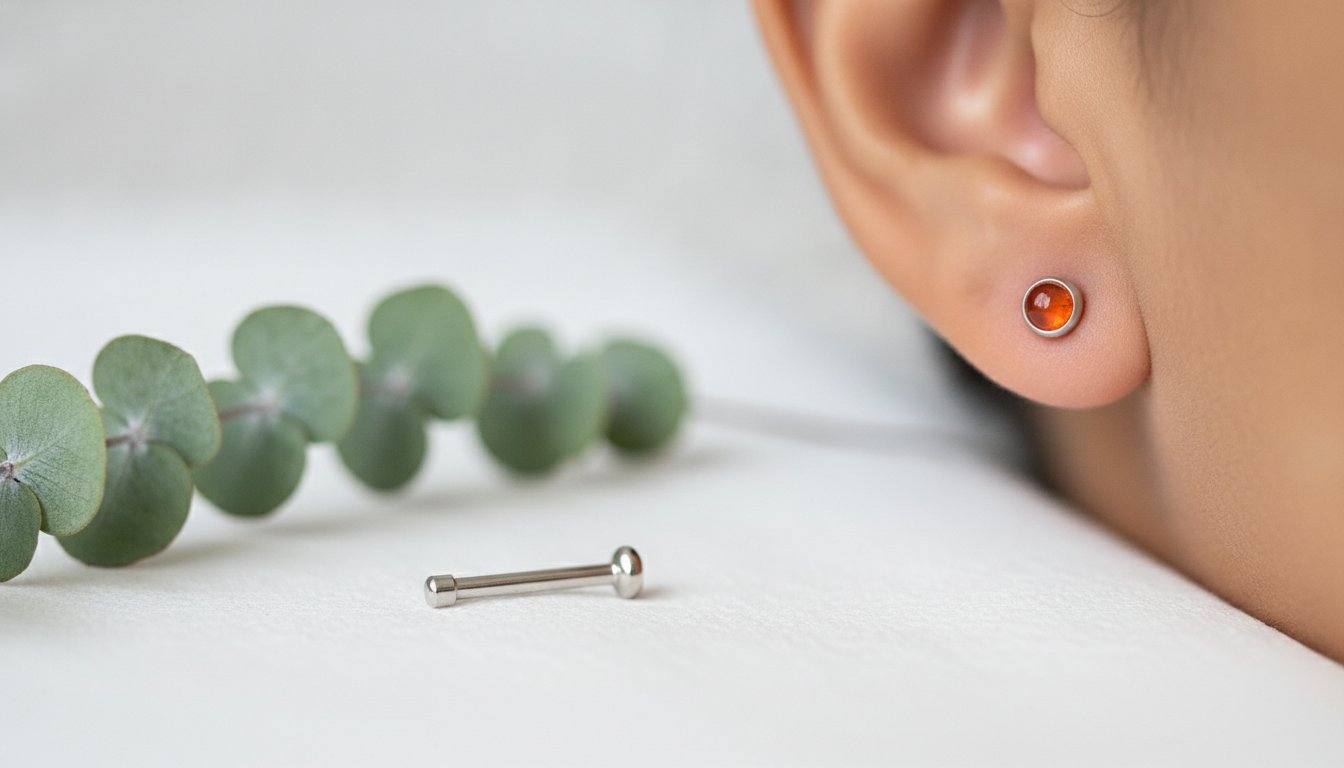
That extra-long bar in your new piercing isn't just a temporary placeholder; it is a structural liability that begins a countdown the moment your initial swelling subsides. While that length was essential for your first few weeks of healing, leaving it in too long often leads to snagging, migration, and permanent misalignment. Downsizing a piercing stud is not an aesthetic luxury, but a biological necessity for anyone seeking a seamless, healthy result.
We understand the frustration of jewelry that catches on every mask or stray hair, creating a cycle of irritation that feels impossible to break. You deserve a piercing that feels as refined as it looks. In this guide, you will learn the precise timing for your jewelry transition to prevent irritation bumps and ensure your piercing remains perfectly perpendicular to your skin. We will walk through the signs of stabilization, the risks of delay, and the professional standards for achieving a comfortable, flush-fitting stud.
Key Takeaways
- Understand that swapping your initial, extra-long bar for a flush-fitting post is a vital biological bridge between trauma and healing.
- Timing is critical; aim for a check-in at 2-3 weeks for oral piercings or 4-8 weeks for ears and nose to ensure tissue stability.
- Learn why delaying the process of downsizing a piercing stud creates a "lever effect," which can lead to permanent migration and crooked angles.
- Prioritize safety by consulting a professional who can manage the transition using sterile protocols and internal threaded jewelry.
- Discover why selecting high-quality materials like surgical steel or titanium is essential for maintaining skin integrity during the second stage of healing.
What is Downsizing and Why is it Necessary?
Downsizing a piercing stud is the deliberate act of replacing your initial, elongated jewelry with a shorter post that sits flush against your skin. This isn't an aesthetic upgrade; it is a structural necessity. When you first receive a piercing, your body initiates a complex healing response involving localized inflammation, increased blood flow, and fluid drainage. To accommodate this inevitable expansion, professional piercers install a "starter" post with significant extra length. While this extra room acts as a safety net during the first few weeks, it becomes a biological liability once the initial swelling subsides. Stability, safety, and symmetry depend on this transition.
The history of body piercing reveals that while jewelry styles have evolved, the biological reality of wound healing remains constant. A piercing is a controlled trauma, and your body treats it as such. In the acute phase of healing, the tissue requires space to breathe. However, as the wound moves into the proliferative phase, that extra length begins to work against you. A bar that is too long will tilt, snag, and put uneven pressure on the developing fistula. Downsizing a piercing stud at the right moment ensures the jewelry remains perpendicular to the tissue, preventing the hole from healing at a crooked angle.
The Role of the Initial Swelling Bar
Your body is a masterpiece of self-protection. When a needle passes through tissue, the immune system triggers a rush of white blood cells to the site, causing the area to expand. If your jewelry was perfectly snug on day one, the expanding tissue would have nowhere to go. This leads to "embedding," a painful complication where the skin actually grows over the jewelry ends. The initial "swelling bar" provides the necessary clearance for hygiene, drainage, and oxygen flow. It is a temporary tool designed to manage the body's inflammatory peak, not a permanent fixture for long-term wear.
Downsizing vs. Changing Jewelry for Style
It is vital to distinguish between a mid-heal downsize and a style swap. A style change is driven by aesthetics; downsizing is driven by health. During this delicate phase, the internal tunnel of skin is still fragile and incomplete. You aren't just changing a look; you are stabilizing a wound. Because the piercing is still active, the material of your downsized stud is non-negotiable. You must continue using high-quality, biocompatible materials like surgical steel or titanium. This ensures that as the jewelry sits closer to the skin, it supports the final stages of cellular repair without introducing irritants or allergens.
Timing Your Downsize: When is Your Piercing Ready?
Determining the right time for downsizing a piercing stud requires a keen eye for your body’s unique recovery pace. Timing is a delicate balance between biological readiness and environmental stability. While every body recovers at a different pace, most professionals follow established windows for the first jewelry transition. For oral piercings, which benefit from high vascularity and rapid cell turnover, the window is often as short as 2-3 weeks. In contrast, piercings in the ears or nose typically require 4-8 weeks before the initial inflammation has subsided enough to warrant a shorter post. Following the expert guidance on downsizing your piercing ensures you don't act too early or wait until damage occurs.
Cartilage piercings, such as the helix or conch, demand a much stricter adherence to these timelines. Because cartilage lacks its own blood supply, it is prone to "piercing bumps" if the jewelry is allowed to tilt or snag for too long. If you miss the 8-week window, the extra length of the bar begins to act like a lever, creating micro-tears in the developing fistula. Your lifestyle also dictates your readiness. Consistent sleep, a nutrient-dense diet, and high-quality initial jewelry materials can accelerate this timeline. Conversely, high stress or poor aftercare habits will inevitably push your appointment back.
Physical Signs You Are Ready to Size Down
The most reliable indicator is the "Visible Bar" test. When your ear is relaxed and the jewelry is pushed forward, you should see at least 2mm of the post exposed. This gap confirms that the internal swelling has retreated. You should also observe a significant reduction in redness, a lack of tenderness during cleaning, and jewelry that moves freely without "crustiness" or resistance. While waiting for your appointment, continue using a saline piercing aftercare spray to keep the area pristine, calm, and ready for the switch.
When to Delay Your Downsizing Appointment
Stability is the priority. If you see active signs of infection, such as localized heat, excessive swelling, or yellow discharge, you must postpone downsizing a piercing stud. Swapping jewelry in a compromised site can trap bacteria or exacerbate inflammation. Similarly, if you've recently snagged the piercing on a mask or hair, the resulting trauma may have re-triggered the swelling response. Patience is a virtue here. It's better to wait an extra week for a stable environment than to force a change on a reactive, angry wound.
The Risks of Skipping: What Happens if You Don't Downsize?
Neglecting the transition to shorter jewelry isn't just a minor delay; it's a structural gamble with your anatomy. The extra length on your starter jewelry creates a mechanical disadvantage known as the "Lever Effect." Think of the long post as a handle. Any pressure applied to the end of the jewelry—whether from a pillow, a stray hand, or a face mask—multiplies the force exerted on the delicate internal fistula. This constant, uneven pressure doesn't just cause temporary discomfort. It literally reshapes the wound, forcing the piercing to heal at a compromised angle.
This mechanical stress is a primary driver of the risks of improper piercing aftercare. When you leave a long bar in place, you invite the "Snag Factor" into your daily routine. Hair brushes, knit sweaters, and even bedsheets become hazards that can tear the fragile new skin cells. Over time, this leads to permanent migration. Your piercing doesn't just stay irritated; it moves. The body, sensing a constant source of pressure and trauma, may attempt to "push" the jewelry toward the surface or tilt it away from the stress, resulting in a hole that no longer sits where it was originally intended.
The Link Between Long Bars and Piercing Bumps
Excessive movement is the enemy of cellular stability. When a bar is too long, it slides back and forth through the channel, dragging bacteria and debris into the wound. This micro-trauma triggers a defensive inflammatory response. Your body creates extra tissue to protect itself, often manifesting as a localized granuloma or irritation bump. If you've already noticed a raised area, learning how to get rid of piercing bump is your first priority. However, the most effective long-term solution is prevention. By downsizing a piercing stud, you eliminate the friction that fuels the cycle of irritation and swelling.
Aesthetic Consequences: Crooked Piercings
A crooked piercing is often a permanent one. This is particularly common in cartilage piercings, where sleeping on a long bar forces the jewelry into a downward tilt. Once the fistula matures and hardens around that tilted angle, the jewelry will never sit flat against the skin again. A snug, downsized fit acts as a stabilizer. It keeps the jewelry perfectly perpendicular to the tissue, ensuring your aesthetic remains symmetrical, professional, and intentional. Correcting a migrated piercing often requires letting the hole close entirely and waiting months for scar tissue to soften before starting the process over. Downsizing a piercing stud on time protects your investment and your look.

How to Downsize Safely: A Step-by-Step Approach
The transition to a shorter post is a clinical procedure that requires precision, patience, and purity. While it may seem like a simple jewelry change, downsizing a piercing stud involves interacting with a partially healed wound channel. The "Golden Rule" of the industry is clear: a professional piercer is always your best resource. They act as a wise guardian for your healing, utilizing specialized tools to ensure the swap is seamless and trauma-free. Safety is the priority. Precision is the goal. Success is the standard.
Sterilization is the most critical component of this process. Simply "cleaning" a piece of jewelry with an alcohol wipe is insufficient for a mid-healing swap. Professionals use ultrasonic cleaners to remove microscopic debris and autoclaves to eliminate pathogens. This level of decontamination is vital because the transfer method—the physical act of swapping posts—briefly exposes the internal fistula. A sterile environment prevents the introduction of bacteria into the deeper layers of your skin, ensuring the stable healing phase remains uninterrupted.
The Professional Downsizing Experience
When you visit a studio, the piercer begins with a thorough assessment of your tissue. They use precision calipers to measure the exact millimeter of post length needed for a flush fit. To make the swap, they often use a "taper," a smooth, pin-like tool that guides the new, shorter post into the channel as the old one is pushed out. This ensures the hole never has a chance to shrink or close during the transition. It is a controlled, guided insertion that minimizes friction and protects the fragile new skin cells.
Safe At-Home Transitions (When Necessary)
If you cannot reach a professional, you must recreate a controlled environment at home. Start by thoroughly saturating the area with sterile saline spray for piercings to soften any debris. Use latex-free gloves to maintain a barrier against oils and bacteria. The "no-gap" swap is the safest technique; keep the end of your new jewelry in direct contact with the back of the old post as you push it through. If you experience immediate bleeding or cannot find the exit hole, stop immediately. Never force jewelry into a resistant channel.
Once the new jewelry is in place, perform a post-swap assessment. The stud should sit flush against the skin when relaxed, but it must not "pinch" or indent the tissue. A perfect downsize allows for very minor daily fluctuations without putting pressure on the wound. To ensure your transition is supported by the highest quality materials, you can shop our internal threaded labret studs for a secure and comfortable fit.
Selecting the Right Downsized Jewelry and Aftercare
The jewelry you select for your second stage of healing acts as the permanent scaffolding for your self-expression. While the procedure of downsizing a piercing stud is brief, the hardware you choose stays with you for months or years. You must prioritize biocompatibility. Surgical steel offers a high-polish, reliable finish for most users, while titanium remains the gold standard for those with sensitive skin or nickel allergies. Both materials provide the stability your body needs to finalize the development of the fistula. Purity, precision, and permanence are the pillars of this transition.
Distinguishing between a flush fit and a tight fit is a matter of biological safety. A flush fit allows the jewelry to rest against the skin without indentation. It looks clean, feels weightless, and stays secure. Conversely, a tight fit is a clinical hazard. If the post is too short, it can indent the tissue, restrict circulation, or even lead to embedding. Your jewelry should sit comfortably enough to allow for minor daily fluctuations in blood flow without putting pressure on the wound. Downsizing a piercing stud is about finding that perfect equilibrium where the jewelry is present but the pressure is absent.
Why Internal Threaded Labret Studs Rule
The architecture of your jewelry matters. Internal threading means the screw thread is on the removable end, leaving the post that passes through your skin perfectly smooth. External threads are like miniature "cheese-cutters" that can scrape and tear the delicate internal lining of your piercing. Internally threaded jewelry also offers superior security, as the ends are far less likely to vibrate loose over time. We consider Internal Threaded Labret Studs the gold standard for anyone moving into the stable healing phase, as they protect the skin's integrity while providing a high-end aesthetic.
Aftercare Maintenance Post-Downsize
The 48 hours following your jewelry swap are a critical window for stabilization. Even a perfect, professional swap can cause minor temporary irritation. It’s essential to resume your cleaning routine using a saline solution for piercing aftercare to soothe the site and flush away any microscopic debris. If the swap causes a minor flare-up or a small bump, applying a targeted piercing bump treatment oil can help calm the inflammation. Once the initial 48-hour sensitivity passes, adopt the "LITHA" method: Leave It The Hell Alone. Your body knows how to heal; your job is simply to provide the clean, stable environment it needs to finish the work.
Secure Your Path to Permanent Healing
Your piercing is a powerful form of self-expression, but its longevity depends on the structural choices you make during the healing process. We have established that the transition from a temporary swelling bar to a flush-fitting post is a biological necessity. This vital step prevents the mechanical stress of the lever effect, protects against permanent migration, and eliminates the friction that fuels irritation bumps. By respecting your body's timeline, you ensure your aesthetic remains symmetrical and stable.
Downsizing a piercing stud is the final bridge to a comfortable, life-long result. At BodyJ4You, we bring over 20 years of industry expertise to your recovery journey. We utilize only surgical-grade materials for sensitive skin, creating hardware that is trusted by professional piercers worldwide. You deserve a fit that is as refined as your style. Ready for a better fit? Shop our Internal Threaded Labret Studs for the perfect downsize.
Step forward with confidence, knowing your healing is supported by clinical precision and nurturing care. Your journey toward a fully healed, beautiful piercing is almost complete.
Frequently Asked Questions
Does downsizing a piercing hurt?
Downsizing a piercing stud is typically a painless procedure when performed correctly by a professional. You may feel a brief sensation of pressure or a minor pinch as the jewelry is swapped, but it is far less intense than the initial piercing. If you experience sharp pain or significant resistance, it often indicates the tissue is not yet stable enough for the transition. Patience and precision ensure the process remains comfortable and safe.
Can I downsize my own piercing at home?
While you can perform an at-home transition, seeking a professional is always the safest choice for your long-term health. Piercers utilize sterile environments, ultrasonic cleaners, and precision tapers that are difficult to replicate in a domestic setting. If you must proceed alone, ensure you use sterile saline and latex-free gloves to maintain the highest standards of hygiene. Protecting the integrity of the wound channel is your primary responsibility.
What happens if I wait too long to downsize?
Delaying your downsize increases the risk of snagging, migration, and permanent misalignment. The extra length of the bar acts as a lever, putting uneven pressure on the wound channel as you sleep or move. This mechanical stress can cause the piercing to heal at a crooked angle, which is often impossible to correct without letting the hole close. Timely action preserves the aesthetic you worked so hard to achieve.
Why is my piercing bar so long after the swelling went down?
Your initial jewelry was intentionally long to accommodate the body's natural inflammatory response and fluid drainage. During the first few weeks, the tissue expands significantly, and a snug fit would lead to painful embedding. Once the acute healing phase ends and the swelling retreats, that extra space is no longer necessary for safety. This visible gap is your body's signal that it is time for a flush-fitting post.
Do I have to pay for new jewelry when I downsize?
You will typically need to purchase a new, shorter post for the downsizing process. Since the goal is a customized, flush fit, the jewelry used is a separate piece of hardware from your initial starter stud. Think of this as a necessary investment in the structural integrity and aesthetic refinement of your piercing. High-quality materials like surgical steel or titanium ensure this second stage of healing remains irritant-free and stable.
Can I downsize a piercing that still has a bump?
Yes, and in many cases, downsizing a piercing stud is the specific solution needed to resolve a persistent irritation bump. These bumps are often caused by the lever effect of a bar that is too long, which creates constant micro-trauma inside the fistula. Swapping to a shorter stud stabilizes the site and removes the source of friction. This allows the tissue to finally calm, recover, and return to its natural state.
How do I know what size bar I need for downsizing?
A professional piercer uses precision calipers to measure the exact thickness of your tissue for a perfect, customized fit. If you are assessing this at home, the visible bar rule suggests you are ready when you see at least 2mm of the post while the ear is relaxed. Choosing the correct length ensures the jewelry sits flush without indenting or pinching the skin. Accuracy is the key to comfort.
Should I downsize my septum piercing too?
Septum piercings typically do not require downsizing unless they were initially pierced with a straight or curved barbell. Most septum jewelry consists of captive bead rings or circular barbells that do not have the same lever effect issues as ear or nose studs. However, if your initial jewelry feels excessively large or heavy, consulting a specialist can help you find a more comfortable diameter. Every anatomy is unique and deserves a tailored approach.


