


You finally fall into a deep sleep, only to be jolted awake by a sharp, stinging reminder of your new cartilage jewelry. For many, the first few nights are the most challenging part of the journey toward aesthetic self-expression. We understand the frustration of choosing between a restful night and the integrity of your new piercing. Since a helix can take anywhere from three to twelve months to fully heal, learning how to sleep with a new helix piercing is not just about comfort; it's a vital biological requirement for recovery. You deserve to rest without the fear of snagging your jewelry or waking up to painful irritation.
This guide provides the stabilizing strategies you need to protect your investment and your well-being. You'll master the "piercing pillow" technique, learn to create a dedicated zero-contact zone, and discover how to maintain the perfect aesthetic angle of your jewelry. We'll explore the essential nighttime rituals that ensure you wake up feeling refreshed, refined, and entirely pain-free. By prioritizing safety, hygiene, and smart positioning, you can support your body’s natural healing process while enjoying the deep sleep you require.
Key Takeaways
- Understand why cartilage requires a zero-pressure environment to prevent jewelry migration and permanent angle shifts.
- Master the "Donut Method" to learn how to sleep with a new helix piercing comfortably while protecting the delicate healing site.
- Discover why flat-back labret studs are the gold standard for nighttime safety. High-friction hoops can often delay your progress.
- Establish a rhythmic two-minute hygiene ritual to minimize bacterial buildup and manage morning "crusties" effectively.
- Identify "sleep bumps" early and learn how specialized oils can soothe inflammation caused by overnight friction.
The Anatomy of a Helix Piercing: Why Sleep Pressure is Dangerous
Your ear is more than an aesthetic canvas; it's a complex biological structure. Unlike the earlobe, which is fleshy and rich in blood supply, the helix consists of dense, avascular connective tissue. This lack of robust blood flow is the primary reason cartilage piercing healing times are significantly longer than those of soft tissue. When you apply direct pressure by sleeping on your side, you restrict what little blood flow exists. This starvation of oxygen and nutrients slows the cellular repair process and leaves the site vulnerable to irritation.
Learning how to sleep with a new helix piercing is a vital step in your wellness journey. Beyond the immediate sting of pain, constant pressure creates a "pressure cooker" environment. Your body heat and the moisture from your skin get trapped against the pillow, creating a breeding ground for bacteria. Additionally, the friction from standard cotton pillowcases can cause microscopic tears in the healing fistula. These micro-tears invite infection and prolong the initial inflammatory phase, making your recovery much more difficult than it needs to be.
The Risk of Piercing Migration and Bumps
Constant, directional force is the enemy of a straight piercing. If you consistently sleep on your new jewelry, the weight of your head forces the post to find the path of least resistance through the tissue. Pressure migration is the permanent displacement of jewelry due to external force. This shift doesn't just ruin the aesthetic angle of your curation; it creates uneven tension that often results in localized inflammation. This chronic irritation is a leading cause of unsightly growths, but knowing how to get rid of a piercing bump starts with preventing this physical trauma in the first place.
Cartilage Sensitivity vs. Lobe Healing
Lobe piercings heal through "fleshy" regeneration, but the helix requires "structural" integration. The first 2-4 weeks are the most critical for establishing the piercing channel. During this window, the tissue is highly reactive and prone to significant swelling. If you don't manage your sleeping position, this swelling can lead to the jewelry becoming "embedded" in the ear. This occurs when the skin swells over the decorative end or the back of the post, which can be both painful and distressing. Maintaining a zero-pressure environment ensures your jewelry stays where it belongs: on the surface of your skin, not beneath it.
The Donut Strategy: Best Sleeping Positions for Helix Healing
Mastering how to sleep with a new helix piercing requires a shift from passive rest to active protection. While your body focuses on cellular repair, your primary job is to maintain a "zero-contact zone" around the ear. This isn't just about avoiding pain; it's about preserving the structural integrity of your piercing. According to the Association of Professional Piercers aftercare guidelines, minimizing physical trauma is essential for a smooth recovery. By implementing a few strategic hacks, you can achieve deep, restorative sleep without compromising your aesthetic goals.
The Travel Pillow (Donut) Method
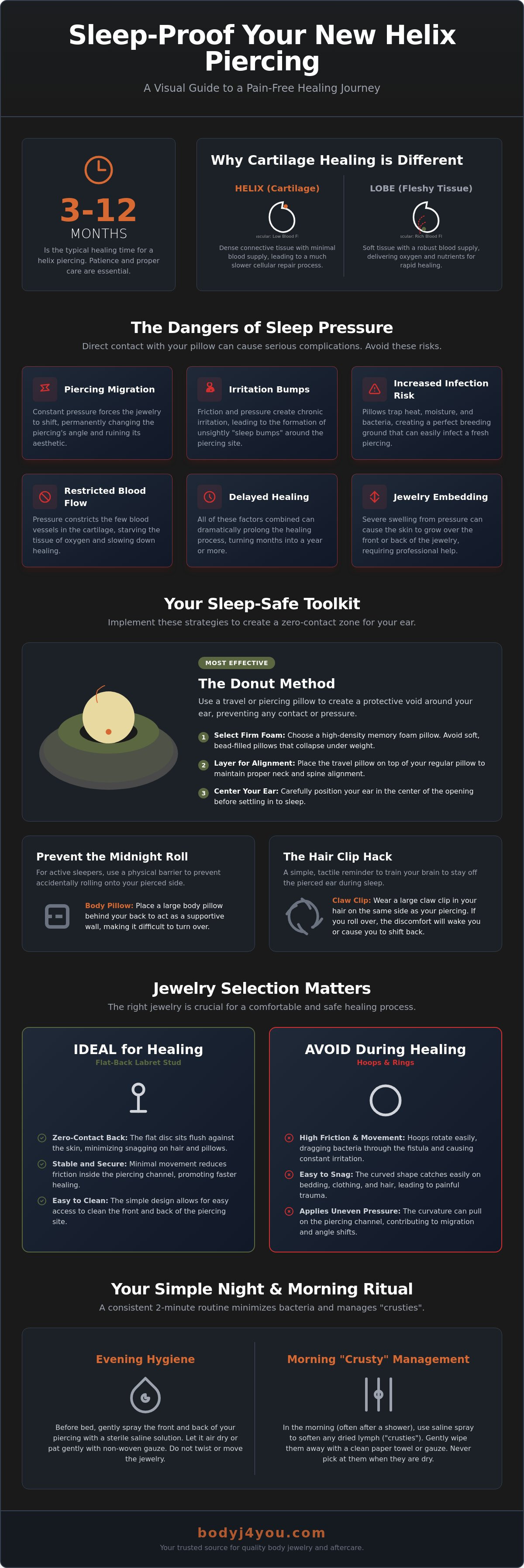
The most effective tool in your arsenal is a firm travel pillow. This technique, often called the "Donut Method," involves placing your ear directly into the center opening of the pillow. This creates a protective void where the jewelry never touches a surface. To ensure success, follow these steps:
- Select Firm Foam: Avoid bead-filled pillows that shift under weight. A high-density memory foam provides the stability, comfort, and protection required to keep your head elevated.
- Layer for Alignment: Don't ditch your main pillow. Place the travel pillow on top of your standard one to maintain proper neck and spinal alignment.
- Center the Ear: Ensure your helix is perfectly centered in the "donut hole" before you drift off.
Preventing the Midnight Roll
Even the best intentions can be ruined by involuntary movement during the night. If you're a side sleeper who tends to toss and turn, you need physical barriers. A large body pillow placed behind your back acts as a stabilizing force, making it physically difficult to roll onto your pierced side. For a more creative approach, try the "Hair Clip Hack." By wearing a large claw clip on the side of your head that is pierced, your brain will receive a gentle, tactile reminder to stay off that ear if you attempt to roll over.
Another classic specialist trick is the "Tennis Ball" method. Simply pin a tennis ball to the side of your pajama shirt on the pierced side. The slight discomfort of the ball prevents you from settling onto that shoulder. Additionally, you should never sleep with wet hair. Dampness softens the skin and increases the risk of the jewelry snagging on loose strands or fabric. To keep your piercing site calm and hydrated, consider applying a soothing treatment oil before bed to maintain tissue elasticity.
Finally, examine your bedding. While cotton is breathable, its fibers are relatively coarse and can catch on the ends of a labret stud. Switching to a silk or satin pillowcase provides a frictionless surface that allows your hair and jewelry to glide safely. This small upgrade offers a high-end feel while serving as a critical protective layer for your healing helix.
Jewelry Selection: How Studs vs. Hoops Affect Your Sleep
Your choice of jewelry is the foundation of your recovery. While the aesthetic appeal of a delicate hoop is often the primary motivation for a new piercing, the mechanical reality of healing requires a more stable approach. Jewelry isn't just a decorative element; it's a medical-grade placeholder that dictates how your body repairs itself. Selecting the wrong style can turn a night of rest into a cycle of irritation. To ensure you understand how to sleep with a new helix piercing, you must prioritize stability, material purity, and structural safety.
The Association of Professional Piercers aftercare guidelines emphasize that initial jewelry should be designed to accommodate swelling and minimize movement. Standard "butterfly back" earrings are entirely unsuitable for this purpose. Their design features tight crevices that trap bacteria, and the sharp post can cause significant trauma if pressed against the head during sleep. Instead, professional specialists insist on implant-grade surgical steel or titanium to prevent allergic reactions and support the delicate healing fistula.
The Advantage of Internal Threaded Labret Studs
Flat-back internal threaded labret studs are the gold standard for sleep comfort. Unlike traditional earrings, the flat disk sits flush against the back of your ear, eliminating the "poke" factor that disrupts rest. Because the threading is on the inside of the post, the exterior is perfectly smooth. This design ensures that the jewelry won't snag on pillow fibers or hair as you move. A critical step in your journey is "downsizing" your post. Once the initial swelling subsides, usually after 4 to 8 weeks, a shorter post reduces the "wiggle room," preventing the jewelry from tilting or shifting while you sleep.
Why Hoops are High-Risk for Sleepers
Hoops are beautiful but mechanically volatile. When you sleep on a hoop, you trigger the "Lever Effect." Any pressure applied to the visible part of the ring translates into a powerful force inside the piercing channel. This movement acts like a lever, dragging bacteria, crusties, and hair into the wound. This constant motion prevents the structural integration required for cartilage healing. Furthermore, thin hoops can cause the "cheese-cutter effect," where pressure forces the jewelry to migrate through the cartilage, leaving a permanent scar. For these reasons, it is generally recommended to wait at least six to nine months before transitioning from a stud to a hoop. Prioritize safety, stability, and long-term health over immediate trends.
Your Nighttime and Morning Helix Care Routine
Consistency is the hallmark of successful healing. While your travel pillow provides the physical barrier, a rhythmic hygiene routine provides the biological defense. Mastering how to sleep with a new helix piercing requires more than just positioning; it demands a dedicated transition between your daily activities and your restorative rest. A clean, dry, and stable environment is the only way to ensure your jewelry remains an asset rather than a liability. By establishing these habits, you protect the delicate fistula from the invisible threats of the night.
The Pre-Sleep Saline Shield
Before you settle in, dedicate two minutes to a protective ritual. Use a sterile saline spray for piercings to gently irrigate the site. This removes the environmental pollutants, sweat, and oils accumulated throughout the day. Moisture is a silent threat to cartilage. Trapped dampness can lead to tissue softening and bacterial proliferation, which is why specialists emphasize a dry environment. After spraying, use a hair dryer on the "cool" setting to ensure the area is perfectly dry before your head hits the pillow. Avoid thick ointments or heavy oils during this time. These substances can clog the piercing channel and trap heat, leading to unnecessary overnight inflammation.
Morning Assessment and Debris Removal
Waking up with "crusties" is a sign of a healthy immune system. This material is dried lymph fluid, a byproduct of your body’s repair work that often accelerates during the deep sleep cycles. Never pick at these with your fingernails. Instead, use specialized piercing cleaning swabs saturated with saline to gently soften and wipe away the buildup. This ensures you don't tear the delicate new skin forming inside the channel. If you wake up and realize you accidentally slept directly on your ear, don't panic. A brief saline soak and a return to the "Leave It The Hell Alone" (LITHA) rule will usually resolve minor pressure-induced redness.
Differentiating between simple sleep irritation and a true infection is vital for your peace of mind. Sleep irritation typically manifests as localized redness or a dull ache that fades shortly after waking. An infection, however, often presents with persistent heat, throbbing pain, or thick, discolored discharge. If you notice these symptoms, consult your specialist immediately. To keep your recovery on track and maintain your aesthetic, ensure you have the right tools by stocking up on professional aftercare essentials today.
Expert Solutions for Sleep-Related Piercing Irritation
Setbacks are a natural part of the biological healing journey. Even when you've mastered how to sleep with a new helix piercing, a single night of restless movement can cause localized distress. Cartilage is unforgiving; it remembers every ounce of pressure. If you wake up with increased redness or a small protrusion near the jewelry, you're likely dealing with a "sleep bump." This isn't a permanent failure but a signal from your body that the tissue requires stabilizing care and reduced friction. Understanding how to respond to these minor crises is what separates a successful healing process from a chronic struggle.
Soothing the "Sleep Bump"
A sleep bump is typically a localized inflammatory response to friction or pressure migration. Unlike infections, these bumps are often firm, skin-colored or slightly pink, and painless unless touched. To resolve this, you must prioritize tissue calming. Applying a piercing bump treatment oil provides the essential fatty acids and soothing botanicals needed to reduce swelling and restore skin integrity. This approach is far superior to dangerous, outdated "hacks" like aspirin paste or undiluted tea tree oil, which often cause chemical burns on fresh wounds. Your body needs purity, ethics, and safety; not harsh chemicals.
Consistency is your greatest ally. While it may be tempting to try "shock treatments" to make a bump disappear overnight, your cartilage responds better to gentle, steady care. A warm compress can be incredibly effective. The gentle heat increases blood flow to the "squashed" cartilage, aiding in the removal of cellular waste and promoting repair. Combine this with your regular saline routine to maintain a pristine environment. Remember: healing is a marathon, not a sprint. Maintain your rhythm, trust the process, and protect your aesthetic.
When to Seek Professional Help
There are moments when home care reaches its limit. If your jewelry appears to be "sinking" into the tissue, your post may be too short to accommodate sleep-induced swelling. This requires a professional adjustment to a longer post to prevent the jewelry from becoming embedded. You should also monitor the angle of your piercing. If the jewelry has migrated to a point where it no longer sits perpendicular to the tissue, a specialist can determine if the angle is still salvageable. Early intervention prevents permanent displacement.
Your helix is a long-term investment in your self-expression. Since full maturation takes between six and twelve months, your protective sleep habits must become second nature. Stay disciplined, stay observant, and stay patient. If you need the right tools to support your recovery, explore our full range of aftercare and jewelry to ensure your journey is as seamless as possible. You have the knowledge; now, give your body the time it needs to shine.
Protecting Your Aesthetic Investment
Navigating the long road to a healed helix requires patience, precision, and protection. By mastering the donut pillow technique and committing to high-quality internal threaded jewelry, you've already taken the most important steps toward a successful recovery. You now understand that a zero-pressure environment is the only way to prevent migration and maintain the perfect angle of your curation. Consistency with your nighttime hygiene and a disciplined approach to how to sleep with a new helix piercing will ensure your self-expression remains vibrant and irritation-free.
At BodyJ4You, we bring over 20 years of industry experience to your aftercare journey. Our USA-manufactured aftercare line and specialized internal threaded jewelry are designed to provide the stability, purity, and safety your body deserves. Don't leave your comfort to chance. Shop BodyJ4You Aftercare and Jewelry for a Pain-Free Healing Journey and give your piercing the professional support it needs to thrive. Your journey toward a fully healed, beautiful helix is well within reach. Sleep soundly, stay consistent, and enjoy the art of your curation.
Frequently Asked Questions
Can I sleep on my new helix piercing if I use a soft pillow?
No, you should avoid sleeping directly on the ear regardless of the pillow's texture. Even the softest down or memory foam applies consistent pressure to the cartilage, which restricts vital blood flow and triggers inflammation. This pressure is the primary cause of delayed healing and localized swelling. To ensure your helix heals perfectly, maintain a zero-contact zone until the tissue has fully matured.
How long do I have to use a travel pillow after getting a helix piercing?
You should use a travel pillow for the entire duration of the initial healing phase, which typically lasts six to twelve months. While the piercing may feel comfortable after a few weeks, the internal structural tissue remains vulnerable to pressure migration. Transitioning to a standard pillow too early can cause the jewelry to shift angle permanently. Consistency is the key to a stable, aesthetic result.
What should I do if I accidentally sleep on my new piercing and it starts bleeding?
Don't panic if you notice minor bleeding after a restless night. Gently irrigate the area with a sterile saline spray to remove any blood without touching the wound directly. Avoid picking at any scabs that form, as these act as a biological bandage for the healing fistula. If the bleeding is heavy or persistent, contact your professional piercer for a physical assessment of the jewelry and tissue.
Is it okay to put a band-aid over my helix piercing while I sleep?
No, you should avoid using adhesive bandages over a fresh piercing. Band-aids trap moisture, heat, and bacteria against the wound, creating an environment ripe for infection. Additionally, the adhesive can pull on the jewelry or the surrounding skin, causing unnecessary trauma. The best protection is a clean, open environment that allows the tissue to breathe while you master how to sleep with a new helix piercing.
Why does my helix piercing hurt more in the morning than at night?
Increased morning pain is usually the result of fluid accumulation or involuntary movement during the night. As your body repairs itself during deep sleep, lymph fluid and blood flow to the area can cause minor throbbing or "crusties." If you find yourself waking up with significant pain, it's a sign that you may have accidentally rolled onto the ear, causing temporary pressure-induced inflammation.
Can I use a regular earplug to protect my piercing while sleeping?
A regular earplug will not provide the structural protection your helix requires. Earplugs are designed to sit inside the ear canal, whereas a helix piercing is located on the outer rim of the cartilage. Using an earplug may actually introduce additional bacteria to the area if your hands touch the piercing while inserting it. Stick to the travel pillow method to ensure the entire ear remains untouched.
How do I stop my hair from wrapping around my helix jewelry at night?
The most effective way to protect your jewelry from hair snags is to secure your hair away from the face before bed. Use a loose braid, a high bun, or a silk head wrap to keep strands contained. This prevents individual hairs from wrapping around the post or decorative end, which can lead to painful tugging and irritation. A silk pillowcase also helps by reducing the friction between your hair and the bedding.
Will sleeping on my piercing cause it to become crooked permanently?
Yes, consistent pressure can lead to permanent displacement known as pressure migration. When you sleep on a new piercing, the weight of your head forces the jewelry to exit the tissue at a different angle. Over time, the cartilage heals around this new, slanted path, which can ruin the aesthetic alignment of your jewelry curation. Protecting your ear during sleep is essential for maintaining a clean, perpendicular angle.


