

Your piercing isn't actually healed just because it stopped hurting. What you see on the surface is frequently a "false positive" that masks the complex biological work occurring deep within your tissue. We understand the frustration of the waiting game. You want to express yourself, you want to ditch the initial jewelry, and you want to be certain you're safe from infection. Learning how to know when piercing is healed is the only way to avoid the setbacks of piercing bumps, scarring, or sudden regression.
True healing is a journey of patience, precision, and protection. While a lobe might feel settled in six weeks, the internal skin tube, known as the fistula, often requires months to reach full structural integrity. This guide provides the expertise you need to master the biological signs of a matured piercing. We will detail the specific timelines for different placements, explain the difference between lymph and infection, and teach you how to test your piercing without risking trauma. You'll gain the clarity to curate your look with absolute peace of mind.
Key Takeaways
- Identify the "false positive" phase where the absence of pain masks a fragile, still-developing internal fistula.
- Master the physical checklist for how to know when piercing is healed, including the 14-day "no crusties" rule and rounded skin edges.
- Learn a safe jewelry transition protocol that prioritizes hygiene and the use of high-quality internal threaded labret studs.
- Understand why complex placements like industrial or navel piercings require a full 12-month commitment to reach biological maturity.
- Distinguish between normal healing stages and warning signs to protect your aesthetic investment from scarring or piercing bumps.
The "False Positive": Why Your Piercing Looks Healed Before It Is
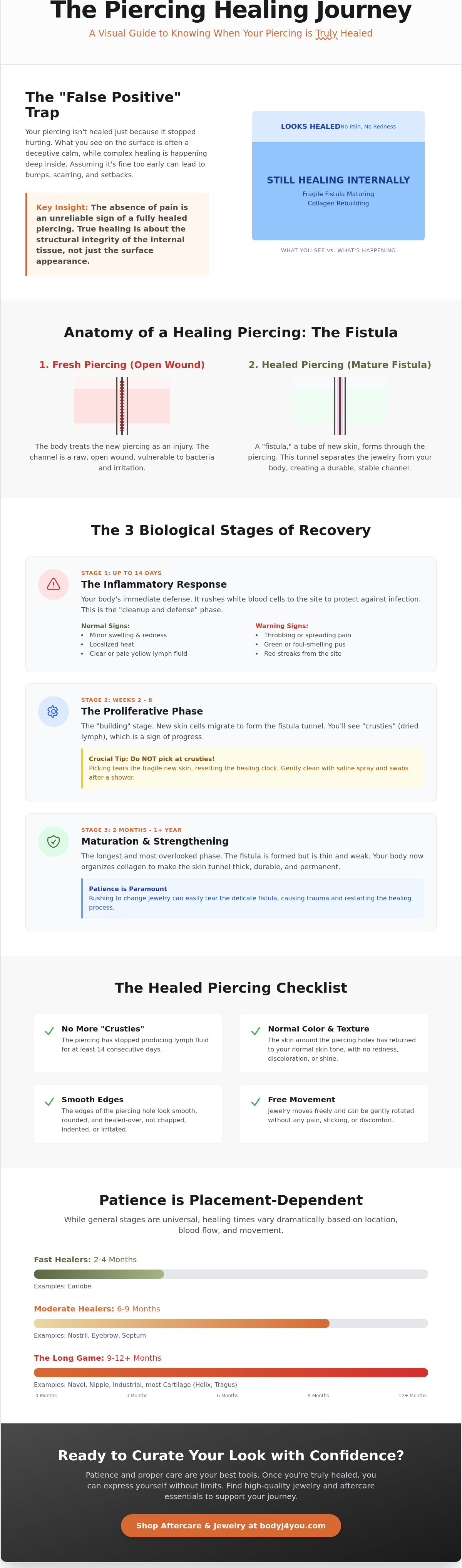
Self-expression is a journey of patience, precision, and protection. The "False Positive" is the deceptive moment when the surface of your skin looks calm, but the internal work is only half-finished. Most enthusiasts assume that once the tenderness vanishes, the healing is over. However, this is just the beginning of the maturation process. Understanding how to know when piercing is healed involves distinguishing between a closed wound and a strengthened skin tunnel. If you stop your routine the moment the piercing looks "fine," you invite the very complications you've worked so hard to avoid.
Pain is an unreliable narrator. It fades long before the internal tissue has reorganized itself into a durable structure. During this quiet phase, the body is transitioning between the biological stages of piercing recovery, moving from initial defense to structural building. Without the protective signals of pain, many people accidentally snag or pressure their piercings, leading to delayed healing or the sudden appearance of piercing bumps. True maturation is a silent, long-term commitment to tissue integrity.
The Anatomy of a Healing Piercing
Your body views a piercing as a foreign intrusion that must be managed. To do this, it creates a fistula, which is essentially a biological sleeve that separates the jewelry from your internal systems. This process starts at the surface and moves inward. Skin cells grow from the entry and exit points, slowly migrating through the channel until they meet in the middle to seal the wound. The fistula is a continuous tunnel of epithelial cells that must toughen over time to withstand the daily stresses of movement and jewelry weight. Until this lining is fully organized, the piercing is technically an open channel.
Why Early Jewelry Changes Reset the Clock
The most frequent mistake in the piercing community is the premature jewelry change. When you slide a new post through an immature fistula, you risk creating microscopic tears in the thin, new skin. These tears are often invisible to the naked eye, but they act as gateways for bacteria and irritants. This creates a cycle of "piercing trauma" that mimics the symptoms of a fresh wound. Swelling returns, redness reappears, and the healing clock resets to zero. By rushing the process, you aren't just changing your look; you are potentially trapping bacteria inside a newly irritated wound. Patience is the ultimate guardian of your aesthetic goals.
The 3 Biological Stages of Piercing Recovery
Your body follows a strict, non-negotiable biological schedule. It doesn't care about your desire to switch jewelry for an upcoming event. Understanding the three distinct phases of recovery is the most reliable method for how to know when piercing is healed. While a simple lobe piercing might breeze through these stages in three to five months, complex cartilage or navel placements frequently require a full year to reach permanent stability. Your biology is the architect; you are the guardian.
Stage 1: The Inflammatory Response
This is the body's immediate defensive posture, typically lasting the first 14 days. During this time, you will notice localized heat, slight swelling, and a clear or pale yellow discharge known as lymph. These are healthy signs of white blood cells rushing to the site to prevent intrusion. According to the Association of Professional Piercers, minor discoloration and itching are normal parts of this initial window. However, you must watch for warning signs like throbbing pain, green pus, or red streaks radiating from the wound. To support this stage, use a Saline Piercing Aftercare Spray twice daily to flush debris without causing chemical irritation. Cleanse, protect, and wait.
Stage 2: The Proliferative Phase
The proliferative phase is the "building" stage, usually spanning weeks two through eight. This is when the fistula begins to form as new skin cells migrate to create a protective tunnel. You'll likely see "crusties," which are simply dried secretions. Never pick at these with your fingernails. Picking causes microscopic tears in the fragile new skin growing underneath, which resets your healing clock. Instead, use Piercing Cleaning Swabs to gently remove softened debris after a saline soak. This ensures the area remains hygienic without the trauma of physical friction.
Stage 3: Maturation and Strengthening
This is the longest and most overlooked phase, lasting from two months up to a full year. The fistula is technically formed, but it's thin and easily damaged. During maturation, your body organizes collagen fibers to make the skin tunnel durable and permanent. For high-movement piercings like an industrial or navel, this stage is critical. If you stop aftercare or sleep on the piercing now, you risk developing piercing bumps or migration. This stage is the true answer to how to know when piercing is healed; it's when the tissue has matured enough to resist the daily stresses of life. Purity, safety, and self-expression require patience.
If you're noticing persistent irritation during the maturation phase, a soothing piercing bump treatment oil can provide the stabilizing care your skin needs to finish the journey.
The Healed Piercing Checklist: 5 Physical Signs to Look For
Observation is your greatest tool. Once you understand the biological stages of recovery, you can begin to look for specific physical milestones that signal maturation. Relying on a calendar alone is risky. Every body heals at a different pace, influenced by sleep, nutrition, and jewelry quality. To achieve certainty in how to know when piercing is healed, you should look for these five definitive physical indicators before considering your aftercare complete.
- The "No Crusties" Rule: You must experience 14 consecutive days without any discharge, lymph, or crust buildup. If you see even a speck of dried fluid, the internal fistula is still sealing.
- Rounded Edges: Examine the entry and exit points closely. The skin should look "tucked in" and smooth rather than raw, jagged, or raised.
- Fluid Jewelry Movement: Your jewelry should slide or rotate freely through the channel. There should be zero resistance, sticking, or "pinching" sensations when the jewelry moves during cleaning.
- Color Consistency: The skin immediately surrounding the piercing should match your natural skin tone. Any lingering pinkness or redness indicates that the body is still sending extra blood to the site for repair.
- The "Shrink" Factor: As initial swelling vanishes, your starter jewelry will suddenly look "long." This gap between the jewelry end and your skin is a clear sign that the tissue has settled into its permanent thickness.
Visual Markers of a Mature Fistula
A mature piercing has a distinct "donut" look at the entrance. This indicates that the skin has successfully rolled inward to create a continuous tunnel of epithelial cells. If the skin looks shiny or translucent, it's a sign that the tissue is still "new" and lacks the collagen density required for durability. Rounded, inward-sloping edges are the hallmark of a completed skin tunnel. Until you see this structural change, treat the area with extreme care.
The Sensation Test
Sensation provides the final confirmation. Gently tugging the jewelry should produce zero "sharp" or "stinging" sensations. You can also try the "Cold Water Test." Fresh piercings react sharply to temperature changes, often feeling a dull ache in cold weather or during a cold shower. Healed piercings don't react to temperature changes as sharply as fresh ones because the nerves are no longer in a state of high alert. If you notice minor irritation or a small flare-up during these tests, applying a Piercing Bump Treatment Oil can provide the soothing, stabilizing support needed to calm the tissue. Mastering how to know when piercing is healed is about listening to these subtle physical cues. Your body will tell you when it's ready for self-expression.
The Jewelry Change Test: Moving Safely to Fashion Pieces
Transitioning from starter studs to fashion-forward pieces is the ultimate reward for your patience. It marks the shift from a healing wound to a permanent aesthetic statement. However, the first change is also a moment of vulnerability for the delicate fistula. To ensure your body is ready, perform a controlled "Jewelry Change Test." This practical assessment is the final step in how to know when piercing is healed before you commit to a new look. Cleanse, inspect, and transition.
Success requires three things: hygiene, precision, and high-quality materials. First, wash your hands thoroughly with antimicrobial soap and cleanse the area with a sterile saline spray. Gently loosen your starter jewelry. If you are wearing Internal Threaded Labret Studs, the removal process will be significantly smoother as there are no external threads to scrape the internal channel. Partially slide the jewelry out and inspect the visible channel. A mature fistula will look white or skin-toned. If the interior looks pink, raw, or if you feel a sharp "sting," immediately stop. Put the starter jewelry back in and wait at least 14 days before testing again.
Choosing Your First "Fashion" Jewelry
Material integrity is non-negotiable for a freshly matured piercing. Stick to biocompatible materials like Surgical Steel or implant-grade Titanium. These metals provide the purity needed to prevent irritation. Avoid heavy "dangle" earrings or weighted pieces for the first few months after your change. A new fistula is strong enough for standard studs but can still be stretched or torn by excessive weight. Steer clear of "mystery metals" or inexpensive alloys containing nickel, which can trigger an allergic reaction and reset your healing timeline instantly. Quality is the foundation of self-expression.
What to Do if the Hole "Shrinks"
A new fistula is surprisingly dynamic. If you leave your jewelry out for even a few minutes, the channel can begin to contract. Always have your new, sanitized jewelry ready before you remove the old piece. If you encounter resistance, don't force the jewelry through. Forcing a piece can cause "piercing trauma," leading to swelling and potential infection. If the hole has tightened, a professional piercer can use a sterilized taper to gently guide the jewelry back into place without damaging the tissue. This cautious approach is a core part of how to know when piercing is healed enough to sustain a change.
Ready to upgrade your look? Explore our collection of Internal Threaded Labret Studs to ensure your first jewelry change is as safe as it is stylish.
The Long Game: Maintenance After the 12-Month Mark
"Fully healed" is a significant milestone, but it isn't a shield against the world. Even after you have confirmed how to know when piercing is healed, the fistula remains a living, reactive skin tunnel. It continues to interact with your immune system, your environment, and the jewelry you choose to wear. While the primary healing phase has concluded, the maturation phase is an ongoing process of reinforcement. Resilience, consistency, and awareness are the keys to maintaining your aesthetic investment for a lifetime.
Seasonal changes often catch experienced collectors off guard. Dry winter air can dehydrate the tissue around the fistula, making it brittle and prone to micro-tears during jewelry changes. Conversely, summer humidity and sweat can trap bacteria against the skin, occasionally causing a "healed" piercing to feel itchy or tender. Even years later, a quick rinse with a saline solution after a day at the beach or a heavy workout is a wise ritual. Your body is a dynamic system; treat it with rhythmic care.
The Maturation Timeline by Piercing Type
Every placement has a unique biological clock. While you may feel confident in how to know when piercing is healed based on surface signs, the internal maturation follows these verified 2026 standards:
- Earlobes: 6 to 12 weeks for an initial jewelry change; 6 months for full maturation.
- Cartilage (Helix, Tragus, Industrial): 6 to 12 months for maturation.
- Septum: 3 to 5 months for maturation.
If your journey includes aesthetic expansion, patience is your most valuable tool. You should only consider using an Ear Stretching Kit once the fistula has reached the maturation stage. Attempting to stretch a "closed" but immature wound can lead to blowouts or permanent tissue damage.
Signs of a "Regression" (And How to Fix It)
Regression occurs when a stable, year-old piercing suddenly behaves like a fresh wound. If you notice a sudden bump, redness, or discharge, look at your lifestyle first. High stress, lack of sleep, or a compromised immune system can divert your body's resources away from the fistula. Physical trauma, such as snagging an industrial barbell on a sweater, can also trigger a flare-up. If this happens, return to the basics. Keep a bottle of saline spray on hand and treat the area with the same nurturing care you provided on day one. Listen, cleanse, and protect.
Secure Your Style with Confidence
Your journey from a fresh piercing to a mature fistula is a testament to your patience and care. By looking past the "false positive" phase and respecting the biological stages of recovery, you protect the integrity of your skin. Remember that true maturation requires rounded edges, fluid movement, and a consistent absence of discharge. Mastering how to know when piercing is healed ensures your self-expression remains a source of joy rather than a source of irritation. You've done the work to understand the science; now you can enjoy the aesthetics.
At BodyJ4You, we bring over 20 years of industry expertise to your aftercare routine. Our locally manufactured skincare products provide strict quality control that professional piercers trust worldwide. Whether you need stabilizing oils or high-quality titanium studs, we offer the tools for a seamless transition. Shop BodyJ4You Sterile Aftercare & High-Quality Jewelry to give your piercings the specialized care they deserve. Your body is a canvas. Treat it with the respect it deserves and let your unique style shine.
Frequently Asked Questions
Can I change my piercing after 2 weeks if it doesn’t hurt?
No, you should not change your jewelry after only two weeks. This period marks the peak of the inflammatory stage where the internal tissue is still incredibly raw. Changing jewelry now causes microscopic tears and introduces bacteria into a fragile channel. Patience at this stage prevents piercing bumps, migration, and long-term scarring. Wait for the proliferative phase to conclude before considering a change.
What does it mean if my piercing is still "crusty" after 3 months?
Persistent crust buildup after three months indicates that the proliferative stage is still active. This is common for cartilage placements like the helix or tragus which heal more slowly than earlobes. Your body is still producing lymph to seal the internal channel. It's a clear signal for how to know when piercing is healed; if crusties remain, the fistula hasn't reached biological maturity.
How do I know if my piercing is infected or just irritated?
Infection presents with green or foul-smelling discharge, radiating heat, and persistent throbbing. Irritation is usually localized redness or a small bump caused by physical trauma like snagging jewelry. If the area feels hot to the touch or you see red streaks, seek professional medical advice immediately. Most minor flare-ups are simply irritation from sleeping on the piercing or using harsh chemicals.
Is clear fluid coming out of my piercing normal?
Clear or pale yellow fluid is perfectly normal during the healing process. This substance is lymph, a vital component of your body’s immune response that helps create the protective seal over the wound. It helps create the "crust" that protects the healing fistula from external debris. Don't confuse this with pus. Lymph is a sign that your body is actively building a healthy skin tunnel.
Why does my healed piercing smell when I move the jewelry?
That odor is caused by a natural buildup of dead skin cells and sebum. Even in a mature piercing, these elements can accumulate inside the fistula and create what is often called "piercing funk." Regular cleaning with warm water or a gentle jojoba oil during your shower will eliminate the scent. It's a sign of a living, healthy skin channel rather than a medical complication.
Can I go swimming if my piercing looks healed?
You should avoid swimming until the fistula has completely matured and passed the checklist. Pools, lakes, and oceans are filled with bacteria that can easily enter a healing wound. Even if the surface looks fine, the internal tissue remains vulnerable to infection. If you must swim, use a waterproof bandage and rinse the area with sterile saline immediately afterward to flush out irritants.
What happens if I take my jewelry out before it’s fully healed?
Your piercing will likely close within minutes if you remove the jewelry prematurely. An immature fistula lacks the structural integrity to stay open without the support of a stud or hoop. Taking jewelry out now risks trapping bacteria inside as the skin seals over the entry points. If you lose a piece of jewelry, see a professional piercer immediately to have it replaced safely.
How long can I leave my jewelry out once the piercing is healed?
The duration depends entirely on the age and placement of the piercing. A one-year-old piercing can shrink or close in just a few hours if left empty. Older, more established piercings might stay open for days, but there is always a risk of the hole tightening. Learning how to know when piercing is healed involves recognizing that a permanent hole takes years of consistent jewelry wear to maintain.


