

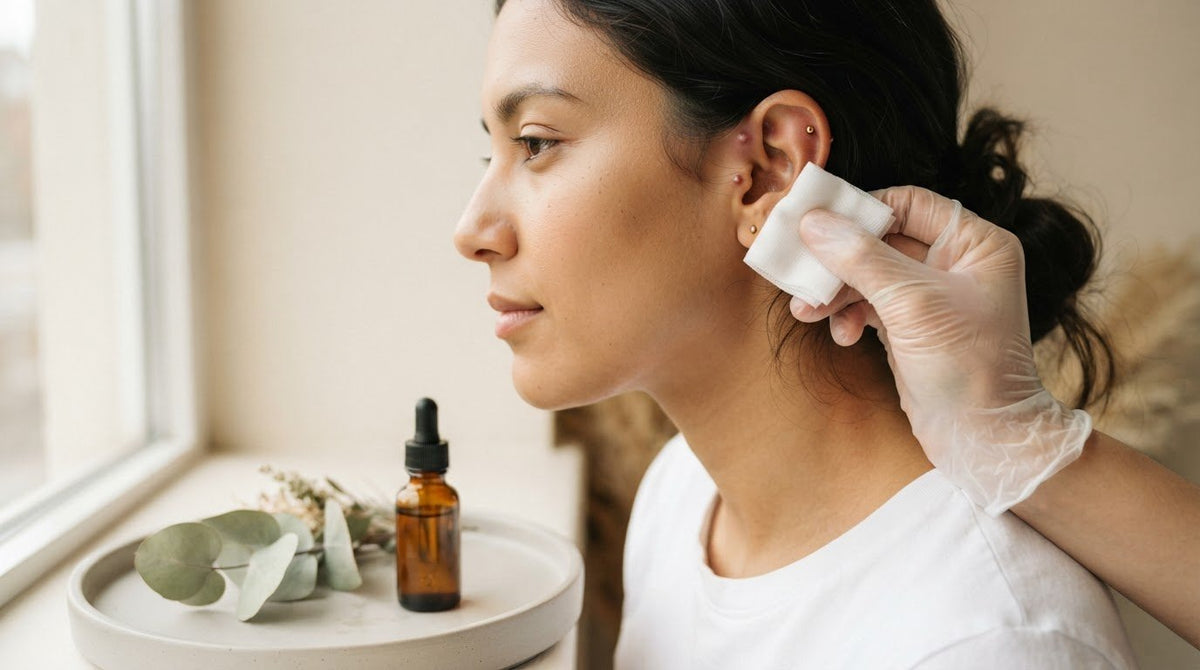
Don’t try to break down scar tissue around a piercing by squeezing, scraping, or cutting it. A raised area that remains within the original piercing site may be a hypertrophic scar; a keloid can grow beyond the wound. These conditions need different assessment and care. To understand how to break down scar tissue around a piercing safely, first consider what the bump may be and avoid actions that could irritate it further.
It’s understandable to want a raised scar to flatten quickly, but irritation bumps and scars can look alike. This guide explains how to recognize a possible hypertrophic scar, outlines treatment options, and covers gentle cleaning and protection while the area heals. You’ll also learn when professional assessment matters, so you can care for the piercing without putting your skin through more trauma.
Key Takeaways
- Notice whether a raised area stays within the piercing site or extends beyond it, and distinguish scar tissue from an irritation bump.
- Learn which treatments may help flatten hypertrophic scars and why treatment choices depend on the type and condition of the scar.
- Recognize changes in a piercing’s appearance and sensation that can help you describe the area clearly during an assessment.
- Keep care gentle: clean with saline and reduce pressure, friction, and movement that can irritate the site.
Is It a Hypertrophic Scar on Your Piercing?
A raised piercing bump may be scar tissue or irritation, and appearance alone can’t confirm the cause. Consider its boundaries, texture, and changes over time, but don’t rely on these signs to diagnose it or choose treatment.
Comparing Keloids, Hypertrophic Scars, and Irritation Bumps
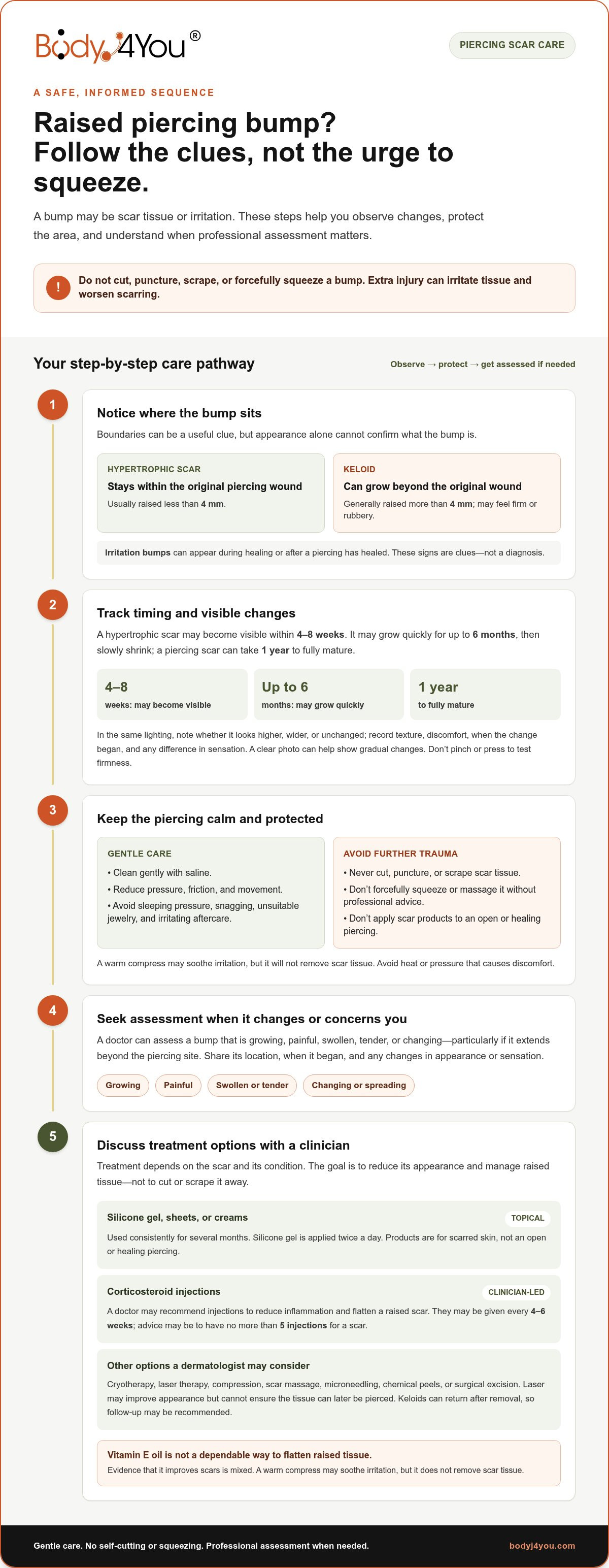
A hypertrophic scar stays within the original piercing wound, while a keloid grows beyond it. A hypertrophic scar is usually raised less than 4 millimeters; a keloid is generally raised more than 4 millimeters. Keloids may feel firm or rubbery and cause itching, pain, swelling, or tenderness. Irritation bumps can appear during healing or after a piercing heals. Don’t squeeze or cut any bump: extra injury can irritate tissue and worsen scarring.
Causes and Medical Attention for Piercing Bumps
Pressure from sleeping, snagging, unsuitable jewelry, and aftercare that irritates the site can cause bumps or prolong healing. A doctor can assess a bump that is growing, painful, swollen, tender, or changing, particularly if it extends beyond the piercing site. These features may help distinguish a keloid from a localized hypertrophic scar, but appearance alone cannot confirm a diagnosis.
Can You Pierce Through an Existing Scar?
Whether scar tissue can be pierced depends on its severity, cause, and age; an in-person assessment may be needed. Small, mostly flat, healthy scars from earlier piercings are generally easier to pierce. Larger or more severe scars can heal less predictably and may develop additional scarring. Surface piercings offer fewer options because scar tissue can affect tissue integrity. Surgical or accident scars also need careful assessment of their condition and location before piercing.
Corticosteroid Injections for Raised Scars
A doctor may recommend corticosteroid injections to reduce inflammation and flatten a raised scar. Injections may be given every four to six weeks, and the advice may be to have no more than five injections for a scar. Never try to break down scar tissue with a needle, blade, or squeezing. These actions can injure the skin, increase inflammation, and cause further scarring. A clinician can assess the bump and discuss appropriate treatment.
Hypertrophic scar characteristics and treatment options
A hypertrophic scar may grow quickly for up to six months, then slowly shrink. Treatment aims to reduce its appearance and manage raised tissue, not cut or scrape it away.
Over-the-Counter Products and Vitamin E
Silicone gel sheets and scar creams are topical options used consistently for several months to reduce a scar’s appearance. Over-the-counter products containing onion extract may also help make scars less visible. Evidence that vitamin E oil improves scars is mixed, so it isn’t a dependable way to flatten raised tissue. Use only topical products intended for scarred skin, not an open or healing piercing.
Dermatological, Laser, and Topical Treatments
A dermatologist can recommend treatment based on the scar type and how it changes. Options include silicone, corticosteroid treatments, cryotherapy, laser therapy, compression, and scar massage. Silicone gel is applied twice a day; silicone sheets or creams need consistent use for several months. Laser treatment may improve a scar’s appearance, but it cannot ensure the tissue can later be pierced.
Microneedling and chemical peels are other procedures used to improve scar appearance. Surgical excision may be considered when a scar affects appearance or function. Keloids can return after removal, so dermatologists may recommend topical scar cream and steroid injections if regrowth occurs. Follow-up helps monitor healing and address changes.
At-Home Breakdown, Massage, and Warm Compresses
You can’t safely break down scar tissue at home by cutting, puncturing, or forcefully squeezing it. Scar massage is one treatment option, but a dermatologist can advise whether it suits the scar and surrounding skin. A warm compress may soothe irritation, but it won’t remove scar tissue. Avoid heat or pressure that causes discomfort.
Improvement takes time: a piercing scar can take one year to fully mature, while silicone treatments require consistent use for several months. In the United States, treatment cost depends on the chosen approach, such as topical care, injections, or laser therapy, and the scar being treated. For gentle cleansing around a piercing, Saline Piercing Aftercare Spray is an aftercare option, not a scar-removal treatment.
Hypertrophic scar symptoms and appearance
A hypertrophic scar may become visible within four to eight weeks after a piercing. It appears raised and thickened around the healing site, rather than spreading beyond the original wound. Timing can help you compare the bump with the piercing’s healing history, but it doesn’t identify the cause. Note when you first noticed the change and whether the outline remains localized.
Track the scar’s appearance consistently. In the same lighting, note whether it looks higher, wider, or unchanged, and record any change in texture. Comparing a clear photo with an earlier one can reveal gradual changes that are hard to notice day to day. Don’t press or pinch the area to test its firmness; handling can irritate the piercing and change how the skin looks at rest.
Sensation is another useful detail. More severe scars may have decreased sensitivity or sensation, so note whether the skin feels different from the surrounding area. For example, describe a patch that feels less responsive to a light touch rather than repeatedly testing it. Share this observation during an assessment, along with the piercing’s location and when the change began.
Raised scars can draw attention because they change the skin’s surface, but consider their appearance alongside how they change over time. If you’re researching how to break down scar tissue around piercing sites, first note whether the outline stays stable or continues to change. Keep a simple record of discomfort and texture, and don’t try to flatten the tissue yourself.
Collagen is part of the scar tissue involved in keloid formation, but a visible bump cannot be classified by appearance alone. A dermatologist can assess the scar’s boundaries, texture, and sensation, then discuss possible causes and care. Questions about how to break down scar tissue around piercing areas are best considered with this assessment in mind. Bring dated notes and photos to show how the area has changed.
Cleaning and protecting a piercing scar
Gentle, consistent cleaning helps limit infection that could worsen scarring. Use sterile saline to clean the piercing site, or follow medical advice about a mild antiseptic. A saline soak can be made with 1/4 teaspoon of iodine-free salt in 8 ounces of warm water. Apply it for 5 to 10 minutes, twice daily, then avoid rubbing the area.
Keep pressure, friction, and excess movement away from the site. If an ear piercing presses against a pillow while you sleep, adjust your position; take care not to snag jewelry on clothing. These changes can reduce repeated irritation while the skin heals. Don’t twist or repeatedly handle the piercing just to inspect a bump.
Protect the scar from sun exposure. Ultraviolet rays can darken scar tissue and make it more noticeable; shade or clothing can provide a simple barrier. A scar from a surgical incision also needs protection from friction and sun, but follow the care instructions for that incision. Piercing aftercare and surgical wound care aren’t interchangeable.
Choose products carefully. Undiluted tea tree oil can be too harsh for a healing wound, and evidence about the safety of topical tea tree oil is inconclusive. Don’t apply it directly to a piercing. If you use a saline product, follow its directions and keep care gentle rather than layering oils or harsh antiseptics.
The key is steady protection, not trying to dissolve or scrub away scar tissue. For routine cleansing, choose a saline piercing aftercare spray and use it according to its directions. Stop anything that causes irritation, and seek medical advice if the site becomes increasingly painful, swollen, or tender.
BodyJ4You: Acrylic Ear Stretching Kit
The Acrylic Ear Stretching Kit is for readers exploring ear stretching, not for breaking down scar tissue. Don’t use a stretching kit to push through a raised or irritated area; stretching and scar treatment are different concerns.
For piercing aftercare, BodyJ4You also offers Saline Piercing Aftercare Spray and Piercing Bump Treatment Oil. These products fit a care routine, but they aren’t substitutes for dermatological treatment of a hypertrophic scar or keloid. Choose care based on the condition of the skin, and avoid applying products to an open or irritated area unless their directions support that use.
If you’re ready to explore piercing aftercare or ear-stretching products, visit BodyJ4You online.
Choose a Careful Next Step
When considering how to break down scar tissue around a piercing, focus on the next safe step rather than a quick fix. Note changes, avoid methods that injure the skin, and seek medical assessment if the bump is changing or concerning. This gives you a clearer basis for deciding whether scar treatment is appropriate or whether you simply want to maintain a piercing-care routine.
BodyJ4You offers an Acrylic Ear Stretching Kit, a Surgical Steel Taper and Plug Kit, and Saline Piercing Aftercare Spray for distinct piercing-related needs. Stretching kits aren’t scar treatments, and aftercare spray isn’t a substitute for medical care. Choose products for their intended purpose, and keep your skin’s condition at the center of each decision.
For product-related piercing questions, contact BodyJ4You for piercing advice. A measured, informed approach helps you care for your skin while protecting the self-expression your piercing represents.
Frequently Asked Questions
Are hypertrophic and keloid scars the same?
No. A hypertrophic scar remains within the original wound, while a keloid extends beyond it. For example, a raised area contained inside the piercing opening fits the first pattern more closely; growth past the original site suggests the second. These clues help describe the change, but they don’t confirm a diagnosis. Note whether the bump’s border is expanding before seeking an assessment.
How Do You Get Rid of a Bump on a Piercing?
First, avoid actions that could injure or irritate the area, then consider what may be causing the bump. If a pillow repeatedly presses on a new ear piercing, reducing that pressure may remove a source of irritation. Track changes instead of squeezing the bump. A doctor can assess an area that is growing, painful, swollen, or tender and discuss treatment options.
What Is an Irritation Bump?
An irritation bump is a raised area associated with irritation around a piercing, not necessarily a lasting scar. It can develop during healing or after the piercing has healed. Repeated snagging or pressure while sleeping, for example, can keep the site irritated. Look for links between the bump and these habits, reduce the trigger, and observe whether the area changes.
How can you tell piercing scar tissue from an infection or keloid?
You can’t reliably identify an infection from a bump’s appearance alone. Scar tissue may stay localized, while a keloid grows beyond the original wound; pain, swelling, or tenderness also deserve attention. If a piercing becomes increasingly uncomfortable, changes quickly, or concerns you, seek medical assessment rather than assuming it is routine scarring. Describe when it began and how its appearance has changed.
How do you care for a piercing bump without irritating it?
Handle the area as little as possible and avoid pressure, friction, and snagging. Move clothing carefully around a navel piercing, for example, and avoid sleeping directly on an irritated ear piercing. Use gentle saline care rather than harsh treatments, and don’t twist jewelry to inspect the area. If a product causes irritation, stop using it; seek medical advice if symptoms continue or worsen.
What treatments do dermatologists use for piercing scars or keloids?
Depending on the scar, dermatologists may consider silicone products, corticosteroid treatments, cryotherapy, compression, or laser therapy. A raised scar may need a different approach from a keloid that extends beyond the piercing site. Keloids can return after surgical removal, so follow-up matters if the area grows again. Treatment focuses on the scar’s appearance, symptoms, and response over time.


