

Removing your jewelry the moment your skin turns red and tender is often the fastest route to a painful abscess. When bacteria enter an open puncture tract, pulling out the post allows the outer tissue to seal shut, trapping purulent drainage beneath the dermis. If you are anxious about scarring or trying to figure out how to deal with a piercing infection safely, you need a routine rooted in clinical wound biology rather than internet myths.
It's completely normal to feel overwhelmed by contradictory advice pushing harsh chemicals like rubbing alcohol, or to second-guess whether that pale fluid is natural healing lymph or a developing complication. You deserve clear, protective guidance. You will learn how to recognize active bacterial symptoms, soothe reactive tissue with sterile isotonic balance, and treat your piercing without risking permanent damage.
Ahead, we outline the exact boundaries between minor irritation and genuine infection, a gentle step-by-step cleansing protocol, and the critical warning signs that make prescription medical intervention non-negotiable.
Key Takeaways
- Distinguish between normal healing lymph and active bacterial discharge so you can accurately assess your symptoms without unnecessary panic.
- Master how to deal with a piercing infection using sterile isotonic saline rinses while keeping jewelry in place to preserve vital drainage channels.
- Avoid harsh chemical remedies like hydrogen peroxide, rubbing alcohol, and petroleum ointments that strip delicate cells and trap debris.
- Identify non-negotiable red flags, particularly around ear cartilage, that require immediate medical evaluation and prescription antibiotic treatment.
- Safeguard your tissue over the long term by selecting biocompatible, internally threaded jewelry and using lint-free cleaning tools that prevent micro-trauma.
Piercing Infection vs. Normal Irritation: How to Spot the Difference
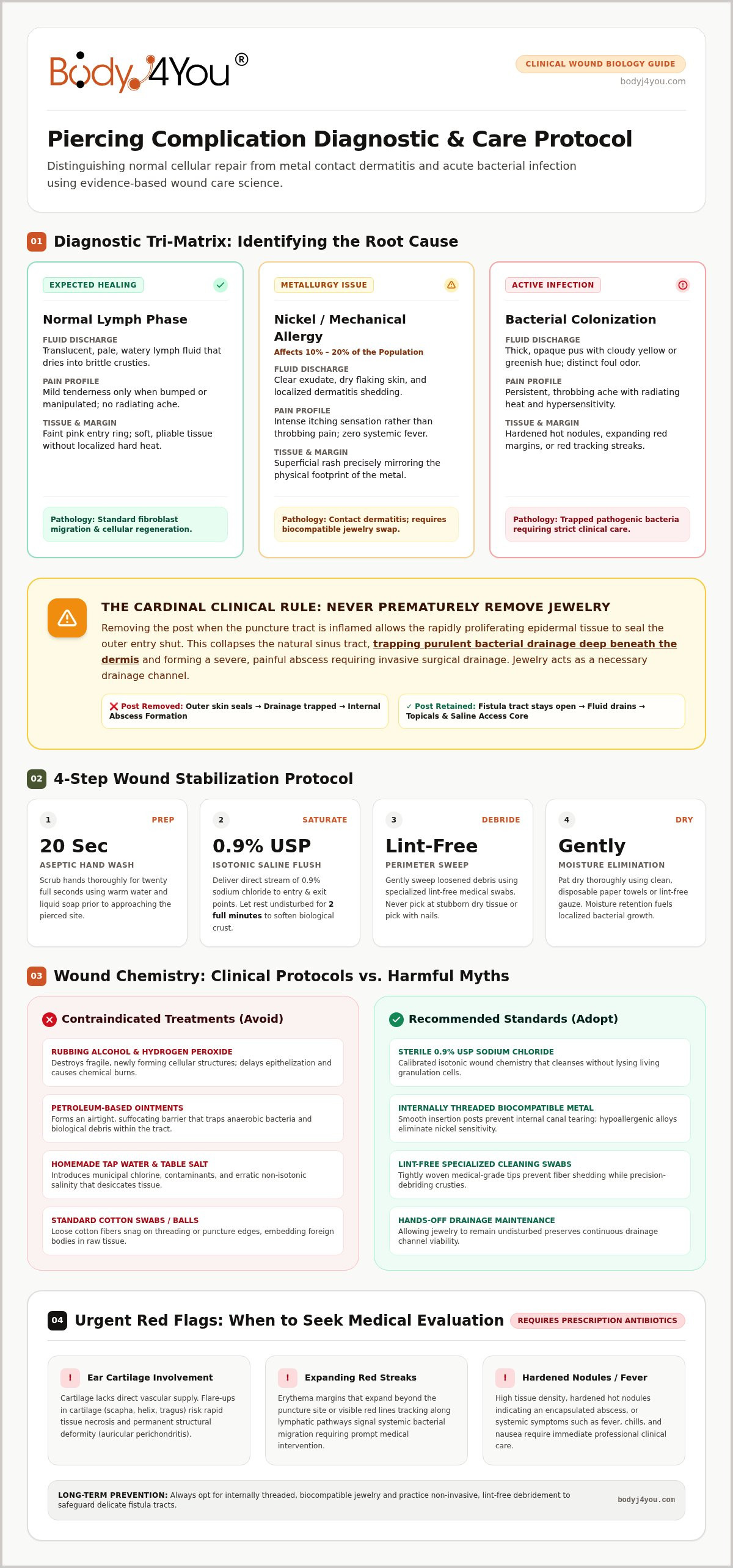
Panic sets in quickly when a healing piercing feels tender. Yet, mistaking a mechanical irritation bump or standard lymphatic fluid for a bacterial emergency leads to aggressive over-cleaning that worsens delicate tissue. Understanding the biological risks and complications of body piercings begins with recognizing cellular behavior. A normal healing phase produces translucent, pale lymph fluid that dries into brittle crusties. An active bacterial infection, conversely, generates thick, opaque pus with a cloudy yellow or greenish hue, often accompanied by a distinct odor.
Sensory markers also tell a clear story. Standard healing causes mild tenderness when bumped. An active infection creates a persistent, throbbing ache, noticeable radiating heat, and intense hypersensitivity across surrounding skin. If you are assessing localized swelling without radiating heat or foul discharge, consult our guide on how to get rid of a piercing bump fast to resolve non-bacterial irritation safely.
The Visual Breakdown: Secretion, Color, and Swelling
Evaluating physical shifts requires calm, clinical precision. Fluid appearance provides the clearest baseline. Clear, watery fluid signals standard cellular repair, whereas opaque green drainage confirms active bacterial colonization.
- Fluid consistency: Translucent lymph supports tissue regeneration; cloudy, viscous discharge indicates trapped microbes.
- Erythema boundaries: A faint pink ring around the channel entry is normal; expanding red margins or red streaks traveling along the skin require immediate medical care.
- Tissue density: Benign swelling remains soft and pliable, while hardened, hot nodules often signal an escalating abscess.
Tracking these physical cues is the first step in learning how to deal with a piercing infection before minor irritation turns into severe tissue trauma.
Contact Dermatitis and Metal Allergies
Sometimes inflammation stems from metallurgy rather than microbes. Nickel allergies affect roughly 10% to 20% of the population, triggering contact dermatitis that closely mimics bacterial flare-ups. Rather than throbbing pain, an allergic reaction produces intense itching, dry flaking, and a rash that mirrors the exact footprint of the jewelry.
Mechanical friction creates another category of confusion. Oversized posts snagging on clothing or sustained pressure from sleeping on your side causes localized tearing within the delicate fistula. While bacterial invasions trigger throbbing pain and fever, mechanical irritation and migration patterns produce localized swelling without systemic illness. Discerning these subtle cues ensures you know exactly how to deal with a piercing infection versus a simple metal intolerance or mechanical snag.
How to Treat a Mildly Infected Piercing at Home: 4-Step Protocol
Managing an angry puncture tract requires biological balance, not chemical warfare. While genuine bacterial flare-ups requiring systemic antibiotics need medical intervention, a mildly irritated or lightly infected entry point can often be stabilized by restoring tissue equilibrium. Mixing coarse table salt with tap water introduces unpredictable salinity and municipal water contaminants. Instead, rely on calibrated wound chemistry. Review our detailed guide on sterile saline spray for piercings to understand why a 0.9% USP sodium chloride concentration protects delicate cellular repair. Performing this disciplined routine morning and night respects natural immune defenses without causing chemical trauma.
Step 1 and Step 2: Flush and Soften Debris
Preparation protects vulnerable tissue. Scrub your hands for twenty full seconds using warm water and liquid soap before approaching the wound site. Next, deliver a direct stream of sterile isotonic saline to both entry and exit points. Rather than picking at dry, crusty buildup, let the pressurized mist saturate the area. Allow the solution to rest undisturbed for two full minutes so dried lymph and biological debris soften naturally.
Step 3 and Step 4: Debride and Dry Gently
Mechanical precision prevents fresh micro-tears. Once the crust softens, sweep the perimeter cleanly:
- Select the right tools: Use lint-free piercing cleaning swabs rather than loose cotton balls, which shed fibrous strands that wrap around jewelry posts and harbor bacteria.
- Clear the margins: Sweep gently around the base of the fixture without rotating, twisting, or forcing the post through the channel.
- Eliminate moisture: Pat the skin completely dry with a clean, disposable paper towel; lingering wetness invites fungal and bacterial growth.
Executing these four steps twice daily shows you precisely how to deal with a piercing infection in its earliest, non-systemic phase.
Warm Saline Compresses for Lymphatic Drainage
Sluggish circulation often traps fluid inside inflamed tissue. Applying gentle warmth stimulates local microcirculation, encouraging white blood cells to reach the site while facilitating natural drainage. Fold a piece of non-woven medical gauze, saturate it thoroughly with warm sterile saline, and rest it against the channel for five minutes. Ensure the temperature remains comfortable. Scalding compress water burns fragile skin and triggers immediate rebound swelling.
When curating your daily routine, exploring BodyJ4You for medical-grade aftercare essentials like our Saline Piercing Aftercare Spray and Piercing Cleaning Swabs gives you the clean, reliable tools needed to master how to deal with a piercing infection at home safely.
Critical Mistakes to Avoid When Managing an Infected Piercing
Instinct often drives people to take drastic, counterproductive measures the moment a piercing turns hot and inflamed. Panic leads to aggressive choices that worsen tissue distress. When researching how to deal with a piercing infection, you will find widespread online advice suggesting harsh antiseptics or telling you to pull the jewelry out immediately. Both actions disrupt delicate biological healing. Complex placements carry elevated risks; reviewing anatomy specifics in our industrial piercing guide highlights how fragile dual-cartilage channels react poorly to mechanical disruption. Protecting the puncture tract requires disciplined patience, not aggressive tampering.
Why You Must Never Remove the Jewelry Yourself
The post functions as an open drainage stent. The body heals puncture wounds from the outside inward. If you slide the stud or barbell out while bacteria remain active inside the fistular canal, the surface tissue seals shut over the opening within hours.
This premature closure traps purulent exudate beneath the dermis. Trapped bacteria multiply unchecked in the subcutaneous space, transforming a superficial bacterial colonisation into an enclosed, throbbing abscess. Clinical resources like the Cleveland Clinic infected piercing treatment guide note that removing jewelry prematurely can complicate care, often requiring surgical incision and localized drainage. Keep the post in place to let excess fluid discharge naturally while professional treatment clears the underlying microbes.
Chemical Irritants: Alcohol, Peroxide, and Ointments
Attacking inflamed skin with household disinfectants destroys newly forming cells. These products burn fragile tissue rather than curing it:
- Hydrogen peroxide: This aggressive oxidizer lyses healthy fibroblasts and nascent epithelial cells, wiping out the foundational matrix needed to rebuild the channel wall.
- Rubbing alcohol: Isopropyl solutions strip essential lipids, producing deep dermal fissures and chemical dermatitis that mimic spreading infection.
- Antibiotic ointments: Petroleum-based products form an airtight barrier over the puncture wound. This suffocates the fistula, blocks drainage, and traps airborne debris.
Mechanical trauma causes equal harm. Resist twisting, rotating, or sliding the jewelry back and forth during cleansing. Sliding a crusty post through raw tissue shears fragile granulation buds, reopening internal micro-wounds and driving surface bacteria deeper into the canal. Understanding how to deal with a piercing infection means stepping back from aggressive interventions and allowing steady, non-invasive irrigation to stabilize the wound.
When to Seek Urgent Medical Care: Red Flags and Complications
Understanding how to deal with a piercing infection requires knowing your boundaries. Topical saline and careful hygiene soothe minor surface irritations, but cosmetic aftercare products cannot cure advancing bacterial infections. Puncture wounds penetrate deep into dermal and cartilaginous beds. When pathogenic microbes breach deeper tissue, prompt medical evaluation and targeted prescription antibiotics become non-negotiable.
Systemic Warning Signs Requiring a Doctor
Your immune system provides clear alerts when a localized issue becomes a systemic threat. Seek clinical care immediately if you observe any of these warning signs:
- Fever and chills: An oral temperature exceeding 100.4°F (38°C), accompanied by chills, nausea, or body aches, indicates spreading systemic illness.
- Advancing erythema: Red streaks or rapidly widening margins of redness radiating from the puncture channel signal spreading cellulitis.
- Lymphadenopathy: Tender, swollen lymph nodes along the neck, jawline, or collarbone confirm an active immune battle.
- Jewelry embedding: Extreme swelling that pulls decorative ends or backing plates beneath the skin surface requires immediate clinical extraction under local anesthesia.
Facial and mucosal piercings present unique vulnerabilities. As detailed in our septum piercing aftercare guide, inner nasal and oral tissues sit directly adjacent to complex vascular networks and sinus cavities, making unchecked bacterial migration particularly hazardous.
Cartilage Perichondritis: An Acute Medical Emergency
Cartilage tissue lacks its own direct blood supply, relying entirely on the surrounding perichondrium for oxygen and nutrients. When high ear piercings succumb to bacterial invasion, up to 87.2% of cultured cases involve Pseudomonas aeruginosa. This aggressive pathogen thrives in avascular cartilage matrices.
Untreated perichondritis can destroy structural ear cartilage in under forty-eight hours, causing permanent necrosis and external deformity. If you experience intense throbbing, dusky purple discoloration, or fluid accumulation across the upper ear, bypass home remedies and go directly to urgent care. Physicians must prescribe anti-pseudomonal coverage such as oral ciprofloxacin, because standard first-generation antibiotics like cephalexin fail against Pseudomonas.
Safeguarding your health means knowing where self-care ends and medical therapy begins. Once a physician manages the acute infection, browse BodyJ4You's certified aftercare collection to find gentle, dependable tools that keep your channel clean and comfortable as healing resumes.
Long-Term Healing: How to Prevent Future Piercing Infections
Achieving a fully healed, resilient fistula requires proactive defense long after acute inflammation subsides. Once you resolve an initial crisis, the permanent goal shifts from emergency triage to biological preservation. Knowing how to deal with a piercing infection effectively means setting up an environment where opportunistic bacteria cannot gain a foothold again. Lasting success relies on three pillars: biocompatible metallurgy, environmental hygiene, and sensible tissue maintenance.
Upgrading to Implant-Grade, Hypoallergenic Materials
Microscopic surface imperfections and reactive alloys trigger ongoing cellular stress. Inferior mystery metals leach nickel, degrading fragile canal walls and inviting bacterial colonization. Choose ASTM F-136 implant-grade titanium or 316L surgical steel to eliminate toxic sensitivities and support tissue integration.
Engineering matters as much as chemistry. Internal threaded labret studs or press-fit threadless posts ensure smooth insertion, protecting healing channels from the serrated edges found on externally threaded jewelry. Keep porous acrylics and gold-plated trinkets out of unhealed tissue. Save decorative fashion pieces for mature, fully healed piercings.
Environmental Protection and Lifestyle Hygiene
Daily routines constantly expose healing tissue to pathogens. Simple adjustments prevent foreign microbes from entering delicate skin channels:
- Bedding contact: Swap pillowcases every two to three days, or sleep on a donut-shaped travel pillow to keep ear piercings suspended without pressure.
- Aerosol shields: Shield healing tissue with a clean hand or disposable cup when applying hairspray, dry shampoo, or setting powders.
- Submersion risks: Keep puncture wounds out of communal swimming pools, ocean surf, and hot tubs until the tract matures completely.
Controlling these daily variables keeps mechanical friction low and keeps bacterial exposure to a minimum.
Maintaining a Gentle Maintenance Routine
Healing tissue thrives on gradual stabilization. Once active redness, swelling, and fluid drainage clear, scale saline rinses back to once daily to prevent over-drying. When the channel closes completely and the internal fistular tunnel matures, shift focus to barrier preservation. Massaging external, fully closed skin with pure jojoba oil or cold-pressed rosehip oil restores lipid balance, softens scar tissue, and promotes suppleness.
Investing in your body's wellness pays compounding dividends. Nourish your skin and protect your journey by exploring BodyJ4You aftercare essentials, ensuring you have professional-grade tools to support your piercings for years to come.
Protecting Your Piercing for a Confident Recovery
Navigating piercing setbacks doesn't have to derail your personal style. Successfully mastering how to deal with a piercing infection comes down to trusting biological fundamentals: keep your jewelry in place to maintain vital drainage, avoid harsh disinfectants that destroy regenerating skin cells, and seek immediate clinical care the moment systemic red flags appear.
Your body has an incredible capacity to heal when given gentle, disciplined support. Protect your healing journey with BodyJ4You Saline Piercing Aftercare Spray. Formulated domestically in the USA under strict quality control standards, our pure 0.9% USP grade saline matches your body's natural cellular chemistry to flush debris safely without stinging. Backed by over twenty years of trusted expertise across the body modification community, we provide the precision tools your tissue needs to thrive. Be patient with the process, listen closely to your body, and wear your personal aesthetic with pride.
Frequently Asked Questions
Can I use rubbing alcohol or hydrogen peroxide to clean an infected piercing?
No, you should never apply rubbing alcohol or hydrogen peroxide to an infected piercing. These harsh chemicals destroy healthy fibroblasts, delaying granulation tissue formation and stalling recovery. They dry out delicate surrounding margins, causing painful cracking and chemical dermatitis that worsens localized inflammation. Instead, flush the site twice daily with sterile 0.9% isotonic saline spray, which cleanses biological debris without killing your body's regenerative cells.
Should I take my jewelry out if my piercing is infected?
No, leave your jewelry in place unless an examining physician explicitly instructs you to remove it. Your jewelry acts as a necessary drainage stent for expelling purulent discharge. Removing the post allows exterior skin to seal shut rapidly, trapping bacteria and pus beneath the surface. This trapped fluid can quickly turn into a painful subcutaneous abscess requiring surgical lancing. Keep the post in place and seek clinical evaluation.
How can I tell the difference between a piercing bump and an infection?
A standard piercing bump is localized and painless, whereas an infection produces throbbing pain, radiating heat, and systemic symptoms. Irritation bumps typically stem from mechanical friction, improper jewelry angles, or moisture traps, remaining firm and localized. Genuine bacterial invasions cause expanding redness, fever, and cloudy, discolored fluid. Learning how to deal with a piercing infection starts with recognizing whether you face simple mechanical distress or active microbial proliferation.
What does normal healing discharge look like compared to an infection?
Normal healing fluid is thin, clear, or pale straw-colored, while infectious discharge is thick, opaque, and distinctly discolored. Healing tissue naturally produces lymph fluid, which dries into harmless, brittle crusties around the jewelry post without any foul odor. Bacterial discharge, by comparison, looks cloudy white, dark yellow, or green. It drains persistently and frequently carries an unpleasant smell alongside localized swelling, tenderness, and throbbing heat.
Can an infected ear or cartilage piercing heal on its own without antibiotics?
A genuine bacterial piercing infection cannot reliably heal on its own and often demands prescription antibiotics. While minor surface irritation resolves with gentle saline irrigation, true bacterial proliferation requires professional medical intervention. Cartilage infections are especially dangerous because avascular tissue lacks direct blood flow, allowing pathogens like Pseudomonas to cause rapid necrosis within days. If you experience fever, red streaks, or worsening pain, consult a doctor immediately.
Is it safe to make homemade saltwater solution for an infected piercing?
No, mixing homemade saltwater is unsafe and frequently irritates infected tissue further. Kitchen salt mixtures introduce uncalibrated salinity and tap water bacteria directly into an open wound tract. Hypertonic DIY solutions dehydrate fragile healing cells, delaying proper closure. For safe care, use commercially packaged, sterile 0.9% USP sodium chloride spray paired with lint-free swabs to flush crust safely without introducing household contaminants or altering delicate tissue pH.
How long does it take for a mild piercing infection to clear up?
Mild surface irritation usually begins calming down within two to three days of proper sterile saline care. When discovering how to deal with a piercing infection or localized flare-up, consistent morning and evening flushes should steadily reduce redness and swelling over forty-eight to seventy-two hours. If symptoms fail to improve after two days, or if throbbing pain and cloudy discharge escalate, schedule an immediate medical appointment.


