

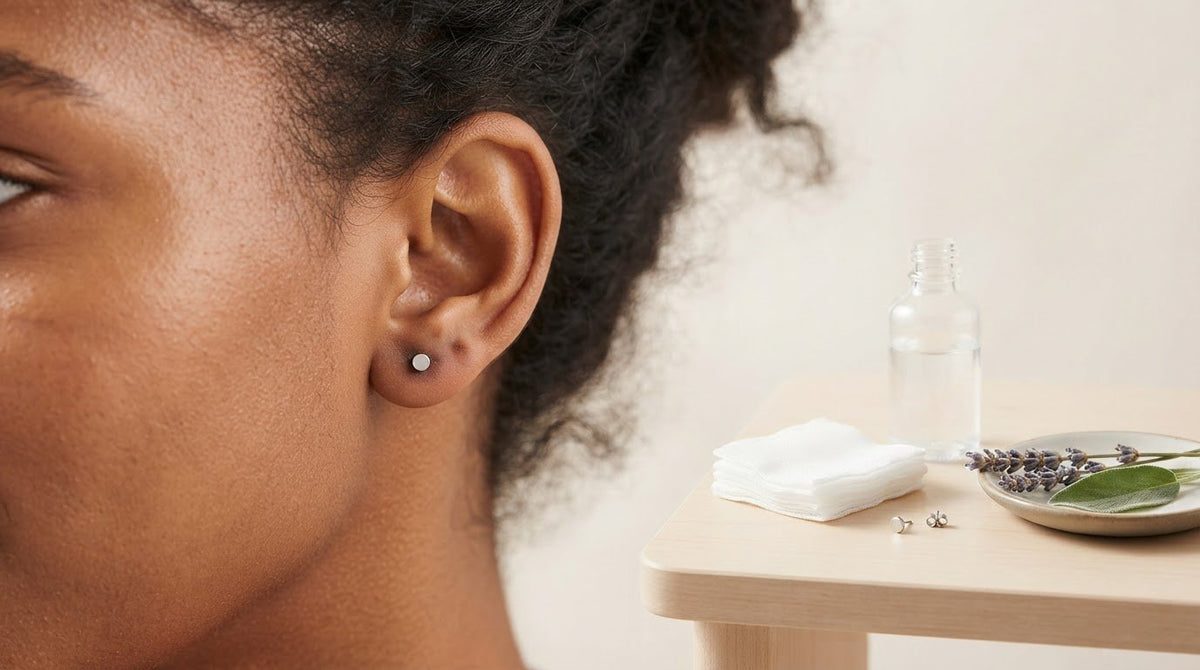
Dark skin around a piercing isn’t automatically an infection or a permanent scar. If you’re wondering how to get rid of dark skin around piercing, the safest first step is to understand what might be behind the color change, rather than reaching for a strong cream or oil that could irritate healing skin.
It’s understandable to feel concerned, especially when aftercare advice seems to conflict. A flat, darker patch can follow irritation or inflammation, but color alone can’t confirm the cause. Raised, firm skin or worsening pain, swelling, redness, or pus-like discharge deserves a closer look.
This guide explains possible reasons for discoloration, gentle ways to care for the area, and when to seek advice from a healthcare professional or experienced piercer. You’ll also learn why unverified products or handling jewelry can make irritation worse, and how to tell when it’s time for an assessment. Start with calm, consistent care; decisions about fading pigment can wait until the piercing is ready.
Key Takeaways
- Darkening may follow inflammation or injury, but color alone can’t identify its cause.
- Learn how flat discoloration can differ from bumps, thickened scars, and symptoms that need medical attention.
- For how to get rid of dark skin around piercing, start by protecting the area and avoiding habits or products that may add irritation.
- A clinician can assess persistent or unclear changes before recommending next steps.
What Does Dark Skin Around a Piercing Usually Mean?
A darker patch near a piercing can appear after the skin has been irritated or injured. The change may be post-inflammatory hyperpigmentation (PIH), but its appearance alone can’t confirm the cause. A piercing may also be healing, reacting to jewelry, or experiencing ongoing irritation. Assess the whole picture rather than treating the color in isolation.
Post-inflammatory hyperpigmentation is extra pigment that appears in skin after inflammation or injury. As skin responds to irritation, it may produce or retain more melanin in the affected area. PIH is one form of hyperpigmentation, a broad term for areas of skin that look darker than the surrounding skin. Not every piercing develops a dark mark, and a mark around a piercing isn’t necessarily PIH.
How post-inflammatory hyperpigmentation can appear
PIH may look like a flat patch or spot that’s darker than nearby skin. It can appear brown, gray, or another shade, and may be subtle or more noticeable depending on your natural skin tone and the area’s appearance before the piercing. Color varies from person to person. Treat a visible change as something to observe, not a diagnosis by itself.
For example, someone might notice a small, flat brown area beside an earlobe piercing, while another person sees a grayish patch around a navel piercing. Neither example confirms PIH. Changes in shape, texture, tenderness, and how the area evolves matter too, so a single glance or photo may not tell the full story.
Why color changes can feel alarming
It’s natural to wonder whether a dark mark means infection, a permanent scar, or a reaction to jewelry. The uncertainty can be stressful, especially because healing and irritation may occur alongside pigmentation and can overlap in appearance. Try not to assume the worst, but don’t use color alone to rule out a concern. If you’re unsure what you’re seeing, an assessment can help clarify what’s happening.
Dark marks can look different across skin tones. On some skin, a change may be easy to spot; on other skin, it may be less obvious or appear as a different shade. This variation doesn’t tell you whether a piercing is healthy or what caused the change. Pay attention to texture and symptoms as well as color.
If you’re searching for how to get rid of dark skin around piercing, make the first goal identifying the likely cause, not bleaching the area. Pigment-focused creams or home remedies may irritate skin that’s still healing and complicate the picture. There’s no single schedule for color changes to settle, and a dark patch shouldn’t be expected to fade by a particular date. Assess the area carefully before choosing an approach to discoloration.
Why Can Skin Darken Around a Piercing?
Skin may darken when it responds to inflammation, but this doesn’t happen with every piercing. During the skin’s response to irritation or injury, pigment can become more noticeable in the affected area. The degree of change varies, and skin history can influence how visible discoloration becomes. A mark’s appearance alone can’t show which factor caused it.
Inflammation can prompt pigment changes near a piercing, but discoloration alone can’t confirm the cause. A piercing may experience occasional irritation as it heals, yet persistent or repeated irritation can keep the area unsettled. Pressure, snagging, unnecessary handling, or a reaction to jewelry may all contribute. These possibilities can overlap, so look for patterns and accompanying symptoms rather than settling on one explanation.
Healing, irritation, and repeated friction
Small sources of friction can add up. Jewelry may catch on clothing or hair, pressure from sleeping on an ear piercing may aggravate the area, and frequent touching can disturb sensitive skin. Rough cleaning or moving the jewelry to inspect the channel can also cause unnecessary trauma. Avoid twisting or turning jewelry; clean gently and reduce pressure and snagging while the piercing heals.
If discomfort returns after a particular activity, note what happened and whether the area settles when you reduce that source of friction. This can help you describe the pattern to a qualified professional. It won’t diagnose the cause, but it provides more context than color alone.
Skin sensitivity and jewelry-related reactions
A jewelry reaction can involve more than a dark patch. Contact irritation or an allergy may also cause itching, a rash, swelling, or soreness around the piercing. These symptoms have other possible causes, so don’t diagnose a metal allergy from appearance alone. The American Academy of Family Physicians reviews several complications of body piercing, including allergic contact dermatitis and other issues that can affect the surrounding skin.
If symptoms appear after changing jewelry, or if itching, rash, swelling, or soreness persists or worsens, seek an assessment from a healthcare professional. Avoid adding new creams, oils, or harsh cleaners to test a theory; they can irritate the area and make the underlying problem harder to interpret. A qualified piercer can help assess jewelry fit, while medical symptoms call for medical advice.
For anyone wondering how to get rid of dark skin around piercing, identifying and reducing ongoing irritation is a safer starting point than trying to fade pigment immediately. Gentle, consistent aftercare can support cleaning without promising to remove discoloration. BodyJ4You offers piercing aftercare products, including a fine-mist saline spray. Follow product directions and stop using any product that causes irritation, redness, or another negative reaction.
How to Tell Pigmentation From a Piercing Bump, Scar, or Infection
Color can offer a clue, but it can’t tell you what’s happening on its own. Compare the area’s texture and symptoms, and notice whether it’s changing. The patterns below can help you decide what to observe or discuss with a professional. They aren’t diagnostic criteria, and more than one issue can be present at the same time.
| What you notice | Possible pattern | What to keep in mind |
|---|---|---|
| Flat area of darker skin | May be a pigment change after irritation or injury. | Color alone can’t confirm the cause or rule out another issue. |
| Small raised bump | May reflect local irritation or another change in the tissue. | Notice if it’s tender, growing, or repeatedly irritated. |
| Thickened or firm tissue | Could be a scar pattern, such as a hypertrophic scar or keloid. | A hypertrophic scar tends to remain within the wound area; a keloid may extend beyond it. Assessment is needed to distinguish them. |
| Spreading redness, warmth, worsening pain, pus, or fever | Concerning symptoms that may occur with infection or another complication. | Seek medical assessment promptly; urgent care is appropriate for severe or rapidly worsening symptoms. |
Flat discoloration versus a raised bump or scar
A flat patch feels level with the surrounding skin, while a bump or scar changes the surface. Raised tissue may feel firm or tender, and it may enlarge or become more noticeable over time. These differences are useful observations, not a way to diagnose yourself. If a bump is your main concern, BodyJ4You’s piercing bump guide can offer more focused information.
Scar types can be difficult to tell apart without an assessment. A raised area that stays within the original injury may fit a hypertrophic-scar pattern, while a keloid can grow beyond the original wound. Don’t press, pick, or try to flatten the tissue. If it’s enlarging, painful, or unclear, seek professional advice.
Symptoms that deserve prompt attention
A flat color change alone is different from spreading redness, increasing warmth, worsening pain, pus, or fever, which call for prompt medical assessment. Infection or piercing rejection can’t be confirmed or ruled out by color alone. If symptoms are severe or changing quickly, seek urgent care rather than waiting to see whether the mark fades.
If infection is a concern, don’t remove the jewelry unless a healthcare professional advises you to. Removing it without guidance may complicate assessment or care. Note when symptoms began and whether pain, warmth, redness, or discharge is worsening. These details can help a clinician assess the piercing and decide what needs attention.
When you’re searching for how to get rid of dark skin around piercing, it’s tempting to focus on fading the mark. First, work out whether the area is flat discoloration or a raised, symptomatic change. If you’re unsure, or if the skin is getting worse, seek an assessment before trying pigment-focused products.
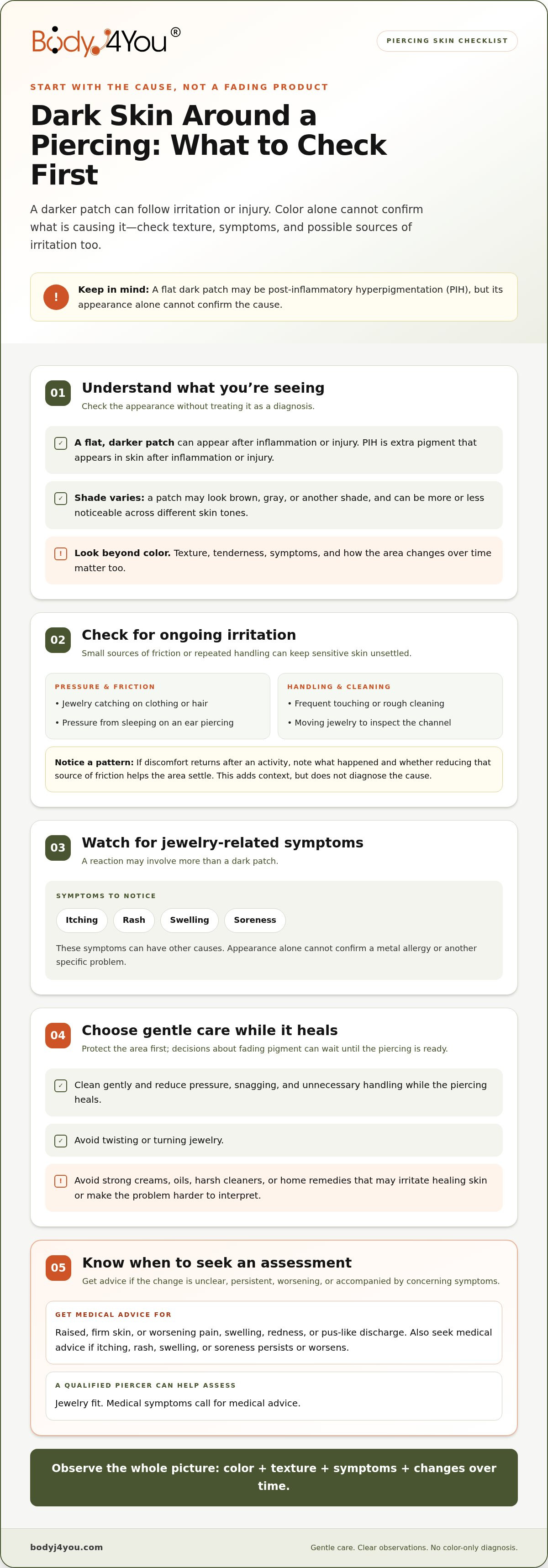
How to Care for Dark Skin Around a Piercing Without Making It Worse
Gentle care won’t promise to fade discoloration, but it can help avoid adding irritation while the piercing heals. Keep the routine simple and consistent. If symptoms are worsening or you’re unsure whether the skin is healing normally, get professional advice before trying to treat the color.
A gentle routine while the piercing is healing
Follow the aftercare directions for your piercing and any product you use. Before necessary contact, wash your hands, and keep touching to a minimum. Don’t twist or turn the jewelry, even while cleaning. A light touch helps avoid friction and unnecessary movement around sensitive tissue.
- Reduce friction and pressure. Notice what snags or rubs the piercing, such as clothing, hair, or pressure while sleeping. Adjust what you can, and avoid picking at flakes or crusts.
- Clean gently. Use a suitable sterile saline aftercare product according to its directions. Don’t scrub, use cotton swabs roughly, or apply saline spray to an open wound. For general cleaning steps, follow a sterile saline aftercare guide.
- Dry carefully. Pat the area dry with a clean, disposable material rather than rubbing it. Avoid leaving it damp under tight clothing or accessories.
- Monitor changes. Notice whether the area is becoming more tender, swollen, warm, or irritated. If redness, irritation, or another negative reaction follows a product, discontinue use and seek advice as appropriate.
BodyJ4You’s saline piercing aftercare spray has a fine mist and contains purified water, sodium chloride, aloe vera, and rosemary extract. It is dye-free and fragrance-free. Use it only as directed, and keep the routine simple rather than layering several products onto the area.
Why quick-fix pigment treatments can backfire
Acids, retinoids, bleaching agents, and essential oils can irritate sensitive skin, especially if they reach a healing piercing or its channel. Don’t apply these directly to a piercing that hasn’t healed. The skin around the opening and the piercing channel aren’t the same thing: a product tolerated on fully healed skin may still irritate healing tissue. Ask a clinician before using active ingredients for persistent discoloration.
Even after the piercing has healed, avoid assuming a pigment product is appropriate just because the mark looks flat. A clinician can help assess the change and advise whether treatment makes sense. Stop any product that causes redness, irritation, or another negative reaction. Protecting the skin from additional irritation comes before trying to alter its color.
For a gentle cleaning routine, explore BodyJ4You’s saline piercing aftercare spray and follow its product directions carefully. Saline aftercare supports cleaning; it isn’t a proven treatment for hyperpigmentation and shouldn’t be used on open wounds.
When to Seek Advice and What to Expect From a Safe Next Step
Get medical advice if the area is worsening, you’re unsure whether it’s discoloration or another problem, or the change persists and continues to concern you. Increasing pain, spreading redness, warmth, pus-like discharge, or fever needs prompt assessment. Seek urgent care for severe symptoms or changes that worsen rapidly. You don’t have to wait until you’re certain what the cause is.
What a professional assessment can clarify
An assessment is a way to investigate the cause, not a promise of one specific treatment. A clinician may examine how the piercing is healing and consider irritation, infection, scarring, or pigmentation before recommending next steps. The right approach depends on what they find. Avoid starting pigment treatments while the cause is uncertain, especially if the skin is still healing or symptomatic.
Before your appointment, make a simple note of when you first noticed the change and whether it has spread, become raised, or developed new symptoms. Share any products you’ve applied and whether you recently changed jewelry or noticed a pattern after friction or pressure. These details help the clinician understand the timeline and decide what to assess. If you have a fever or symptoms are getting worse quickly, don’t delay care to gather more information.
Even a mark that seems mostly cosmetic is worth discussing if it’s persistent and worrying you. A healthcare professional can help distinguish a pigment change from an issue that needs a different kind of care. Don’t try to force a diagnosis from a photo or rely on color alone to choose a treatment.
Using aftercare products with clear safety limits
Aftercare products support a routine; they aren’t proven treatments for hyperpigmentation. BodyJ4You Saline Piercing Aftercare Spray is a fine-mist product containing purified water, sodium chloride, aloe vera, and rosemary extract. It is dye-free and fragrance-free. Use it only as directed for piercing aftercare. For external use only. Avoid eye contact and contact with the mouth. Do not use saline spray on open wounds. Discontinue use if irritation, redness, or another negative reaction occurs. Keep out of reach of children. If you’re unsure whether a product is appropriate for your piercing’s current condition, ask a healthcare professional before applying it.
Don’t use aftercare as a substitute for medical assessment when symptoms are worsening or unclear. Likewise, don’t apply a pigment-fading product to a healing piercing just because it’s marketed for dark spots. Once a clinician has assessed the area, follow their guidance on whether and when any treatment may be suitable.
If you’re looking for products to support a careful routine, explore BodyJ4You’s piercing aftercare range. Choose aftercare for cleaning and routine support, not as a promise to remove dark skin.
Choose a Gentle Next Step
Give your skin time and make decisions based on what it needs, not pressure to change its appearance quickly. If you’re still asking how to get rid of dark skin around piercing, focus on careful care and seek a professional assessment when the cause or next step isn’t clear. Pigment treatments aren’t a substitute for addressing irritation or other concerns.
BodyJ4You brings over 20 years of expert piercer experience to a safety-focused approach to piercing care. Its piercing aftercare products are made in the USA and are intended to support a gentle routine, not to promise that discoloration will fade. Choose products for their intended aftercare use and follow their directions.
Ready to support your routine with considered aftercare? Explore BodyJ4You piercing aftercare. Orders over $30 ship free. BodyJ4You offers 30 day returns. Take it one careful step at a time, and feel confident seeking advice when you need it.
Frequently Asked Questions
Does dark skin around a piercing go away?
Post-inflammatory discoloration may fade as the skin settles, but the timing and outcome vary from person to person. If a piercing keeps getting irritated by pressure, snagging, or frequent handling, the color change may last longer. Avoid trying to bleach a mark near a healing piercing. If it persists, changes, or worries you, a clinician can assess it and help determine whether it needs care beyond a gentle routine.
Is dark skin around a new piercing normal?
Color changes can happen after skin inflammation or injury, but darkening by itself can’t confirm that a new piercing is healing normally. Look at the whole area: worsening pain, warmth, swelling, or discharge may need medical assessment, especially if symptoms are increasing. A sudden or rapid change also deserves attention. If you’re uncertain, it’s safer to get an informed assessment than to diagnose the cause from the color alone.
Can piercing jewelry cause dark skin around the hole?
It can contribute indirectly: friction, pressure, or a reaction to jewelry may irritate nearby skin, and irritation can be followed by a color change. The appearance alone can’t establish a material allergy. Avoid handling or moving the jewelry unnecessarily, and pay attention to symptoms such as itching, a rash, swelling, or persistent soreness. Seek professional advice if these develop, continue, or seem to worsen.
How long does piercing hyperpigmentation take to fade?
There isn’t one reliable timeline. The cause of the discoloration, how the piercing is healing, individual skin characteristics, and continued irritation can all affect how long a mark remains visible. It may still be noticeable after the original irritation has settled. If the mark changes, worsens, or continues to concern you, ask a clinician to assess it rather than relying on a promised fading schedule.
Can I use vitamin C, retinol, or a dark-spot cream near a piercing?
Avoid applying vitamin C, retinol, or dark-spot creams to a healing piercing or its channel unless a clinician advises you to. Active cosmetic ingredients can irritate sensitive tissue and make healing more difficult to assess. Treating fully healed skin near a piercing is a separate question. A clinician can consider your skin and the piercing’s condition, then advise whether a particular ingredient is suitable. For broader skincare support and formulations designed to promote healthier, radiant skin once healing is complete, resources like vensia.ai offer dedicated solutions.
Should I remove my piercing if the skin around it turns dark?
Darkening alone isn’t enough to decide whether jewelry should come out. If infection or another complication may be involved, seek prompt medical advice before changing or removing it. For a stable color change without other symptoms, arrange an assessment if you can’t identify the cause or the mark is getting worse. Avoid making a jewelry change based only on color or online advice.


