

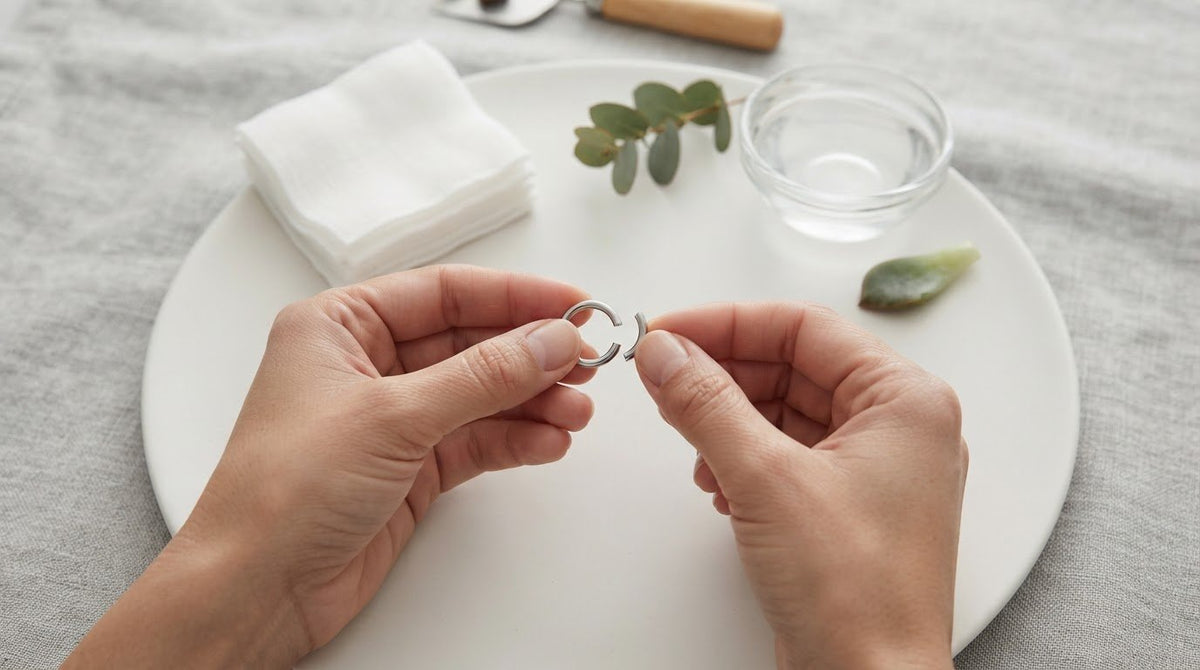
If you’re searching for how to open a segment ring without tools, the safest first step may be knowing when not to pull. Applying too much pressure can bend the ring, scratch its finish, or irritate a piercing. Before handling it, identify which part of the jewelry is designed to move.
This guide explains how to distinguish a removable segment from a hinged closure or a seamless ring, and how to use gentle, controlled hand pressure only when the ring’s construction allows it. You’ll learn how to prepare your hands and jewelry, why sideways movement matters, and when to stop. A true segment ring can be difficult to open by hand, so forcing a tight or stuck piece isn’t a safe shortcut.
Start with a visual closure check and a quick inspection of the ring and piercing. If the jewelry resists, pause instead of applying more pressure. A calm approach helps protect both the jewelry and your piercing.
Key Takeaways
- Identify whether the ring has a removable segment, a hinge, or a seamless opening before applying pressure.
- For how to open a segment ring without tools, use gentle, controlled sideways movement rather than pulling the ends straight apart.
- Wash and dry your hands, then work over a clean, well-lit surface.
- Stop if the ring resists or looks distorted, including an uneven circle or a misaligned join.
- When closing the ring, align the segment gently and make sure it sits securely without forcing it.
How to Open a Segment Ring Without Tools: Identify the Closure First
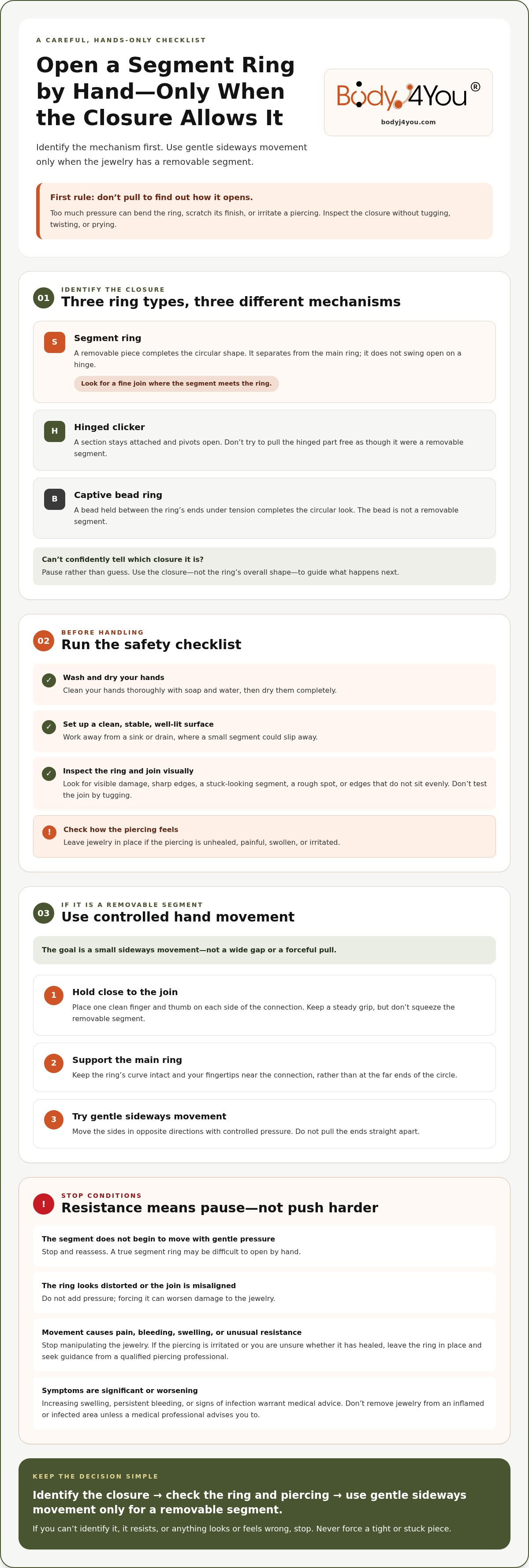
Before trying to open a segment ring without tools, identify its closure. A segment ring has a removable piece that completes the circular shape. The piece fits between the two ends of the main ring, leaving a small join when the jewelry is closed. That join may look like a fine seam, but it isn’t necessarily a hinge.
Quick definition: A removable segment comes away from the ring; a hinged closure stays attached and swings open. These closures move differently. Applying pressure before identifying the mechanism can scratch the finish, distort the ring, or put unnecessary strain on the piercing.
What does a segment ring look like?
Look for a smooth circular profile interrupted by a small section that appears to complete the curve. When closed, the segment’s edges may sit so neatly against the main ring that the join is hard to see. Rotate the jewelry slowly in your fingers and inspect the full circumference in good light. A fine line or change in the surface can help you spot the connection.
Inspect the join without tugging, twisting, or prying. You’re looking for clues, not testing the closure. Check whether the suspected piece appears separate from the ring or attached at one side like a small door. If you can’t tell how it opens, pause rather than guess. A visual check is safer than exploratory force.
Segment ring, clicker, or captive bead ring?
A true segment ring has a removable piece that separates from the circular band. It doesn’t swing open on a hinge. A clicker has a hinged section that remains attached and pivots away from the ring. Don’t treat a hinge like a removable segment or try to pull it free.
A captive bead ring uses a bead held between the ring’s ends under tension. The bead completes the circular look, but it isn’t a removable segment. Body-jewelry closures vary, and general information about Body piercing can provide wider context on jewelry types and risks. For septum jewelry and placement context, see the complete septum piercing guide.
Let the closure, not the ring’s overall shape, guide your next move. If you can’t confidently identify whether the join is removable, hinged, or held by a bead, don’t apply pressure. Correct identification helps you avoid using the wrong motion on delicate jewelry or a sensitive piercing.
Check the Ring and Piercing Before You Try to Open It
A safe attempt starts before you touch the closure. Check the ring’s condition and consider how the piercing feels. This quick assessment helps you decide whether to continue or leave the jewelry in place.
Prepare your hands and workspace
Set up before handling the jewelry. Wash your hands thoroughly with soap and water, then dry them completely. Choose a clean, stable, well-lit surface, such as a cleared tabletop. Avoid working over a sink or drain, where a small segment could disappear if it slips.
Use this checklist:
- Clean your hands: Wash and dry them before touching the ring or piercing.
- Clear your workspace: Choose a clean, well-lit surface away from drains.
- Inspect the join: Look for sharp edges, visible damage, or a segment that appears stuck.
- Check the piercing: Leave the jewelry in place if the piercing is unhealed, painful, swollen, or irritated.
- Pause if unsure: Don’t proceed if you can’t identify the closure or see whether the ring is damaged.
Look for a gap, rough spot, or edge that doesn’t sit evenly against the ring. Don’t run a fingernail over a sharp-looking area or test a stuck segment by tugging. A visual inspection is enough to flag a reason to stop. If the surface looks scratched or the ends don’t meet cleanly, added pressure could worsen the damage.
Know when not to remove the jewelry
Don’t manipulate jewelry in a new or unhealed piercing. A healing piercing is still vulnerable, and removing or shifting the jewelry can aggravate the area. Stop if even slight movement causes pain, bleeding, swelling, or unusual resistance. Mayo Clinic’s guidance on body piercings covers piercing risks and care, including the importance of allowing healing.
If the piercing is irritated or you’re unsure whether it has healed, leave the ring in place and seek appropriate guidance from a qualified piercing professional. For significant or worsening symptoms, such as increasing swelling, persistent bleeding, or signs of infection, seek medical advice. Don’t remove jewelry from an inflamed or infected area unless a medical professional advises you to do so.
Once the piercing and ring pass these checks, decide whether to continue with the opening steps. If you’re exploring other body jewelry, body jewelry options can help you compare styles while keeping closure type in mind.
How to Open a Segment Ring by Hand, Step by Step
Follow these steps only if you’ve identified a removable segment, not a hinged clicker or captive bead closure. A true segment may be difficult to open by hand. The goal is controlled sideways movement, not a wide gap or forceful pull. If the piece doesn’t begin to move with gentle pressure, stop and reassess rather than trying harder.
- Position the ring securely. Hold the ring close to the join, with one clean finger and thumb on each side. Keep your grip steady, but don’t squeeze the segment itself. Pinching the removable piece can make it harder to move and may mark or alter its shape.
- Keep the ring’s curve intact. Support the main body so it doesn’t wobble or flex unpredictably. Place your fingertips near the connection, not at the far ends of the circle. A close grip gives you better control and limits strain across the rest of the jewelry.
- Apply a small sideways twist. Move the two sides in opposite directions, one slightly toward you and the other slightly away. Shift the ends sideways out of alignment rather than pulling them directly apart. Use gentle, controlled pressure and watch the join. The ring should retain its overall curve.
- Pause and reassess. If the segment doesn’t start to loosen, release your grip and inspect the join again. Don’t repeat the motion with greater force or rock the ring back and forth. Resistance may mean the piece is tight, stuck, damaged, or not the removable closure you thought it was.
- Guide the segment free. If the join loosens, continue with light pressure until the removable piece separates. Guide it away without levering it against the ring or scraping its edge along the band. Set it on the prepared surface so it doesn’t roll away.
The sideways twist is the key distinction. Pulling the ends straight apart can stretch the opening and distort the ring’s circular profile. Twisting them in opposite directions creates a small offset while helping preserve the ring’s shape. When learning how to open a segment ring without tools, gradual movement is safer than forcing an immediate release.
Keep your fingers close to the join throughout. A grip across the ring makes it harder to control where pressure lands, while squeezing the removable section can interfere with its fit. Use only enough pressure to test whether the section is releasing. Repeated bending, abrupt twists, and forceful attempts can damage the jewelry.
If you feel pain at the piercing, notice bleeding, or encounter persistent resistance, stop. Don’t continue manipulating jewelry that’s still in a piercing if movement is uncomfortable. Leave the ring in place and seek appropriate guidance rather than risking irritation or a misshapen closure.
What If the Segment Ring Will Not Open or Looks Bent?
Persistent resistance is a stop sign, not a reason to press harder. A segment that doesn’t move with gentle, correctly directed sideways pressure may be tightly fitted, obstructed, damaged, or a different closure than you first thought. Set the ring down and reassess instead of repeating the same movement with more force.
Forcing a stuck ring can deform the jewelry or irritate the tissue around your piercing. A small piece that’s difficult to handle is different from a ring that appears distorted or causes discomfort. Pay attention to both the jewelry and your body.
Common reasons a segment feels stuck
A close-fitting segment may need careful handling, but it shouldn’t require force. If you’ve mistaken a hinged closure or another ring style for a removable segment, the motion you’re using won’t release it. Check the join visually again; don’t experiment with stronger twists.
Debris may also be visible around the join. Don’t scrape at it with a pin, blade, or other sharp object, and don’t lever the segment against the ring. If gentle, correctly directed movement doesn’t make the piece begin to shift, stop. Repeated attempts can turn a minor handling problem into damage.
Signs the ring may be distorted
Before touching it again, look at the ring from different angles. Put it on a clean, flat surface if you need to check its outline without holding it under pressure. Stop handling it if you notice any of these changes:
- The circle looks uneven, flattened, or bent instead of smoothly rounded.
- The segment sits at an angle or no longer aligns with the ends of the ring.
- A gap remains visible at the join when the closure should be seated.
- An edge looks rough, nicked, or sharp.
Don’t try to reshape a bent-looking ring by repeatedly bending it back. Further adjustment can weaken the fit or leave the closure misaligned. If you’re unsure whether the shape has changed, pause.
When to get hands-on help
Leave a stuck, visibly damaged, or painful-to-handle ring alone and seek help from a professional piercer. Stop immediately if manipulating it causes pain, bleeding, or swelling. If the piercing has worsening symptoms or signs that may indicate infection, seek medical advice. Don’t keep trying to remove the jewelry yourself.
Teeth, pliers, and improvised sharp tools aren’t safe substitutes for a suitable technique. They can slip, scratch the finish, distort the ring, or injure tissue. Knowing how to open a segment ring without tools also means recognizing when a tool-free attempt should end.
If you’re considering a different closure style for a future jewelry choice, explore BodyJ4You captive bead rings. They use a distinct closure mechanism, so don’t apply segment-ring opening instructions to them.
Close the Segment Ring Carefully and Choose Jewelry With Confidence
Closing a removable-segment ring takes the same control as opening it. Return the piece to its original position while keeping the band’s round shape. Don’t force the ends together. If the segment won’t sit securely with gentle handling, stop rather than wearing jewelry with a loose or uneven closure.
Reinsert and align the segment
Place the removable segment back into its original opening and check how its edges meet the ring. If you opened the ring with a gentle sideways twist, use a controlled reverse movement to bring the ends back into alignment. Avoid squeezing the segment or bending the ring into shape. The pieces should sit neatly together without a visible mismatch or gap that makes the closure feel insecure.
Inspect the ring from several angles. Its outline should look round, and the join should appear aligned rather than tilted or forced into place. If it takes strong pressure to close, or the segment shifts out of position, stop. A closure that won’t seat properly may need attention before the jewelry is worn again.
Keep the jewelry type matched to its closure
Segment rings, hinged clickers, and captive bead rings have different closures and require different handling. The gentle reverse sideways movement described here applies to a removable segment, not every ring that looks circular. Materials and designs can vary, so don’t assume every piece will open or close with identical pressure.
Choose jewelry with the piercing and its healing stage in mind. Avoid changing jewelry in an unhealed or irritated piercing, and don’t wear a piece that looks bent, feels painful, or won’t stay securely closed. If you’re uncertain about the closure or fit, pause and seek guidance from a professional piercer. Knowing how to open a segment ring without tools is useful, but recognizing when not to handle it is part of safe jewelry care.
BodyJ4You offers body jewelry, including captive bead rings. These rings use a bead held between the ends, a different closure from a removable segment, so handle each style according to its construction. For more options, explore BodyJ4You body jewelry.
Make Your Next Jewelry Choice With Confidence
Good jewelry care isn’t about getting a stubborn closure open at any cost. It’s about understanding how a piece works, handling it carefully, and choosing a style that suits your piercing and its healing stage. If you’re still unsure how to open a segment ring without tools, be patient. Pausing is the smart choice when the jewelry resists or won’t sit securely.
BodyJ4You brings more than two decades of body-jewelry industry experience to helping wearers explore their options. Its range includes captive bead rings, which use a different closure from removable-segment rings. Knowing the style helps you handle each piece appropriately.
Ready to explore jewelry that suits your personal style? Explore BodyJ4You body jewelry and choose your next piece with care.
Frequently Asked Questions
Can you open a segment ring with your fingers?
Sometimes, but a true segment ring can be difficult to open by hand, and some closures may not release with gentle finger pressure. If you’re learning how to open a segment ring without tools, try only when you’ve identified a removable segment and the jewelry and piercing are in good condition. If light, controlled movement doesn’t work, stop rather than increasing force or reaching for improvised tools.
How do you open a segment ring without bending it?
Use a controlled sideways twist at the join rather than pulling the ring ends directly apart. Keep your grip close to the connection, support the ring, and avoid pinching the removable piece. If the circle starts to look oval or the join shifts unevenly, release your grip and stop. Ring designs and materials vary, so don’t assume a movement that works on one piece will suit another.
What should you do if a segment ring will not open?
Stop if the segment remains immobile after gentle, correctly directed movement. The closure may be tightly fitted, obstructed, damaged, or misidentified, and more pressure can make the problem worse. Don’t use your teeth, pliers, or sharp household objects. If the ring is stuck, visibly bent, or painful to handle, seek help from a professional piercer. Get medical advice for worsening symptoms or possible infection.
Is a segment ring the same as a hinged clicker?
No. A segment ring has a piece that comes completely away from the main ring, while a clicker’s opening section stays attached and swings on a hinge. That difference affects how the jewelry opens: a hinged piece pivots rather than separating. If you see a connection at one side that resembles a small joint, don’t pull that section out as though it were a removable segment.
Can you open a segment ring while it is in your piercing?
It may be physically possible, but handling a ring in place can make it harder to control movement and avoid pulling on the piercing. Don’t try this with a new or unhealed piercing, or if there’s pain, swelling, bleeding, or irritation. For a healed piercing, stop if the ring shifts against the tissue or feels difficult to reach. A professional piercer can help if removal is uncomfortable or uncertain.
How do you close a segment ring after removing it?
Place the segment back into its original opening and guide the ends toward alignment with gentle reverse sideways movement. Check that the ring retains a smooth outline and the join sits flush. Don’t wear it if the segment feels loose, the opening remains visible, or the ring looks misshapen. Keep the small segment on a clean surface while you work so it doesn’t roll away.


